A pivotal clarification has emerged from the Calcutta High Court on the primacy of documented title over claims of long-term possession. In dismissing a second appeal, the Court reaffirmed that a patta issued in favor of a plaintiff establishes legal title, rendering claims of adverse possession legally insufficient when no substantial question of law is raised.
Background & Facts
The Dispute
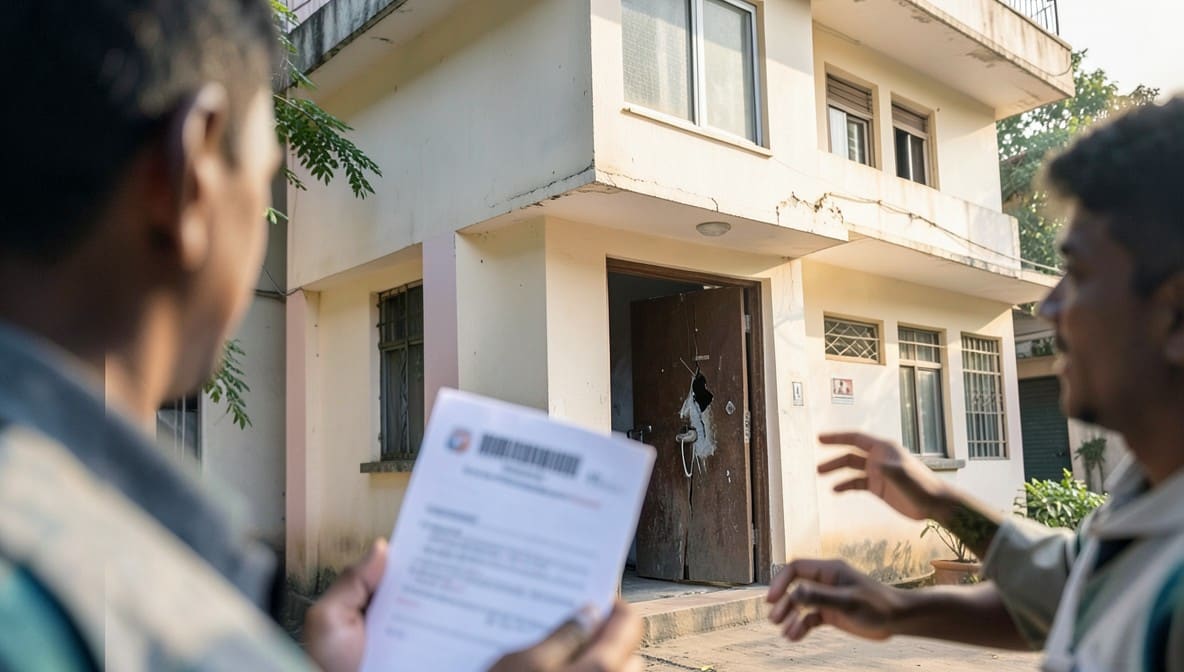
The suit was instituted by the original plaintiff, now represented by his legal heirs, seeking a declaration of title to a piece of land and recovery of khas possession. The defendants, appellants in the second appeal, claimed continuous possession since 1993 and contested the plaintiff’s title. The dispute centered on whether the plaintiff’s title, evidenced by a patta, could override the defendants’ assertion of long-standing possession.
Key Facts
- The plaintiff was granted a patta for the suit property in 1997, which was marked as an exhibit in the suit.
- The defendants claimed to have been in possession of the property since 1993 and paid panchayat taxes during that period.
- The plaintiff alleged that he was dispossessed on December 25, 2011.
- During cross-examination on February 24, 2016, the plaintiff, as PW1, reportedly admitted that the defendants were in possession since 1993.
- The defendants produced evidence of possession, including tax receipts and local testimony.
- The suit was filed in the trial court, which decreed the plaintiff’s claim.
Procedural History
- 1997: Patta granted to the plaintiff in his favor.
- December 25, 2011: Alleged date of dispossession.
- 2013: Suit filed before the Trial Court for declaration of title and recovery of possession.
- 2015: Trial Court decreed the suit in favor of the plaintiff, holding that the patta conferred title and possession could be recovered.
- 2017: First Appellate Court affirmed the trial court’s decree.
- 2025: Second Appeal (SA No. 17 of 2025) filed before the Calcutta High Court.
- April 6, 2026: Judgment delivered by the Division Bench.
Relief Sought
The plaintiff sought: (1) a declaration of title based on the 1997 patta, and (2) recovery of khas possession from the defendants. No monetary compensation was claimed.
The Legal Issue
The central question was whether a second appellate court can interfere with concurrent findings of fact by the courts below when the plaintiff’s title is established by a patta, and whether an admission of possession during cross-examination defeats a claim based on documented title.
Arguments Presented
For the Appellants
Counsel for the defendants argued that the plaintiff’s admission during cross-examination on February 24, 2016, that the defendants had been in possession since 1993, fatally undermined the plaint’s assertion of continuous possession. They contended that the suit was undervalued because recovery of possession was the principal relief, not merely consequential. They further argued that their long-standing possession, supported by tax payments and local evidence, amounted to a valid defense against the plaintiff’s claim.
For the Respondents
Counsel for the plaintiff’s heirs emphasized that the patta issued in 1997 was conclusive evidence of title under Section 14 of the Indian Evidence Act and Section 110 of the Bengal Tenancy Act. They argued that the alleged admission was isolated and contradicted elsewhere in the plaintiff’s testimony. They maintained that recovery of possession was a consequential relief flowing from the declaration of title, and the valuation was therefore correct.
The Court's Analysis
The Court rejected the appellants’ contentions on multiple grounds. First, it held that even if the plaintiff’s admission during cross-examination were accepted, it did not negate his title. The patta, granted in 1997 and exhibited in court, conferred legal ownership irrespective of prior possession by others.
"The plaintiff was, in any event, entitled to recover possession from the defendants/appellants since admittedly, the defendants/appellants were in possession of the suit property at least on the date of filing of the suit."
The Court further clarified that a stray admission in a witness’s deposition cannot be isolated from the entirety of the testimony. The plaintiff had, in other parts of his evidence, rebutted the claim of adverse possession by the defendants.
On the issue of valuation, the Court held that the principal relief sought was declaration of title based on the patta, with recovery of possession being ancillary. Hence, the suit was correctly valued.
The Court emphasized the limited scope of a second appeal under Order XLI Rule 11 of the Code of Civil Procedure, noting that interference is permissible only when a substantial question of law arises. The appreciation of evidence and concurrent findings of fact by two lower courts could not be disturbed absent such a question.
"Since concurrent findings of facts were returned by both the trial court as well as the first appellate court, there is no scope for the second appellate court to interfere with the same within the limited scope of a second appeal."
The Court concluded that no substantial question of law was raised, and the appeal was therefore liable to be dismissed.
The Verdict
The second appeal was dismissed under Order XLI Rule 11 of the Code of Civil Procedure. The declaration of title based on the 1997 patta was upheld. The recovery of khas possession was affirmed as a consequential relief. There will be no order as to costs. The judgment of the courts below stands affirmed.
What This Means For Similar Cases
Title by Patta Overrides Possession Claims
- Practitioners must now treat a patta as conclusive proof of title in land disputes, even where adverse possession is alleged.
- Evidence of tax payments or long occupancy alone cannot defeat a documented title.
- In suits involving both title and possession, the patta must be the focal point of litigation strategy.
Second Appeals Are Not Fact Re-trials
- Appellate courts must resist the temptation to re-appreciate evidence in second appeals.
- A finding of fact by two lower courts is binding unless a substantial question of law is demonstrably present.
- Counsel must frame second appeals strictly around legal errors, not factual disagreements.
Strategic Use of Witness Testimony
- Isolated admissions in cross-examination must be contextualized within the entire deposition.
- Counsel should prepare witnesses to clarify contradictions and reinforce the overall narrative.
- Courts will not allow cherry-picked statements to overturn findings based on the preponderance of evidence.