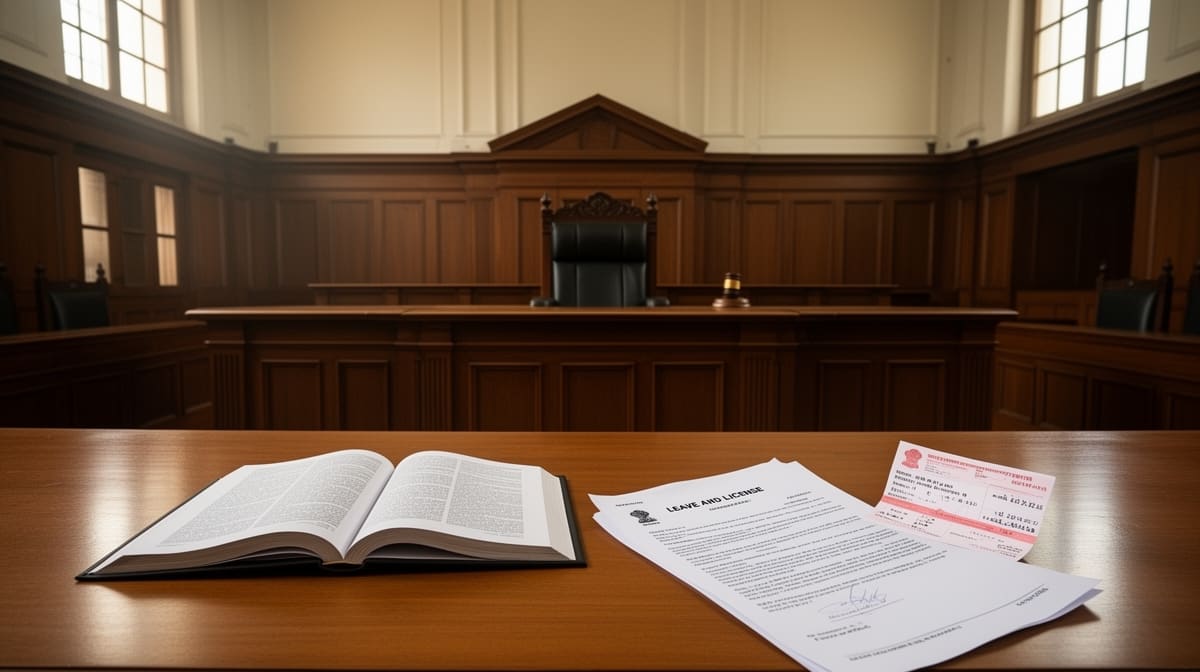
The Jharkhand High Court has delivered a stern rebuke against state entities attempting to evade binding court settlements by disowning their own counsel. In a clear affirmation of procedural integrity, the Court dismissed a review petition filed by government corporations that sought to repudiate admissions made during a judicially facilitated settlement, imposing personal costs on the responsible officials.
Background & Facts
The Dispute
The dispute arose between Vijeta Projects and Infrastructure Ltd. (original petitioner) and the Jharkhand State Building Construction Corporation Ltd. (JSBCCL), along with other state departments, over contractual claims related to a public infrastructure project. The petitioner raised three primary grievances: (1) price variation adjustments, (2) refund of GST differential, and (3) unpaid labour charges.
Key Facts
- The dispute was pending before the High Court as a writ petition.
- On 17.12.2025, the Court directed the parties to explore an amicable settlement.
- A meeting was held on 19.02.2026 between representatives of both parties.
- Minutes of Meeting dated 21.02.2026 (Annexure-10) recorded:
- Agreement on price variation: JSBCCL agreed to pay the differential amount.
- No decision taken on GST refund: "As regards payment of differential amount of GST, there being no provisions in the SBD, it is not possible to take a decision on this issue at this stage."
- Labour charges were not addressed.
- Ms Khalida Haya Rashmi, counsel for JSBCCL, was present at the 19.02.2026 meeting.
- On 26.02.2026, JSBCCL filed a supplementary affidavit sworn by Mr. Sunil Kumar, Manager-cum-Executive Engineer, confirming the agreement reached and stating that the Minutes reflected the consensus arrived at under the Court’s direction.
- On 26.02.2026, counsel for JSBCCL (Ms Rashmi) orally submitted that payment for price variation would be made on or before 25.03.2026. This statement was recorded in paragraph 9 of the Court’s order.
- The Court’s order dated 26.02.2026 disposed of the writ petition on the basis of the settlement on price variation, while leaving GST and labour claims open for further representation.
Procedural History
- 17.12.2025: Court directs parties to settle amicably.
- 19.02.2026: Settlement meeting held; Minutes signed on 21.02.2026.
- 26.02.2026: Supplementary affidavit filed by Mr. Sunil Kumar; oral submission made by Ms Khalida Haya Rashmi; Court passes order disposing of petition.
- 09.04.2026: Review petition filed by JSBCCL and its officials seeking to set aside the 26.02.2026 order.
- Grounds for review: (1) Counsel was not authorized to make the payment admission; (2) The Minutes allegedly constituted a full and final settlement rejecting GST and labour claims.
The Parties' Positions
Review Petitioners (JSBCCL, State of Jharkhand, etc.):
- Claimed Ms Khalida Haya Rashmi acted without instructions.
- Asserted that the Minutes of Meeting constituted a full and final settlement, thereby extinguishing claims for GST refund and labour charges.
- Sought to disown the oral admission made in court and reinterpret the Minutes.
Original Petitioner (Vijeta Projects):
- Contended that the settlement was limited to price variation only.
- Highlighted that the Minutes explicitly left GST and labour claims unresolved.
- Emphasized that the supplementary affidavit and oral submission were consistent and binding.
Relief Sought
The review petitioners sought to set aside the order dated 26.02.2026, arguing that the Court’s direction to pay on account of price variation was based on unauthorized statements and that the settlement was broader than recorded.
The Legal Issue
The central question was whether a state entity can file a review petition to disown statements made in court by its duly authorized counsel, especially when those statements are corroborated by contemporaneous documentary evidence and affidavits filed by its own officials.
Arguments Presented
For the Petitioners
The review petitioners contended that Ms Khalida Haya Rashmi was not instructed to admit liability for payment on account of price variation by 25.03.2026. They argued that the Minutes of Meeting constituted a full and final settlement, thereby extinguishing the claims for GST refund and labour charges. They further claimed that the Court’s order was based on a misrepresentation and sought to invoke review jurisdiction under Article 226 to correct an alleged error apparent on the face of the record.
For the Respondents
The original petitioner argued that the review petition was a blatant abuse of process. They pointed to the supplementary affidavit of Mr. Sunil Kumar, which explicitly confirmed the agreement recorded in the Minutes and the Court’s direction. They emphasized that Ms Rashmi was present at the settlement meeting and acted within her authority. The petitioner contended that the review petition was filed solely to avoid compliance with a binding settlement and to cast unwarranted aspersions on an officer of the Court.
The Court's Analysis
The Court began by citing Tamil Nadu Electricity Board v. N. Raju Reddiar and Om Prakash v. Suresh Kumar, where the Supreme Court condemned the practice of filing review petitions with a change of counsel to re-litigate settled matters. The Court observed that such conduct undermines judicial efficiency and erodes public confidence in the legal profession.
"It is a sad spectacle that a new practice unbecoming and not worthy of or conducive to the profession is cropping up."
The Court noted that the review petitioners, being entities under Article 12 of the Constitution, are held to the highest standard of integrity. Their attempt to disown their counsel’s statement - made in open court and corroborated by a sworn affidavit from their own officer - was deemed "extremely dishonest."
The Court meticulously examined the Minutes of Meeting dated 19.02.2026 and found no language suggesting a full and final settlement. The GST claim was explicitly left unresolved: "it is not possible to take a decision on this issue at this stage." The labour charges were not addressed at all. The Court held that the review petitioners’ new interpretation was a post-hoc fabrication.
The Court further emphasized that the supplementary affidavit of Mr. Sunil Kumar, filed on the same day as the order, was not a mere formality but a formal confirmation of the settlement. The fact that the same officer later filed a contradictory affidavit in support of the review petition was described as "contradictory" and "unacceptable."
The Court also rejected the argument that counsel acted without instructions. Ms Rashmi was present at the settlement meeting, and the Court found no reason to doubt her authority. The Court even verified with Mr. Gadodia (counsel for the petitioner) and Mr. Sunil Kumar (present in court) that the statements were made with express instructions.
The Court concluded that the order dated 26.02.2026 contained no error apparent on the face of the record. The review petition was not filed to correct a judicial mistake but to evade a binding commitment.
The Verdict
The review petition was dismissed with costs of Rs. 50,000 to be borne personally by the Managing Director of JSBCCL and Mr. Sunil Kumar, Executive Engineer, in equal measure. The costs must be paid directly to the Jharkhand High Court Advocates’ Clerk Association within two weeks. A compliance report must be filed in court after notifying the original petitioner’s counsel. The Court explicitly barred the use of public funds to pay the costs.
What This Means For Similar Cases
State Entities Cannot Repudiate Court Admissions
- Practitioners must argue that any oral admission made by a state’s counsel in open court, especially when corroborated by affidavits and minutes, is binding.
- Review petitions filed to disown such admissions will be dismissed as abuse of process.
Documentary Evidence Trumps Post-Hoc Denials
- Minutes of settlement meetings, signed by both parties, carry decisive weight.
- Any attempt to reinterpret such documents after the fact will be rejected unless supported by contemporaneous evidence.
Personal Accountability for Public Officials
- Costs imposed must be borne personally by officials who authorize abusive litigation.
- Public funds cannot be used to pay penalties arising from dishonest litigation tactics.
- This sets a precedent for holding senior bureaucrats personally liable for undermining judicial settlements.