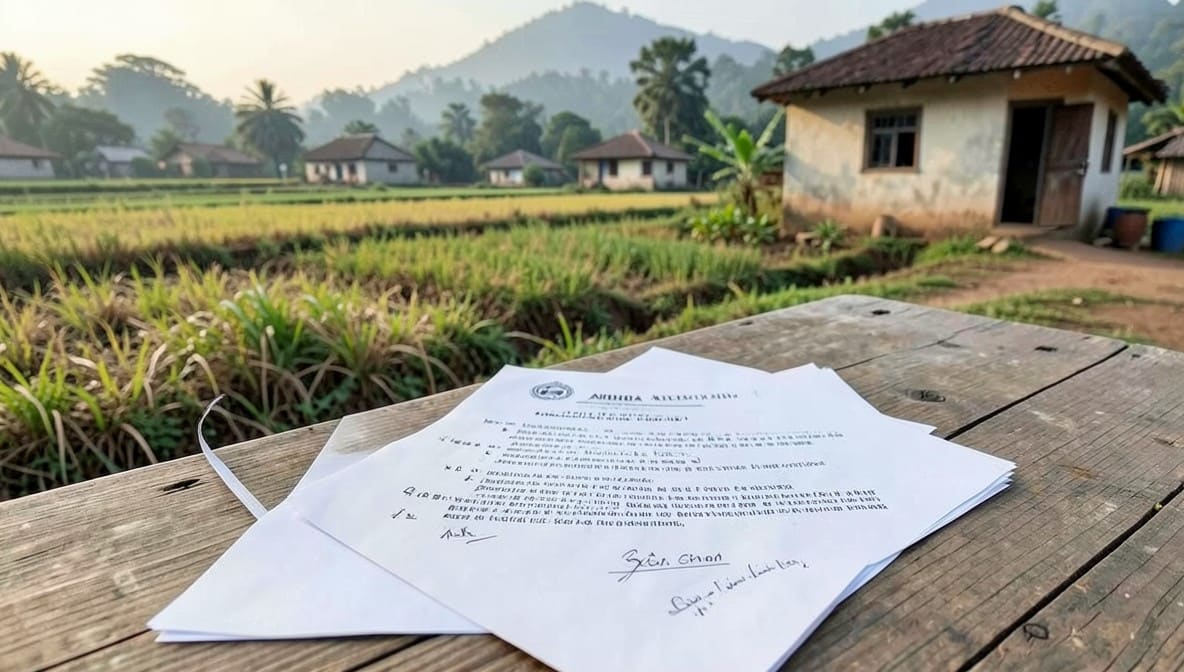
The Madras High Court upheld the decree for specific performance of a 1998 sale deed, rejecting the defendant's allegations of forgery and unfair consideration, and dismissed the second appeal, the civil revision petition and all ancillary applications, thereby reinforcing the evidentiary standards for registered instruments and the limited scope for introducing post-appeal evidence.
Background & Facts
The Dispute
The appellant, S. Rajendran, contended that the agreement of sale dated 17.06.1998 for agricultural land in Ernapuram Village, Sankari Taluk, was forged and that the consideration of Rs.1,50,000 was unconscionably low. The respondent, K. Manivannan, claimed ownership of the half-share in the land and sought specific performance of the agreement, alternatively a refund of the advance of Rs.1,25,000 with interest.
Key Facts
- 17.06.1998: Registered agreement of sale (Document No.3835) executed by the respondent in favour of the plaintiff.
- Rs.1,25,000 paid as advance; balance of Rs.25,000 due on or before 17.06.1999.
- 07.06.1999: Legal notice served by the plaintiff demanding execution of the sale deed.
- 20.04.2006: Sub Judge, Sankari decreed specific performance, granting the plaintiff one month to deposit the balance and directing execution of the deed.
- 28.11.2008: Principal District Judge, Salem affirmed the trial court decree.
- 09.07.2009: Executing court executed a sale deed in favour of the plaintiff.
- 05.02.2010: Power of attorney executed by the plaintiff in favour of P. Govindarasu.
- 30.07.2010: Sale deed executed by the attorney in favour of R. Chelizhan, P. Subramani, P. T. Raja and A. P. Shanmugam (subsequent purchasers).
- 151/2012: Execution petition (R.E.A.) filed by the decree-holder and subsequent purchasers.
- 11.12.2018: Executing court ordered delivery of possession.
- 18.02.2019: Police aid granted to enforce the delivery order.
- 30.06.2014: Interim stay order purportedly granted (later found not in force).
- 2019: Multiple civil miscellaneous petitions (C.M.P. No.2585, 2588, 10777) and revision petition (C.R.P. No.1666) filed.
- 30.07.2026: Judgment delivered by Justice A.D. Maria Clete.
Procedural History
- 20.04.2006: Trial court decreed specific performance.
- 28.11.2008: First appellate court (Principal District Judge, Salem) confirmed the decree.
- 09.07.2009: Execution of sale deed by the executing court.
- 05.02.2010: Power of attorney executed.
- 30.07.2010: Subsequent sale deed executed.
- 151/2012: Execution petition filed.
- 11.12.2018: Executing court ordered delivery of possession.
- 18.02.2019: Police assistance ordered.
- 30.06.2014: Interim stay purportedly granted (later deemed lapsed).
- 2019: C.M.P. No.2585 filed seeking admission of additional evidence; C.M.P. No.2588 and C.M.P. No.10777 filed for injunctions and stays; C.R.P. No.1666 filed for civil revision.
- 30.07.2026: Second appeal (S.A. No.1043 of 2013) and civil revision petition disposed by common judgment.
Parties' Positions
- Appellant/Defendant (S. Rajendran): Alleged forgery of signatures, claimed the agreement was fabricated, asserted that the price was grossly inadequate, and argued that the one-year period to pay the balance was unrealistic and exploited his illiteracy.
- Respondent/Plaintiff (K. Manivannan) and subsequent purchasers: Maintained that the agreement was valid, that expert forensic analysis confirmed the defendant’s signatures, that the plaintiff had paid the advance and was ready and willing to perform, and that the price was not unconscionable.
Relief Sought
- Second Appeal: Set aside the judgment and decree of 28.11.2008 and the trial court decree of 20.04.2006.
- Civil Revision Petition: Quash the execution order dated 11.12.2018 directing delivery of possession.
- C.M.P. No.2585: Admit additional documents (Power of Attorney, subsequent sale deed) as evidence.
- C.M.P. Nos.2588 & 10777: Interim injunction restraining the respondent from encumbering the suit property.
- M.P. Nos.1 of 2013 & 2014: Stay all further proceedings pending disposal of the second appeal.