The Gauhati High Court has clarified that a special permit for cultivation is a personal license, not a transferable or inheritable right, and cannot be construed as conferring ownership over land. This ruling resolves long-standing ambiguity in land tenure under customary administrative grants in Northeast India, with direct implications for heirs of permit holders and state land administration practices.
Background & Facts
The Dispute
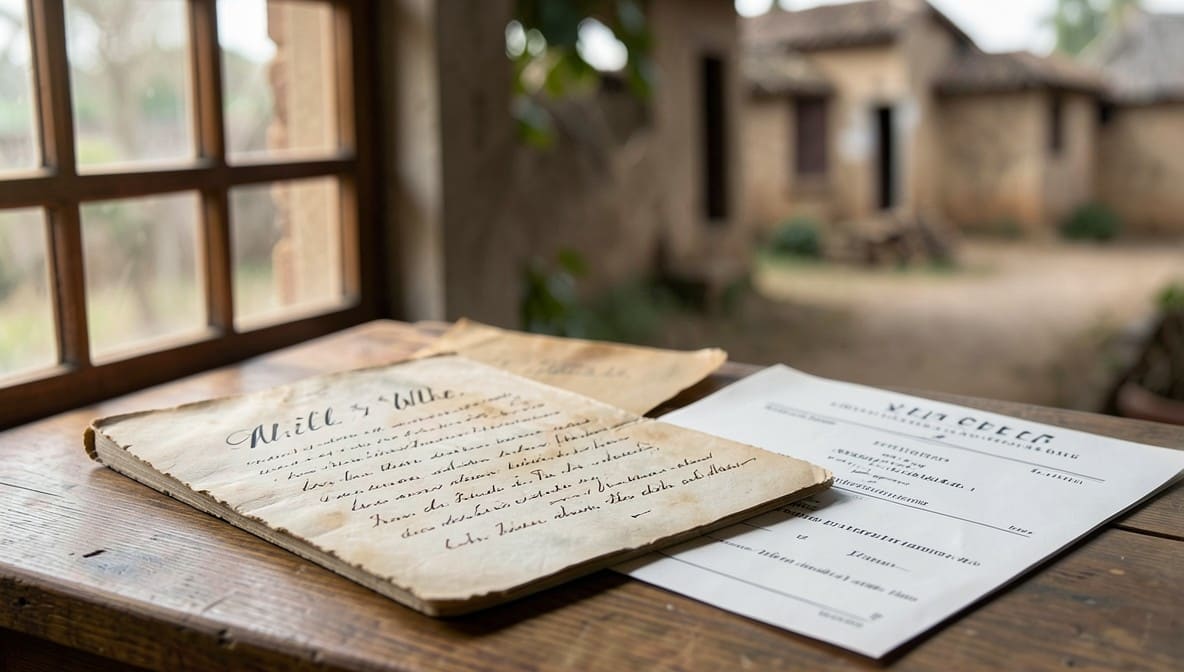
The dispute centers on a Special Permit issued on 29.03.1971 by the Additional Deputy Commissioner, Mon Sub-Division, to the petitioner’s late father, L. Wangshu Konyak, for the use of 157.81 acres of land in Tizit, Nagaland, solely for cultivation purposes. The petitioner, L. Nokman Wangshu, claims succession rights to this permit after his father’s death in 1974, asserting ownership and seeking compensation for 111 land allotments made by the state administration on the same land between 1988 and 2020. The state contends the permit was a non-transferable, non-heritable license, and that the land originally belonged to Jaboka Village, which donated 1,200 acres to the government in 1968 for establishing Tizit town headquarters.
Key Facts
- The Special Permit (MEMO No. 8487-90 dated 29.03.1971) explicitly permitted cultivation only, with no mention of ownership, transfer, or inheritance.
- The petitioner’s father died in 1974, leaving the petitioner a minor.
- On 11.04.1975, the Circle Officer, Tizit, upheld the permit and allowed the petitioner to cultivate the land, but did not issue any formal transfer or mutation.
- No revenue payments were made by the petitioner or his father for the land.
- Between 1988 and 2020, the district administration issued 111 allotments on the land to government departments and private individuals.
- The petitioner himself sold or transferred 76.912 acres of the permit land to 12 private individuals without government consent.
- On 18.07.1996, the Chief Secretary directed a special enquiry into the matter, citing the administration’s obligation to honor prior commitments.
- A Special Enquiry Report dated 31.10.2014 confirmed the above facts and recommended an amicable settlement, including renaming a colony after the petitioner’s father.
- On 24.09.2018, the Deputy Commissioner cancelled the Special Permit.
- On 25.01.2020, the Principal Secretary, Home Department, directed that no further land be allotted to the petitioner.
- A survey conducted on 31.01.2020 confirmed the petitioner currently occupies 0.67 acres for residence and fishery pond.
- On 25.02.2020, the petitioner was granted an allotment order for the 0.67 acres he occupied - a grant he did not challenge.
Procedural History
- 29.03.1971: Special Permit issued to L. Wangshu Konyak for cultivation.
- 1974: Death of L. Wangshu Konyak; petitioner, then a minor, assumed possession.
- 11.04.1975: Circle Officer, Tizit, upheld the permit and permitted cultivation by petitioner.
- 18.07.1996: Chief Secretary, Govt. of Nagaland, issued directive to conduct special enquiry.
- 2012: WP(C)/204(K)/2012 filed by petitioner seeking to stop illegal allotments.
- 05.08.2014: Gauhati HC directed Deputy Commissioner, Mon, to conduct special enquiry within three months.
- 31.10.2014: Special Enquiry Report submitted.
- 24.09.2018: Deputy Commissioner cancelled the Special Permit.
- 25.01.2020: Principal Secretary, Home Department, directed that no further land be allotted to petitioner.
- 01.02.2020: Survey report submitted confirming land usage and 111 allotments.
- 25.02.2020: Allotment order issued to petitioner for 0.67 acres.
- 05.03.2019: Petitioner submitted representation to Chief Secretary seeking final settlement.
- 10.03.2021: Petitioner filed representation challenging cancellation of permit and letter dated 25.01.2020 - no response received.
- 2022: WP(C)/88/2022 filed before Gauhati HC.
- 2017: WP(C)/58/2017 filed challenging land permit dated 15.05.2011 - no annexure filed.
- 2016: WP(C)/207/2016 filed challenging restraining orders - aggrieved parties not before court.
The Parties' Positions
Petitioner (L. Nokman Wangshu): Claims the Special Permit was a permanent grant, akin to an allotment, and that his rights as successor were recognized by the 1975 memorandum and the 1996 Chief Secretary’s order. Argues the cancellation of the permit and refusal to compensate for 111 allotments violates his right to livelihood and due process.
Respondents (State of Nagaland and others): Contend the permit was a personal, non-transferable license for cultivation only, which lapsed upon the death of the original holder. Assert that the land was donated by Jaboka Village in 1968 and remains state property. Emphasize that the petitioner never paid revenue, never obtained mutation, and sold 76.912 acres without authorization.
Relief Sought
The petitioner seeks:
- Quashing of the Special Enquiry Report dated 31.10.2014
- Quashing of the cancellation order dated 24.09.2018
- Quashing of the Home Department letter dated 25.01.2020
- Compensation for 111 land allotments issued on his land
- Direction to the state to cease further encroachments
- Recognition of his rights as successor to the Special Permit
The Legal Issue
The central question was whether a Special Permit for cultivation, issued without any mention of ownership, transfer, or inheritance, confers a heritable or transferable interest in land, or whether it constitutes a mere personal license that terminates upon the death of the grantee.
Arguments Presented
For the Petitioner
The petitioner’s counsel argued that the 1971 permit was a de facto allotment, citing the 1975 memorandum upholding his right to cultivate and the 1996 Chief Secretary’s order recognizing the administration’s moral obligation to honor prior commitments. He relied on the principle of promissory estoppel and contended that the state’s long-standing silence and subsequent allotments amounted to acquiescence. He further argued that cancelling the permit without compensation violated Article 21 (right to livelihood) and that the state’s delegation of final decision-making to the Principal Secretary, rather than the Chief Secretary, constituted abdication of duty.
For the Respondent
The State, through the Senior Government Advocate, argued that the permit was a license under Section 52 of the Indian Easements Act, which creates no interest in land and is neither heritable nor transferable. It was emphasized that no revenue was paid, no mutation occurred, and no formal allotment order was ever issued. The state relied on Naseem Kahnam, Asha, and G. Srinivas to assert that courts cannot adjudicate title under Article 226 and that the petitioner’s possession was permissive, not adverse. The 0.67-acre allotment issued on 25.02.2020, which the petitioner did not challenge, was cited as tacit acceptance of the state’s position.
The Court's Analysis
The Court undertook a textual analysis of the Special Permit dated 29.03.1971 and found no language indicating ownership, transferability, or succession rights. The permit was described as a "conditional permission" for cultivation only, akin to a license under Section 52 of the Indian Easements Act. The Court held that a license, by its very nature, is personal, revocable, and extinguished upon the death of the licensee.
"The permit to cultivate gives only a temporary right to use the land. On the other hand, if the Special Permit was made through an order of allotment it would have conferred a legal right or interest over the land. However, a mere permission or license like the Special Permit granted to the petitioner’s father was for a special reason, i.e., permit to cultivate. It is, therefore, nothing transferable and nothing heritable as a ‘permit to cultivate’ is merely a personal license granted to a specific individual and has not created any right, title or interest in the land."
The Court rejected the petitioner’s claim of succession, noting that inheritance of land requires either a formal transfer, mutation, or explicit provision in the grant allowing succession - none of which existed here. The Court also dismissed the argument that the 1975 memorandum or the 1996 Chief Secretary’s letter created a vested right, observing that these were administrative recognitions of possession, not legal conveyances.
The Court further held that the petitioner’s sale of 76.912 acres without government consent undermined his claim of legitimate ownership. The fact that he accepted a 0.67-acre allotment on 25.02.2020 without challenge was deemed an admission that the state retained ultimate control over the land.
Regarding the delegation of authority, the Court found no abdication of power, as the Home Department’s letter dated 25.01.2020 was merely the implementation of a decision made after the Special Enquiry Report - a process fully compliant with the Court’s 2014 direction.
The Court also noted that the petitioner failed to file a reply to the state’s affidavit-in-opposition, thereby admitting the factual assertions made therein under the principle laid down in Asha v. PT B.D. Sharma University.
The Verdict
The writ petition was dismissed. The Court held that the Special Permit dated 29.03.1971 conferred no ownership or inheritable right, and its cancellation was lawful. The petitioner’s claim for compensation for 111 allotments was rejected. The allotment of 0.67 acres to the petitioner on 25.02.2020 stands confirmed. No monetary compensation, interest, or further land allotment is directed. The state is not restrained from managing the remaining land as it deems fit.
What This Means For Similar Cases
A Permit Is Not a Title
- Practitioners must distinguish between "permits" and "allotments" in land disputes - permits are licenses, not titles.
- Claims of inheritance based on cultivation permits will fail unless the original grant explicitly permits succession.
- Revenue payment and mutation records are critical evidence; absence of either fatally weakens a claim of ownership.
Courts Will Not Adjudicate Title Under Article 226
- Writ petitions under Article 226 cannot be used to establish or challenge land ownership - such disputes must be resolved in civil courts.
- Petitioners must file title suits, not writs, when ownership is contested.
- The Court’s refusal to entertain the petitioner’s claim reinforces that administrative discretion in land grants is not subject to judicial review unless mala fide or arbitrary.
State’s Moral Commitments Do Not Create Legal Rights
- Administrative assurances, even from high-ranking officials, do not create legally enforceable rights absent formal documentation.
- Promissory estoppel cannot override statutory or contractual limitations on land tenure.
- Practitioners should advise clients to seek formal mutation or allotment orders immediately upon receiving any administrative recognition of possession.