The Allahabad High Court has redefined the boundary between murder and culpable homicide in a case where a single blow was struck during a sudden quarrel without premeditation. The Court converted a conviction under Section 302 IPC (murder) to Section 304 Part-II IPC (culpable homicide not amounting to murder), emphasizing that the absence of intent to cause death or prior enmity shifts the offence to a lesser degree. The judgment also underscores the admissibility of hostile witness testimony and awards compensation to the victim’s family under Section 357 CrPC, setting a precedent for similar cases involving impulsive violence.
Background & Facts
The Dispute
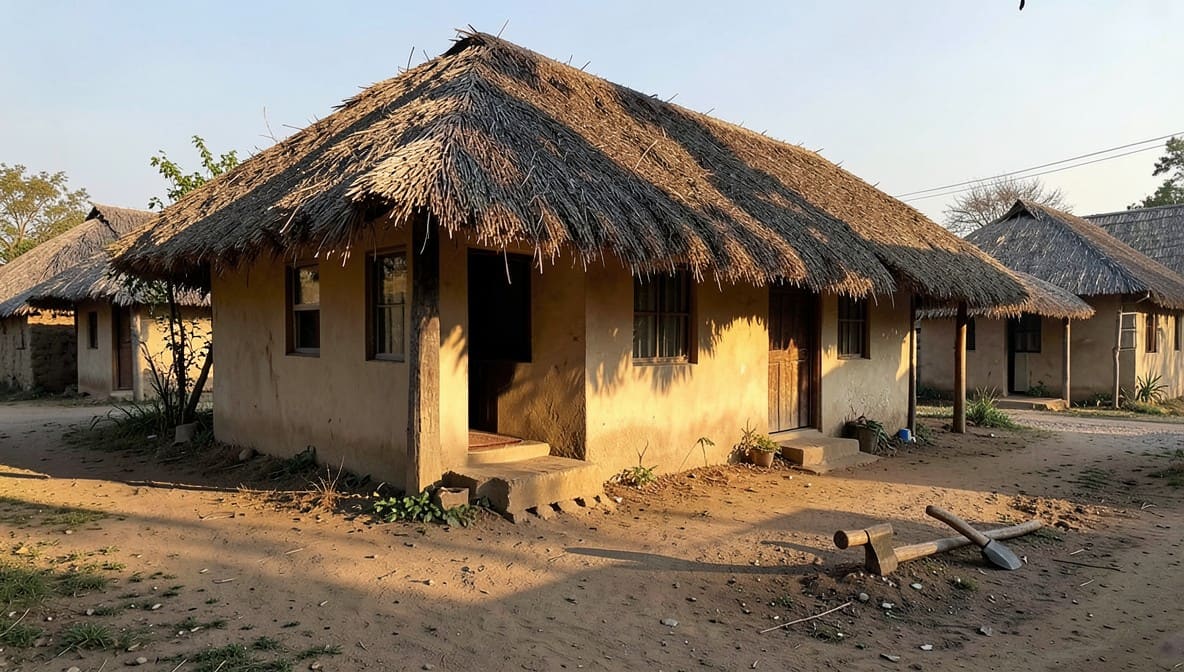
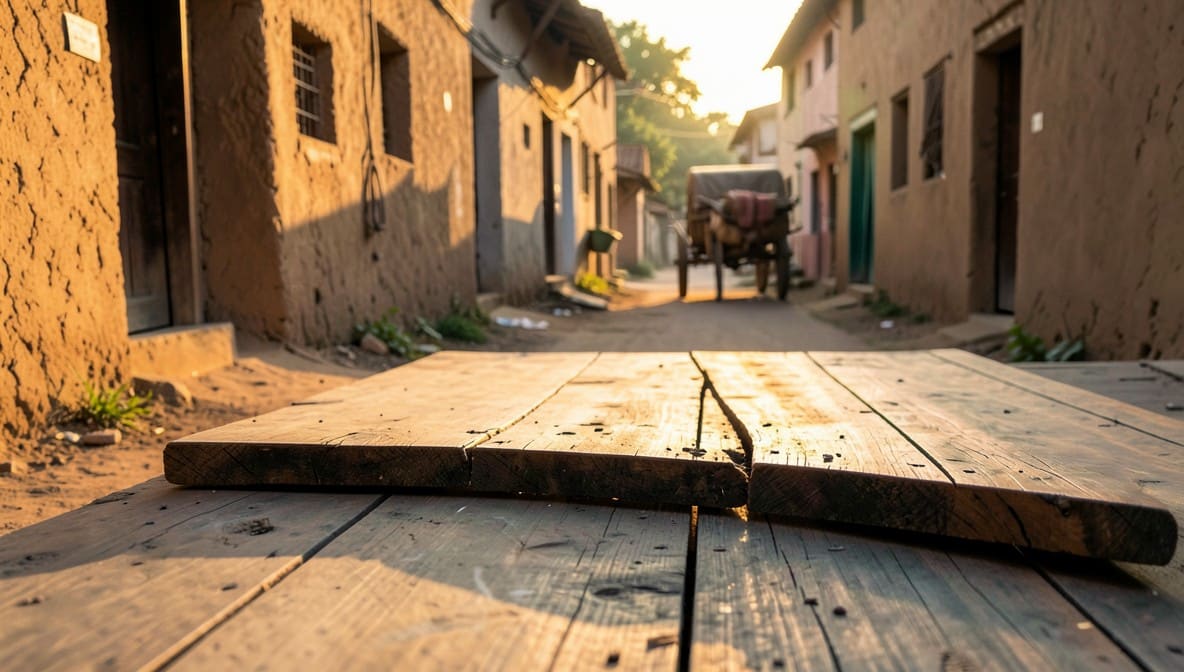
The appellant, Virendra Singh, was convicted by the IIIrd Additional Sessions Judge, Etah, under Section 302 IPC for the murder of Ravikant, the son of the informant Narsingh Pal. The incident arose from a domestic dispute: Virendra’s wife, Baby, had sought refuge at her aunt’s (Reshma Devi) house due to alleged torture by Virendra. On 16.02.1986 at 2:00 P.M., Virendra arrived at the informant’s house armed with a wooden plank, hurling abuses and assaulting Reshma Devi and Baby. When Ravikant intervened, Virendra struck him on the head with the plank, causing his death.
Key Facts
- Marriage and Domestic Strife: Virendra married Baby on 10.06.1985. Baby complained of torture and harassment by Virendra, leading her to seek refuge at her aunt’s house on the morning of 16.02.1986.
- Incident Timeline:
- 16.02.1986, 2:00 P.M.: Virendra arrived at the informant’s house, armed with a wooden plank, and assaulted Reshma Devi and Baby.
- Ravikant intervened, and Virendra struck him on the head with the plank, causing fatal injuries.
- Ravikant succumbed to his injuries while being taken to the police station.
- The informant returned to his house, placed the body on the chabootra (platform), and lodged a written report (Ex.Ka.-1) at Police Station Awagarh at 16:10 hours.
- Medical Evidence: Dr. B.V. Verma conducted the autopsy on 17.02.1986 and found:
- A lacerated wound (3.5 cm x 0.5 cm x bone deep) on the right side of the skull.
- Fractured right parietal bone, congested membranes, and haematoma.
- Cause of death: Coma due to ante-mortem injuries.
- Recovery: The Investigating Officer (IO) recovered the wooden plank (Material Exb.-1) and blood-stained soil from the spot.
Procedural History
- 16.02.1986: Written report (Ex.Ka.-1) lodged at Police Station Awagarh; FIR (Ex.Ka.-3) registered under Section 304 IPC.
- 17.02.1986: Autopsy conducted; post-mortem report (Ex.Ka.-2) prepared.
- Investigation: IO prepared inquest report (Ex.Ka.-5), site plan (Ex.Ka.-14), and other documents. Charge-sheet (Ex.Ka.-15) filed under Section 304 IPC.
- Trial Court Proceedings:
- Charge Framed: Under Section 302 IPC.
- Prosecution Evidence: Examined P.W.1 (Narsingh Pal), P.W.2 (Tejpal Singh), P.W.3 (Reshma Devi), P.W.4 (Dr. B.V. Verma), P.W.5 (Head Constable Surendra Singh), and P.W.6 (IO Mahipal Singh).
- Defence: Accused denied charges under Section 313 CrPC, claiming false implication.
- Judgment: Trial Court convicted and sentenced the appellant to life imprisonment under Section 302 IPC (30.10.1987).
- Appeal: Filed before the Allahabad High Court (Criminal Appeal No. 2570 of 1987).
The Parties' Positions
- Appellant (Virendra Singh): Argued that the prosecution case was baseless, witnesses were hostile, and the incident was sudden without premeditation. Contended that even if the prosecution evidence was accepted, the offence fell under Section 304 IPC, not Section 302 IPC.
- Respondent (State): Argued that P.W.1 and P.W.3 were natural witnesses, and their testimony, along with medical evidence, proved the appellant’s guilt under Section 302 IPC. Admitted the incident was sudden but maintained the conviction was justified.
Relief Sought
The appellant sought:
- Acquittal or conversion of conviction from Section 302 IPC to Section 304 IPC.
- Reduction of sentence, considering the lapse of 39 years since the incident.
The Legal Issue
The Court framed two questions:
- Whether the prosecution proved its case against the appellant beyond reasonable doubt under Section 302 IPC?
- Whether the case was one of culpable homicide not amounting to murder under Section 304 IPC, warranting conversion of conviction and reduction of sentence?
Arguments Presented
For the Appellant
- The prosecution case was baseless, and the trial Court misinterpreted the evidence.
- P.W.1 and P.W.2 were cross-examined by the prosecution, rendering them hostile and unreliable.
- P.W.3’s deposition did not establish the place of incident, undermining her credibility.
- The incident was sudden, without premeditation, and involved a single blow, making Section 302 IPC inapplicable.
- Even if the prosecution evidence was accepted, the offence fell under Section 304 IPC.
- The sentence of life imprisonment was excessive, given the lapse of 39 years.
For the Respondent
- P.W.1 (father of the deceased) and P.W.3 (mother of the deceased) were natural witnesses, and their testimony was consistent and reliable.
- P.W.2 (neighbour) corroborated the prosecution version.
- The medical evidence proved the deceased died due to a severe head injury caused by the appellant.
- The trial Court correctly convicted the appellant under Section 302 IPC.
- The incident, though sudden, justified the conviction under Section 302 IPC.
The Court's Analysis
Evaluation of Evidence
The Court meticulously analyzed the depositions of the prosecution witnesses:
-
P.W.1 (Narsingh Pal): Though he supported the prosecution in his examination-in-chief, he was not an eyewitness. In cross-examination, he stated the deceased wielded a lathi, and the appellant struck in self-defence. The Court noted his deposition was relevant for proving the written report (Ex.Ka.-1), the torture of Baby, and the fact of Ravikant’s death but not for establishing the manner of the incident.
-
P.W.2 (Tejpal Singh): A neighbour and eyewitness, his deposition was consistent regarding the date, time, place, and manner of the incident. Despite cross-examination, he affirmed the appellant assaulted Ravikant with a wooden plank. The Court held his testimony was reliable.
-
P.W.3 (Reshma Devi): The mother of the deceased, her deposition corroborated the prosecution version. Though she stated the incident occurred inside the room, the Court attributed this to her illiteracy and emotional state, holding the rest of her testimony trustworthy.
-
Medical Evidence: P.W.4 (Dr. B.V. Verma) proved the homicidal nature of the death, confirming the injury was sufficient to cause death in the ordinary course of nature.
The Court rejected the appellant’s argument that P.W.1 and P.W.2 were hostile witnesses, relying on the Supreme Court’s observations in K.P. Tamilmaran v. State and Sat Paul v. Delhi Administration. It held that the evidence of a hostile witness could not be discarded entirely and must be evaluated for admissible portions.
Legal Principles on Murder vs. Culpable Homicide
The Court relied on the Supreme Court’s judgment in Anbazhagan v. State to distinguish between murder (Section 302 IPC) and culpable homicide not amounting to murder (Section 304 IPC):
-
Section 300 IPC defines murder where the act is done with:
- Intention to cause death.
- Intention to cause bodily injury known to be likely to cause death.
- Intention to cause bodily injury sufficient in the ordinary course of nature to cause death.
- Knowledge that the act is imminently dangerous and likely to cause death.
-
Section 299 IPC defines culpable homicide where the act is done with:
- Intention to cause death.
- Intention to cause bodily injury likely to cause death.
- Knowledge that the act is likely to cause death.
The Court emphasized that Clause (3) of Section 300 IPC requires proof of intention to cause a bodily injury sufficient in the ordinary course of nature to cause death. If this intention is absent, the offence falls under Section 304 IPC.
Application to the Present Case
The Court held:
- The appellant struck a single blow with a wooden plank during a sudden quarrel, without premeditation or prior enmity.
- There was no intention to cause death or an injury sufficient to cause death in the ordinary course of nature.
- The appellant had knowledge that the act was likely to cause death but lacked the knowledge that it was imminently dangerous.
- The incident fell under Clause (c) of Section 299 IPC, making it culpable homicide not amounting to murder under Section 304 Part-II IPC.
"As there was no intention of causing death or causing injury as is likely to cause death, therefore whether the appellant - convict can be said to have the knowledge that the act of assault upon the deceased by wooden plank was likely to cause death or not. The accused was carrying a wooden plank and he was in a fit of rage because of his strained relationship with his wife. No one can be permitted to take refuge that he was lacking knowledge of impact of his assault because of his particular state of mind (i.e. in a fit of anger in the present case). Therefore, we are of the opinion that although the accused was having the knowledge that the act of assaulting the deceased with a wooden plank is likely to cause death, but he was lacking the knowledge that his act was so immensely dangerous that it must in all probability could cause death or such bodily injury as was likely to cause death."
The Verdict
The Court partly allowed the appeal:
- Conviction: Converted from Section 302 IPC to Section 304 Part-II IPC.
- Sentence: Reduced to 7 years rigorous imprisonment with a fine of Rs. 2,00,000.
- Compensation: Rs. 1,80,000 to be paid to the parents of the deceased (Narsingh Pal and Reshma Devi) from the fine amount.
- Default Clause: In case of failure to deposit the fine, the appellant shall undergo 1 year simple imprisonment.
- Adjustment: The period already served by the appellant shall be adjusted against the sentence.
- Bail: The appellant’s bail bonds were cancelled, and he was directed to surrender to serve the remaining sentence.
What This Means For Similar Cases
Single Blow Without Premeditation: Culpable Homicide, Not Murder
- Intent vs. Knowledge: The distinction between Section 302 IPC and Section 304 IPC hinges on the accused’s intention to cause death or an injury sufficient to cause death. Where the act is impulsive and lacks premeditation, the offence is likely to fall under Section 304 IPC.
- Sudden Quarrel: Courts will examine whether the incident occurred in the heat of passion without prior planning. A single blow struck in a sudden quarrel, without intention to kill, may not attract Section 302 IPC.
- Burden of Proof: The prosecution must prove intention under Section 302 IPC. If the evidence shows only knowledge that the act was likely to cause death, the conviction may be converted to Section 304 IPC.
Hostile Witnesses: Admissibility and Reliability
- Not Wholly Discarded: The evidence of a hostile witness cannot be discarded entirely. Courts must distinguish admissible portions, especially where corroborated by other evidence.
- Corroboration: Testimony of hostile witnesses can be relied upon if it aligns with other reliable evidence, such as medical reports or eyewitness accounts.
- Contradictions: Minor contradictions in depositions, especially due to delayed cross-examination, do not necessarily render the witness unreliable.
Victim Compensation Under Section 357 CrPC
-
Integral Component: Compensation to victims is an integral part of criminal justice administration. Courts must consider awarding compensation in every criminal case, especially where the victim’s family suffers irreparable loss.
-
Quantum: The amount of compensation should reflect the gravity of the offence, the financial capacity of the accused, and the loss suffered by the victim’s family.
-
Default Consequences: Failure to pay compensation may result in additional imprisonment, emphasizing the enforceability of compensation orders.
-
Practitioners’ Takeaway:
- Argue for conversion of conviction to Section 304 IPC where the act was impulsive and lacked premeditation.
- Highlight the absence of prior enmity and single blow as key factors for reducing the offence.
- Rely on hostile witness testimony where corroborated by other evidence.
- Seek compensation for victims under Section 357 CrPC as a matter of right, not discretion.