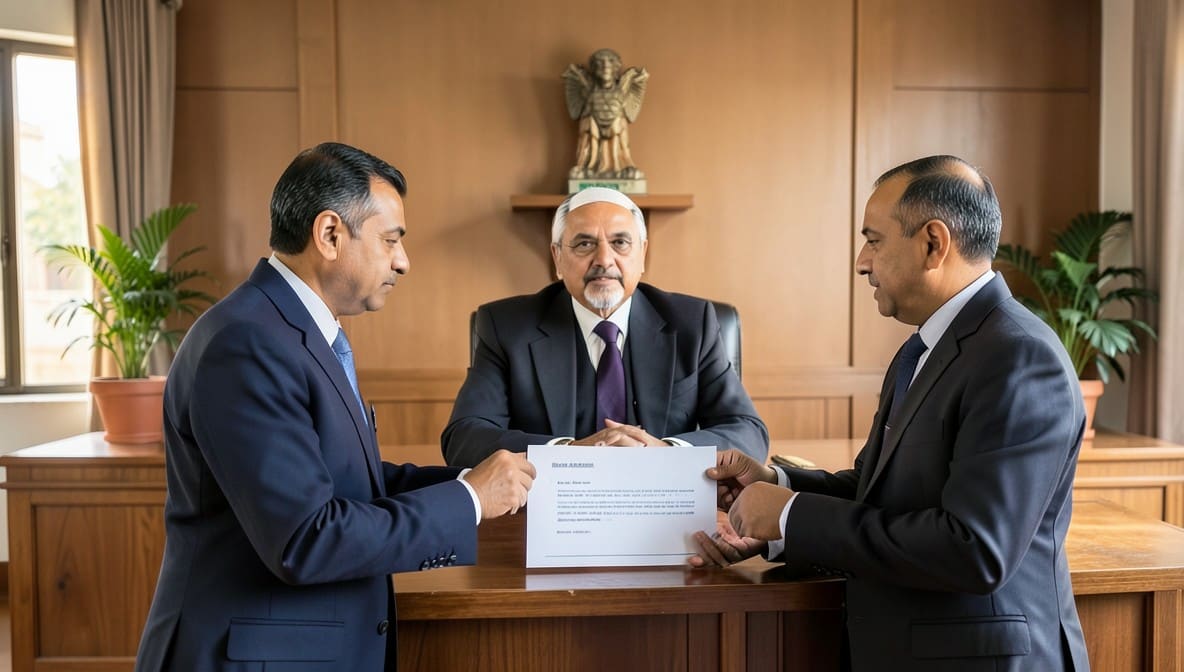
The Supreme Court has reaffirmed that the gravity of a life-threatening assault under Section 307 IPC cannot be mitigated by the mere passage of time or an offer of monetary compensation. In a stern rebuke to the Madras High Court, the Court held that reducing a sentence to time already served undermines the foundational principles of deterrence, proportionality, and societal justice.
Background & Facts
The Dispute
The case arose from a brutal attack on 6 June 2009, when the Private Respondents, armed with knives, stabbed the victim multiple times in the chest, abdomen, and palm. The injuries were deemed life-threatening by medical evidence. The attack followed a known enmity between the parties. Two other accused were acquitted due to insufficient evidence, but the Private Respondents were found guilty of intentionally causing grievous harm with intent to kill.
Procedural History
- 2009: Crime No. 142/2009 registered at Thiruppachethi Police Station; charge sheet filed under Sections 294(b), 323, 324, 326, and 307 IPC.
- 2013: Trial Court convicted the Private Respondents under Sections 307, 326, and 324 IPC; sentenced them to three years rigorous imprisonment and a fine of ₹5,000 each.
- 2016: District Sessions Fast Track Mahila Court upheld the conviction and sentence.
- 2020: Madras High Court, in Criminal Revision, modified the sentence to time already served (two months) and enhanced the fine to ₹50,000 each, citing lapse of over 10 years and the victim’s subsequent murder by others.
- 2021: Appellant (widow of the victim) filed SLP challenging the High Court’s order.
Relief Sought
The Appellant sought restoration of the original three-year sentence, arguing that the High Court’s reduction was legally unsustainable, lacked judicial reasoning, and violated the principle of proportionality in sentencing.
The Legal Issue
The central question was whether the lapse of time and an offer of compensation can justify reducing a sentence for an offence under Section 307 IPC, where the injuries inflicted were life-threatening and the conviction was based on clear, corroborated evidence.
Arguments Presented
For the Appellant
Learned counsel relied on State of Madhya Pradesh v. Suresh (2019), Hazara Singh v. Raj Kumar (2013), and State of M.P. v. Saleem (2005) to argue that: (1) sentencing must be proportionate to the gravity of the offence; (2) mere delay cannot be a mitigating factor in heinous crimes; (3) compensation is restitutory, not punitive, and cannot substitute incarceration; and (4) the High Court’s order reflected undue sympathy, eroding public confidence in justice.
For the Respondent
Counsel for the Private Respondents contended that the High Court acted within its revisional jurisdiction by considering the elapsed time, the victim’s death in a separate incident, and the respondents’ willingness to pay ₹1,00,000 as compensation. They argued that the reduction promoted reformation and avoided disproportionate punishment, aligning with the spirit of restorative justice.
The Court's Analysis
The Supreme Court conducted a comprehensive review of sentencing jurisprudence, emphasizing that proportionality is the cardinal principle in criminal sentencing. The Court observed that the Trial Court and Appellate Court had correctly assessed the evidence: four stab wounds, medical testimony confirming life-threatening injury, prior enmity, and the use of deadly weapons all established intent under Section 307 IPC.
"Undue sympathy to impose inadequate sentence would do more harm to the justice system to undermine the public confidence in the efficacy of law."
The Court rejected the High Court’s reliance on the lapse of time, citing State of M.P. v. Kashiram (2009) and Suresh (2019), which hold that delay alone cannot mitigate the gravity of violent crimes. The Court further condemned the substitution of punishment with compensation, distinguishing it from statutory victim compensation under Section 357 CrPC or Section 395 BNSS. The Court cited Shivani Tyagi v. State of U.P. (2024), labeling the High Court’s approach as akin to "Blood Money," which has no place in Indian criminal jurisprudence.
The Court emphasized that while reformation is a goal of criminal law, it cannot override the need for deterrence, especially in crimes that strike at the social fabric. The High Court failed to balance aggravating factors (brutality, intent, weapon used) against mitigating ones (delay, compensation offer), and its reasoning was devoid of judicial analysis.
The Verdict
The Appellant won. The Supreme Court set aside the High Court’s judgment, affirmed the Trial Court’s conviction and sentence of three years rigorous imprisonment, and directed the Private Respondents to surrender and serve the remaining sentence after adjusting the two months already undergone. The enhanced fine of ₹50,000 each was upheld as a separate restitutory measure.
What This Means For Similar Cases
Punishment Cannot Be Bought
- Practitioners must argue that compensation under Section 357 CrPC or Section 395 BNSS is additive, not substitutive, to punishment.
- Courts must reject any attempt to commute custodial sentences for violent offences merely on payment of money.
- In appeals against sentence reduction, highlight Shivani Tyagi and Saleem to establish that "blood money" is legally impermissible.
Delay Is Not a Mitigating Factor in Heinous Crimes
- In cases involving Section 307 IPC, Section 326 IPC, or sexual offences, lapse of time cannot be invoked to reduce sentences unless accompanied by compelling, case-specific mitigating circumstances.
- The burden lies on the accused to prove that delay caused prejudice to defence - not merely that time has passed.
- Courts must distinguish between procedural delay (which may warrant bail or discharge) and substantive sentencing reduction.
Judicial Discretion Must Be Reasoned and Transparent
- Any modification of sentence must be accompanied by a detailed balancing of aggravating and mitigating factors.
- Generic references to "sympathy" or "reformation" without factual anchoring will be set aside.
- Appellate courts must cite precedents like Hazara Singh and Suresh to justify deviations from trial court sentences.