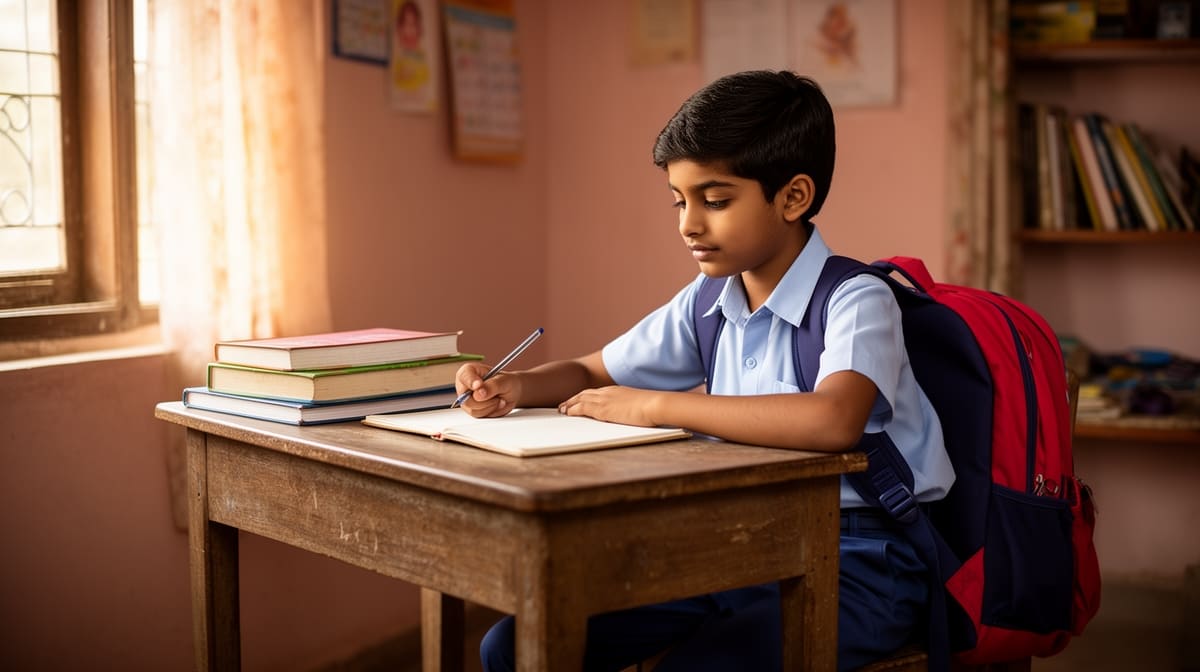
The Madhya Pradesh High Court has reaffirmed that a claim of juvenility, even if raised years after conviction, must be examined on its merits under the protective framework of the Juvenile Justice Act. This ruling ensures that statutory safeguards for children in conflict with the law are not defeated by procedural delays.
Background & Facts
The Dispute
The petitioners, Golu alias Jitendra and Kanha alias Ashish, were convicted in 2016 for offenses under Sections 148 and 336 of the Indian Penal Code arising from an incident on 07.04.2007. The trial court sentenced them to two years of rigorous imprisonment with a fine of Rs. 500/- under Section 148 IPC, and three months of rigorous imprisonment with a fine of Rs. 150/- under Section 336 IPC. The petitioners appealed the conviction and sentence before the III Additional Sessions Judge, Ambah, District Morena.
Key Facts
- The alleged offense occurred on 07.04.2007.
- Petitioner No. 1 (Golu @ Jitendra) was born on 04.06.1989, making him 17 years, 10 months, and 3 days old on the date of the offense.
- Petitioner No. 2 (Kanha @ Ashish) was born on 07.05.1989, making him 17 years, 11 months, and 0 days old on the date of the offense.
- Both petitioners produced their Class 10th mark sheets as documentary evidence of age, which were duly certified by the respective educational boards.
- The trial court did not raise the issue of juvenility suo motu, nor did it conduct any age determination inquiry during trial.
- The petitioners filed applications for declaration of juvenility on 20.10.2021 and 02.11.2023, during the pendency of their criminal appeal.
- The appellate court dismissed both applications on the ground that they were filed belatedly and were intended to delay proceedings.
Procedural History
- 07.04.2007: Alleged offense occurred.
- 2007: FIR No. 117/2007 registered against petitioners and co-accused.
- 2016: Charge sheet filed; trial concluded.
- 19.07.2016: Trial Court convicted petitioners and imposed sentence.
- 2016: Criminal Appeal No. 136/2016 filed before III Additional Sessions Judge, Ambah.
- 20.10.2021: First application for declaration of juvenility filed.
- 02.11.2023: Second application for declaration of juvenility filed.
- 27.02.2026: Appellate Court dismissed juvenility applications as belated and mala fide.
- 12.03.2026: Present petition under Section 528 of BNSS filed before High Court of Madhya Pradesh, Gwalior.
Relief Sought
The petitioners sought quashing of the order dated 27.02.2026, a declaration that they were juveniles on 07.04.2007, and a direction to the appellate court to conduct a proper inquiry into their age under Section 9(2) of the Juvenile Justice Act.
The Legal Issue
The central question was whether Section 9(2) of the Juvenile Justice (Care and Protection of Children) Act, 2015 obligates a court to conduct an inquiry into juvenility even when the claim is raised for the first time during an appeal, long after conviction and sentencing.
Arguments Presented
For the Appellant/Petitioner
Counsel argued that Section 9(2) mandates that any court before whom a claim of juvenility is raised must conduct an inquiry and record a finding on age, regardless of the stage of proceedings. Reliance was placed on Surajdev Mahto v. State of Bihar [(2022) 11 SCC 800], where the Supreme Court held that juvenility claims cannot be dismissed on technical grounds of delay. Counsel emphasized that the Act is a welfare statute, and its provisions must be interpreted liberally to protect children. The petitioners’ documentary evidence (Class 10th mark sheets) was sufficient to trigger the statutory obligation.
For the Respondent/State
The State defended the appellate court’s order, contending that the applications were filed after a delay of over five years, during which the trial and appeal had progressed. It argued that allowing such belated claims undermines finality of judgments and encourages tactical litigation. The State maintained that the appellate court was justified in dismissing the applications as frivolous and dilatory.
The Court's Analysis
The Court observed that Section 9(2) of the Juvenile Justice Act is unambiguous: "Wherever a claim of juvenility is raised before any court, the court shall inquire into the age of the person and record a finding regarding the same." The provision does not impose any time limit on when such a claim may be raised. The Court emphasized that the Act is a beneficial legislation, designed to ensure that children are not subjected to adult criminal procedures.
"Even if a plea of juvenility is raised at a late stage, the Court is required to examine the claim and determine the age in accordance with the law rather than dismissing the application on technical grounds."
The Court cited Surajdev Mahto as binding precedent, noting that the Supreme Court had explicitly rejected the notion that delay in raising juvenility claims can be a ground for rejection. The appellate court’s reasoning - that the applications were filed to delay proceedings - was legally unsustainable, as the burden to prove mala fide intent lay with the State, which had not discharged it.
The Court further held that the denial of an inquiry into juvenility violated Article 21 of the Constitution, as it deprived the petitioners of statutory protection without due process. The documentary evidence submitted - Class 10th mark sheets - was prima facie credible and sufficient to trigger the mandatory inquiry under Section 9(2). The appellate court’s failure to conduct such an inquiry rendered its order legally flawed.
The Verdict
The petition succeeded. The High Court set aside the order dated 27.02.2026 dismissing the juvenility applications. The matter was remanded to the III Additional Sessions Judge, Ambah, with a direction to conduct a formal inquiry into the age of the petitioners in accordance with Section 9(2) of the Juvenile Justice Act, using the Class 10th mark sheets and any other relevant evidence, and to pass a fresh order on merits within eight weeks.
What This Means For Similar Cases
Juvenility Claims Cannot Be Dismissed on Delay Alone
- Practitioners must raise juvenility claims at any stage - pre-trial, trial, appeal, or even post-conviction - without fear of dismissal on procedural grounds.
- Courts are now bound to conduct an inquiry even if the claim is raised after final disposal of the case.
Documentary Evidence Is Sufficient to Trigger Inquiry
- Class 10th mark sheets, birth certificates, or school records are prima facie valid for age determination under Section 9(2).
- Courts cannot demand additional evidence (e.g., ossification tests) unless the documentary evidence is demonstrably forged or unreliable.
Judicial Duty Overrides Finality Concerns
- The welfare principle under the Juvenile Justice Act overrides concerns about finality of judgments.
- Any order dismissing a juvenility plea without inquiry is liable to be set aside as violative of statutory mandate and Article 21.