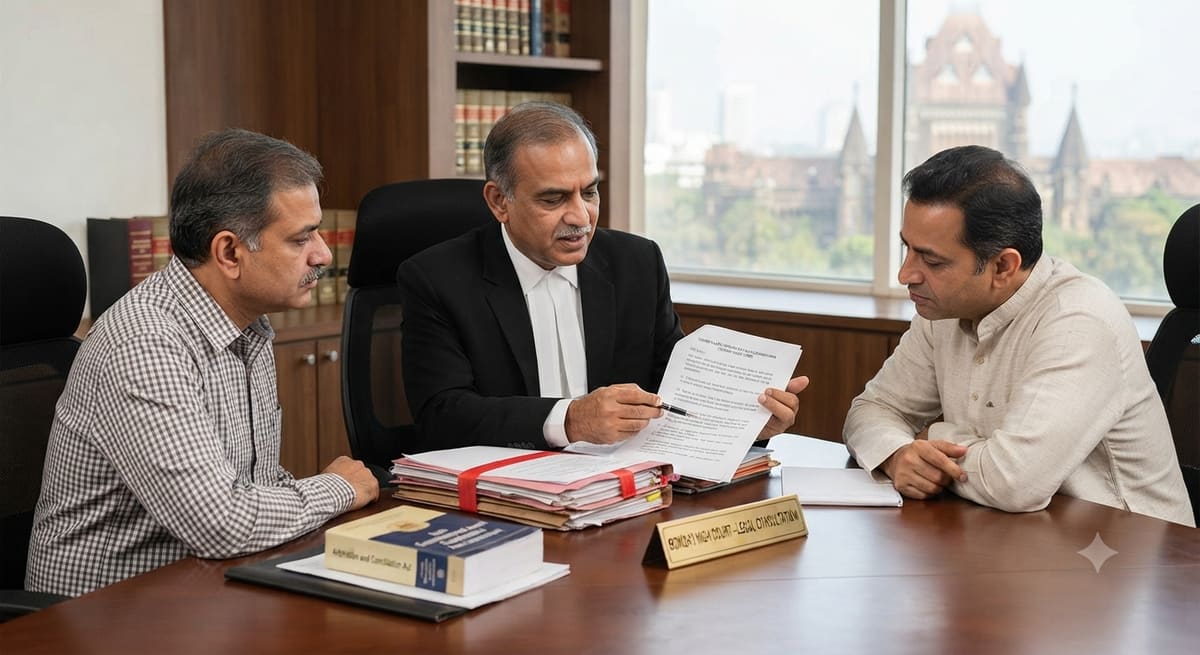
The Bombay High Court has reaffirmed that long-standing tenancy claims under the Bombay Tenancy and Agricultural Lands Act, 1948, cannot be sustained on isolated oral testimony or unchallenged revenue entries alone. The judgment underscores the necessity of consistent, corroborative documentary evidence to establish statutory tenancy rights, particularly where the claim spans over three decades.
Background & Facts
The Dispute
The dispute centres on agricultural land bearing Gat No. 132, admeasuring 2 hectares and 40.7 roods, located in Village Shiravali, Taluka Bhor, District Pune. The land was originally owned by late Shankar Bala Palshikar, father of Respondent No. 1. The Petitioner, Kisan Bhimaji Khopade, claims that his father, Bhimaji Khopade, was inducted as a permanent tenant by Shankar Bala Palshikar and cultivated the land continuously for over 35 years. Upon his father’s demise, the Petitioner succeeded to the tenancy rights and continued cultivation, paying Khand (rent) in the form of 6 Man of rice annually to the Respondents.
Key Facts
- The Petitioner asserts that the Respondents, being salaried individuals residing in Bhor, never personally cultivated the land.
- No formal tenancy agreement was ever executed.
- No rent receipts were issued due to alleged cordial relations between the families.
- The Petitioner claims continuous cultivation from approximately 1968 until the institution of proceedings.
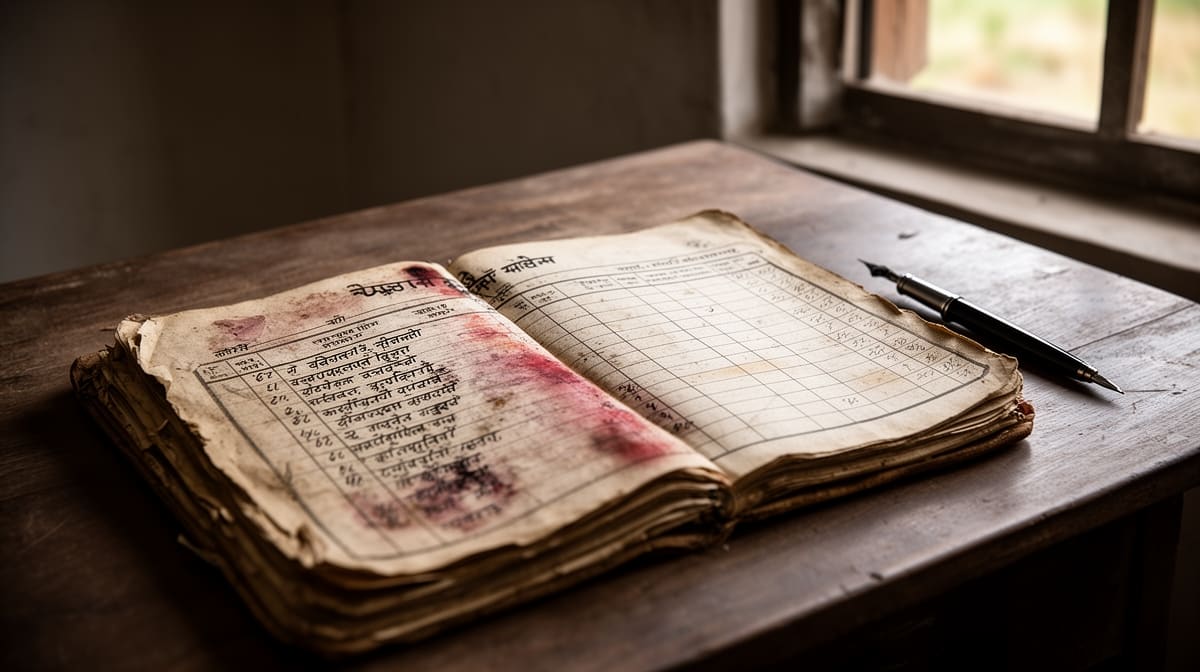
- In 1995-96, the Petitioner’s name was entered in the cultivation column of the 7/12 extract pursuant to proceedings under Rule 31 of the Maharashtra Land Revenue Record of Rights and Registers Rules, 1971.
- The 7/12 extract for 1995-96, 1996-97, 1997-98, and 1998-99 shows two separate Vahiwat cases initiated by the Petitioner.
- The witness Ramchandra Yashwant Mandhare, owner of adjoining land, testified that he witnessed delivery of rice bags to the Respondents on one occasion and that the Respondents never cultivated the land.
- In cross-examination, the witness admitted he knew only one member of the Palshikar family, had never entered their house, and had no knowledge of rent payments beyond a single instance.
Procedural History
- 2003: Petitioner filed Tenancy Case No. 2 of 2003 before the Tahsildar, Bhor, seeking declaration as permanent tenant under Section 70(b) of the Bombay Tenancy Act.
- 2005: Tahsildar held in favour of the Petitioner, declaring him a permanent tenant.
- 2006: Respondents filed Appeal under Section 74 before the Sub-Divisional Officer, Bhor, which was dismissed.
- 2007: Respondents filed Revision Application No. TNC/REV/149/2007/P before the Maharashtra Revenue Tribunal.
- 29 April 2013: Maharashtra Revenue Tribunal allowed the Revision, set aside the concurrent findings, and held that the Petitioner failed to prove tenancy.
- 2013: Writ Petition No. 8642 of 2013 filed before the Bombay High Court under Articles 226 and 227.
- 6 May 2026: Judgment reserved.
- 7 May 2026: Judgment pronounced.
The Parties' Positions
Petitioner’s Position: Claims permanent tenancy under Section 70(b), relying on 35 years of continuous cultivation, the 1995-96 Rule 31 entry, and oral testimony of an adjoining landowner. Argues that the Tribunal erred in disregarding concurrent findings and the unchallenged revenue entry.
Respondents’ Position: Contend that the Petitioner is a trespasser. Assert that the Rule 31 proceedings were irregular, no notice was served, and no valid inquiry into tenancy was conducted. Emphasize shifting legal pleas (contractual → permanent → deemed tenancy) and absence of any documentary proof of rent payment or agreement.
Relief Sought
The Petitioner sought quashing of the Maharashtra Revenue Tribunal’s order dated 29 April 2013, restoration of the Tahsildar’s declaration of permanent tenancy, and recognition of his rights as tenant under Section 70(b). The Respondents sought dismissal of the writ petition with costs.
The Legal Issue
The central question was whether Section 70(b) of the Bombay Tenancy and Agricultural Lands Act, 1948 can be invoked to declare a person a permanent tenant based solely on oral testimony, a single instance of rent payment, and a disputed revenue entry under Rule 31, in the absence of any documentary evidence of continuous cultivation or landlord-tenant relationship over a 35-year period.
Arguments Presented
For the Petitioner
The Petitioner relied on Babu Hari Patil v. Rama Ananda Jadhav, Dharma Radhya Vartha v. Ramesh Shah, and Jagannath Vithu Jadhav v. State of Maharashtra to argue that formal agreements or rent receipts are not indispensable where lawful cultivation is established. He contended that the 1995-96 Rule 31 entry, being unchallenged, attained finality and constituted conclusive evidence of tenancy. He further argued that the Tribunal failed to appreciate the testimony of Ramchandra Mandhare, an adjoining landowner with firsthand knowledge, and committed a non-application of mind by ignoring the concurrent findings of two lower authorities.
For the Respondent
The Respondents contended that the Petitioner’s case was built on shifting legal pleas - first contractual tenancy, then permanent tenancy, and finally deemed tenancy under Section 4 - which is impermissible under Dwarakanath Vishram Ghurye. They emphasized that Rule 31 proceedings are purely fiscal and cannot confer substantive tenancy rights. They highlighted the witness’s admission that he witnessed rent payment only once and had no knowledge of the Respondents’ family. They relied on Hanumant Nimbals to assert that the burden of proving lawful possession lies squarely on the claimant, and that absence of any rent receipts, agreements, or consistent revenue entries renders the claim unsubstantiated.
The Court's Analysis
The Court undertook a meticulous review of the evidence and procedural history. It acknowledged that while oral testimony from an adjoining landowner is admissible, it cannot substitute for the statutory requirement of proving continuous, lawful cultivation over decades under Section 70(b). The Court noted that the witness Ramchandra Mandhare admitted to witnessing rent delivery on only one occasion and had no personal knowledge of the Respondents’ family beyond superficial contact.
"Merely because the witness owns adjoining land does not elevate his statement to conclusive proof of tenancy. His evidence has to withstand the test of cross-examination."
The Court further held that the 1995-96 entry in the 7/12 extract, though unchallenged, was the product of Rule 31 proceedings - which are summary, non-adjudicatory, and meant solely for revenue record-keeping. The Court emphasized:
"Mutation entries neither create title nor conclusively establish tenancy rights. The tenancy rights under the Bombay Tenancy and Agricultural Lands Act can be recognised only upon satisfaction of the statutory requirements contemplated under the said enactment."
The Court found the Petitioner’s shifting legal theories - from contractual to permanent to deemed tenancy - to be legally impermissible and indicative of an unstable factual foundation. It cited Dwarakanath Vishram Ghurye to hold that a litigant cannot pivot between distinct statutory categories of tenancy without proper pleadings and foundational facts.
The Court also rejected the Petitioner’s reliance on Babu Hari Patil and Dharma Radhya Vartha, distinguishing those cases on facts: in both, there was clear, continuous cultivation over decades, possession was undisputed, and the evidence was corroborated by regional agricultural practices. In contrast, the present case lacked any documentary chain of cultivation, rent receipts, or consistent revenue entries.
The Court concluded that while the Petitioner may have cultivated the land, the evidence failed to establish that such cultivation was pursuant to a lawful tenancy relationship as defined by the Act. The burden of proof, the Court held, was not discharged.
The Verdict
The Writ Petition was dismissed. The Judgment and Order dated 29 April 2013 of the Maharashtra Revenue Tribunal was upheld. The Petitioner’s claim of permanent tenancy under Section 70(b) was rejected. The Court confirmed that the Rule 31 entry could not substitute for statutory tenancy proof. No costs were awarded. However, the interim protection granted to the Petitioner was extended for six weeks from the date of judgment.
What This Means For Similar Cases
Revenue Entries Are Not Tenancy Decrees
- Practitioners must not treat 7/12 extract entries under Rule 31 as conclusive proof of tenancy.
- Such entries are fiscal records only and cannot override the substantive requirements of the Bombay Tenancy Act.
- Any claim based solely on mutation entries without corroborative evidence of cultivation or rent payment is legally unsustainable.
Shifting Legal Pleas Are Fatal to Tenancy Claims
- A litigant cannot change the legal basis of their tenancy claim (e.g., from contractual to deemed to permanent) mid-proceedings.
- Each category of tenancy under the Act has distinct ingredients; inconsistent pleadings undermine credibility and violate principles of fair trial.
- Courts will treat such shifts as indicia of an unsubstantiated claim.
Oral Evidence Requires Corroboration in Long-Term Tenancy Cases
- In cases spanning decades, isolated oral testimony - even from adjoining landowners - is insufficient.
- Courts expect documentary evidence of rent payment, cultivation records, or consistent revenue entries.
- A single instance of rent delivery, without continuity, cannot establish a 35-year tenancy.
Burden of Proof Remains on the Claimant
- The burden to prove lawful cultivation and tenancy under Section 70(b) lies entirely on the claimant.
- Absence of rent receipts, agreements, or consistent records cannot be compensated by vague assertions.
- Courts will not presume tenancy merely because cultivation occurred; the legal relationship must be established.