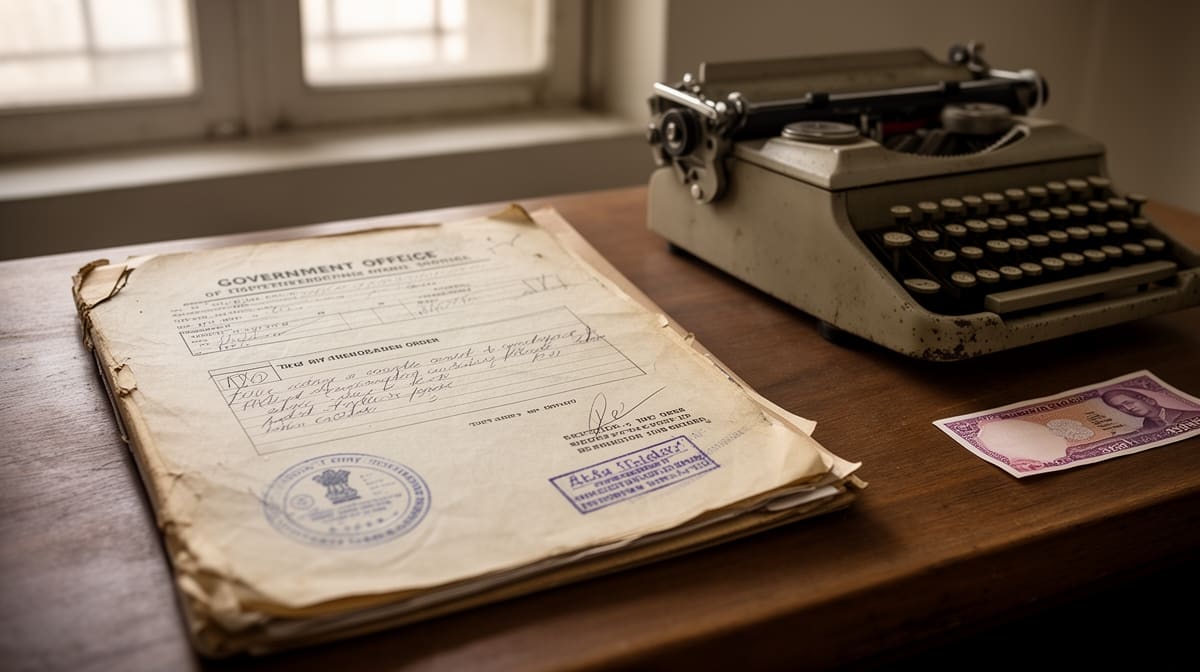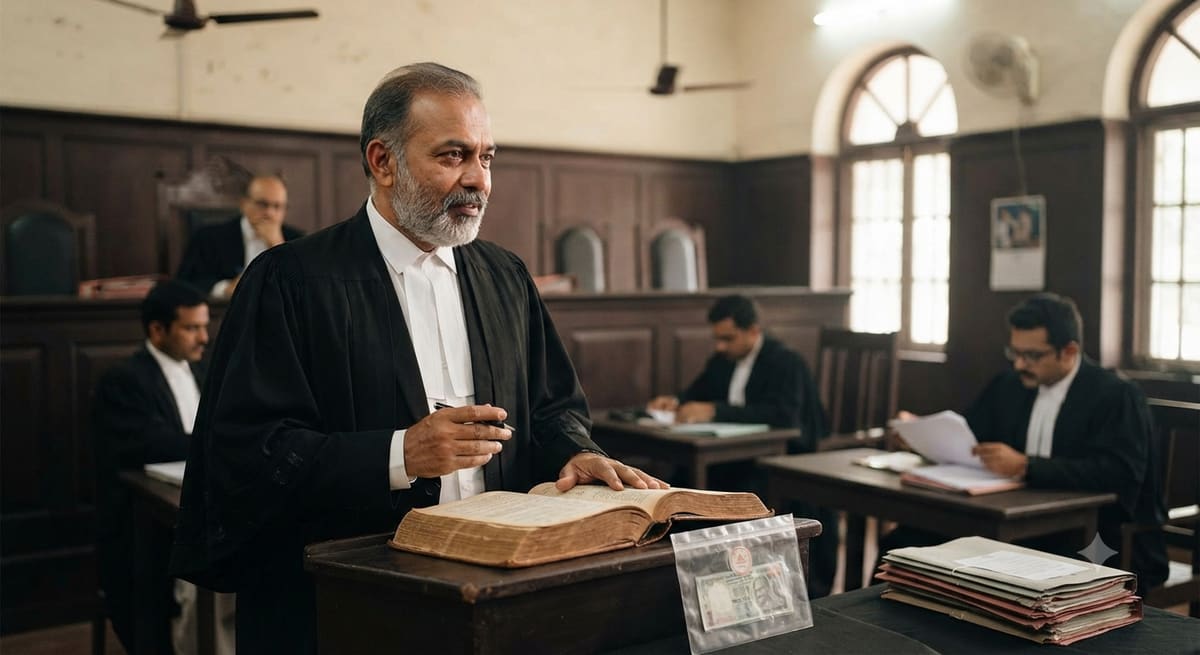
The Bombay High Court has reaffirmed that consistent corroboration between a complainant and a shadow pancha in a trap operation is sufficient to establish the essential ingredients of demand and acceptance under the Prevention of Corruption Act, 1988. The judgment underscores that minor inconsistencies in peripheral details do not invalidate the core prosecution narrative when the central act of bribery is clearly proven.
Background & Facts
The Dispute
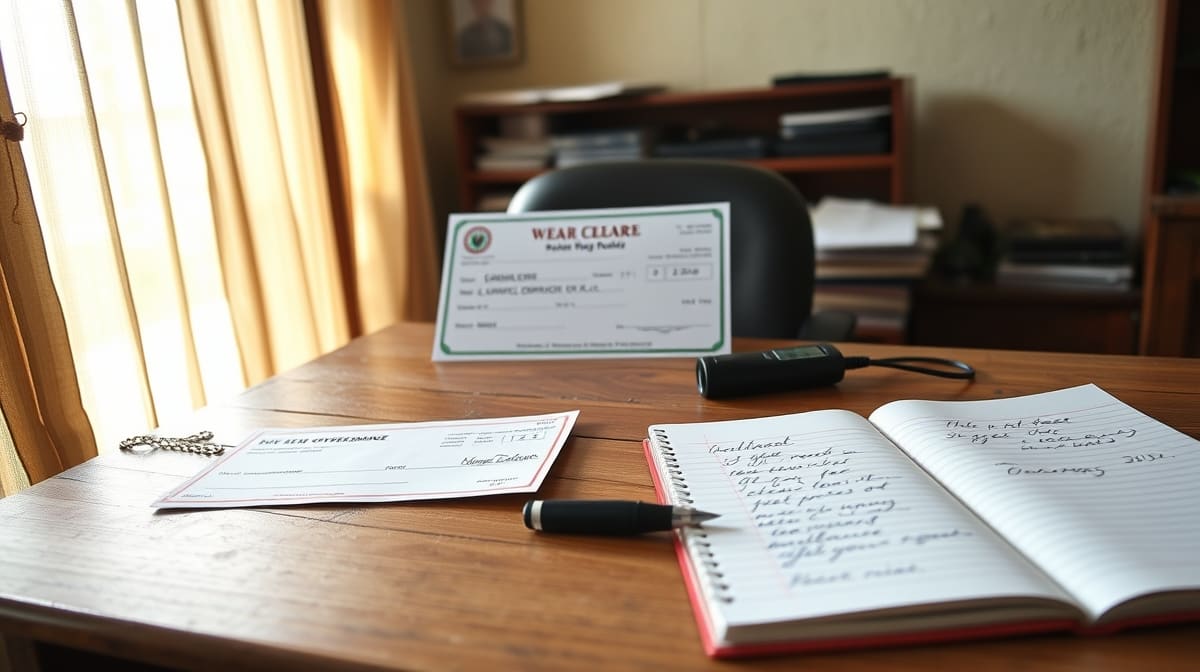
The appellant, Shrikant s/o Prabhakar Patange, a Gram Sevak in Renapur, Latur, was accused of demanding a bribe of Rs.7,000 from PW1, a Member of the Village Panchayat, in exchange for affixing his signature on a cheque issued by the Zilla Parishad for Rs.1,22,180 towards repair work on a primary school’s tin roof. The work had been undertaken by PW1 after no contractor was willing to take it up. The cheque required dual signatures - from the Deputy Sarpanch and the Gram Sevak. While the Deputy Sarpanch signed without demand, the appellant allegedly insisted on a cash payment before signing.
Key Facts
- The repair work was approved by the Village Panchayat and funded by the Zilla Parishad.
- The cheque for Rs.1,22,180 was issued but bore no date at the time of initial presentation.
- PW1 approached the Anti-Corruption Bureau (ACB) on 07.09.2012 after the appellant demanded Rs.7,000.
- ACB recorded a voice conversation between PW1 and the appellant on 08.09.2012, confirming the demand.
- A second conversation occurred on 10.09.2012 at Mayuri Hotel, Latur, where the appellant again insisted on Rs.7,000.
- Tainted currency was handed over by PW1 to the appellant, who accepted it and then signed the cheque.
- The cheque was dated 10.09.2012, the same day as the trap.
- Anthracene powder was applied to the currency notes as per standard ACB procedure.
- The appellant was apprehended immediately after accepting the money.
Procedural History
- 07.09.2012: PW1 filed complaint (Exhibit 41) with ACB.
- 08.09.2012: First voice recording and verification panchanama (Exhibit 46) prepared.
- 10.09.2012: Main trap executed at Mayuri Hotel; second panchanama (Exhibit 48) prepared.
- 10.09.2012: Appellant apprehended and arrested.
- 2013: Chargesheet filed in Special Case (ACB) No. 6 of 2013.
- 17.02.2021: Special Court convicted appellant under Sections 7 and 13(2) of the Prevention of Corruption Act, 1988; acquitted co-accused.
- 26.03.2026: Appeal heard and dismissed by Bombay High Court (Aurangabad Bench).
The Parties' Positions
For the Appellant: Argued false implication, citing contradictions between PW1 and PW2 regarding minor procedural details - including timing of the panchanama, visibility of anthracene powder, and whether the cheque was dated before or after the trap. Contended that the Gram Sevak had no authority to allot work, making the bribe demand implausible. Alleged mechanical sanction by the CE Officer without application of mind.
For the Respondent-State: Maintained that the prosecution evidence was consistent on the core elements - demand, acceptance, and motive. Highlighted that the voice recordings and panchanamas corroborated the sequence of events. Emphasized that the appellant’s signature on the cheque after accepting cash established illegal gratification.
Relief Sought
The appellant sought quashing of the conviction order dated 17.02.2021, acquittal on all charges, and release from custody. No monetary relief was claimed.
The Legal Issue
The central question was whether the demand and acceptance of bribe under Section 7 of the Prevention of Corruption Act, 1988 can be established solely through the consistent testimony of a complainant and a shadow pancha, even if minor discrepancies exist in peripheral details.
Arguments Presented
For the Appellant
Counsel contended that the prosecution case was riddled with contradictions: PW1 initially claimed the cheque was undated when presented to the appellant, yet later admitted the date was added on the day of signing. The shadow pancha could not recall the colour of the appellant’s clothing or the exact timing of the panchanama. Counsel cited State of Maharashtra v. Suresh and Rajendra Prasad v. State of Bihar to argue that material contradictions invalidate a conviction. Further, he argued that the sanction under Section 19 was mechanical, as the CE Officer merely rubber-stamped the file without independent scrutiny.
For the Respondent
The APP submitted that the prosecution’s case was anchored in two independent, corroborative accounts - PW1 and PW2 - both of whom consistently described the demand for Rs.7,000, the meeting at Mayuri Hotel, the acceptance of tainted currency, and the subsequent signing of the cheque. Minor omissions regarding clothing or lighting conditions were irrelevant to the core act of bribery. The sanction was valid as the CE Officer had reviewed the complaint, panchanamas, and voice recordings before granting approval.
The Court's Analysis
The Court conducted a meticulous re-appreciation of the evidence, focusing on the distinction between material inconsistencies and trivial discrepancies. It held that the prosecution’s case was not weakened by the shadow pancha’s inability to recall the colour of the complainant’s attire or the exact time of the panchanama. Such omissions were natural under the stress of a covert operation.
"The sine qua non of the offence under Section 7 is the demand and acceptance of illegal gratification. The evidence of PW1 and PW2, though subjected to rigorous cross-examination, remains consistent on this crucial point."
The Court noted that the voice recordings, though not played in court, were authenticated through panchanamas (Exhibits 46 and 48), which were signed by the panchas and ACB officers. The application of anthracene powder and the immediate apprehension following acceptance of the currency further corroborated the trap’s legitimacy.
The Court rejected the argument that the Gram Sevak had no authority to demand a bribe, observing that the offence under Section 7 does not require the accused to have official discretion over the work - only that the bribe was demanded in relation to an official act. The appellant’s signature on the cheque was an official function, and his demand for cash before performing it constituted illegal gratification.
Regarding sanction, the Court held that the CE Officer’s testimony confirmed he reviewed the case file, including the complaint and panchanamas, before granting sanction. Absence of a detailed written order does not equate to mechanical sanction.
The Court emphasized that the presumption under Section 20 of the PC Act - that the accused accepted illegal gratification if found in possession of it - was triggered by the evidence of demand and acceptance. No rebuttal was offered by the appellant.
The Verdict
The appeal was dismissed. The conviction of the appellant under Sections 7 and 13(2) of the Prevention of Corruption Act, 1988 was upheld. The appellant remains convicted and sentenced to imprisonment, with no modification to the original order. The Court found no perversity in the trial court’s appreciation of evidence and declined to interfere.
What This Means For Similar Cases
Consistency on Core Elements Trumps Minor Inconsistencies
- Practitioners must focus on whether the complainant and corroboration witness agree on the demand, acceptance, and context of the bribe - not on trivial details like clothing, lighting, or exact timestamps.
- Minor contradictions in peripheral facts do not automatically render the prosecution case unreliable.
Trap Evidence Remains Credible When Properly Documented
- Voice recordings authenticated by panchanamas, even if not played in court, are admissible as corroborative evidence.
- Anthracene powder application and immediate apprehension after acceptance are critical to establishing the trap’s integrity.
Official Act Under PC Act Is Broadly Interpreted
- An official act need not involve discretionary power - merely performing a duty (e.g., signing a cheque) can be the basis for a bribe charge.
- A public servant cannot evade liability by claiming lack of authority over the underlying transaction.
Sanction Must Be Scrutinized for Substance, Not Form
- A sanctioning authority need not record detailed reasons if the record shows review of material facts.
- Blanket assertions of "mechanical sanction" require concrete evidence of non-application of mind - mere absence of a lengthy order is insufficient.