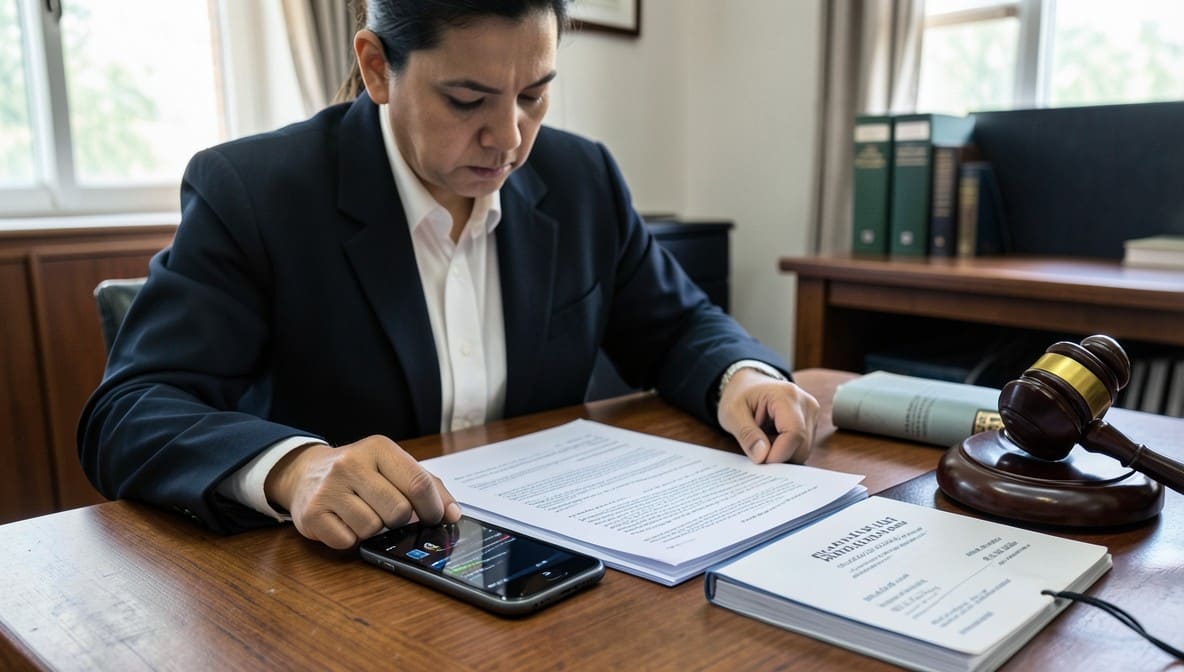
The Rajasthan High Court has established a precedent for bail conditions under Section 483 of the Bharatiya Nyaya Sanhita (BNS), mandating comprehensive disclosure of digital assets, social media accounts, and regular monitoring. This order reflects evolving judicial scrutiny over cyber-enabled offences and sets a template for future bail orders in technology-related crimes.
Background & Facts
The Dispute
The petitioner, Nisar (aged 27), was arrested in connection with FIR No. 63/2026 dated 17.03.2026 registered at Police Station Khoh, District Deeg. The FIR invoked multiple provisions of the Bharatiya Nyaya Sanhita (BNS), 2023, including Sections 319(2), 318(4), 308(2), 317(2), 317(4), 317(5), 338, 336(3), 340(2), 313, and 303(2), alongside Section 66D of the Information Technology (Amendment) Act, 2008. The allegations pertained to cyber-enabled offences, though the judgment does not detail the specific acts.
Key Facts
- 17.03.2026: FIR registered against the petitioner for offences under BNS and IT Act
- Date of arrest: Not explicitly stated, but the petitioner was in custody at the time of filing the bail application
- 28.03.2026: Bail application rejected by the District & Sessions Judge, Deeg
- Post-28.03.2026: Petitioner filed the present bail application under Section 483 of the Bharatiya Nagarik Suraksha Sanhita (BNSS)
- The petitioner had one complaint registered on the '1930 portal', described as of "petty nature"
- The charge-sheet was filed, and no further investigation was required from the petitioner
Procedural History
- 17.03.2026: FIR registered at Police Station Khoh, Deeg
- Post-arrest: Petitioner detained in District Jail Deeg
- 28.03.2026: Bail application rejected by District & Sessions Judge, Deeg
- Post-28.03.2026: Present bail application filed before the Rajasthan High Court under Section 483 BNSS
- 19.06.2026: High Court allowed the bail application with stringent conditions
The Parties' Positions
For the Petitioner
- Argued that the charge-sheet had been filed, and no further investigation was required from the petitioner
- Highlighted that the complaint on the '1930 portal' was of petty nature
- Contended that the petitioner had no serious criminal antecedents and had been in custody for a prolonged period
- Emphasized that the trial would take considerable time, justifying bail
For the Respondent
- The Public Prosecutor strongly opposed the bail application, though specific grounds for opposition were not detailed in the judgment
Relief Sought
The petitioner sought enlargement on bail under Section 483 BNSS, arguing that continued detention was unwarranted given the filing of the charge-sheet and the nature of the allegations.
The Legal Issue
The central question was whether Section 483 of the BNSS permits the grant of bail to an accused charged with cyber-enabled offences, and if so, under what conditions to ensure compliance with investigation and prevent tampering with evidence.
Arguments Presented
For the Petitioner
- Relied on the filing of the charge-sheet as a ground for bail, arguing that no further investigation was required from the petitioner
- Highlighted the petty nature of the complaint on the '1930 portal' and the absence of serious criminal antecedents
- Contended that prolonged detention would serve no purpose, as the trial would take considerable time
For the Respondent
- The Public Prosecutor opposed the bail application, though the judgment does not specify the grounds for opposition
The Court's Analysis
The Court did not engage in a detailed legal analysis of the offences or the merits of the case. Instead, it focused on balancing the need for investigation with the petitioner's right to liberty, noting the following:
-
The nature of the allegations in the FIR, though serious, did not preclude bail given the filing of the charge-sheet and the absence of further investigative requirements from the petitioner.
-
The petitioner had no serious criminal antecedents and had been in custody for a prolonged period, with the trial likely to take considerable time.
-
The Court emphasized the importance of ensuring compliance with the investigation and preventing tampering with evidence, particularly in cyber-enabled offences. To this end, it imposed stringent bail conditions aimed at monitoring the petitioner's digital footprint and preventing further offences.
The Court observed:
"Considering the nature of the allegations as mentioned in the FIR, noting that there is only one complaint against the petitioner on '1930' portal, he has no criminal antecedents of any serious nature, he is behind the bars since long and trial will take considerable long time to conclude, without commenting upon merits/demerits of the case, this Court is inclined to exercise its power under Section 483 B.N.S.S. and deems it just and proper to enlarge the accused-petitioner on bail."
The conditions imposed reflect a proactive approach to preventing recidivism in cybercrimes, requiring the petitioner to:
- Disclose all moveable and immovable assets, including bank accounts, digital wallets, UPI IDs, and cryptocurrency holdings
- Submit transaction statements of all active bank accounts and digital payment instruments every 30 days
- Surrender his passport and seek prior permission before leaving India
- Refrain from using VPNs, TOR browsers, or proxy servers without the Investigating Officer's (IO) permission
- Provide a comprehensive list of all electronic devices (mobile phones, laptops, tablets, etc.) with their IMEI and serial numbers
- Disclose all social media accounts, email accounts, domain registrations, and websites operated by the petitioner
- Refrain from creating new social media accounts or websites without intimation to the IO
- Mark presence at the police station every 15 days
- Fully cooperate with the investigation and refrain from tampering with evidence or influencing witnesses
The Verdict
The Court allowed the bail application under Section 483 BNSS and directed the petitioner's release on the following conditions:
- Personal bond of Rs. 1,00,000 with two sureties of Rs. 50,000 each
- Filing of an affidavit within 15 days disclosing:
- All moveable and immovable assets, including land, buildings, vehicles, bank accounts, digital wallets, UPI IDs, and cryptocurrency holdings
- Transaction statements of all active bank accounts and digital payment instruments every 30 days until trial completion
- Surrender of passport and prohibition on leaving India without prior permission
- Prohibition on using VPNs, TOR browsers, or proxy servers without the IO's permission
- Submission of a list of all electronic devices (mobile phones, laptops, tablets, etc.) with IMEI and serial numbers within 15 days
- Disclosure of all social media accounts, email accounts, domain registrations, and websites operated by the petitioner
- Prohibition on creating new social media accounts or websites without intimation to the IO
- Marking presence at the police station every 15 days
- Immediate intimation of any change of residential address to the IO and trial Court
- Full cooperation with the investigation and prohibition on tampering with evidence or influencing witnesses
The Court further directed that any breach of these conditions, failure to provide required information, or involvement in a similar offence in the future would result in automatic cancellation of bail.
What This Means For Similar Cases
Digital Asset Disclosure: A New Norm for Cybercrime Bail
- Courts are increasingly mandating comprehensive disclosure of digital assets as a bail condition in cyber-enabled offences
- Practitioners must advise clients to maintain meticulous records of all digital transactions, accounts, and devices to comply with such conditions
- Failure to disclose assets or transactions may lead to automatic cancellation of bail, as seen in this case
Monitoring and Compliance: Beyond Traditional Bail Conditions
- The judgment introduces proactive monitoring mechanisms, such as:
- Regular submission of transaction statements (every 30 days)
- Disclosure of all electronic devices with IMEI/serial numbers
- Restrictions on using anonymizing technologies (VPNs, TOR browsers)
- Regular physical presence at the police station (every 15 days)
- These conditions reflect a shift toward preventive justice, aiming to prevent recidivism and ensure compliance during the trial
Implications for Cybercrime Investigations
- Investigating Officers (IOs) are now empowered to demand detailed digital footprints from accused persons, even at the bail stage
- Defence strategies must include preparing clients for digital audits, including:
- Organizing transaction records
- Listing all digital accounts and devices
- Ensuring compliance with disclosure timelines
- Prosecutors can use this judgment to argue for similar conditions in future bail applications involving cyber-enabled offences
Balancing Liberty and Investigation
- The Court's approach underscores that bail is not automatic, even after the filing of a charge-sheet, if the allegations involve cyber-enabled offences
- Stringent conditions are justified to prevent tampering with evidence and ensure the accused's presence during trial
- Practitioners must tailor bail arguments to address specific investigative concerns, particularly in cases involving digital evidence