The Punjab and Haryana High Court has reaffirmed that procedural compliance in civil litigation is non-negotiable, particularly when parties seek to invoke statutory protections like irrevocable license under the Indian Easements Act. The judgment underscores that legal arguments cannot be conjured on appeal without foundational pleading, reinforcing the primacy of pleadings in adjudicating title and possession disputes.
Background & Facts
The Dispute
The dispute centers on ownership and possession of agricultural land in Punjab. The plaintiffs, descendants of migrants who moved to India after Partition in 1947, claimed ownership based on revenue records and sought ejectment of the defendants, who had been occupying the land for decades. The defendants, whose families resided in the village prior to Partition, asserted they were not tenants but owners who had constructed permanent residential structures on the land.
Procedural History
- Original Suit: Filed by plaintiff seeking possession under Section 106 of the Transfer of Property Act, 1882
- Trial Court: Decreed suit in favor of plaintiff, holding plaintiff proved ownership via jamabandi (Ex.P-1) and defendant failed to rebut title
- First Appellate Court: Affirmed trial court’s findings on ownership and possession
- High Court Appeal: Defendants appealed, introducing for the first time a claim under Section 60 of the Indian Easements Act, 1882
Relief Sought
The plaintiffs sought permanent possession and ejectment of the defendants. The defendants sought dismissal of the suit on grounds of ownership and, on appeal, claimed protection under Section 60 of the Indian Easements Act as irrevocable licensees.
The Legal Issue
The central question was whether a defendant, who never pleaded the existence of a license in their written statement, can invoke Section 60 of the Indian Easements Act, 1882 to claim irrevocable rights over land after decades of possession and construction.
Arguments Presented
For the Appellant
Senior counsel argued that the defendants had been in permissive possession since before Partition, had constructed permanent residential buildings, and therefore, any license granted by the plaintiffs’ predecessors had become irrevocable under Section 60 of the Indian Easements Act. He contended that the nature of possession - long-standing, exclusive, and with construction - transformed a mere license into a vested right.
For the Respondent
The respondent’s counsel countered that the written statement never mentioned a license, permission, or any relationship of licensee. Instead, the defendants explicitly claimed to be owners by prescription and adverse possession. The plea under Section 60 was a new argument raised for the first time on appeal, violating the cardinal rule that parties are bound by pleadings. The respondent emphasized that the defendants’ own plea of ownership negated any claim of permissive possession.
The Court's Analysis
The Court examined the pleadings with strict adherence to the principle that pleadings define the boundaries of litigation. It noted that the defendants’ written statement denied the plaintiff’s title and asserted their own ownership, citing ancestral residence and construction. Nowhere did they allege a license, permission, or any relationship of licensee-licensor.
"There is no plea raised in the written statement regarding defendant being licensee under the plaintiff."
The Court held that invoking Section 60 of the Indian Easements Act, which protects irrevocable licenses granted by owners, requires a clear and specific pleading of the existence of such a license. The defendants’ attempt to raise this defense for the first time on appeal was impermissible. The Court further observed that the defendants’ claim of ownership by prescription was fundamentally inconsistent with a claim of permissive possession under license.
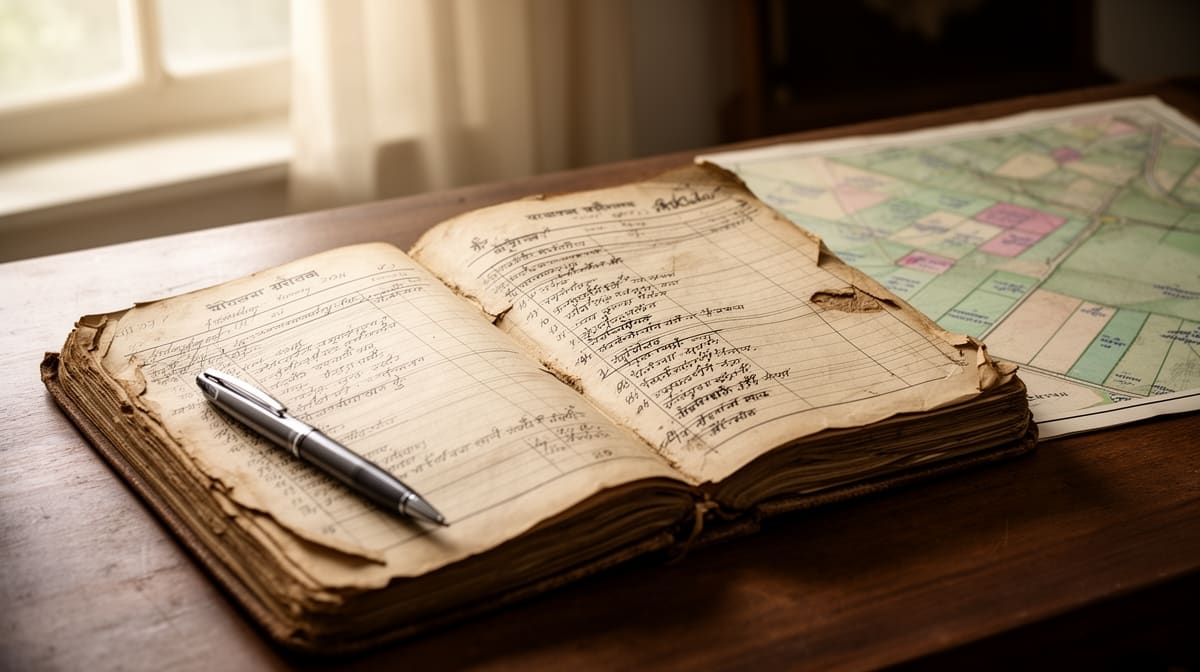
The Court also affirmed the lower courts’ reliance on the jamabandi (Ex.P-1) as conclusive evidence of ownership, noting that revenue records are prima facie evidence of title under Section 117 of the Indian Evidence Act. The defendants’ failure to produce any title deed, mutation record, or other documentary proof of ownership rendered their claim unsustainable.
The Verdict
The appellants lost. The Court held that Section 60 of the Indian Easements Act cannot be invoked without a specific pleading of license, and that the defendants’ claim of ownership negated any basis for such a plea. The suit for possession was decreed in favor of the plaintiff, and all appeals were dismissed.
What This Means For Similar Cases
Pleadings Are the Foundation of Legal Claims
- Practitioners must ensure all statutory defenses - especially those under the Easements Act, Transfer of Property Act, or Limitation Act - are explicitly pleaded in the written statement
- Raising new legal theories on appeal will be rejected as a violation of the rule of fair trial and procedural fairness
Ownership Claims Must Be Supported by Documentary Evidence
- Revenue records (jamabandi) remain strong prima facie evidence of title in rural land disputes
- Mere long possession, even with construction, is insufficient to establish ownership without corroboration
Inconsistent Pleadings Invalidate Defenses
- A defendant cannot simultaneously claim ownership and permissive possession; courts will treat such contradictions as fatal to the defense
- Adverse possession and license are mutually exclusive legal doctrines; mixing them without clarity invites dismissal