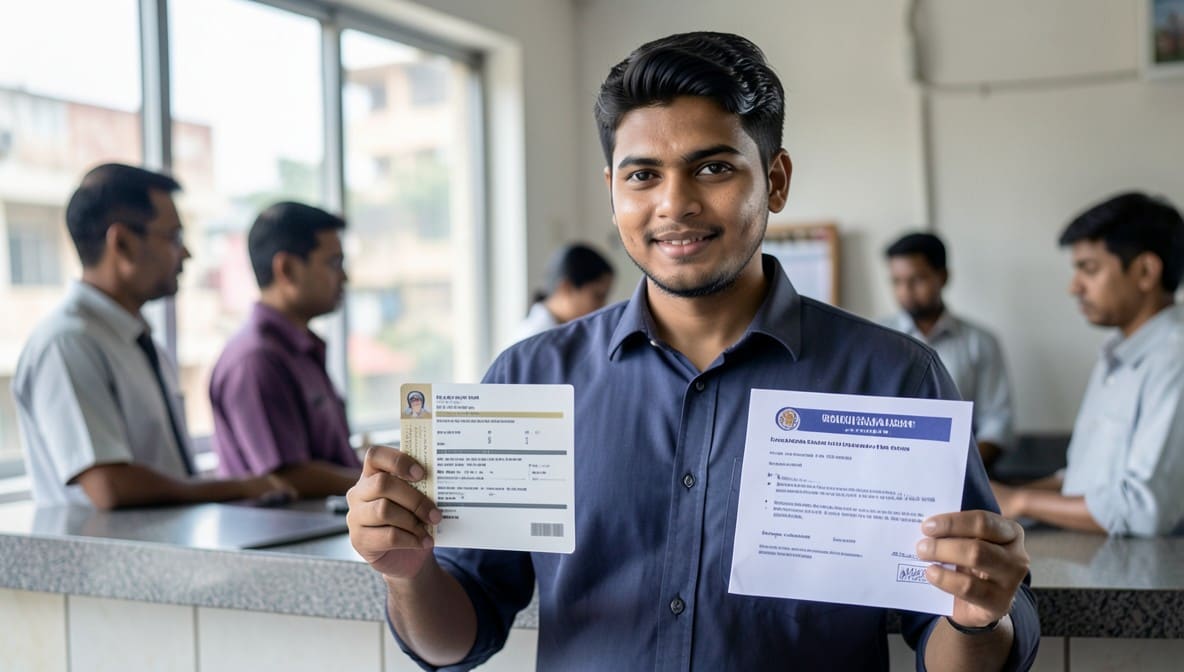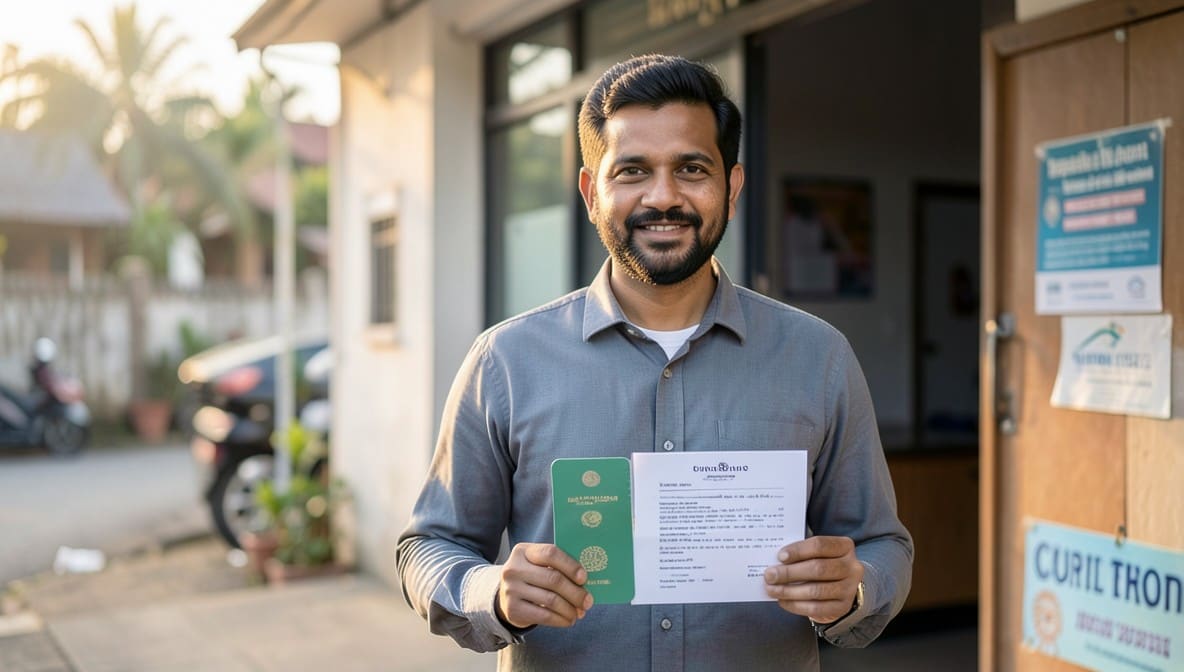
The Kerala High Court has clarified that an accused person, whose case remains under investigation without a final report, cannot be denied a ten-year passport solely on account of pending criminal proceedings. This ruling affirms the principle that mere accusation does not justify disproportionate restriction on fundamental rights, including the right to travel for employment.
Background & Facts
The Dispute
The petitioner, Sajil K, aged 34, is employed abroad and requires a ten-year passport to maintain his employment status. He applied for renewal of his passport through the Regional Passport Office, but was issued a passport valid for only one year. The passport authority relied on an order passed by the Judicial Magistrate of First Class, Koyilandy, dated 19.08.2025, which granted permission to travel abroad but did not specify the duration of validity. The passport authority interpreted this silence as authorization for a one-year passport only.
Key Facts
- The petitioner is employed with a foreign company and is currently stationed abroad.
- He filed CMP No. 3178/2025 before the Judicial Magistrate, First Class, Koyilandy, seeking permission to travel abroad for employment.
- The Magistrate’s order dated 19.08.2025 permitted travel but did not specify the passport validity period.
- The petitioner submitted Annexure A4: a letter from his employer mandating a ten-year passport for continued employment.
- The petitioner’s employment is contingent upon possession of a valid, long-term passport.
- The criminal case against him, Crime No. 276/2025, involves allegations under Sections 126(2), 296(b), 74, 351(2), and 115(2) of the Bharatiya Nyaya Sanhita (BNS).
- As of the date of the High Court hearing, no final report had been filed in the case.
- No other criminal cases are pending against the petitioner.
- The petitioner has offered to appear before the court whenever required.
Procedural History
- 19.08.2025: Judicial Magistrate, First Class, Koyilandy, passed an order granting permission to travel abroad but without specifying passport validity.
- After 19.08.2025: Regional Passport Office issued a one-year passport, citing lack of duration specification in the Magistrate’s order.
- 2026: Petitioner filed Crl.M.C. No. 2728/2026 before the Kerala High Court under Section 528 of the Bharatiya Nagarik Suraksha Sanhita (BNSS) seeking direction to issue a ten-year passport.
- 07.04.2026: Hearing before the High Court.
Relief Sought
The petitioner sought a direction to the 3rd respondent (Regional Passport Officer) to issue a passport with a validity of ten years, consistent with international norms and his employment requirements, and to modify the Magistrate’s order to explicitly permit such validity.
The Legal Issue
The central question was whether a criminal accused, against whom no final report has been filed and who has no other pending cases, can be denied a ten-year passport solely because the Magistrate’s order permitting travel did not specify the duration.
Arguments Presented
For the Petitioner
The learned counsel argued that the petitioner’s right to travel for employment is protected under Article 21 of the Constitution. The absence of a specified duration in the Magistrate’s order cannot be construed as a denial of a ten-year passport, especially when the employer has mandated it and no final report has been filed. Reliance was placed on the principle that restrictions on fundamental rights must be proportionate and not automatic. The petitioner’s willingness to appear before the court negated any flight risk.
For the Respondent
The learned Deputy Solicitor General conceded that the passport authority’s practice of issuing one-year passports in the absence of a specified duration was administrative, not legal. He acknowledged that the petitioner’s employment abroad was genuine and that no objection was raised by the Public Prosecutor. He did not contest the petitioner’s eligibility under the Passports Act, 1967, but maintained that the authority was bound by the Magistrate’s silence.
The Court's Analysis
The Court observed that Section 528 of BNSS empowers the High Court to issue directions to any authority to secure the ends of justice. The Magistrate’s order, while silent on duration, did not prohibit a ten-year passport. The Court emphasized that the passport authority cannot impose an arbitrary limitation where the court has not imposed any.
"The mere fact that the Magistrate did not specify the period of validity does not empower the Passport Authority to unilaterally restrict the passport to one year. The authority must act in accordance with the purpose of the permission granted and the legitimate needs of the applicant."
The Court noted that the petitioner’s case was still under investigation, with no charges framed or final report filed. There was no evidence of flight risk, and the petitioner had consistently offered to appear before the court. The employer’s requirement for a ten-year passport was documented and reasonable. The Court held that denying a ten-year passport under these circumstances would be disproportionate and contrary to the principle of minimal restriction on liberty.
The Verdict
The petition was allowed. The Court directed the 3rd respondent, the Regional Passport Officer, to renew the petitioner’s passport for a period of ten years, provided he remains otherwise eligible under the Passports Act, 1967. The order dated 19.08.2025 passed by the Judicial Magistrate, First Class, Koyilandy, is modified to the extent that the passport authority shall not restrict validity to one year in the absence of a specific restriction by the court. The passport shall be issued within four weeks from the date of this order.
What This Means For Similar Cases
Passport Validity Cannot Be Arbitrarily Restricted
- Practitioners representing accused persons abroad can now cite this judgment to demand ten-year passports where no court-imposed travel restriction exists.
- Passport authorities cannot impose a default one-year validity merely because a Magistrate’s order is silent on duration.
No Final Report = No Grounds for Denial
- If no chargesheet or final report has been filed, the mere pendency of an investigation does not justify denying long-term travel documents.
- Courts must assess proportionality: employment necessity, absence of flight risk, and lack of prior violations must be weighed.
Procedural Silence ≠ Substantive Denial
- Administrative bodies must interpret judicial permissions broadly in favor of liberty, not narrowly to impose restrictions.
- Where a court grants permission to travel, the burden shifts to the authority to show why a longer validity would be contrary to justice.