The Madras High Court has clarified that a convicted individual’s prolonged absence from trial proceedings, when attributable to genuine ill-health and complete lack of communication from legal counsel, may justify suspension of sentence pending appeal. This ruling reinforces the principle that procedural fairness must accommodate human vulnerability, even in cases involving serious property offences.
Background & Facts
The Dispute
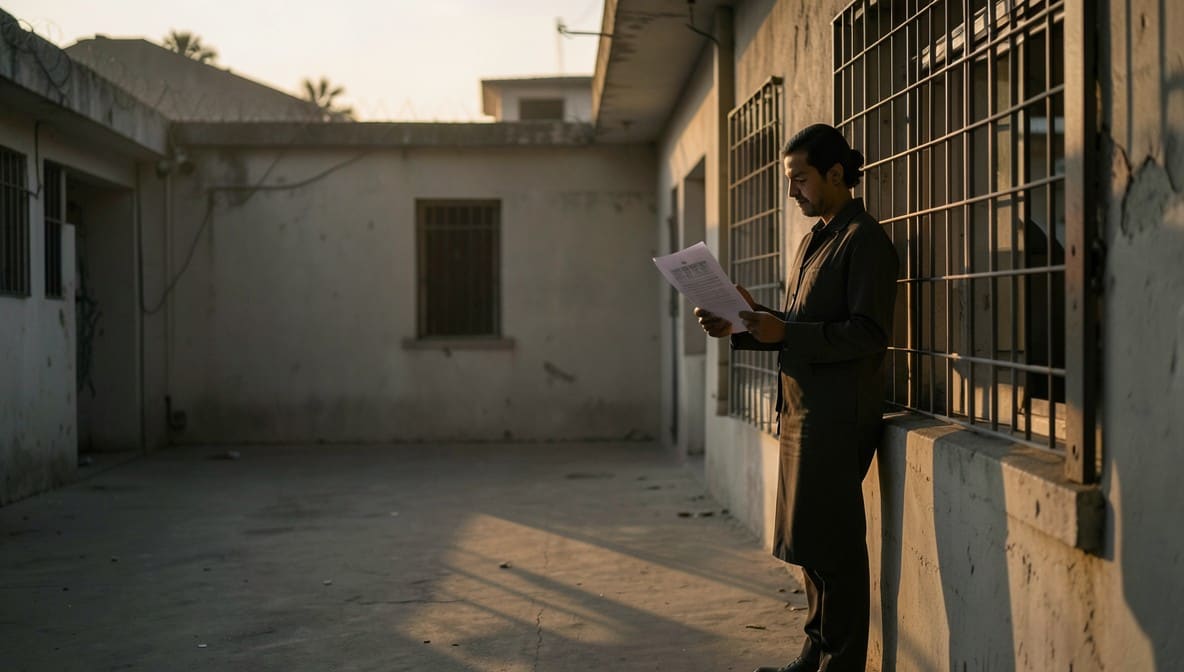
The petitioner, Thawlath Nish, was convicted under Section 381 IPC (theft by a servant) by the II Metropolitan Magistrate, Egmore, Chennai, in C.C.No.2470 of 2021 on 05.03.2024. She was sentenced to two years rigorous imprisonment and a fine of Rs.2,000, with three months simple imprisonment in default. The conviction was delivered in her absence. She was arrested on 27.12.2025 in Kumbakonam and lodged in the Central Special Prison for Women, Puzhal.
Key Facts
- The petitioner was employed as a domestic helper in the household of the complainant, who runs a hospital in Chennai.
- On 25.02.2020, the complainant reported the disappearance of diamond studs, gold bangles, a gold ring, and ear studs valued at approximately Rs.15 lakhs.
- The petitioner was later apprehended after a confession and CCTV footage from the complainant’s residence and Papanasam Benefit Fund, Kumbakonam, linked her to the pledged and purchased gold.
- Evidence included seven prosecution witnesses (PW1 to PW7) and documents marked as Exhibits P1 to P14.
- The petitioner was on bail during trial but failed to appear on the date of judgment.
- The petitioner is a permanent resident of Thirupalathurai, Kumbakonam, and resides with her ailing husband.
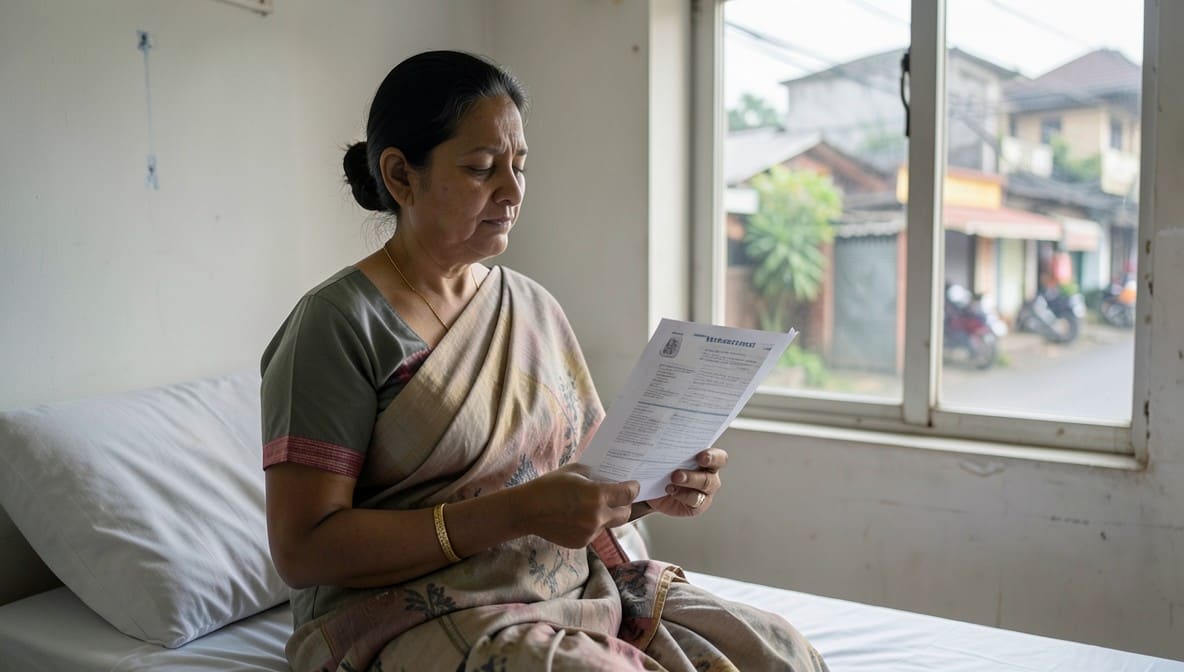
- Both the petitioner and her husband suffer from chronic health conditions requiring ongoing medical care.
- The petitioner’s trial counsel failed to inform her of the judgment date or outcome.
- The petitioner became aware of the conviction only after her arrest on 27.12.2025.
Procedural History
- 25.02.2020: Alleged theft reported by complainant.
- 05.03.2024: Trial Court convicts petitioner in absentia and passes judgment.
- 27.12.2025: Petitioner arrested in Kumbakonam based on conviction warrant.
- 06.03.2026: Lower appellate Court (IV Additional Sessions Judge) condones delay of 12 days in filing appeal (Crl.A.No.373 of 2026) on condition of depositing Rs.5,000 with District Court Mediation Centre.
- 10.03.2026: Petitioner pays Rs.5,000 as directed.
- 17.03.2026: Lower appellate Court dismisses petition for suspension of sentence (Crl.M.P.No.2711 of 2026), holding petitioner evaded legal process.
- 28.03.2026: Criminal Original Petition filed under Section 528 of Bharatiya Nagarik Suraksha Sanhita, 2023 before the Madras High Court.
- 09.04.2026: Judgment delivered by the Madras High Court.
The Parties' Positions
For the Petitioner: Argued that her absence from trial was due to severe health conditions of herself and her husband, compounded by the failure of her counsel to communicate the judgment. She had no knowledge of the conviction until arrest. She has no prior criminal record, is a permanent resident of Kumbakonam, and is ready to furnish sureties. She has substantial grounds in appeal.
For the Respondent: Contended that the petitioner absconded after the offence, failed to appear during trial despite being on bail, and deliberately evaded legal process. The evidence against her was strong, and granting bail would risk flight.
Relief Sought
The petitioner sought suspension of her sentence pending disposal of her appeal (Crl.A.No.373 of 2026), release on bail, and setting aside the order dated 17.03.2026 dismissing her suspension petition.
The Legal Issue
The central question was whether suspension of sentence under Section 528 of the Bharatiya Nagarik Suraksha Sanhita, 2023 can be granted when the accused’s absence from trial was due to ill-health and lack of legal communication, and whether the lower appellate court erred in rejecting suspension solely on the ground of alleged evasion of process.
Arguments Presented
For the Petitioner
Counsel relied on the petitioner’s documented health conditions, her permanent residence in Kumbakonam, and the failure of her counsel to discharge professional duties. He argued that the petitioner’s conduct did not indicate an intent to evade justice but rather reflected systemic neglect. He cited State of Maharashtra v. Suresh and Rajesh Kumar v. State of Haryana to emphasize that suspension is not a privilege but a procedural safeguard when appeal prospects are substantial and personal circumstances are compelling.
For the Respondent
The Additional Public Prosecutor maintained that the petitioner’s failure to appear during trial, despite being on bail, demonstrated a pattern of non-cooperation. He emphasized the seriousness of the offence, the strength of documentary and eyewitness evidence, and the risk of flight if released. He argued that condonation of delay does not equate to absolution of prior default.
The Court's Analysis
The Court observed that while the petitioner’s absence from trial was unexplained at the time, the subsequent facts revealed a compelling narrative of medical vulnerability and professional negligence by counsel. The trial court did not make any effort to ensure her presence, despite her known address and prior bail status.
"The failure of the trial court advocate to communicate the judgment to the petitioner, coupled with her genuine health constraints and the absence of any prior history of evasion, cannot be construed as deliberate avoidance of the judicial process."
The Court noted that the lower appellate court had already condoned the delay in filing the appeal, which implicitly accepted the petitioner’s explanation as credible. To then deny suspension on the same grounds was inconsistent and legally untenable.
The Court further held that the petitioner had raised substantial grounds in appeal, including the admissibility of CCTV footage and the sufficiency of identification evidence. The appeal was not frivolous. Given that the sentence was for two years - a term below the threshold for automatic denial of bail under settled jurisprudence - and that the petitioner was a permanent resident with family responsibilities, the balance of convenience favoured suspension.
The Court also emphasized that the police were fully aware of the petitioner’s residence in Kumbakonam, yet waited over 21 months to arrest her, suggesting the arrest was not an immediate enforcement but a delayed consequence of the conviction warrant.
The Verdict
The petition is allowed. The impugned order dated 17.03.2026 dismissing the petition for suspension of sentence is set aside. The substantive sentence of two years rigorous imprisonment imposed by the trial court is suspended pending disposal of Crl.A.No.373 of 2026. The petitioner is ordered to be released on bail, subject to executing a bond of Rs.5,000 with two sureties, each to the satisfaction of the lower appellate court. She shall appear before the lower appellate court on the first working day of every calendar month commencing May 2026 at 10:30 a.m. If unable to appear, she shall file an application under Section 317 Cr.P.C. and appear on the date directed by the court.
What This Means For Similar Cases
Ill-Health and Counsel Negligence Can Justify Suspension
- Practitioners must now argue that failure to appear due to documented medical conditions, especially when compounded by counsel’s failure to communicate, constitutes a valid ground for suspension.
- Courts cannot treat absence as evasion if the accused has no motive to flee and resides permanently at a known address.
- The burden shifts to the prosecution to prove deliberate evasion, not merely absence.
Suspension Is Not Dependent on Trial Conduct Alone
- Condoling delay in filing appeal implies acceptance of the explanation for non-appearance.
- Denial of suspension after condonation of delay is legally inconsistent and amounts to double punishment.
- Courts must assess the merits of the appeal and the personal circumstances together - not in isolation.
Procedural Fairness Trumps Technical Default
-
The judiciary must not penalize vulnerable litigants for systemic failures by legal representatives.
-
Suspension under Section 528 BNS 2023 is a remedial provision; its purpose is to prevent irreparable harm pending appellate review.
-
Where the accused is a permanent resident, has no prior record, and has family dependents, courts must lean toward liberty.
-
Always document health records and counsel communication failures in suspension applications.
-
Cite Rajesh Kumar v. State of Haryana and State of Maharashtra v. Suresh to support the principle that suspension is not discretionary but a right where appeal prospects are substantial and personal hardship is evident.
-
Do not assume that a conviction warrant justifies immediate arrest without considering the accused’s circumstances.
-
File applications under Section 317 Cr.P.C. proactively if appearance is impossible - this demonstrates good faith.
-
Use this judgment to challenge denials of suspension in cases involving women, elderly, or chronically ill accused.