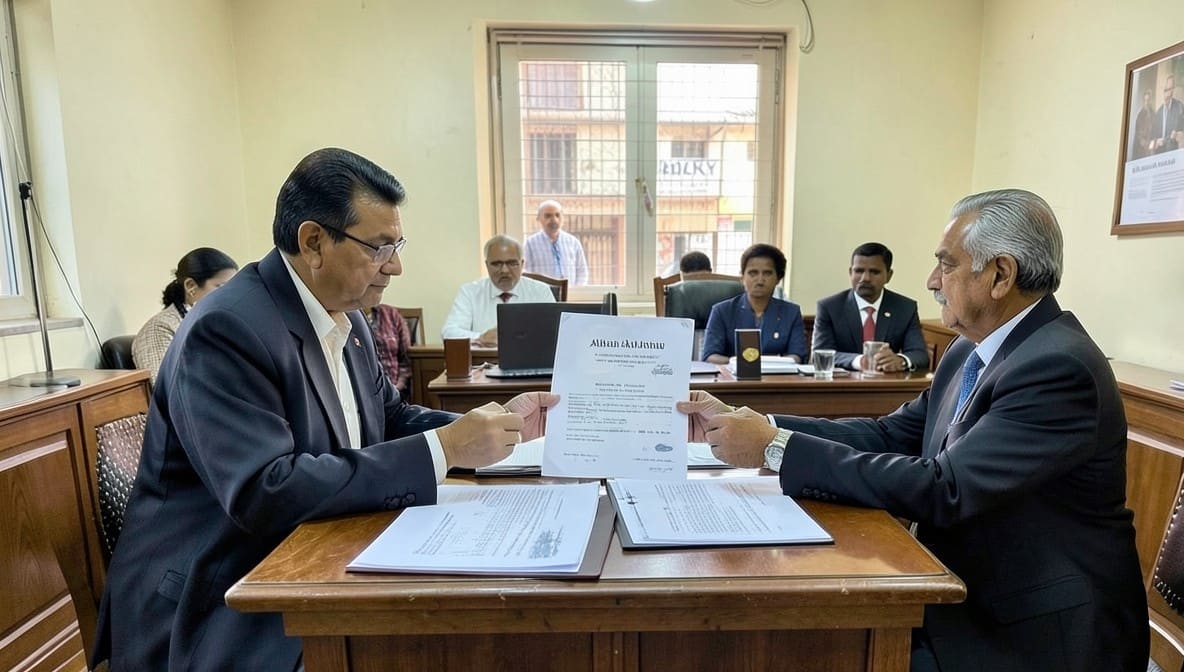
The Chhattisgarh High Court has reaffirmed that a delayed complaint in a dowry harassment case, even when filed after initiation of divorce proceedings, does not by itself invalidate the FIR or warrant quashing of criminal proceedings, provided the allegations prima facie disclose the essential ingredients of Section 498A IPC.
Background & Facts
The Dispute
The petitioner, Swapneel Jain, is accused in an FIR registered under Sections 498A and 34 IPC for allegedly subjecting his wife, respondent No. 2 Disha Jain, to mental and physical cruelty in connection with unlawful dowry demands. The marriage between the petitioner and respondent No. 2 was solemnized on 19.02.2011 at Tatibandh, Raipur, in accordance with Hindu customs. Two children, Khanak Jain (aged about 10 years) and Prerak Jain (aged about 6 years), were born from the marriage. The complainant resided in the matrimonial home after marriage but alleged that disputes arose over time due to persistent harassment, denial of educational opportunities, and coercive domestic labor.
Key Facts
- Marriage solemnized on 19.02.2011
- Two children born: Khanak Jain (approx. 10 years) and Prerak Jain (approx. 6 years)
- Complainant filed written complaint before Mahila Thana, Raipur on 10.12.2023
- FIR Crime No. 145/2023 registered on 10.12.2023 against petitioner, his mother Shanta Jain, and other relatives
- Investigation completed; charge-sheet No. 41/2024 filed on 05.05.2024 naming only the petitioner
- Cognizance taken by Judicial Magistrate First Class, Raipur on 25.06.2024
- Criminal Case No. 10000/2024 registered and pending at stage of arguments on charge
- Petitioner filed divorce proceedings prior to the complaint
- Petitioner claims he supported complainant’s higher education, including M.D.S. admission and funding
- No contemporaneous complaint or legal notice was filed between 2011 and 2023
Procedural History
- 19.02.2011: Marriage solemnized
- 10.12.2023: Written complaint filed by respondent No. 2; FIR registered same day
- 05.05.2024: Charge-sheet filed by police
- 25.06.2024: Cognizance taken by Judicial Magistrate First Class, Raipur
- 10.12.2023 to 05.05.2024: Investigation conducted; statements of complainant and witnesses recorded
- 30.04.2024: Family Court, Raipur passed order granting interim maintenance of Rs. 9,000/month to respondent No. 2 and children
- Cr.R. No. 537/2024: Revision petition filed by respondent No. 2 challenging maintenance order; court referred parties to mediation
- Mediation failed: No further scope for settlement
- 06.05.2026: Present petition under Section 528 BNSS filed before Chhattisgarh High Court
The Parties' Positions
Petitioner’s Position: Allegations are vague, omnibus, and filed with mala fide intent to harass. Delay of over 12 years without prior complaint undermines credibility. Petitioner supported complainant’s education and refutes claims of cruelty. Proceedings amount to abuse of process.
Respondent No. 2’s Position: Complaint is based on true facts of continuous cruelty and dowry demands. Investigation corroborated her statements. Timing of complaint is irrelevant to substance of allegations.
State’s Position: FIR registered after due investigation; charge-sheet filed; cognizance taken. Petitioner has adequate remedy before trial court to seek discharge or raise defenses.
Relief Sought
The petitioner seeks quashing of:
- FIR Crime No. 145/2023 dated 10.12.2023
- Charge-sheet No. 41/2024 dated 05.05.2024
- Order of cognizance dated 25.06.2024
- All proceedings in Criminal Case No. 10000/2024 pending before the Judicial Magistrate First Class, Raipur
The Legal Issue
Whether the filing of a complaint under Section 498A IPC more than twelve years after marriage, coinciding with pending divorce proceedings, renders the FIR legally unsustainable due to delay, mala fide, or absence of specific allegations constituting cruelty.
Arguments Presented
For the Petitioner
The petitioner’s counsel argued that the complaint is an afterthought, filed only after initiation of divorce proceedings, indicating mala fide intent. He relied on Achin Gupta v. State of Haryana, Suman Mishra v. State of Uttar Pradesh, and Dara Lakshmi Narayana v. State of Telangana to contend that vague, general allegations reproducing statutory language without specific acts of cruelty cannot sustain a criminal prosecution. He emphasized that Section 468 Cr.P.C. imposes a three-year limitation period for offences punishable up to three years, and the delay of over twelve years is unexplained and fatal to the case. He further submitted that the complainant’s educational advancement was facilitated by the petitioner, negating the claim of denial of education.
For the Respondent/State
The State and respondent No. 2 contended that the complaint discloses a prima facie case of continuous cruelty under Section 498A IPC. The delay in filing is not fatal where the alleged cruelty is of a continuing nature. The investigation yielded corroborative witness statements, and the charge-sheet was filed only after due scrutiny. The respondent emphasized that the petitioner’s remedy lies before the trial court to seek discharge or raise defenses during trial, and quashing at this stage is premature.
The Court's Analysis
The Court examined the settled legal position that the power to quash criminal proceedings under Section 528 of the Bharatiya Nagrik Suraksha Sanhita, 2023 (successor to Section 482 Cr.P.C.), must be exercised sparingly and only in exceptional cases where the allegations, even if accepted at face value, do not disclose any cognizable offence.
"The Court cannot inquire about the reliability, genuineness, or otherwise of the allegations made in the FIR/complaint. The power under Section 482 Cr.P.C. is very wide, but conferment of wide power requires the Court to be cautious."
The Court noted that the allegations in the FIR - including unlawful dowry demands, mental harassment, denial of education, and coercive domestic labor - are sufficient to prima facie attract Section 498A IPC. The fact that the complaint was filed after twelve years does not, by itself, negate the existence of a continuing offence. The Court observed that cruelty under Section 498A IPC is often a prolonged and cumulative process, and the law does not require immediate reporting.
The Court further held that the petitioner’s claim of supporting the complainant’s education is a factual dispute to be resolved at trial, not a ground for quashing at the FIR stage. The Court declined to evaluate the credibility of witnesses or the veracity of allegations, as that is the domain of the trial court.
Regarding limitation under Section 468 Cr.P.C., the Court noted that for continuing offences, the limitation period runs from the last act of cruelty, not from the date of marriage. Since the complainant alleged ongoing harassment up to the date of complaint, the limitation defence was not maintainable at this stage.
The Court also observed that mediation had been attempted and failed, eliminating any possibility of amicable resolution. The existence of an efficacious remedy before the trial court - including the right to seek discharge under Section 227 BNSS - further weighed against interference.
The Verdict
The petition was dismissed. The Court held that the FIR, charge-sheet, and criminal proceedings are not liable to be quashed. The interim order, if any, stands vacated. The trial court is directed to proceed with the case in accordance with law, and the petitioner may raise all permissible defenses, including limitation and lack of specific allegations, during the trial.
What This Means For Similar Cases
Delayed Complaints in 498A Cases Are Not Fatal
- Practitioners must argue that continuing offences like cruelty under Section 498A IPC are not subject to limitation from the date of marriage, but from the last alleged act
- A delay of several years, even when coinciding with divorce proceedings, does not automatically render the complaint mala fide or legally void
- Courts will not quash FIRs merely on grounds of delay unless the allegations are inherently improbable or devoid of any criminal substance
Vague Allegations Must Be Evaluated in Context
- General allegations of "cruelty" and "dowry demand" are sufficient at the FIR stage if they point to a pattern of conduct
- Specific acts need not be detailed in the complaint; they may emerge during investigation and trial
- Petitioners seeking quashing must show that the allegations, even if true, cannot constitute an offence - not merely that they are disputed
Trial Court Remedy Prevails Over High Court Intervention
- High Courts will not interfere at the FIR or charge-sheet stage if the accused has a clear remedy to seek discharge before the trial court
- Applications under Section 227 BNSS remain the appropriate forum to challenge sufficiency of evidence
- Quashing under Section 528 BNSS is reserved for cases where no offence is disclosed, not where facts are contested