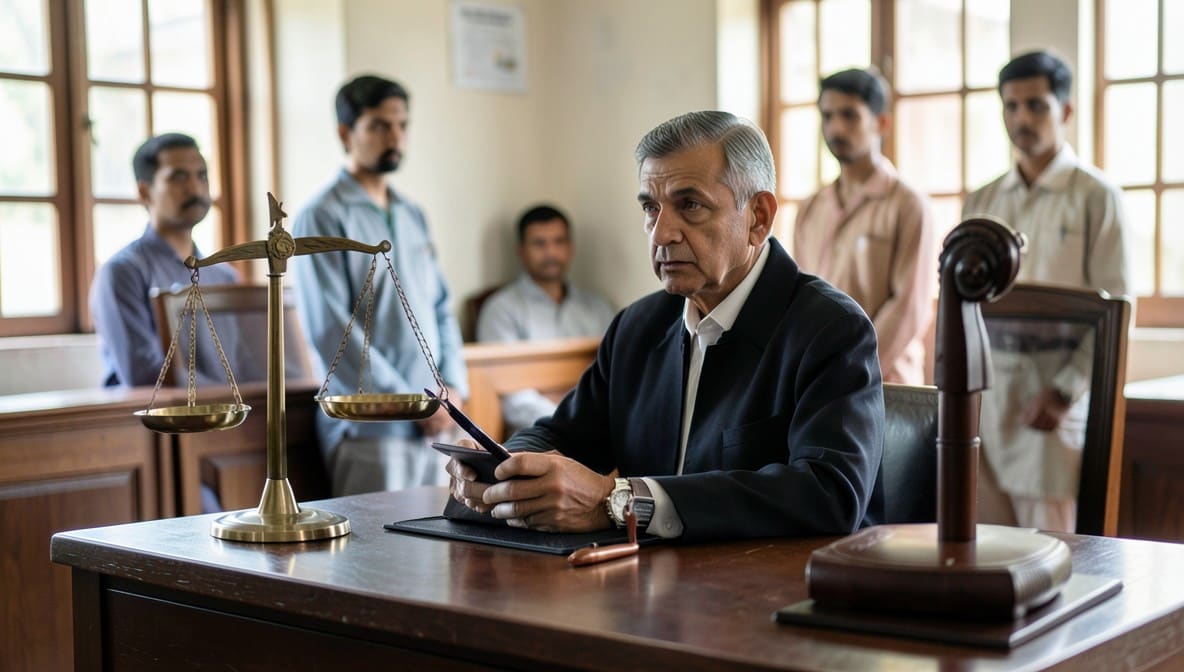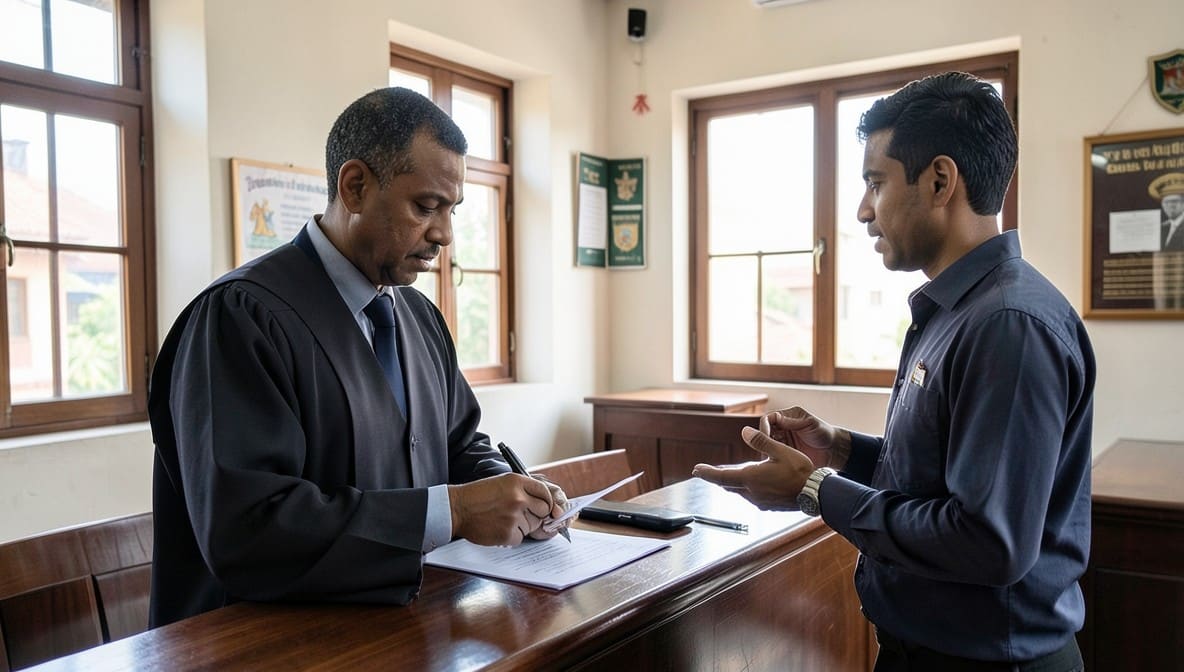
The Madhya Pradesh High Court at Gwalior has granted bail to an accused in a narcotics case after 17 months of pre-trial custody, reinforcing that undue delay in concluding trial, coupled with no risk of absconding, may outweigh the gravity of the offence under the NDPS Act. This order underscores the constitutional right to speedy trial and the principle that bail is the rule, jail the exception.
Background & Facts
The Dispute
The applicant, Bhoore Singh Bhadouriya, is accused in Crime No. 49/2025 registered at Police Station Kailaras, District Morena, Madhya Pradesh, for offences under Section 8 and Section 21 of the Narcotic Drugs and Psychotropic Substances (NDPS) Act, 1985. The prosecution alleges that on 05.02.2025, Sub-Inspector Rammantra Gupta intercepted the applicant and recovered 20.40 grams of heroin (smack) from his possession. The applicant was taken into custody on 06.02.2025 and has remained in judicial custody since then.
Key Facts
- The alleged offence occurred on 05.02.2025
- The applicant was arrested on 06.02.2025
- The charge-sheet was filed after completion of investigation
- The applicant is 55 years of age
- He is the sole breadwinner of his family
- He is a permanent resident of District Morena with no history of prior absconding
- Only three prosecution witnesses have been examined as of the date of this application
Procedural History
- 05.02.2025: Alleged recovery of 20.40 grams of heroin
- 06.02.2025: Applicant taken into custody
- 05.08.2025: First bail application dismissed in M.Cr.C. No. 20616/2025
- 26.09.2025: Second bail application dismissed in M.Cr.C. No. 41978/2025
- 07.01.2026: Third bail application dismissed in M.Cr.C. No. 54865/2025
- 01.07.2026: Fourth bail application filed under Section 483 of BNSS
- 02.07.2026: Order signed by the Court (date of judgment)
The Parties' Positions
For the Applicant
The applicant’s counsel contended that:
- The applicant is innocent and falsely implicated
- He is a senior citizen and the sole earner of his family
- The investigation is complete and charge-sheet filed
- Only three prosecution witnesses have been examined, indicating prolonged trial proceedings
- He has deep roots in District Morena and no likelihood of absconding
- He is willing to comply with all bail conditions
For the Respondent-State
The Public Prosecutor opposed bail, citing the applicant’s criminal antecedents and the serious nature of the offence under the NDPS Act, arguing that bail should be denied in drug-related cases due to societal harm.
Relief Sought
The applicant sought release on bail with appropriate conditions, citing prolonged custody, completion of investigation, and lack of flight risk.
The Legal Issue
The central question was whether prolonged pre-trial custody of 17 months, coupled with a slow-moving trial and no evidence of flight risk, justifies the grant of bail in a case involving a serious offence under the NDPS Act, despite the existence of prior criminal antecedents.
Arguments Presented
For the Appellant/Petitioner
The applicant’s counsel relied on the principle that bail is the rule and jail the exception, even in serious offences, as affirmed in Sanjay Chandra v. CBI and State of Rajasthan v. Balchand. It was submitted that the delay in trial, with only three witnesses examined over 17 months, violates the right to speedy trial under Article 21 of the Constitution. The applicant’s age, family responsibility, and permanent residence in Morena were emphasized to rebut the risk of absconding. The applicant offered to comply with stringent conditions.
For the Respondent/State
The State contended that offences under the NDPS Act are grave and attract strict bail restrictions under Section 37 of the NDPS Act, which mandates that bail shall not be granted unless the court is satisfied that there are reasonable grounds to believe the accused is not guilty and is not likely to commit any offence while on bail. The Public Prosecutor argued that prior criminal antecedents, even if unproven, disqualify the applicant from the benefit of bail.
The Court's Analysis
The Court declined to express any opinion on the merits of the case or the veracity of the allegations. Instead, it focused on the procedural posture and the duration of custody. The Court noted that the applicant had been in custody for 17 months without the trial having progressed meaningfully, with only three witnesses examined. The Court observed that the charge-sheet had been filed and no further investigation was pending, indicating that the case was ready for trial.
"The right to speedy trial is an integral part of Article 21, and undue delay in trial cannot be ignored merely because the offence is serious."
The Court distinguished this case from those where bail is denied due to risk of tampering or flight, noting that the applicant was a permanent resident of Morena with no history of absconding. The Court rejected the argument that criminal antecedents alone disqualify an accused from bail, especially where no conviction has been recorded and the trial is delayed.
The Court emphasized that while the NDPS Act imposes restrictions, it does not create an absolute bar to bail. The Court held that the balance of convenience, the length of custody, and the applicant’s willingness to comply with conditions tipped the scale in favor of bail.
The Verdict
The applicant succeeded. The Court granted bail on the following conditions: a personal bond of Rs. 50,000 with one solvent surety of the like amount; cooperation in trial; no intimidation of witnesses; no commission of any further offence; no unnecessary adjournments; no travel outside India without permission; and mandatory monthly reporting at Police Station Kailaras between 10:30 am and 2:30 pm on the first Sunday of every month until trial concludes. Failure to comply with any condition shall result in automatic cancellation of bail without further notice.
What This Means For Similar Cases
Prolonged Custody Overrides Gravity of Offence
- Practitioners may now argue that 12+ months of pre-trial custody in NDPS cases, where trial is stalled, constitutes a violation of Article 21 and justifies bail
- Courts must weigh delay against offence severity - prolonged custody alone can be a decisive factor
- The burden shifts to the State to explain why trial has not progressed, not to the accused to prove innocence
Monthly Reporting as a Viable Bail Condition
- Courts may impose monthly reporting at police stations as a substitute for restrictive custody in non-violent, non-fleeing accused
- Such conditions are enforceable and reduce risk without violating liberty
- This model may be replicated in other serious offence cases under special statutes (e.g., UAPA, PMLA) where traditional bail is denied
Criminal Antecedents Are Not Disqualifying Per Se
- Unproven antecedents cannot be used to deny bail unless they indicate a pattern of flight or tampering
- Courts must distinguish between allegations and convictions
- The absence of prior conviction or pending trial for other offences strengthens the bail plea