The Rajasthan High Court has reaffirmed that the pendency of prior criminal cases, without conviction, cannot be a decisive factor in denying bail under Section 483 of the Bharatiya Nagarik Suraksha Sanhita. This judgment clarifies the threshold for bail in non-bailable offences triable by Magistrates, reinforcing the presumption of innocence and the proportionality principle in pre-trial detention.
Background & Facts
The Dispute
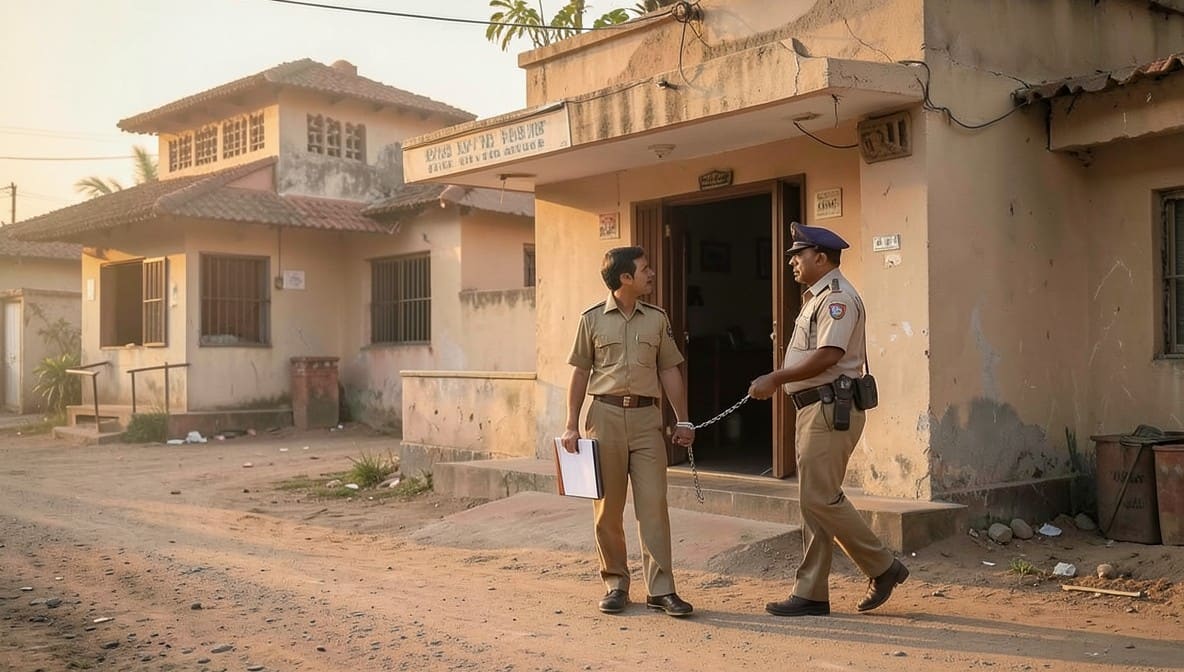
The petitioner, Kalulal alias Sachin, aged approximately 27 years, was arrested in connection with FIR No. 80/2026 registered at Police Station Rawat Bhata, District Chittorgarh. The FIR alleged offences under Section 3/25 of the Arms Act, 1959. The petitioner was taken into judicial custody on or about 16.05.2026, following his arrest. He filed a bail application under Section 483 of the Bharatiya Nagarik Suraksha Sanhita (BNSS), seeking release on bail pending trial.
Key Facts
- The alleged offence under Section 3/25 of the Arms Act is triable by a Court of Magistrate
- No recovery of arms or ammunition was made from the petitioner’s conscious possession
- The prosecution did not allege any direct involvement in use or discharge of the weapon
- The petitioner has ten pending criminal cases, none of which have resulted in conviction
- The petitioner has been in judicial custody since his arrest on or before 16.05.2026
- No charge sheet has been filed as of the date of the bail order (02.06.2026)
Procedural History
- 16.05.2026: Petitioner arrested and remanded to judicial custody
- 02.06.2026: Bail application filed under Section 483 BNSS before the High Court of Judicature for Rajasthan at Jodhpur
- 02.06.2026: Hearing conducted by Vacation Judge, Hon’ble Mr. Justice Sanjeet Purohit
- 02.06.2026: Order passed granting bail
Relief Sought
The petitioner sought release on bail with personal bond and sureties, arguing that his continued incarceration served no useful purpose given the nature of the offence, the absence of recovery, and the prolonged pendency of trial.
The Legal Issue
The central question was whether the mere pendency of ten prior criminal cases, without any conviction, justifies denial of bail under Section 483 BNSS for an offence triable by a Magistrate, where no recovery was effected and trial is likely to be protracted.
Arguments Presented
For the Petitioner
Learned counsel for the petitioner submitted that the offence under Section 3/25 of the Arms Act is non-bailable but triable by a Magistrate, indicating lower gravity. He emphasized that no weapon was recovered from the petitioner’s possession, and the prosecution had not established any active role in commission of the offence. He further argued that the petitioner had been in custody since 16.05.2026, and the investigation was still ongoing, making prolonged detention unjustified. He relied on the principle that bail is the rule and jail is the exception, and that pending cases without conviction cannot be treated as criminal antecedents for denying bail.
For the Respondent
The Public Prosecutor opposed bail on the ground that the petitioner has ten pending criminal cases, which, according to the prosecution, indicate a pattern of criminal behavior. He contended that such antecedents, even if unconvicted, raise concerns about the petitioner’s likelihood of reoffending or tampering with evidence, and thus warrant denial of bail.
The Court's Analysis
The Court examined the nature of the offence, the stage of investigation, and the legal standard for bail under Section 483 BNSS. It noted that the offence alleged is triable by a Magistrate, which inherently suggests a lower degree of seriousness compared to offences triable by Sessions Courts. The Court emphasized that the prosecution had not established any recovery from the petitioner’s possession, nor had it demonstrated a threat to investigation or public order.
"Mere pendency of criminal cases, by itself, cannot be treated as determinative of the issue of bail."
The Court held that prior pending cases, absent conviction, do not constitute a legal ground to deny bail. The Court distinguished between criminal antecedents based on conviction and those based on mere accusation or pendency. It observed that the presumption of innocence remains intact until proven guilty, and that the burden of justifying continued custody lies with the prosecution.
The Court further noted that the trial was likely to take considerable time, and the petitioner had already spent nearly three weeks in custody without any formal charges being framed. The Court concluded that no useful purpose would be served by continued incarceration, especially in the absence of any evidence suggesting flight risk or tampering.
The Verdict
The bail application was allowed. The petitioner, Kalulal alias Sachin, shall be released on bail upon furnishing a personal bond of Rs. 50,000 and two sureties of Rs. 25,000 each, to the satisfaction of the trial court. He must appear before the trial court on all hearing dates and whenever required until the conclusion of trial. The Court clarified that its observations are strictly for bail purposes and shall not prejudice the trial court. The prosecution may move for cancellation of bail if the petitioner commits a similar offence or misuses the liberty granted.
What This Means For Similar Cases
Pendency Without Conviction Is Not a Ground to Deny Bail
- Practitioners must argue that pending cases, without conviction, cannot be equated with criminal antecedents under Section 483 BNSS
- Courts must distinguish between accused persons with prior convictions and those merely facing untried allegations
- Bail applications should focus on the nature of the current offence, not the history of unadjudicated charges
Trial Duration and Custody Duration Are Critical Factors
- Where trial is likely to be protracted and accused has been in custody for weeks without charge sheet filing, courts must weigh detention against the right to liberty
- In non-bailable but Magistrate-triable offences, prolonged pre-trial detention requires stronger justification than mere antecedents
- This judgment reinforces the principle that bail is not a privilege but a right, subject to reasonable conditions
Proportionality Must Guide Bail Decisions
- The gravity of the offence, recovery status, and likelihood of interference with investigation must be assessed objectively
- Courts must avoid blanket denials based on the number of pending cases
- This ruling provides a clear framework for arguing bail in cases involving accused with multiple pending FIRs but no convictions