The Punjab & Haryana High Court has reaffirmed that minimal participation in a violent incident, where no injury is caused and no weapon is used, warrants grant of regular bail - especially when the investigation is complete and trial is likely to be protracted. This decision underscores the principle that prolonged incarceration without a conclusive finding of guilt cannot be sustained merely due to the nature of the charges.
Background & Facts
The Dispute
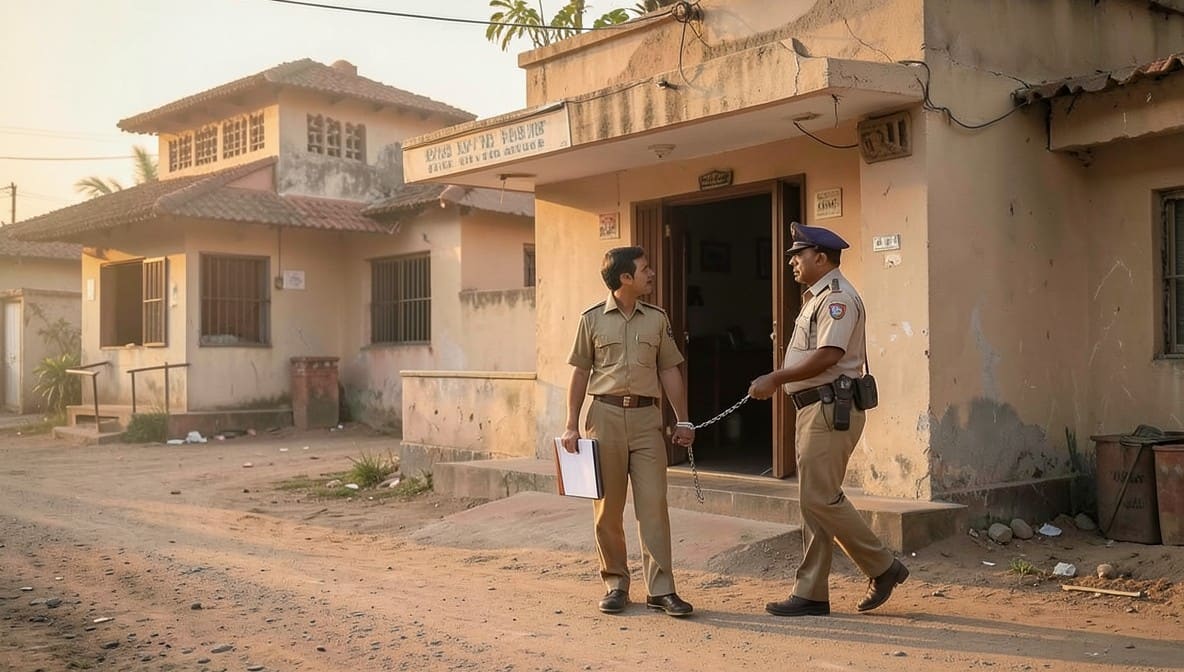
The petitioner, Ranjit Singh @ Rana, is accused in FIR No. 18 dated 02.02.2024, registered at Police Station Bhindi Saidan, District Amritsar, under Sections 307, 336, 506, 148, and 149 IPC, with Section 302 IPC added later. The case arises from an incident resulting in the death of Gurmukh Singh, a boy aged approximately 17 - 18 years, allegedly due to gunfire attributed to the main accused, Jaskaran Singh.
Key Facts
- The petitioner was arrested on 07.02.2024 and has remained in custody since then.
- He was armed with a gandasi (a traditional curved blade weapon), but no evidence links him to causing any injury to the deceased or any other person.
- The sole allegation against him is that he raised a lalkara (a shout or incitement cry) during the incident.
- Co-accused Satnam Singh, who allegedly fired shots into the air using a licensed firearm, was granted bail by a coordinate bench of this Court on 12.03.2026 in CRM-M-4779-2025.
- The petitioner has no prior criminal antecedents.
- The charge sheet was filed, and charges were framed on 02.09.2024.
- Out of 24 prosecution witnesses, only two have been examined as of the date of the hearing.
Procedural History
- 02.02.2024: FIR registered at Police Station Bhindi Saidan, District Amritsar.
- 07.02.2024: Petitioner taken into custody.
- 02.09.2024: Charges framed by the Trial Court.
- 12.03.2026: Co-accused Satnam Singh granted bail by coordinate bench.
- 30.03.2026: Present petition under Section 483 of BNSS filed before the High Court seeking regular bail.
Relief Sought
The petitioner sought regular bail on the grounds of minimal role, no use of weapon, no injuries caused, completion of investigation, prolonged custody, and the grant of bail to a co-accused with a more active role.
The Legal Issue
The central question was whether regular bail can be granted to an accused who, despite being named in a serious non-bailable offence, played only a passive role - specifically, raising a lalkara and carrying a weapon without using it - when the investigation is complete and trial is likely to be prolonged.
Arguments Presented
For the Petitioner
Learned counsel argued that the petitioner’s role was ancillary and non-violent. He was not alleged to have fired any weapon or caused any injury. The fact that a co-accused with a more active role (firing into the air) had already been granted bail demonstrated arbitrariness in treatment. The petitioner had been in custody for over 13 months with only two witnesses examined out of 24, indicating a likely multi-year trial. No criminal antecedents were present. Reliance was placed on the principle that bail is the rule and jail is the exception.
For the Respondent
The Additional Advocate General did not dispute the factual assertions made by the petitioner. He conceded that the petitioner was not attributed any act of violence, did not use the gandasi, and was only accused of raising a lalkara. The State did not oppose bail on substantive grounds.
The Court's Analysis
The Court observed that the petitioner’s alleged involvement was confined to raising a lalkara and possessing a gandasi without any use or injury caused. The Court emphasized that the veracity of the allegations remains unproven and must be tested at trial through evidence. The fact that only two of 24 witnesses had been examined indicated a significant delay in trial proceedings, making continued incarceration disproportionate.
"Any longer incarceration of the petitioner inside the jail would not serve any substantial purpose. The veracity of allegations are yet to be established at the final stage of the trial, which would depend upon the quality of evidence to be led before the Trial Court. Moreover, this Court is of the opinion that conclusion of the trial is likely to take a considerable period of time."
The Court noted the grant of bail to co-accused Satnam Singh, who had a more active role in the incident, as a relevant consideration under the principle of parity. The Court held that the petitioner’s role was so minimal that continued custody served no legitimate purpose under Section 483 of BNSS.
The Court explicitly clarified that its order was not an expression of opinion on the merits of the case and directed the Trial Court to decide the matter independently and expeditiously.
The Verdict
The petition was allowed. The petitioner is ordered to be released on regular bail, subject to furnishing bail/surety bonds to the satisfaction of the concerned Trial Court, Chief Judicial Magistrate, Illaqa Magistrate, or Duty Magistrate. The Court directed that the trial be concluded expeditiously and warned that bail may be cancelled if the petitioner is found directly involved in similar activities in future.
What This Means For Similar Cases
Minimal Role Justifies Bail Even in Serious Offences
- Practitioners may now argue that mere presence, carrying a weapon without use, or raising a lalkara in a group offence does not justify denial of bail if no injury is caused.
- The burden shifts to the prosecution to demonstrate a concrete threat to investigation or public order, not merely rely on the nature of the charge.
Parity Between Co-Accused Is a Valid Ground for Bail
- When co-accused with a more active role are granted bail, denial of bail to an accused with a lesser role may be challenged as arbitrary and violative of Article 14.
- Courts must justify differential treatment based on evidence, not speculation.
Prolonged Pre-Trial Custody Demands Judicial Scrutiny
- Where investigation is complete and trial is delayed, courts must weigh the right to liberty against speculative risks.
- Courts should not defer bail decisions indefinitely on grounds of "seriousness of offence" when the accused’s role is demonstrably passive.