The Allahabad High Court has reaffirmed that allegations of sexual violence coupled with blackmail and possession of indecent material, even if contested, constitute a prima facie case that cannot be quashed at the pre-trial stage under Section 482 CrPC unless they fall within the narrow confines of the rarest of rare cases.
Background & Facts
The Dispute
The applicant, Rohit Upadhyay, is accused in Case Crime No. 17 of 2024, registered at Police Station Koirauna, District Bhadohi, under Sections 506, 376, and 384 IPC. The case stems from allegations made by a married woman who claimed she was raped and blackmailed by the applicant, who presented himself as an exorcist.
Key Facts
- The victim lodged the FIR on 16.02.2024, reporting an incident that occurred on 16.02.2022
- The victim’s two-year-old son was allegedly being treated by the applicant through exorcism
- On 16.02.2022, the victim was summoned to the applicant’s residence at 09:00 p.m. and given a sweet (Laddoo) as ‘Prasad’
- After consuming the ‘Prasad’, the victim lost consciousness
- Upon regaining consciousness, she found her clothes disheveled and alleged the applicant had sexually assaulted her
- The applicant allegedly recorded indecent videos and photographs of the victim and threatened to make them public
- The victim further alleged that she was subjected to repeated rape over time, and that the applicant offered her to his friends
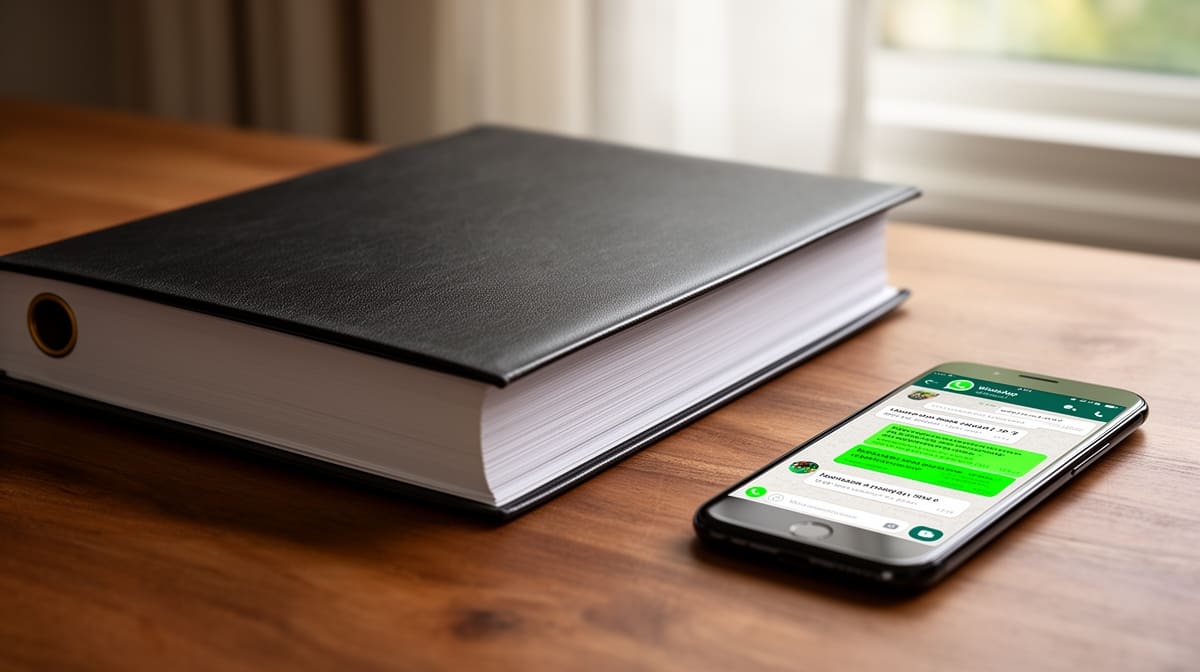
- The applicant submitted a supplementary affidavit containing some of the alleged indecent videos and photographs, which he claimed were consensually obtained
- The applicant claims a consensual romantic relationship existed between him and the victim
- The applicant asserts he transferred money to the victim’s family via Google Pay
- The victim denies any such transaction and claims she was unaware of any financial dealings
- The victim relocated to Orissa with her husband, after which the applicant allegedly followed her to continue blackmailing her
Procedural History
- 16.02.2022: Alleged incident of sexual assault and blackmail
- 16.02.2024: FIR lodged at PS Koirauna, District Bhadohi
- Case No. 68572 of 2024: Chargesheet filed by police under Sections 506, 376, 384 IPC
- 20.01.2026: Judgment reserved in the present application
- 18.03.2026: Judgment delivered dismissing the application under Section 528 BNSS (equivalent to Section 482 CrPC)
The Parties' Positions
For the Applicant
- Alleges the case is false and motivated by family enmity
- Claims the victim fabricated the rape allegations after initially complaining only about disrobing
- Asserts the sexual relationship was consensual
- Denies recording any indecent material
- Claims money was sent via Google Pay to the victim’s family as a gesture of goodwill
- Argues the delay in filing the FIR (nearly two years) undermines credibility
For the Respondent (State and Victim)
- Contends the applicant exploited his position as an exorcist to gain access to the victim
- Argues the ‘Prasad’ contained a stupefying substance
- Points to the applicant’s own supplementary affidavit as proof of possession of indecent material
- Rejects the claim of consensual relationship as untrue
- States the victim was blackmailed into silence and later compelled to flee to Orissa
- Emphasizes the gravity of the allegations and the need for trial
Relief Sought
The applicant sought quashing of the criminal proceedings under Section 528 BNSS (equivalent to Section 482 CrPC), including the charge sheet and all related proceedings.
The Legal Issue
The central question was whether the allegations in the FIR and the victim’s statements under Sections 161 and 164 CrPC, when viewed prima facie, disclose a case so devoid of merit or so manifestly false that it constitutes an abuse of process warranting quashing under Section 482 CrPC.
Arguments Presented
For the Appellant/Petitioner
The applicant’s counsel relied on the doctrine of rarest of rare cases for quashing under Section 482 CrPC, citing State of Haryana v. Bhajan Lal and Som Mittal v. Government of Karnataka. He argued that the delay in lodging the FIR, the absence of forensic evidence of stupefaction, and the applicant’s claim of consensual relations rendered the case frivolous. He further contended that the victim’s changing narrative - from disrobing to rape - indicated fabrication. The Google Pay transactions, he argued, demonstrated goodwill, not coercion.
For the Respondent/State
The State and victim’s counsel countered that the applicant’s possession of indecent material, as evidenced by his own supplementary affidavit, corroborated the victim’s claim of blackmail. They emphasized that the applicant’s role as an exorcist created a position of trust and vulnerability, which he exploited. The delay in reporting, they argued, was understandable given the psychological trauma and fear of social stigma. The absence of forensic proof of stupefaction did not negate the victim’s testimony, which was consistent and detailed.
The Court's Analysis
The Court examined the scope of Section 482 CrPC and reaffirmed that its invocation is exceptional, reserved only for cases where the proceedings are an abuse of process or where no prima facie case exists. It cited Kurukshetra University v. State of Haryana, State of Haryana v. Bhajan Lal, and recent Supreme Court decisions in Naresh Potteries v. Aarti Industries and Punit Beriwala v. State (NCT) of Delhi to underscore that the power must be exercised with restraint.
"There is no love relation between the two, as is claimed by the accused/applicant but denied by the victim. The possession of indecent videos and photographs of the victim with the accused/applicant is reflected from the supplementary affidavit filed by the accused/applicant."
The Court noted that the applicant himself had submitted the very material - indecent videos and photographs - that formed the basis of the blackmail allegation. This, the Court held, was not a mere denial but an admission of possession, which lent credibility to the victim’s claim. The Court further observed that the victim’s account of being drugged, assaulted, and blackmailed over time was not inherently improbable, especially given the power imbalance inherent in the exorcist-victim dynamic.
The Court rejected the argument that delay in filing the FIR was fatal, noting that in cases of sexual violence, victims often delay reporting due to fear, shame, or coercion. The Court also dismissed the claim of consensual relations as unsupported by evidence and contradicted by the victim’s consistent testimony.
The Court concluded that the allegations, if proven, would constitute serious offences under Sections 376 and 506 IPC, and that the material on record was sufficient to warrant a trial. The case did not meet the threshold of a rarest of rare case warranting quashing.
The Verdict
The application under Section 482 CrPC was dismissed. The Court held that the charge sheet and criminal proceedings shall continue. The trial court is directed to proceed expeditiously. No monetary relief or direction was issued, as the relief sought was quashing, which was denied.
What This Means For Similar Cases
Possession of Indecent Material by Accused Corroborates Blackmail Allegations
- If the accused himself produces the alleged indecent material in court filings, it strengthens the victim’s claim of blackmail
- Courts will treat such self-generated evidence as highly probative, not exculpatory
- Practitioners must anticipate that submission of such material may be used against the accused to establish intent and coercion
Delay in FIR Not Fatal in Sexual Violence Cases
- Delay alone cannot be grounds for quashing proceedings under Section 482 CrPC
- Psychological trauma, fear of stigma, and coercive control are recognized as legitimate reasons for delayed reporting
- Courts will examine the nature of the relationship and power dynamics, not just the timeline
Exorcists and Spiritual Healers Are Subject to Heightened Scrutiny
- Individuals claiming spiritual authority who exploit vulnerable individuals for sexual purposes face severe legal consequences
- Courts will not tolerate the misuse of religious or cultural practices to facilitate sexual crimes
- Prosecutors should emphasize the abuse of trust in such cases during trial