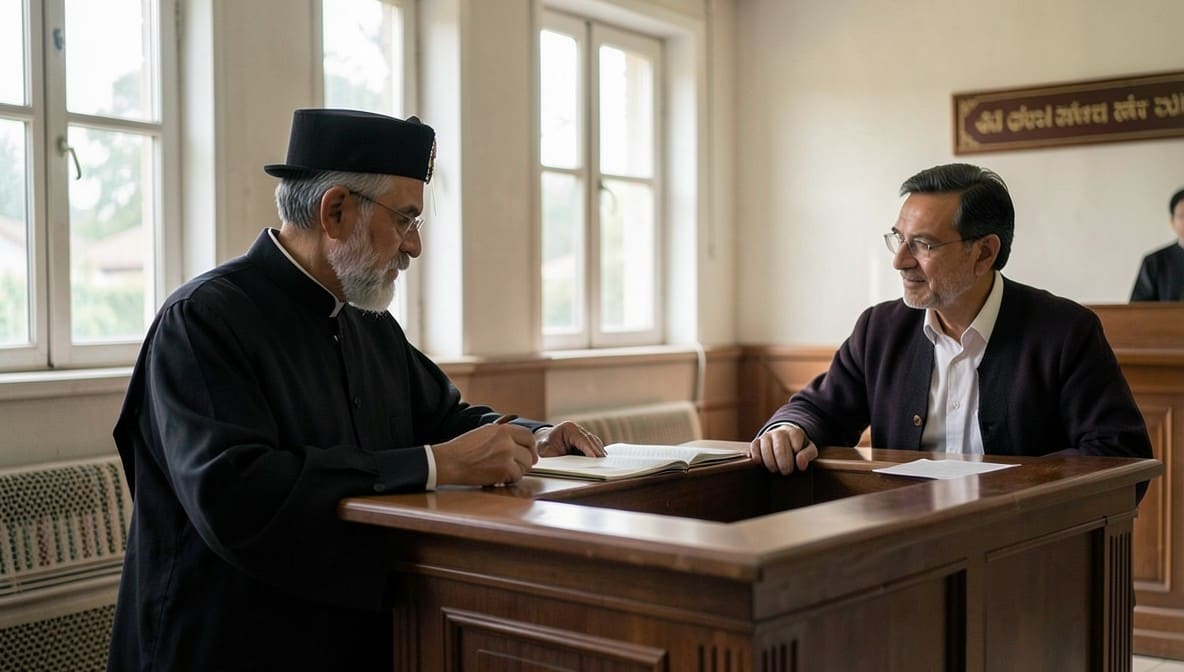
The Himachal Pradesh High Court has reaffirmed that attempts to commit rape, even if followed by a compromise between parties, cannot be quashed through inherent powers under Section 482 CrPC. This decision underscores the public nature of such crimes and the judiciary’s duty to uphold societal interests over private settlements.
Background & Facts
The Dispute
The petitioner, Kanishk Sharma, sought quashing of FIR No. 124 of 2025 registered at Police Station Dharamshala under Sections 62, 64, 74, 75, 76, and 115(2) read with Section 3(5) of the Bhartiya Nayaya Sanhita, 2023 (BNS). The FIR alleged that the petitioner and five to six others had stopped the informant, attempted to rape her, and fled upon her resistance. The complainant later appeared before the Court and stated that nothing had happened to her, indicating a settlement.
Procedural History
- 12 August 2025: FIR registered based on the informant’s complaint.
- 2 December 2025: Informant appeared before the High Court and withdrew her allegations, stating no harm occurred.
- 11 March 2026: Petition for quashing filed under Section 482 CrPC, relying on compromise.
Relief Sought
The petitioner sought quashing of the FIR on grounds of compromise, arguing that continuation of proceedings would serve no purpose and cause undue hardship.
The Legal Issue
The central question was whether the High Court can quash an FIR for attempted rape under the Bhartiya Nayaya Sanhita, 2023, solely on the basis of a compromise between the accused and the victim, despite the offence being non-compoundable and inherently heinous.
Arguments Presented
For the Petitioner
Mr. Vinod Gupta, counsel for the petitioner, contended that the matter had been fully resolved with the victim’s sworn statement that no incident occurred. He relied on Gian Singh v. State of Punjab and Narender Singh v. State of Punjab to argue that where the possibility of conviction is remote and the compromise is genuine, the Court may exercise its inherent powers under Section 482 CrPC to quash proceedings, especially where no physical harm was sustained.
For the Respondent/State
Mr. Jitender Sharma, Additional Advocate General, opposed the petition, asserting that attempted rape under Section 64 BNS is a heinous offence of mental depravity with grave societal implications. He emphasized that the victim’s statement was inconsistent with the FIR and could not override the public interest in prosecuting such crimes. He cited Parbatbhai Aahir v. State of Gujarat and State of M.P. v. Laxmi Narayan to argue that compromise is irrelevant for offences affecting social order.
The Court's Analysis
The Court undertook a comprehensive review of Supreme Court precedents on the exercise of inherent powers under Section 482 CrPC. It noted that while the High Court possesses broad discretion to quash proceedings to secure justice or prevent abuse, this power is not absolute and must yield to the gravity of the offence.
"Heinous and serious offences involving mental depravity or offences like murder, rape, dacoity, etc., cannot be fittingly quashed even though the victim or the victim's family and the offender have settled the dispute. Such offences are not private in nature and have a serious impact on society."
The Court held that attempted rape, even if uncompleted, falls squarely within the category of offences that strike at the dignity and safety of women and are crimes against society, not merely private wrongs. The fact that the victim later retracted her statement did not negate the seriousness of the allegations recorded in the FIR, nor did it transform the nature of the offence.
The Court distinguished cases involving commercial or matrimonial disputes, where compromise may justify quashing, from those involving sexual violence. It emphasized that the Supreme Court has consistently held that offences under Section 307 IPC and analogous provisions in new statutes like BNS must be treated as crimes against the public order. The Court also rejected the argument that the absence of physical injury justified quashing, noting that attempted rape is complete upon the act of attempt, regardless of outcome.
Furthermore, the Court observed that the settlement occurred during investigation, before chargesheet filing, but this timing did not alter the nature of the offence. The principle from State of M.P. v. Laxmi Narayan was applied: even at early stages, heinous offences cannot be compromised.
The Verdict
The petition was dismissed. The Court held that attempted rape under BNS is a heinous, non-compoundable offence and cannot be quashed merely on the basis of a compromise between parties. The public interest in prosecuting sexual violence overrides private settlements, and the FIR must proceed to trial.
What This Means For Similar Cases
Heinous Sexual Offences Are Non-Negotiable
- Practitioners must advise clients that compromise is legally irrelevant for offences like attempted rape, sexual assault, or outraging modesty under BNS.
- Courts will not entertain petitions for quashing such FIRs even if the victim is willing to withdraw.
- Defence counsel should focus on factual defenses, not settlement-based quashing.
Settlement Timing Is Irrelevant for Heinous Crimes
- Even if compromise occurs before chargesheet filing, it cannot override the public interest in prosecuting heinous offences.
- The Court’s analysis in Narender Singh and Parbatbhai Aahir confirms that timing affects only civil-character offences, not those with societal impact.
- Prosecutors may now confidently oppose quashing petitions in sexual offence cases regardless of stage.
BNS Provisions Mirror IPC Precedents
- Sections 64 and 115(2) BNS are functionally equivalent to IPC provisions on attempt to rape and criminal intimidation.
- Precedents under IPC (e.g., Section 307) apply with equal force to analogous BNS provisions.
- Lawyers must treat BNS heinous offences identically to IPC equivalents in bail, quashing, and trial strategy.