The Supreme Court has reaffirmed that where unimpeachable electronic evidence conclusively negates allegations of participation in a criminal act, continuing prosecution amounts to an abuse of process. This judgment underscores the necessity for courts to rigorously evaluate independent evidence at the quashing stage under Section 482 CrPC, particularly when the material undermines the very foundation of the prosecution’s case.
Background & Facts
The Dispute
The dispute arose from a neighborhood altercation on the night of 11th October 2022 at Kanishka Apartment, Janata Road, Survey Park, Kolkata. The complainant, Sushil Chakrabarti, a 77-year-old former Public Prosecutor and pacemaker patient, alleged that he and his family were assaulted by a group of residents, including the appellants, following a disagreement over parking of a scooter near electric meter boxes and damage to the building’s main entrance door.
Key Facts
- The complainant lodged a written complaint at Police Station Survey Park on 11.10.2022 at approximately 09:20 p.m.
- The complaint was kept in abeyance on the directions of the duty officer until 17.10.2022, when the complainant requested its formal registration.
- FIR No. 150 of 2022 was registered on 18.10.2022 under Sections 143, 341, 323, 324, 504, 506, 509, 427 and 354 IPC against eight accused persons.
- The appellants - Sajal Bose (Appellant No.1), Chandidas Joardar (Appellant No.2), and Sautrik Joardar (Appellant No.3) - were named among the accused.
- The complainant alleged that the appellants participated in slapping, kicking, throwing sandals, using a lathi, threatening to burn him with a lighter, and attempting to forcibly enter his flat.
- The complainant’s wife, Nabina Bose, and the wife of Chandidas Joardar, Pampa Joardar, were also named as accused but were later quashed by the High Court.
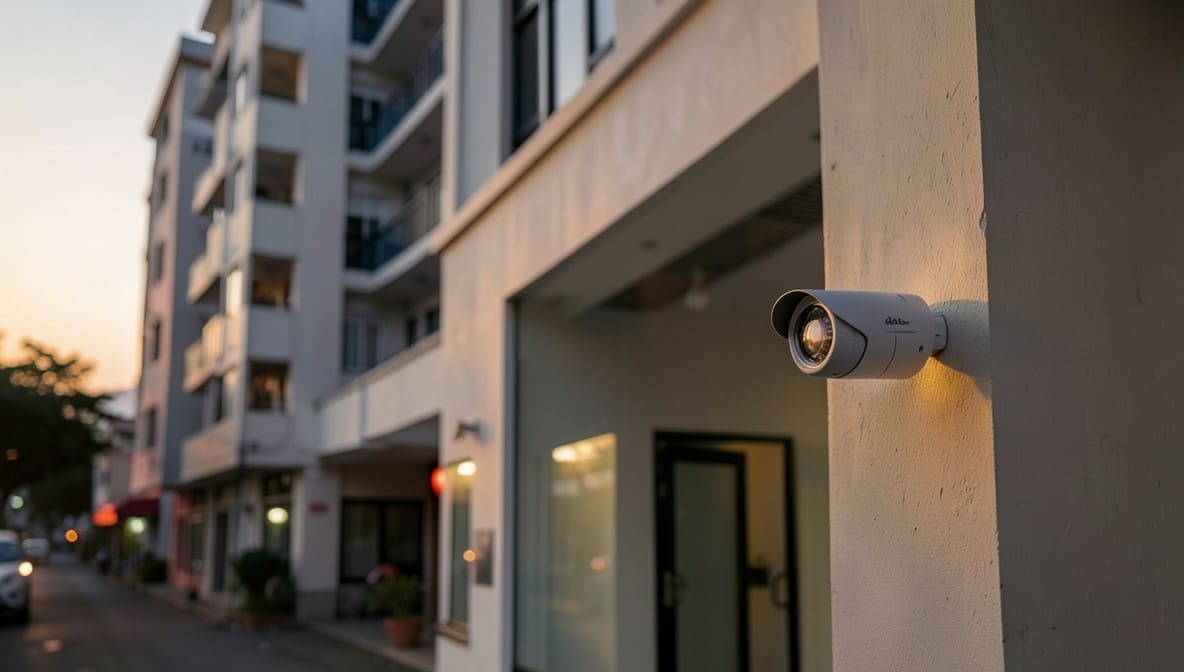
- CCTV footage of the incident was collected during investigation and formed part of the chargesheet.
- Medical reports dated 12.10.2022 recorded injuries on the complainant and Dr. Aparajita Bandyopadhyay (complainant’s daughter).
- A statement under Section 164 CrPC by Dr. Aparajita Bandyopadhyay alleged that Appellant No.2 ignited a lighter to burn the complainant.
- The complainant filed a protest petition alleging that the Investigating Officer deliberately omitted Section 307 IPC.
Procedural History
- 11.10.2022: Alleged incident occurred at approximately 09:20 p.m.
- 17.10.2022: Complainant requested lifting of abeyance on complaint.
- 18.10.2022: FIR No. 150 of 2022 registered at Police Station Survey Park.
- 16.12.2022: Chargesheet No. 135 of 2022 filed under Sections 143, 341, 323, 324, 504, 506, 509, 427 and 354 IPC.
- 08.03.2024: High Court at Calcutta delivered impugned judgment: quashed proceedings against Nabina Bose and Pampa Joardar; refused to quash against appellants.
- 15.07.2024: Supreme Court stayed trial proceedings against appellants via order in SLP(C) No. 8672 and 8721 of 2024.
- 22.07.2024: Stay extended to SLP(C) No. 9826 of 2024.
- 03.02.2026: Supreme Court requested settlement; parties reported non-availability.
- 17.02.2026: Hearing on merits commenced.
- 06.04.2026: Supreme Court delivered judgment.
The Parties' Positions
Appellants (Sajal Bose, Chandidas Joardar, Sautrik Joardar): Contended they were falsely implicated due to prior personal disputes. They asserted they arrived at the scene only after the altercation had begun, attempted to pacify the parties, and were not involved in any physical assault. They relied on CCTV footage showing no participation and argued the chargesheet was mechanically filed without evaluating exculpatory evidence.
Respondent (Complainant & State): Maintained that the appellants actively participated in the assault, including throwing sandals at the pacemaker, threatening to burn the complainant, and joining the unlawful assembly. They relied on the complainant’s FIR, Section 164 CrPC statement of Dr. Aparajita Bandyopadhyay, and medical reports to establish a prima facie case.
Relief Sought
The appellants sought quashing of Chargesheet No. 135 of 2022 and ACGR No. 4659 of 2022 insofar as they were concerned, on grounds of abuse of process, lack of prima facie case, and reliance on uncorroborated and contradicted evidence.
The Legal Issue
The central question was whether the uncontroverted CCTV footage, forming part of the prosecution’s own record and conclusively showing no participation by the appellants in the alleged assault, justifies quashing of criminal proceedings under Section 482 of the Code of Criminal Procedure, even where the FIR and witness statements contain general allegations.
Arguments Presented
For the Appellant
Mr. Gaurav Agarwal, Senior Counsel, argued that the CCTV footage, which was collected during investigation and admitted by the prosecution, demonstrated that the appellants arrived at the scene only after the altercation had commenced and made no aggressive gestures. He contended that the allegations were vague, lacked specific attribution of acts, and were contradicted by the best available evidence. He relied on State of Haryana v. Bhajan Lal and Pradeep Kumar Kesarwani v. State of Uttar Pradesh to argue that where material evidence negates the allegations and remains unrefuted, quashing is mandatory to prevent abuse of process. He further argued that the High Court’s differential treatment of co-accused without reasoning violated the principle of parity.
For the Respondent
Mr. Siddharth Luthra, Senior Counsel for the complainant, contended that the Section 164 CrPC statement of Dr. Aparajita Bandyopadhyay, along with medical evidence, established a prima facie case. He argued that the High Court had correctly distinguished the appellants from the quashed co-accused based on specific allegations in the FIR and witness statements. He maintained that the CCTV footage was open to interpretation and that factual disputes must be resolved at trial, not at the quashing stage.
The Court's Analysis
The Supreme Court undertook a meticulous review of the CCTV footage, which was viewed in open court by the Bench. The Court observed that the appellants were not present during the initial altercation and appeared only after the violence had subsided. The footage showed them making gestures of restraint, attempting to calm the situation, and engaging in no physical aggression, throwing of objects, or use of weapons.
"The visual recording indicates that the appellants made efforts to placate the situation and to dissuade the participants from further escalation of the dispute. The gestures attributed to the appellants are demonstrative of restraint rather than of participation in any act of violence."
The Court held that the CCTV footage, being an independent, objective, and unaltered record collected by the prosecution itself, constituted sterling evidence that directly contradicted the allegations. It noted that the High Court had failed to analyze this crucial evidence, rendering its decision legally unsustainable.
The Court further emphasized that the Section 164 CrPC statement attributing the act of igniting a lighter to Appellant No.2 was entirely discredited by the footage, which showed no such act. The Court held that reliance on such inconsistent and uncorroborated statements, in the face of overwhelming contrary electronic evidence, was misplaced.
Applying the four-step test laid down in Pradeep Kumar Kesarwani v. State of Uttar Pradesh, the Court found:
(i) The CCTV footage was of impeccable quality and collected during investigation; (ii) It conclusively negated the factual assertions against the appellants; (iii) The prosecution had not refuted it meaningfully; and (iv) Continuing the trial would amount to an abuse of process and waste judicial time.
The Court also noted the absence of any cogent reasoning for the High Court’s differential treatment of co-accused, violating the principle of parity. The Court concluded that the case fell squarely within categories (1), (3), and (7) of Bhajan Lal, where allegations, even if accepted at face value, do not constitute an offence, and proceedings are manifestly mala fide.
The Verdict
The appeals of appellants Sajal Bose, Chandidas Joardar, and Sautrik Joardar are allowed. The impugned judgment of the Calcutta High Court dated 08.03.2024 is set aside. Charge Sheet No. 135 of 2022, filed under Sections 143, 341, 323, 324, 504, 506, 509, 427 and 354 IPC, arising out of FIR No. 150 of 2022, is quashed insofar as it pertains to the appellants. All pending applications are disposed of.
What This Means For Similar Cases
CCTV Evidence Can Defeat Prosecution at Quashing Stage
- Practitioners must now insist on judicial review of electronic evidence at the quashing stage, even if it is part of the prosecution’s own record.
- Courts cannot ignore or gloss over CCTV footage that directly contradicts allegations of participation.
- Where such footage is clear, unambiguous, and unrefuted, it is sufficient to quash proceedings under Section 482 CrPC.
Vague Allegations Without Specific Attribution Are Insufficient
- FIRs and witness statements that use omnibus language like "the accused assaulted" without specifying roles are legally inadequate to sustain prosecution.
- The prosecution must clearly attribute overt acts to each accused; generalized allegations will not suffice.
- Courts must scrutinize whether the chargesheet distinguishes individual conduct, especially in multi-accused cases.
Differential Treatment of Co-Accused Requires Reasoned Justification
- If some accused are quashed on grounds of insufficient evidence, others cannot be retained without a clear, material distinction in their alleged roles.
- Absent such reasoning, the decision is arbitrary and violates the principle of parity under Article 14.
- Practitioners should raise this as a standalone ground in quashing petitions.