The Madhya Pradesh High Court has reiterated that disputes involving land encroachment, even if registered under criminal statutes, must be treated with caution to avoid unnecessary arrests. In a significant order, the Court directed compliance with the Arnesh Kumar guidelines while disposing of an anticipatory bail application, emphasizing that civil disputes should not automatically lead to criminal proceedings under Section 318(4) of the Bhartiya Nyay Sanhita, 2023.
Background & Facts
The Dispute
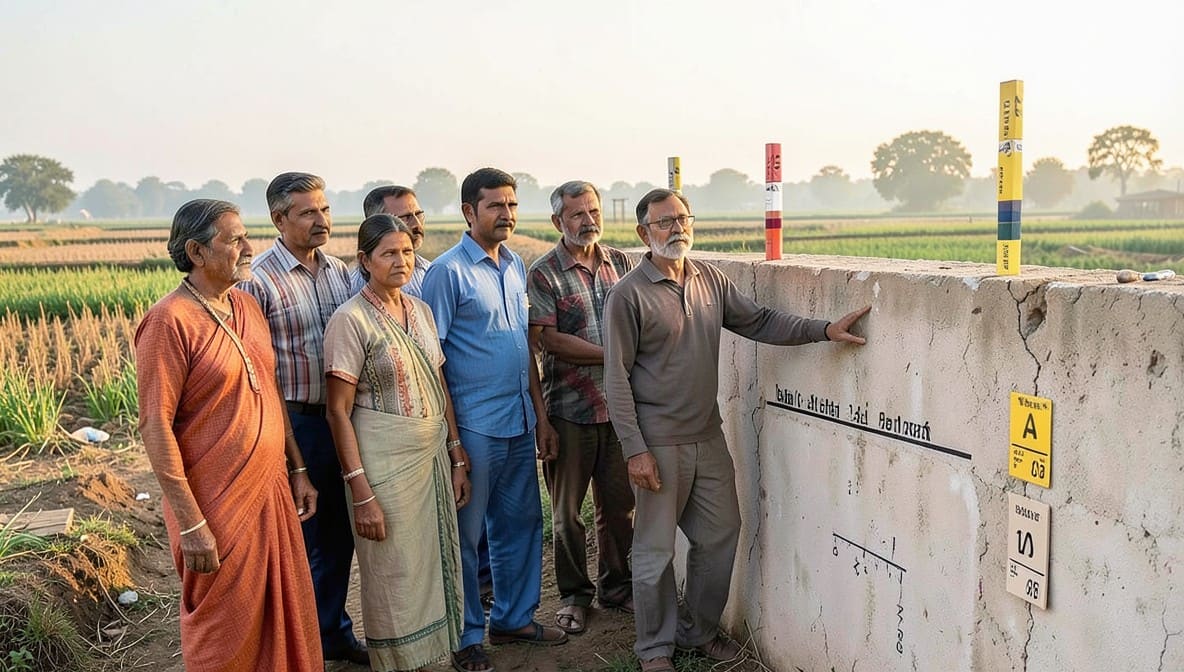
The applicants, Pramod Kale (aged 72) and his wife Ashabai Kale (aged 70), sought anticipatory bail under Section 482 of the Bhartiya Nagarik Suraksha Sanhita (BNSS), 2023 (equivalent to Section 438 of the CrPC, 1973). They apprehended arrest in Crime No. 104 of 2026, registered at Police Station Nivali, District Barwani, Madhya Pradesh, for an offence punishable under Section 318(4) of the Bhartiya Nyay Sanhita, 2023. The allegation against them was illegal encroachment on government land and construction of a structure thereon.
Key Facts
- The applicants were accused of encroaching upon government land and constructing a structure over it
- The dispute was initially treated as a civil matter, with Revenue Authorities taking action against the applicants
- The applicants filed Appeal No. 06 of 2026-27 before the Collector, District Barwani, which was pending with an interlocutory order passed on 09.06.2026
- Applicant No. 1 had a prior criminal antecedent of one case
- The prosecution alleged forgery of a sale deed to support the encroachment
Procedural History
- Crime No. 104 of 2026 registered at Police Station Nivali for Section 318(4) BNS
- MCRC No. 26505 of 2026 filed before the Madhya Pradesh High Court for anticipatory bail
- 29.06.2026: Present order passed by the High Court
The Parties' Positions
For the Applicants
- Argued that the dispute was civil in nature, involving encroachment on government land
- Highlighted their advanced age (72 and 70 years)
- Pointed to ongoing proceedings before the Revenue Authorities, including an appeal pending before the Collector
- Contended that the allegations did not warrant arrest under criminal law
For the Respondent/State
- Opposed the bail plea, arguing that the applicants had forged a sale deed to support their encroachment
- Cited the criminal antecedent of Applicant No. 1 as a ground for denial of bail
- Emphasized the seriousness of the offence, which carries a maximum sentence of seven years
For the Complainant/Objector
- Reiterated the State’s submissions, opposing the grant of anticipatory bail
Relief Sought
The applicants sought anticipatory bail to avoid arrest in connection with Crime No. 104 of 2026, arguing that the dispute was civil and did not justify criminal proceedings.
The Legal Issue
The central question was whether anticipatory bail should be granted under Section 482 BNSS in a case where the dispute primarily involved land encroachment, a matter typically falling within the domain of civil law, and whether the gravity of the offence or criminal antecedents could justify denial of bail.
Arguments Presented
For the Applicants
- Relied on the judgment in Arnesh Kumar v. State of Bihar to argue that arrests should not be automatic in cases where the dispute is civil in nature
- Contended that the Revenue Authorities had already taken action, indicating the civil character of the dispute
- Highlighted the advanced age of the applicants as a factor favoring bail
For the Respondent/State
- Argued that the applicants had forged documents to support their encroachment, bringing the case within the ambit of criminal law
- Cited the criminal antecedent of Applicant No. 1 as a ground for denying bail
- Emphasized the maximum sentence of seven years under Section 318(4) BNS as a deterrent against granting bail
The Court's Analysis
The Court observed that the offence alleged against the applicants carried a maximum sentence of seven years, which necessitated a careful application of the principles laid down in Arnesh Kumar v. State of Bihar. The judgment in Arnesh Kumar had established that arrests should not be made routinely and that the nature of the dispute must be carefully examined before invoking criminal proceedings.
The Court noted that the dispute involved land encroachment, a matter that typically falls within the civil jurisdiction. While the prosecution alleged forgery of a sale deed, the Court did not delve into the merits of this allegation but instead focused on the overarching civil nature of the dispute. The Court emphasized that Section 35(2) of the BNSS, 2023 (equivalent to Section 41-A of the CrPC, 1973) mandates that no arrest shall be made unless the Investigating Officer is satisfied that such arrest is necessary.
"Considering the rival submissions and looking to the fact that the offence alleged against the present applicants is punishable for a maximum period of incarceration up to seven years, this case can be disposed off in light of law as laid down by the Hon'ble Apex Court in case of Arnesh Kumar v. State of Bihar."
The Court thus directed the Investigating Authorities to comply with the Arnesh Kumar guidelines and the mandate of Section 35(2) BNSS, ensuring that no arrest is made unless absolutely necessary.
The Verdict
The Court disposed of the anticipatory bail application with a direction to the Investigating Authorities to comply with the Arnesh Kumar guidelines and Section 35(2) of the BNSS, 2023. The Court did not grant or deny bail outright but instead mandated adherence to procedural safeguards to prevent unnecessary arrests. The order emphasized that civil disputes should not automatically lead to criminal proceedings, and arrests must be justified by specific circumstances.
What This Means For Similar Cases
Arrests Must Be Justified, Not Automatic
- Practitioners must argue that arrests under BNSS/CrPC cannot be routine in cases involving civil disputes, such as land encroachment
- The burden lies on the Investigating Officer to justify the necessity of arrest under Section 35(2) BNSS
- Courts will scrutinize whether the gravity of the offence or criminal antecedents alone suffice to deny anticipatory bail
Civil Disputes Should Not Be Criminalized Without Cause
- Disputes involving land encroachment, contractual breaches, or property matters should first be addressed through civil remedies
- Criminal proceedings should be invoked only when there is clear evidence of criminal intent, such as forgery or fraud
- The judgment reinforces that civil and criminal jurisdictions must not overlap without justification
Compliance with Arnesh Kumar Guidelines Is Non-Negotiable
- Investigating Authorities must strictly adhere to the procedural safeguards outlined in Arnesh Kumar
- Failure to comply with Section 35(2) BNSS could lead to judicial intervention and potential quashing of proceedings
- Practitioners should cite this judgment to challenge unnecessary arrests in civil disputes