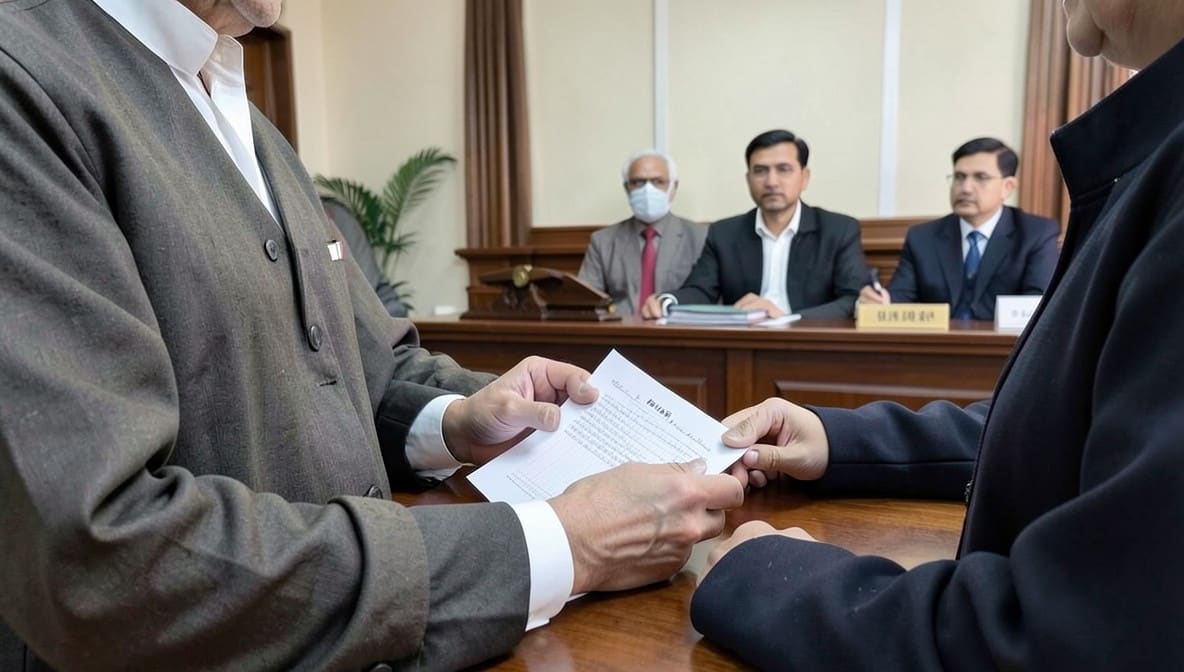
The Madhya Pradesh High Court has clarified a critical procedural question: whether anticipatory bail can be sought for bailable offences under the Bharatiya Nyaya Sanhita (BNS). In a concise but significant order, the Court held that when offences are bailable, the police must accept bail bonds, rendering an anticipatory bail application under Section 482 of the Bharatiya Nagrik Suraksha Sanhita (BNSS) non-maintainable. This judgment underscores the limits of anticipatory bail jurisdiction and reinforces the statutory right to bail for bailable offences.
Background & Facts
The Dispute
The applicants, Raghuveer Singh Kaushal and others, approached the Madhya Pradesh High Court seeking anticipatory bail under Section 482 BNSS. They apprehended arrest in Crime No. 85/2026, registered at Police Station Bijauli, District Gwalior, for offences punishable under Sections 296, 115(2), 125, 351(3), 324(2), and 3(5) of the Bharatiya Nyaya Sanhita (BNS). Notably, the trial court had already observed that all the offences alleged against the applicants were bailable in nature, and thus, an application for anticipatory bail was not maintainable.
Key Facts
- The applicants were named in FIR No. 85/2026 for offences under the BNS, all of which were bailable.
- The trial court rejected the anticipatory bail application on the ground that the offences were bailable, making the application non-maintainable.
- Despite the trial court’s observation, the police refused to accept bail bonds from the applicants, creating a practical apprehension of arrest.
- The applicants contended that while the offences under Sections 25/27 of the Arms Act were also mentioned in the FIR, these pertained to co-accused Hakim and Manoj @ Gambhir, not the present applicants.
Procedural History
- FIR Registration: Crime No. 85/2026 was registered at Police Station Bijauli for offences under the BNS.
- Trial Court Order: The trial court rejected the anticipatory bail application, holding that the offences were bailable and thus anticipatory bail was not maintainable.
- Present Application: The applicants filed Misc. Criminal Case No. 25957 of 2026 before the Madhya Pradesh High Court under Section 482 BNSS.
Relief Sought
The applicants sought a direction to the police to accept their bail bonds, thereby preventing their arrest, given that the offences alleged were bailable.
The Legal Issue
The central question before the Court was whether an application for anticipatory bail under Section 482 BNSS is maintainable when the offences alleged are bailable in nature, and whether the police can refuse to accept bail bonds in such cases.
Arguments Presented
For the Applicants
- The trial court had already held that the offences were bailable, rendering the anticipatory bail application non-maintainable.
- Despite this, the police were refusing to accept bail bonds, creating a legitimate apprehension of arrest.
- The offences under Sections 25/27 of the Arms Act pertained to co-accused, not the applicants, and thus, no apprehension of arrest should exist for them.
For the Respondent/State
The State, represented by the Public Prosecutor, did not present any substantive counter-arguments in the judgment text. The focus remained on the procedural question of bail bond acceptance.
The Court's Analysis
The Court observed that the trial court had explicitly held the offences to be bailable, which inherently entitled the applicants to statutory bail. The refusal of the police to accept bail bonds, despite this finding, created an anomalous situation where the applicants were deprived of their statutory right to bail.
The Court relied on the fundamental principle that for bailable offences, the accused is entitled to bail as a matter of right, and the police cannot refuse to accept bail bonds. The Court noted:
"As the Trial Court itself has held that the offences are bailable, it is directed that the arresting authority/investigation officer shall accept bail bonds of the applicants."
This direction underscores that anticipatory bail under Section 482 BNSS is not maintainable for bailable offences, as the statutory framework already provides for bail as a right.
The Verdict
The Court disposed of the application with the following directions:
- The arresting authority/investigation officer must accept the bail bonds of the applicants.
- The application for anticipatory bail under Section 482 BNSS was held non-maintainable for bailable offences.
- A copy of the order was directed to be sent to the trial court for information.
What This Means For Similar Cases
Anticipatory Bail Is Not Maintainable for Bailable Offences
- Practitioners must note that Section 482 BNSS cannot be invoked for bailable offences, as the statutory right to bail already exists.
- Courts are likely to reject anticipatory bail applications outright if the offences are bailable, as seen in this case.
Police Cannot Refuse Bail Bonds for Bailable Offences
- The judgment reinforces that police authorities cannot refuse bail bonds for bailable offences, as this would violate the statutory right to bail.
- If the police refuse to accept bail bonds despite a court’s finding of bailability, the accused can seek immediate relief from higher courts under Section 482 BNSS or writ jurisdiction.
Clarity on Jurisdictional Limits of Section 482 BNSS
- This judgment provides clear guidance on the limits of Section 482 BNSS, which is intended to prevent abuse of process and secure justice, but not to bypass statutory rights like bail for bailable offences.
- Lawyers must carefully assess whether the offences are bailable before filing anticipatory bail applications, as non-maintainability can lead to unnecessary litigation and delay.
Practical Implications for Accused and Legal Practitioners
- Accused persons facing bailable offences should directly approach the police for bail bonds, as anticipatory bail is not an available remedy.
- Legal practitioners must educate clients on the distinction between bailable and non-bailable offences to avoid misguided filings and procedural errors.