The denial of anticipatory bail in a case involving alleged participation in public humiliation that culminated in death underscores a critical judicial shift toward prioritizing investigative integrity over preemptive liberty, even in non-triggering circumstances under the new Bharatiya Nagarik Suraksha Sanhita, 2023.
Background & Facts
The Dispute
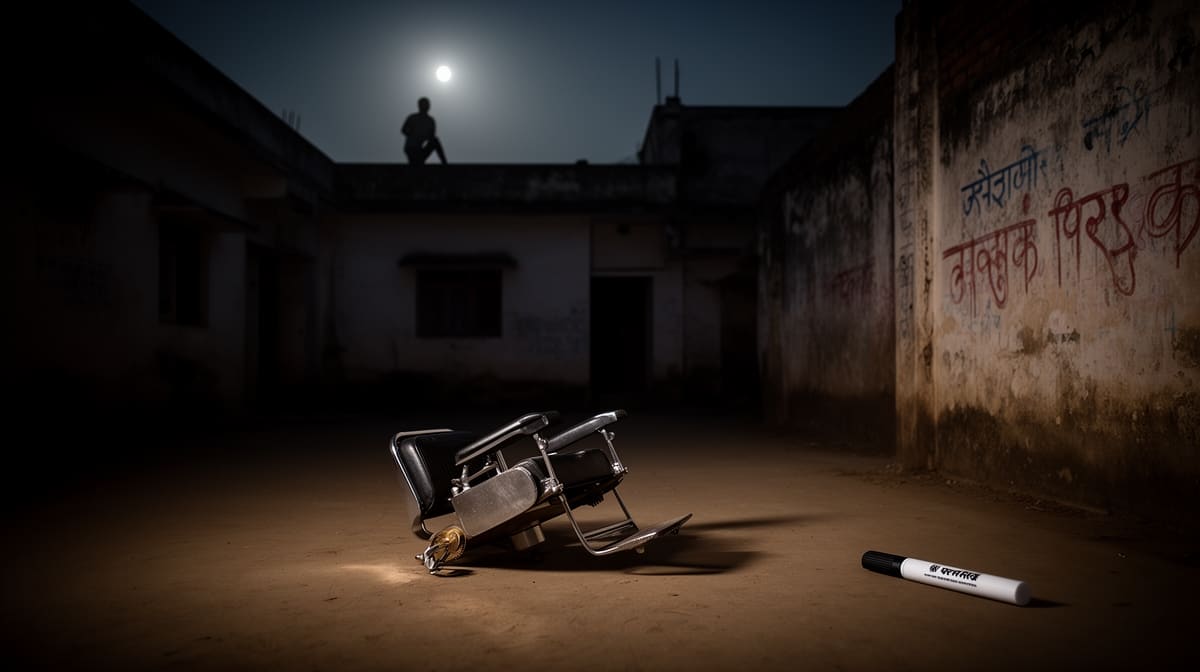
The petitioner, Shashi Kant Dwivedi, is accused alongside Aman Tiwari and Akhilesh of forcibly shaving half the head of Manjeet Kumar, writing "Main chor hoon" on it with a marker pen, and subsequently pushing him from a roof, resulting in his death. The prosecution alleges the act was a targeted humiliation rooted in personal grievance, escalating into fatal violence.
Procedural History
- FIR No. 164/2025: Registered at Police Station Sector 17/18, Gurugram under Section 103(1) of BNS (erstwhile Section 302 IPC) and Section 3(5) of BNS (erstwhile Section 34 IPC)
- Petition filed: Under Section 482 of BNSS seeking anticipatory bail
- Lower Court: No prior bail application filed before any magistrate; petition directly moved to High Court
Relief Sought
The petitioner seeks anticipatory bail, arguing he was merely a bystander who lent a hair-cutting machine, had no physical involvement in the fatal act, no motive, and no injuries attributed to him. He claims false implication due to his association with the main accused.
The Legal Issue
The central question was whether anticipatory bail can be granted under Section 482 of BNSS when the accused is alleged to have played an active role in a sequence of acts - culminating in death - that involved public humiliation, and where custodial interrogation is deemed essential to uncover evidence and prevent witness tampering.
Arguments Presented
For the Petitioner
The petitioner’s counsel contended that: (1) no direct injury or weapon was linked to him; (2) he was not the owner of the marker pen or hair-cutting machine; (3) no motive was established against him; (4) three prosecution witnesses had turned hostile; and (5) he was willing to cooperate fully with the investigation. Reliance was placed on Arnesh Kumar v. State of Bihar to argue that gravity of offence alone cannot override the presumption of innocence.
For the Respondent/State
The State countered that: (1) the petitioner was present at the scene and actively participated in the humiliation; (2) CCTV footage placed him at the location; (3) the barber’s statement confirmed his involvement in forcibly taking the machine; (4) the marker pen remains unrecovered; and (5) the nature of the crime - public degradation followed by death - creates a high risk of evidence tampering and witness intimidation. The State invoked State v. Anil Sharma to emphasize the necessity of custodial interrogation in complex cases.
The Court's Analysis
The Court examined the petitioner’s role not in isolation but as part of a common intention under Section 3(5) of BNS. It held that participation in the initial act of humiliation - forcibly shaving the victim’s head and writing degrading words - constituted active involvement, irrespective of whether the fatal push was directly executed by him. The Court noted that the sequence of events, from humiliation to fatal fall, demonstrated a continuous chain of conduct in which the petitioner was an integral participant.
"Prima facie, such degrading acts clearly demonstrate the active involvement of the petitioner and his associates in subjecting the deceased to extreme mental and physical harassment."
The Court rejected the argument that absence of physical injury or weapon negates culpability, emphasizing that criminal liability under common intention does not require direct perpetration. It further held that the recovery of the marker pen, the CCTV footage, and the barber’s testimony collectively established a prima facie case.
Citing State v. Anil Sharma, the Court underscored that custodial interrogation is indispensable when the investigation is at a crucial stage and the accused’s role is intertwined with the core sequence of events. The Court dismissed the notion that anticipatory bail is a right, reaffirming it as an extraordinary relief to be granted only when investigation is not compromised.
The Court also rejected the claim of hostile witnesses as a ground for bail, noting that witness credibility is a matter for trial, not bail adjudication. The risk of influencing witnesses or absconding, given the gravity of the offence and social impact, was deemed real and substantial.
The Verdict
The petition was dismissed. The Court held that anticipatory bail cannot be granted where the accused is alleged to have actively participated in a sequence of acts leading to death, particularly when custodial interrogation is necessary to recover key evidence and prevent interference with the investigation. The petitioner’s role in the humiliation phase was sufficient to establish prima facie involvement under Section 3(5) of BNS.
What This Means For Similar Cases
Custodial Interrogation Trumps Pre-Arrest Liberty
- Practitioners must now argue that anticipatory bail is not automatic even in non-triggering cases under BNS
- Where the accused is part of a group engaged in escalating violence culminating in death, courts will prioritize investigative needs over liberty
- Merely claiming non-participation in the fatal act is insufficient if involvement in the preceding criminal act is established
Public Humiliation as a Precursor to Fatal Violence
- Acts of public degradation - shaving, writing slurs, forced exposure - are now recognized as aggravating factors in bail jurisprudence
- Such acts may be treated as integral to the offence, even if not directly lethal, if they create a context of terror leading to death
- Courts will consider the social impact of such crimes when evaluating bail applications
Prima Facie Case Based on Circumstantial Evidence
- CCTV footage, witness statements, and recovery of instrumentalities (even if not from the accused) can collectively establish a prima facie case
- Absence of direct physical injury or weapon does not negate liability under common intention
- Hostile witnesses do not automatically weaken the prosecution’s case at the bail stage