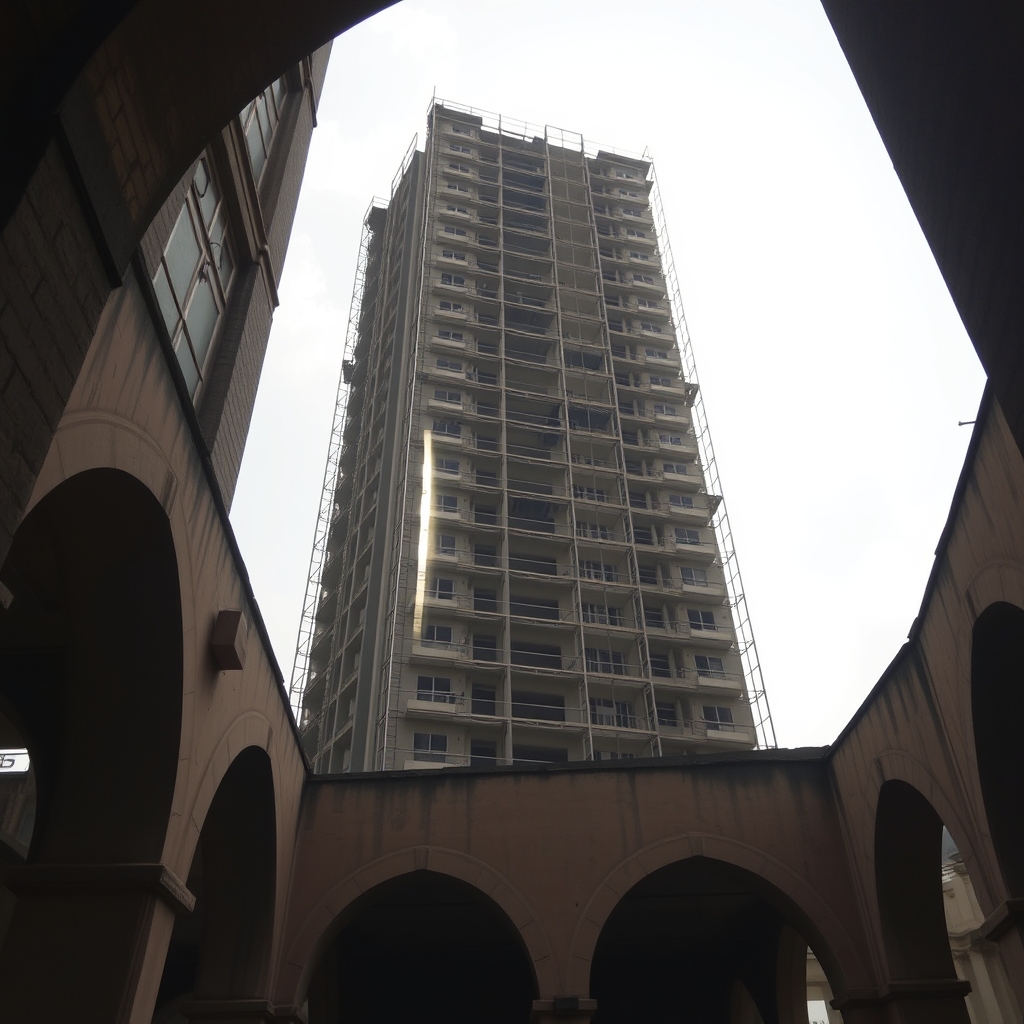
The Income Tax Appellate Tribunal, Bangalore, has delivered a significant ruling clarifying the tax treatment of capital gains arising from Joint Development Agreements executed prior to the introduction of Section 45(5A) of the Income Tax Act, 1961. The judgment affirms that such gains must be taxed in the year of transfer, not upon receipt of the occupancy certificate, and reinforces the prospective nature of the statutory amendment.
Background & Facts
The Dispute
The dispute concerns the assessment of capital gains arising from Joint Development Agreements (JDAs) entered into by Shri Lakkanna Durgappa (the Assessee) and his spouse, Smt. Shanthamma, with SJR Prime Corporation Pvt. Ltd. for the development of the SJR Plaza City Project. The Assessee and his wife held shares in the property - 27.8% and 72.2% respectively - and transferred their rights under JDAs executed on 17.12.2012. The Assessing Officer (AO) sought to tax capital gains in Assessment Year (AY) 2020-21, relying on the newly introduced Section 45(5A), which deems capital gains to arise in the year the completion certificate is issued. The Assessee contended that the gains were taxable in AY 2013-14, the year of transfer, under the law prevailing at that time.
Key Facts
- The JDA with SJR Prime Corporation Pvt. Ltd. was executed on 17.12.2012.
- A second JDA with Sunil Mantri Realty Ltd. was executed on 20.03.2009.
- The occupancy certificate for the project was issued on 30.05.2019.
- The Assessee filed his return of income for AY 2017-18 on 27.10.2017, declaring income of Rs. 13.34 crores.
- A search under Section 132 of the Act was conducted on 19.02.2020.
- The Assessee submitted a sworn statement under Section 131 of the Act on 23.05.2019, disclosing the JDAs and occupancy certificates.
- The Assessee’s wife, Smt. Shanthamma, faced identical facts and was assessed for AY 2020-21.
- The ITAT, in ITA No. 465/Bang/2025 dated 04.09.2025, held that no incriminating material was found during the search and that Section 45(5A) did not apply to pre-2018 JDAs.
- The Assessee’s return for AY 2020-21 was processed under Section 143(1) on 27.03.2021, with no discrepancies noted.
- The Assessee sold 15 flats from the SJR project and 14 from the Mantri project during AY 2020-21, and offered capital gains from these sales in that year.
Procedural History
- 17.12.2012: JDA executed with SJR Prime Corporation Pvt. Ltd.
- 20.03.2009: JDA executed with Sunil Mantri Realty Ltd.
- 23.05.2019: Assessee disclosed JDAs and occupancy certificates under Section 131.
- 19.02.2020: Search conducted under Section 132.
- 27.10.2017 to 31.03.2021: Returns filed and processed for AYs 2017-18 to 2020-21.
- 30.09.2021: Assessment Order issued by AO under Section 153A for AYs 2017-18 to 2019-20, and under Section 143(3) for AY 2020-21.
- 24.10.2025: Commissioner of Income Tax (Appeals) issued consolidated order deleting additions for all four AYs.
- 29.04.2026: Hearing held before ITAT Bangalore.
- 11.05.2026: Judgment pronounced.
The Parties' Positions
For the Assessee
- The JDAs were executed in 2009 and 2012, well before the introduction of Section 45(5A) on 01.04.2018.
- The transfer of capital assets occurred in FY 2012-13, and capital gains were chargeable in AY 2013-14 under the law then in force.
- The Assessee had disclosed the gains in the correct assessment years, including through the sale of flats in AY 2020-21.
- Section 45(5A) is prospective and cannot be applied retrospectively to transactions completed before its enactment.
- The documents relied upon by the AO (JDAs and occupancy certificates) were disclosed prior to the search and thus do not constitute incriminating material under Section 153A.
For the Revenue
- The receipt of the occupancy certificate on 30.05.2019 marked the crystallization of income and triggered taxability under Section 45(5A).
- The Assessee had not offered capital gains in AY 2013-14, resulting in escapement of income.
- The Supreme Court’s dismissal of the SLP in Kanak Bhanj Deo v. Income-tax Officer supports taxing gains in the year of completion certificate.
- The occupancy certificate found during the search constituted incriminating material justifying assessment under Section 153A.
Relief Sought
The Assessee sought deletion of additions of Rs. 42.85 crores (capital gains), Rs. 14.48 crores (unexplained expenses), and Rs. 30.49 crores (capital gain from JDA) for AYs 2017-18 to 2020-21. The Revenue sought to sustain these additions and to tax the gains in AY 2020-21 under Section 45(5A).
The Legal Issue
The central question was whether capital gains arising from a Joint Development Agreement executed before 01.04.2018 are taxable in the year of transfer or in the year the completion certificate is issued, and whether Section 45(5A) of the Income Tax Act applies retrospectively to such agreements.
Arguments Presented
For the Appellant/Petitioner
The Assessee relied on judicial precedents from the Bombay High Court in Chaturbhuj Dwarkadas Kapadia v. CIT and the Karnataka High Court in CIT v. Dr. T.K. Dayalu, both holding that capital gains under a JDA accrue in the year of transfer of possession, not upon issuance of the completion certificate. The Assessee emphasized that Section 45(5A) was introduced prospectively with effect from 01.04.2018, as confirmed by the Explanatory Memorandum to the Finance Act, 2017. The ITAT’s own decision in the wife’s case, dated 04.09.2025, was cited as binding on identical facts. The Assessee further argued that the gains were already disclosed in the return for AY 2020-21 through the sale of flats, and that taxing them again under Section 45(5A) would result in double taxation.
For the Respondent/State
The Revenue contended that the issuance of the occupancy certificate on 30.05.2019 marked the point of accrual of income and that Section 45(5A) should be interpreted to apply to all cases where the certificate was issued after its enactment, regardless of the JDA’s execution date. The Revenue relied on the Orissa High Court’s decision in Kanak Bhanj Deo v. Income-tax Officer and the Supreme Court’s dismissal of the SLP. It argued that the Assessee had not offered the gains in AY 2013-14 and that the AO was justified in invoking Section 147/148 to reassess the income. The Revenue also asserted that the occupancy certificate found during the search constituted incriminating material under Section 153A.
The Court's Analysis
The ITAT undertook a detailed analysis of the statutory framework and judicial precedents. It emphasized that Section 45(5A) was inserted by the Finance Act, 2017, with an express effective date of 01.04.2018. The Explanatory Memorandum clearly indicated that the provision was intended to address future transactions, not to rewrite past ones. The Court observed that the deeming fiction under Section 45(5A) applies only when the JDA is entered into on or after 01.04.2018 and the completion certificate is issued thereafter.
"Section 45(5A) ... contains no express or implied retrospective operation; the Explanatory Memorandum also indicates that it applies only to agreements entered into after its commencement."
The Tribunal noted that the transfer under Section 2(47)(v) occurred in FY 2012-13, when possession was handed over under the JDA. The Bombay and Karnataka High Courts had consistently held that capital gains arise in the year of transfer, not in the year of completion. The ITAT found no reason to depart from this settled position.
The Court also rejected the Revenue’s reliance on Kanak Bhanj Deo, noting that the Orissa High Court’s decision had not considered the binding precedents of the Bombay and Karnataka High Courts. The ITAT held that jurisdictional precedents bind it, and that the Orissa decision was not persuasive in this context.
Regarding the search and Section 153A, the Tribunal reaffirmed the Supreme Court’s ruling in PCIT v. Abhisar Buildwell Pvt. Ltd., holding that for an assessment under Section 153A to be valid, incriminating material must be unearthed during the search. Since the JDAs and occupancy certificates were disclosed under Section 131 on 23.05.2019 - months before the search on 19.02.2020 - they could not be deemed incriminating. The ITAT thus upheld the deletion of additions for AYs 2017-18 to 2019-20.
The Court further clarified that even if the gains were not assessed in AY 2013-14, the Revenue’s remedy lay in reopening that year under Sections 147/148, not in applying a new provision retrospectively to AY 2020-21.
The Verdict
The Assessee succeeded on all grounds. The ITAT dismissed all four appeals filed by the Assessing Officer. The additions of Rs. 42.85 crores (capital gains), Rs. 14.48 crores (unexplained expenses), and Rs. 30.49 crores (capital gain from JDA) for Assessment Years 2017-18 to 2020-21 were deleted. The Tribunal held that Section 45(5A) does not apply to JDAs executed before 01.04.2018, and that capital gains must be taxed in the year of transfer. The decision on incriminating material under Section 153A was also upheld. No interest or costs were awarded as the matter was resolved on merits.
What This Means For Similar Cases
Capital Gains Taxable at Time of Transfer, Not Completion
- Practitioners must now argue that for JDAs executed before 01.04.2018, the year of transfer (when possession is handed over) is the relevant assessment year, irrespective of when the completion certificate is issued.
- Assessing Officers cannot rely on Section 45(5A) to shift the tax liability to a later year merely because the project was completed after the amendment.
- The burden shifts to the Revenue to prove that the transfer occurred after 01.04.2018 if seeking to apply Section 45(5A).
Prospective Application of Section 45(5A) Is Absolute
- The Explanatory Memorandum and statutory language confirm that Section 45(5A) has no retrospective effect.
- Any attempt to tax pre-2018 JDAs under this provision is legally untenable and subject to challenge.
- Taxpayers who did not declare gains in AY 2013-14 must be assessed under Sections 147/148, not Section 45(5A).
Jurisdictional Precedents Bind ITAT
- ITAT benches are bound by decisions of the jurisdictional High Court, even if other High Courts or the Supreme Court have ruled differently.
- The ITAT’s refusal to follow Kanak Bhanj Deo because it ignored Bombay and Karnataka precedents sets a strong precedent for respecting jurisdictional hierarchy.
- Practitioners should always cite the relevant jurisdictional High Court rulings when challenging assessments.
Incriminating Material Must Be Newly Unearthed
- Documents disclosed under Section 131 prior to a search cannot be treated as incriminating material under Section 153A.
- The ITAT’s reliance on Abhisar Buildwell reinforces that Section 153A assessments are void ab initio if no fresh incriminating material is found.
- Taxpayers should proactively disclose documents during summons to prevent future Section 153A assessments.