The National Company Law Appellate Tribunal has clarified that during the Corporate Insolvency Resolution Process, an applicant cannot be evicted from property on grounds of alleged encroachment while a pending application under Section 45 of the IBC challenges the very legitimacy of their possession. This ruling reinforces the principle that insolvency proceedings must preserve the status quo of disputed assets until their legal title is determined.
Background & Facts
The Dispute
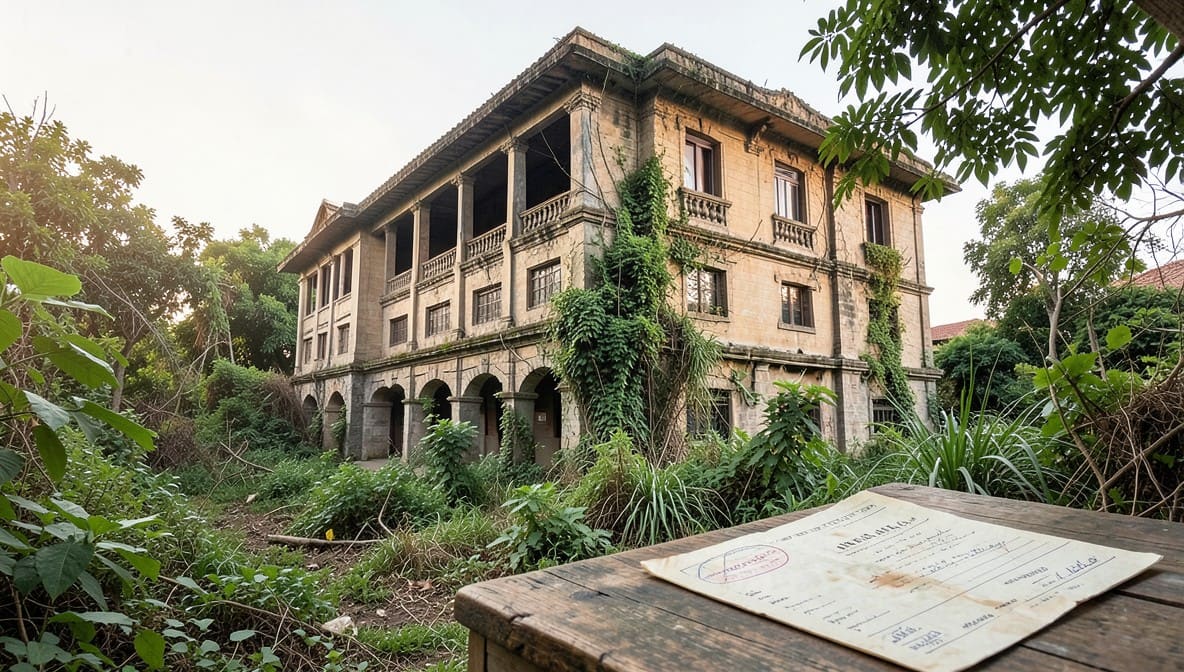
The appellant, M/s Rose Constructions, a partnership firm, was awarded a civil contract by the Corporate Debtor (CD) on 31.12.2014. A payment dispute arose, which the parties purportedly resolved through a Settlement Deed dated 20.04.2017. Subsequently, on 20.12.2017, the CD executed a Lease Deed in favour of one of the appellant’s partners, granting possession of a property measuring approximately 1,830 sq. mt. The appellant claims this lease was executed pursuant to the settlement and that it has been using the property for a nursery school.
Key Facts
- The Corporate Debtor entered Corporate Insolvency Resolution Process (CIRP) on 03.07.2018.
- The Resolution Professional (RP) filed I.A. No. 1197 of 2019 on 09.09.2019 under Section 45 of the IBC, challenging the validity of the lease deed dated 20.12.2017 and seeking its avoidance.
- The appellant filed a reply to I.A. 1197 of 2019, and the matter remains pending before the Adjudicating Authority.
- The RP later filed I.A. 2738 of 2020 alleging that the appellant and another party had encroached upon CD’s property and constructed a sample flat.
- The appellant did not file a reply to I.A. 2738 of 2020.
- On 13.03.2023, the Adjudicating Authority ordered eviction of the appellant and the first respondent from the disputed property.
- The appellant filed I.A. 1298 of 2023 on grounds of non-service of notice and substantive illegality of the eviction order.
- On 23.05.2023, the Adjudicating Authority dismissed I.A. 1298 of 2023, holding that the plea of non-service was untenable.
- The appellant filed the present appeal on 15.06.2023.
- On 07.03.2025, the Adjudicating Authority approved the resolution plan, with the Successor Resolution Applicant (SRA) mandated to prosecute I.A. 1197 of 2019.
- The appellant continues to occupy the property under the lease deed, and settlement talks are reportedly underway between the appellant and the SRA.
Procedural History
- 31.12.2014: Civil contract awarded to appellant by Corporate Debtor
- 20.04.2017: Settlement Deed executed between appellant and CD
- 20.12.2017: Lease Deed executed in favour of appellant’s partner
- 03.07.2018: CIRP initiated against CD
- 09.09.2019: RP files I.A. 1197 of 2019 under Section 45 of IBC
- 13.03.2023: Adjudicating Authority passes order in I.A. 2738 of 2020 directing eviction
- 23.05.2023: Adjudicating Authority dismisses I.A. 1298 of 2023
- 15.06.2023: Appeal filed before NCLAT (CA 965 of 2023)
- 07.03.2025: Resolution plan approved by Adjudicating Authority
Relief Sought
The appellant sought setting aside of the order dated 23.05.2023 dismissing I.A. 1298 of 2023, and a direction to stay eviction pending disposal of I.A. 1197 of 2019. The appellant also requested that its possession under the lease deed be preserved until the legal validity of the lease is determined.
The Legal Issue
The central question was whether the Adjudicating Authority could order eviction of a party under I.A. 2738 of 2020 on grounds of alleged encroachment, while a pending application under Section 45 of the IBC (I.A. 1197 of 2019) directly challenges the legal basis of that party’s possession.
Arguments Presented
For the Appellant
The appellant contended that I.A. 1197 of 2019, pending since 2019, directly questions the validity of the lease deed under which it holds possession. Until that application is decided, the appellant cannot be deemed an encroacher. The RP’s attempt to evict via I.A. 2738 of 2020 was premature and circumvented the adjudicatory process under Section 45. The appellant also argued that notices for I.A. 2738 of 2020 were not properly served, and that the Adjudicating Authority failed to consider the pendency of I.A. 1197 of 2019.
For the Respondent
The RP argued that the appellant had not contested I.A. 2738 of 2020, and that the property was being misused - allegedly for office purposes rather than the stated nursery school. The RP claimed that the lease deed was not properly documented and that the appellant had provided conflicting addresses, making service valid. The SRA added that the appellant’s claim contradicted the approved resolution plan and town planning permissions.
The Court's Analysis
The NCLAT examined the interplay between Section 45 of the IBC, which empowers the Adjudicating Authority to avoid preferential, undervalued, or fraudulent transactions, and the principle of maintaining the status quo during CIRP. The Court noted that I.A. 1197 of 2019, pending since 2019, directly concerns the legitimacy of the appellant’s possession under the lease deed. The Court held that the very existence of this pending application renders the characterization of the appellant as an "encroacher" legally untenable.
"As long as I.A. 1197 of 2019 is pending, it may be difficult to hold that the present appellant would be an encroacher of the same property."
The Court rejected the argument that non-participation in I.A. 2738 of 2020 justified eviction, emphasizing that the underlying dispute over title could not be resolved through an ex parte eviction order. The Court further observed that the resolution plan approved on 07.03.2025 explicitly mandates the SRA to prosecute I.A. 1197 of 2019, thereby affirming its centrality to the resolution process.
The Court also acknowledged ongoing settlement talks between the appellant and the SRA but clarified that such negotiations must not prejudice the adjudicatory process. The appellant’s continued possession was not an endorsement of the lease’s validity, but a recognition that its legal status must be determined by the Adjudicating Authority in the pending application.
The Verdict
The appeal was allowed. The NCLAT set aside the order dated 23.05.2023 dismissing I.A. 1298 of 2023 and remanded the matter to the Adjudicating Authority. The appellant’s possession of the property covered under the lease deed dated 20.12.2017 is permitted to continue until the disposal of I.A. 1197 of 2019 and I.A. 1298 of 2023. The Adjudicating Authority is directed to dispose of both applications within three months from the date of this order. No costs are awarded.
What This Means For Similar Cases
Pending Section 45 Applications Trump Eviction Claims
- Practitioners must now argue that any attempt to evict a party during CIRP on grounds of encroachment is invalid if a Section 45 application challenging the basis of possession is pending.
- Eviction orders passed without adjudicating the underlying transaction’s validity are liable to be set aside.
Status Quo Must Be Preserved During CIRP
- The principle of maintaining the status quo under Section 14 of the IBC extends to disputed assets whose title is under adjudication.
- RP or SRA cannot unilaterally dispossess parties through summary proceedings when the legal basis of possession is contested in a pending application.
Settlement Talks Do Not Override Adjudication
- Settlement negotiations between the SRA and third parties are permissible but cannot substitute judicial determination under Section 45.
- Any settlement must be placed before the Adjudicating Authority for approval and must not prejudice the outcome of pending applications.
Procedural Defects Are Secondary to Substantive Legal Status
- Failure to contest an eviction application does not automatically validate the eviction if the underlying claim of possession is legally contested.
- Courts must examine the nature of the dispute, not merely procedural default, when determining possession rights during insolvency.