The Income Tax Appellate Tribunal, Mumbai, has clarified that expenses incurred by overseas branches for NRI desks - designed to solicit deposits from Non-Resident Indians - are not marketing costs but executive and administrative expenditures, making them subject to the limitations under Section 44C of the Income Tax Act. This ruling resolves a long-standing ambiguity regarding the scope of head office expenditure for non-resident banks operating in India.
Background & Facts
The Dispute
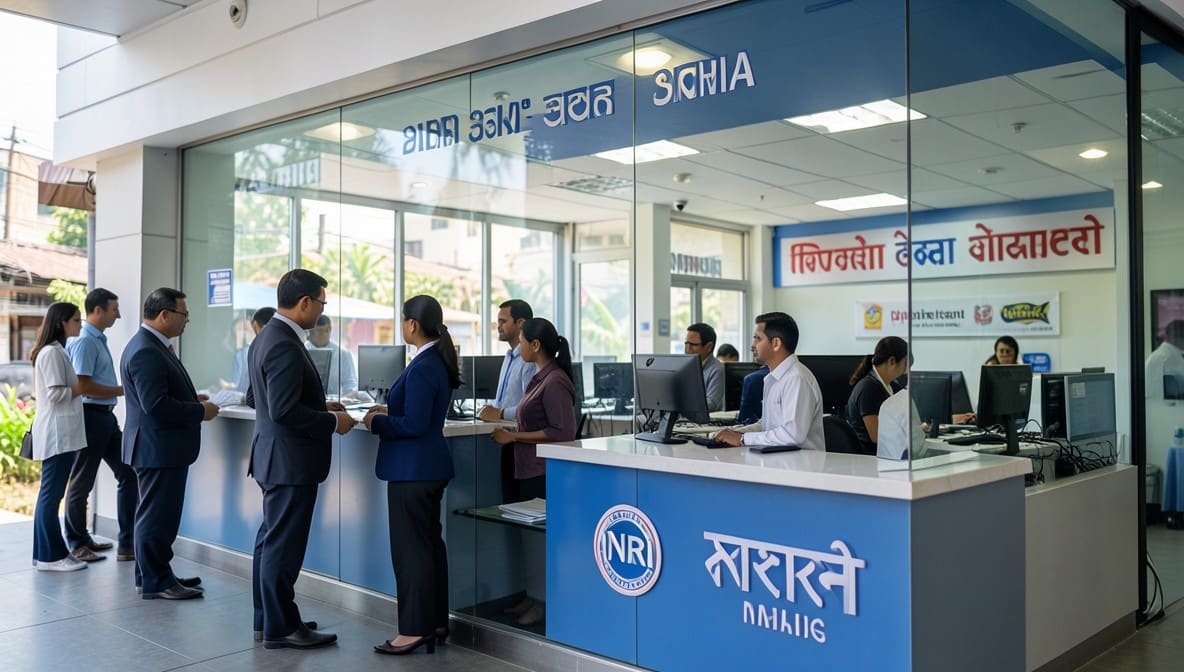
The dispute arises from the assessment of Bank of America N.A. for the assessment year 2000-01. The bank, headquartered in Charlotte, USA, operates five branches in India. During the year, it incurred expenses through its London and Singapore branches to establish and maintain NRI Desks, which were dedicated to attracting deposits from Non-Resident Indians. These expenses included salaries of dedicated staff, office rent, courier charges, telecommunication costs, utilities, and equipment depreciation. The bank claimed these expenses as deductions under Section 37(1) of the Income Tax Act, arguing they were directly attributable to its Indian operations and not head office expenditures subject to the cap under Section 44C.
Key Facts
- The NRI Desks were located in cities with high concentrations of Indian nationals.
- Each desk operated with separate staff, dedicated office space, and independent infrastructure.
- The expenses were not paid to the overseas branches but were allocated internally by the Head Office on a proportionate basis.
- The bank maintained local accountant certificates (pages 127-130 of the paper book) verifying the nature and amount of expenses.
- The total expenditure claimed for NRI Desks was Rs. 1,15,79,071.
- The bank contended these were business development expenses, not administrative overheads.
- The Assessing Officer (AO) disallowed the full amount under Section 44C, treating it as head office expenditure.
- The Commissioner of Income Tax (Appeals) [CIT(A)] deleted the disallowance, relying on Bombay High Court precedents.
- The Revenue appealed, citing the Supreme Court’s decision in DIT v. American Express Bank Ltd. [2025] 181 taxmann.com 433 (SC).
Procedural History
- 27/11/2000: Assessee filed return declaring total income of Rs. 255,41,03,744.
- 28/03/2003: AO passed assessment order under Section 143(3), disallowing Rs. 1,15,79,071 under Section 44C.
- 19/03/2004: CIT(A) passed order allowing the deduction, holding expenses not covered under Section 44C.
- 12/01/2026: Hearing before ITAT Mumbai.
- 18/03/2026: ITAT Mumbai delivered order on cross appeals.
The Parties' Positions
For the Assessee (Bank of America N.A.):
- Argued that NRI Desk expenses were marketing in nature, aimed at generating business, not administrative.
- Relied on Inspecting Assistant Commissioner v. Goodricke Group Ltd. [1985] 12 ITD 1 (Cal.) (SB), where sales-related expenses in London were held not to be head office expenditure.
- Contended that the Supreme Court’s decision in American Express Bank Ltd. did not expand Section 44C to cover all overseas expenses, but only clarified that both common and exclusive expenses are covered - provided they meet the tripartite test.
- Emphasized that the expenses were not of the nature specified in clauses (a) to (d) of the Explanation to Section 44C.
For the Revenue:
- Relied on DIT v. American Express Bank Ltd. [2025] 181 taxmann.com 433 (SC), which held that Section 44C applies to all head office expenditures incurred outside India, whether common or exclusive.
- Argued that the tripartite test laid down by the Supreme Court was satisfied: (i) incurred outside India, (ii) in nature of executive/general administration, (iii) falling within clauses (a)-(d) of the Explanation.
- Stated that salaries, rent, utilities, and equipment costs for dedicated NRI desks are classic examples of administrative overheads.
- Rejected the marketing characterization, noting that such activities are integral to branch-level banking operations.
Relief Sought
- Assessee: Requested deletion of disallowance under Section 44C and full deduction of Rs. 1,15,79,071 under Section 37(1).
- Revenue: Sought restoration of AO’s order disallowing the expense under Section 44C.
The Legal Issue
Whether expenses incurred by overseas branches of a non-resident bank for maintaining NRI Desks - used to solicit deposits from Non-Resident Indians - constitute "head office expenditure" under Section 44C of the Income Tax Act, 1961, and are thus subject to the 5% cap, or whether they qualify as marketing expenses outside the scope of Section 44C.
Arguments Presented
For the Appellant/Petitioner (Revenue)
The Revenue relied on the Supreme Court’s decision in DIT v. American Express Bank Ltd. [2025] 181 taxmann.com 433 (SC), which held that Section 44C is a non-obstante provision overriding Sections 28 to 43A. The Court clarified that the term "head office expenditure" includes both common and exclusive expenses incurred outside India, provided they meet the tripartite test: (i) incurred outside India, (ii) in the nature of executive and general administration, and (iii) falling within the specific categories listed in clauses (a) to (d) of the Explanation. The Revenue argued that NRI Desk expenses - salaries, rent, utilities, communication, and equipment - are classic administrative overheads, not marketing. Marketing expenses, it contended, involve mass media, advertising, or third-party agents, none of which were present here. The fact that the expenses were allocated internally and not paid externally did not alter their nature.
For the Respondent/State (Assessee)
The assessee argued that the Supreme Court’s ruling did not broaden Section 44C to cover all overseas expenses, but only clarified that exclusivity does not exempt an expense. It emphasized that the tripartite test must be strictly applied. The NRI Desks, it submitted, were established to generate business - akin to sales teams - and their expenses were therefore marketing in nature. The assessee cited Goodricke Group Ltd., where expenses for a London sales agent were held not to be head office expenditure. It further argued that the AO and CIT(A) failed to establish that these expenses fell within the specific categories of clauses (a)-(d), particularly since no direct link to executive or administrative functions of the Head Office was demonstrated. The expenses were tied to customer acquisition, not internal management.
The Court's Analysis
The Tribunal undertook a detailed analysis of the nature of the NRI Desk operations and the legal framework under Section 44C. It began by acknowledging the Supreme Court’s ruling in American Express Bank Ltd., which established the tripartite test for head office expenditure. The Court emphasized that the mere fact that an expense is incurred overseas and attributable to Indian operations does not automatically bring it within Section 44C. The expense must be of the nature of executive and general administration.
The Tribunal then examined the specific expenses: salaries of dedicated staff, rent for exclusive office space, telecommunication charges, electricity, and equipment depreciation. It noted that these were not costs incurred for advertising, branding, or third-party sales agents. Rather, they were costs of maintaining a functional unit within the bank’s global network to perform core banking functions - specifically, attracting deposits from NRIs. The Tribunal observed that in the year 1999-2000, banks relied heavily on branch-level personal relationships to build customer loyalty. The NRI Desks were not external marketing agencies but extensions of the bank’s own branch infrastructure, staffed by bank employees performing routine banking functions.
"These expenses, such as salaries of staff, office rental, courier and postage charges, telephone, telex and fax charges, electricity and water expenditure, equipment rentals, depreciation expenses, etc., are nothing but pertain to general banking business conducted at a branch, and thus are in the nature of 'executive and general administration' expenses of the bank."
The Tribunal further held that these expenses fell squarely within clause (b) of the Explanation to Section 44C - "salary, wages, annuity, pension, fees, bonus, commission, gratuity, perquisites or profits in lieu of or in addition to salary, whether paid or allowed to any employee or other person employed in, or managing the affairs of, any office outside India" - and clause (a) - "rent, rates, taxes, repairs or insurance of any premises outside India used for the purposes of the business or profession."
The Tribunal distinguished Goodricke Group Ltd., where the expense was for an external agent engaged in sales promotion. Here, the staff were bank employees, not agents. The Tribunal also rejected the argument that the expenses were marketing because they generated deposits. It held that attracting deposits through branch-level engagement is a core banking function, not marketing. Marketing would involve television ads, billboards, or print campaigns targeting the general public.
The Tribunal concluded that the tripartite test was fully satisfied. The expenses were incurred outside India, were administrative in nature, and fell within the statutory categories. Therefore, Section 44C applied, and the deduction was subject to the 5% cap.
The Verdict
The Revenue’s appeal was partly allowed. The ITAT Mumbai set aside the CIT(A)’s order allowing the full deduction of Rs. 1,15,79,071 under Section 37(1). The AO’s original order disallowing the expense under Section 44C was reinstated. The deduction for NRI Desk expenses is now restricted to the least of: (i) 5% of the adjusted total income, or (ii) the amount of head office expenditure attributable to the Indian business. The order was upheld with directions to the AO to compute the allowable deduction under Section 44C in accordance with the law.
What This Means For Similar Cases
Head Office Expenditure Includes Branch-Level Operational Costs
- Practitioners must now treat expenses incurred by overseas branches for dedicated customer service units (e.g., NRI desks, SME support desks) as potential head office expenditure under Section 44C if they involve salaries, rent, utilities, or equipment.
- The nature of the activity - not the label - is decisive. If the function is integral to banking operations (e.g., deposit mobilization, customer onboarding), it is administrative, not marketing.
- Internal allocation of costs without actual payment does not exclude an expense from Section 44C.
Marketing vs. Administrative Expense Distinction Is Critical
- Expenses tied to mass media, advertising agencies, or third-party promoters are likely marketing and outside Section 44C.
- Expenses for in-house staff performing customer-facing banking functions at overseas locations are administrative and within Section 44C.
- Taxpayers must maintain clear documentation distinguishing between sales/marketing activities and operational branch support.
Documentation and Classification Must Be Precise
- Assessees must prepare detailed breakdowns of overseas expenses, mapping each cost to the specific clause (a)-(d) of the Explanation to Section 44C.
- Local accountant certificates, staff role descriptions, and office usage reports are essential to substantiate the nature of expenditure.
- Failure to classify correctly may result in automatic disallowance under Section 44C, even if the expense is otherwise legitimate.