The Punjab & Haryana High Court has clarified that providing shelter to individuals accused under the Unlawful Activities (Prevention) Act, without evidence of active participation or knowledge of their criminal intent, does not attract liability under UAPA. This ruling reinforces the principle that mere association or passive accommodation cannot substitute for mens rea in terrorism-related offences.
Background & Facts
The Dispute
The appellant, Dalip Kumar, was named as an accused in FIR No. 0020 dated 04.04.2024, registered at Police Station Balachaur, District SBS Nagar, under Sections 302, 120-B, 212, 121, 121-A of the Indian Penal Code, Sections 25 and 27 of the Arms Act, and Sections 10, 13, 15 and 16 of the Unlawful Activities (Prevention) Act. The FIR arose from the murder of Rattandeep Singh on 03.04.2024, during a purported money collection attempt in Balachaur. Two motorcyclists allegedly opened fire on Rattandeep Singh while he was seated in his car, fled the scene, and took away two mobile phones.
Key Facts
- The murder occurred on 03.04.2024 at approximately 06:40 PM near HR Dhaba, Balachaur.
- The investigation led to the arrest of multiple individuals based on sequential disclosure statements.
- Gagandeep Bangar, arrested on 12.07.2024, disclosed that Jaspreet Singh @ Jassi and Simranjit Singh @ Bablu had stayed overnight at the house of Dalip Singh @ Kashi on 03.04.2024.
- Dalip Kumar (appellant) is the son of Dalip Singh @ Kashi and the owner of the house in question.
- The appellant had departed for Australia on 26.06.2023 and returned to Delhi on the evening of 02.04.2024, the day before the murder.
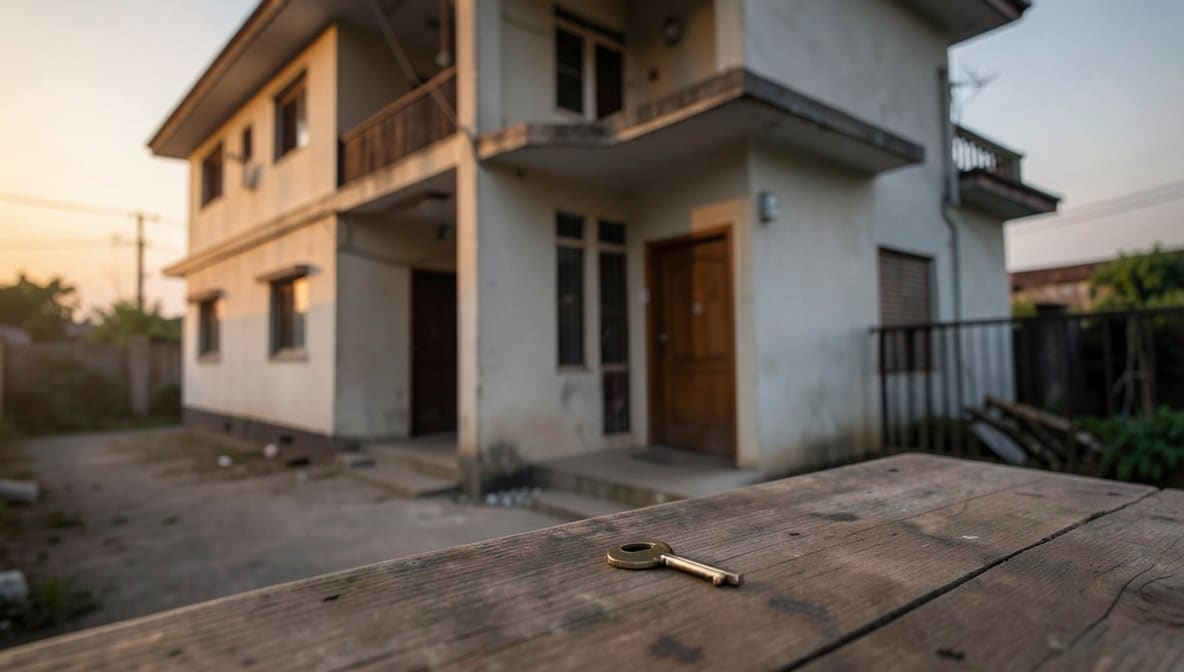
- The appellant had handed over the keys of his house to Gagandeep Bangar for maintenance during his absence.
- There is no allegation that the appellant was present at the house on 03.04.2024, had knowledge of the visitors, or participated in any way in the murder or conspiracy.
- The appellant has no prior criminal record.
Procedural History
- 03.04.2024: Murder of Rattandeep Singh occurs.
- 04.04.2024: FIR No. 0020 registered at PS Balachaur.
- 22.06.2024: Arrest of Manish Kumar @ Lucky and Narinder Singh @ Sipu.
- 23.06.2024: Gagandeep Bangar and Jaspreet @ Jassi nominated as accused via GD No. 16.
- 12.07.2024: Arrest of Gagandeep Bangar, who implicates Jaspreet and Simranjit for staying at Dalip Singh @ Kashi’s house.
- 02.04.2025: Application for anticipatory bail filed by Dalip Kumar before Additional Sessions Judge, SBS Nagar.
- 02.05.2025: Application dismissed by Additional Sessions Judge.
- 10.04.2026: Appeal filed before the Punjab & Haryana High Court (CRA-D-774-2025).
The Parties' Positions
For the Appellant
The appellant’s counsel argued that he was not named in the FIR, was not present at the scene, and had no knowledge of the criminal activities. His only alleged connection was that the accused stayed in his house for one night while he was abroad. He had entrusted the house keys to Gagandeep Bangar for maintenance, with no intention or awareness of misuse. The counsel contended that even if the disclosure statements are accepted, they do not establish any active role or intent on the appellant’s part. At most, the facts may attract Section 212 IPC (harbouring offender), but not UAPA, especially since the appellant was overseas during the offence.
For the Respondent
The State contended that Section 43D(4) of UAPA bars anticipatory bail for any person accused of an offence under the Act, regardless of the nature of involvement. It further argued that providing shelter to persons involved in terrorist activities constitutes an offence under UAPA, and leniency cannot be extended even if the accused’s role appears passive.
Relief Sought
The appellant sought grant of anticipatory bail, arguing that his detention would be unjustified given his complete absence from the crime scene and lack of mens rea.
The Legal Issue
Can a person be denied anticipatory bail under Section 43D(4) of the Unlawful Activities (Prevention) Act solely on the ground that they are named as an accused for allegedly providing shelter to offenders, when there is no evidence of active participation, knowledge, or intent, and the accused was abroad during the commission of the offence?
Arguments Presented
For the Appellant
The appellant relied on the documentary evidence of his passport, air tickets, and boarding passes to establish his continuous absence from India from 26.06.2023 to 02.04.2024. He argued that Section 43D(4) cannot be invoked mechanically to deny bail where the factual basis for invoking UAPA is tenuous. He cited Arnesh Kumar v. State of Bihar to emphasize that arrest must be justified by necessity and not automatic. He further contended that UAPA requires active support or encouragement of unlawful activity, not passive accommodation without knowledge.
For the Respondent
The State relied on the literal reading of Section 43D(4) of UAPA, which bars application of Section 438 CrPC in any case involving arrest under UAPA. It argued that the provision is absolute and that any person accused under UAPA, regardless of the nature of involvement, is ineligible for anticipatory bail. The State further contended that sheltering persons involved in unlawful activities, even without direct participation, undermines national security and must be deterred.
The Court's Analysis
The Court examined the factual matrix with particular attention to the appellant’s whereabouts and the nature of his alleged connection to the accused. It noted that the appellant was not named in the FIR, was not present at the scene, and had no prior association with the accused. The only link was that the accused stayed overnight in his house while he was abroad.
"Even if it is held that Gagandeep Bangar to whom the appellant had allegedly handed over the keys of his house so as to ensure that his house is taken care of, had allowed some criminals to stay in the said house, the said fact also can not ipso facto make him liable for having committed offence under Unlawful Activities (Prevention) Act."
The Court emphasized that UAPA is a stringent statute requiring proof of active involvement in unlawful activities, not mere association or passive conduct. The Court distinguished between harbouring an offender under Section 212 IPC and the more serious offence under UAPA, which demands intent to support terrorism or unlawful activity. The Court held that the State’s reliance on Section 43D(4) to deny anticipatory bail was misplaced in the absence of any prima facie evidence of the appellant’s knowledge or intent.
The Court further observed that the appellant’s conduct, if at all culpable, may fall under Section 212 IPC, which is bailable and does not trigger the bar under Section 43D(4). The Court rejected the State’s argument that any form of sheltering automatically attracts UAPA, noting that such an interpretation would lead to arbitrary detention and violate the principle of proportionality.
The Verdict
The appellant’s appeal was allowed. The Court granted liberty to the appellant to surrender before the Special Court under UAPA and file an application for regular bail on the same day, provided it is filed in the forenoon. The Court directed that the appellant must annex the State’s replies dated 03.07.2025 and 22.01.2026 with the bail application to ensure expeditious disposal. The Court made no order on the merits of the case but clarified that the denial of anticipatory bail under Section 43D(4) cannot be automatic where the factual basis for invoking UAPA is speculative.
What This Means For Similar Cases
Passive Sheltering Does Not Trigger UAPA Liability
- Practitioners must challenge UAPA charges where the accused’s involvement is limited to providing accommodation without knowledge or intent.
- Mere presence of accused persons in a property owned by the applicant, without evidence of active support, cannot sustain a UAPA charge.
- Courts must scrutinize the nature of connection before applying Section 43D(4) to deny anticipatory bail.
Section 43D(4) Is Not an Absolute Bar to Bail
- Section 43D(4) bars anticipatory bail under Section 438 CrPC, but does not preclude regular bail applications.
- The Court’s direction to file regular bail immediately upon surrender establishes a procedural safeguard against indefinite detention.
- Lawyers should file regular bail applications promptly upon surrender, with all relevant documents annexed to avoid procedural delays.
Burden of Proof Remains on the Prosecution
- The prosecution must establish a prima facie case of active support or intent under UAPA, not rely on guilt by association.
- Documentary proof of absence (e.g., passport, travel records) can be decisive in rebutting allegations of involvement.
- Courts must avoid mechanical application of UAPA provisions where facts suggest ordinary criminal conduct rather than terrorism.