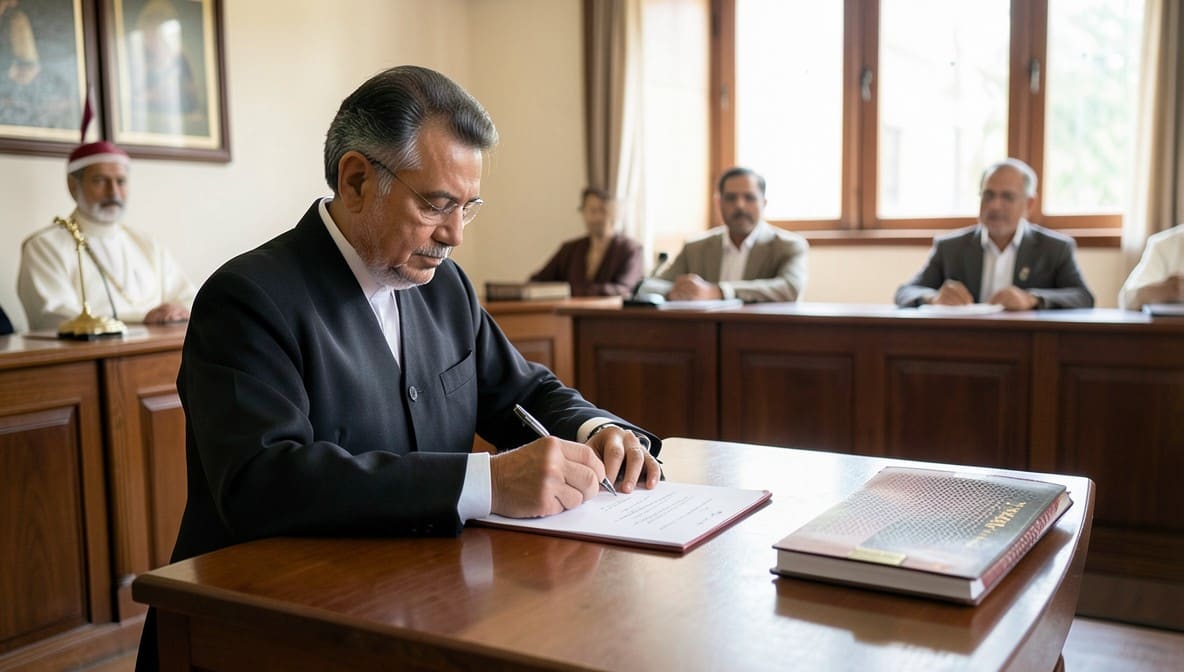
The Patna High Court has granted anticipatory bail to petitioners in a serious criminal case involving allegations of criminal breach of trust and fraud, emphasizing that a genuine compromise and full restitution of funds render detention unnecessary. The judgment underscores that procedural history and prior failed bail applications do not automatically bar relief when the underlying dispute is resolved.
Background & Facts
The Dispute
The petitioners, Urmila Kuer and Gautam Kumar Singh, are accused in Madanpur Police Station Case No. 219 of 2023 under Sections 406, 420, 120B, 467, 468, and 471 of the Indian Penal Code. The allegations arise from a dispute over the sale of land. The complainant, Smt. Anamika Singh, wife of Chandan Kumar Singh, alleged that the petitioners fraudulently obtained money for land they did not have the right to sell.
Key Facts
- The petitioners and the complainant are related by family ties.
- The dispute centered on a land transaction involving a payment of Rs. 12 lakhs.
- The petitioners initially sought anticipatory bail in Cr. Misc. No. 58179 of 2023, which they withdrew on 01.05.2024.
- Urmila Kuer filed a second application, Cr. Misc. No. 56621 of 2024, which was granted on 12.09.2024 with a condition to surrender and repay Rs. 12 lakhs to the complainant.
- Urmila Kuer failed to surrender within the stipulated time due to inability to arrange funds.
- A third application, Cr. Misc. No. 80735 of 2024, seeking extension of time for surrender, was dismissed on 06.12.2024.
- On 09.03.2026, the petitioners and the complainant filed a joint compromise petition before the trial court.
- A supplementary affidavit filed with the High Court confirms that the entire amount of Rs. 12 lakhs has been repaid to the complainant.
Procedural History
- 2023: FIR registered at Madanpur PS, Case No. 219 of 2023.
- 01.05.2024: First anticipatory bail application (Cr. Misc. No. 58179 of 2023) withdrawn by petitioners.
- 12.09.2024: Second anticipatory bail application (Cr. Misc. No. 56621 of 2024) granted with condition to repay Rs. 12 lakhs and surrender.
- 06.12.2024: Third application (Cr. Misc. No. 80735 of 2024) for extension of time dismissed.
- 09.03.2026: Joint compromise petition filed in trial court; repayment of Rs. 12 lakhs confirmed.
- 08.05.2026: Present application (Cr. Misc. No. 23299 of 2026) heard and decided.
Relief Sought
The petitioners sought anticipatory bail in the event of arrest in connection with Madanpur PS Case No. 219 of 2023, citing the resolution of the dispute and repayment of the entire amount.
The Legal Issue
The central question was whether Section 438 of the Cr.P.C. permits the grant of anticipatory bail to an accused who has previously failed to comply with bail conditions, when the underlying dispute has since been fully resolved through compromise and restitution.
Arguments Presented
For the Petitioner
Learned counsel submitted that the petitioners have clean antecedents and that the dispute is essentially civil in nature, arising from a family land transaction. He emphasized that the entire amount of Rs. 12 lakhs has been repaid, and a joint compromise petition has been filed before the trial court. He argued that continued detention would serve no purpose and that the court should consider the substantive resolution of the matter over procedural lapses.
For the Respondent
The Additional Public Prosecutor fairly conceded that since the dispute has been resolved and the amount repaid, sending the petitioners to jail would be an empty formality. The State did not oppose the grant of anticipatory bail but left open the possibility of its cancellation if the compromise were later found to be invalid.
The Court's Analysis
The Court acknowledged the petitioners’ prior failures to comply with bail conditions, including the withdrawal of the first application and the dismissal of the extension request. However, it held that these procedural setbacks cannot override the substantive development in the case - the full repayment of Rs. 12 lakhs and the filing of a joint compromise petition before the trial court.
"Sending the petitioners to jail at this stage would be an empty formality, given that the dispute has been resolved and the entire amount has been repaid."
The Court emphasized that Section 438 Cr.P.C. is a preventive provision designed to shield individuals from arbitrary arrest, particularly where the allegations, though serious, are rooted in private disputes that have been amicably settled. The Court noted that the complainant’s consent to the compromise and receipt of payment indicate a withdrawal of the animus that originally fueled the criminal complaint.
The Court further observed that the grant of anticipatory bail is not a reward for compliance but a recognition of changed circumstances. The prior non-compliance was contextualized as a failure of means, not of intent, and has been remedied.
The Verdict
The petitioners succeeded. The Court granted anticipatory bail to Urmila Kuer and Gautam Kumar Singh, subject to the following conditions: (1) they shall be released on furnishing bail bonds of Rs. 10,000 each with two sureties of the like amount; (2) the bail shall be effective upon arrest or surrender before the trial court within fourteen weeks from 08.05.2026; (3) the bail shall be subject to all conditions under Section 438(2) Cr.P.C.; and (4) the complainant may apply for cancellation of bail if the compromise is not upheld or the Rs. 12 lakhs repayment is found to be false.
What This Means For Similar Cases
Compromise Can Override Procedural Defaults
- Practitioners may now argue that prior non-compliance with bail conditions does not permanently disqualify an accused if the underlying dispute is genuinely resolved.
- Courts must distinguish between willful defiance and inability to comply due to financial hardship, especially in family or property disputes.
Repayment of Amount Is a Material Factor in Bail Decisions
- Full restitution of the disputed sum, coupled with a joint compromise petition, significantly weakens the prosecution’s case for custody.
- In cases under Sections 406 and 420 IPC, where the core grievance is financial, repayment is not merely mitigating - it is dispositive of the need for arrest.
Judicial Discretion Must Reflect Substantive Justice
- The Court’s willingness to overlook three prior applications signals a shift toward outcome-oriented justice in non-violent economic offences.
- Lawyers should proactively file affidavits and compromise petitions alongside anticipatory bail applications to demonstrate resolution.
Anticipatory Bail Is Not a Right, But a Remedy for Changed Circumstances
- This judgment reinforces that Section 438 Cr.P.C. is flexible and responsive to evolving facts.
- The burden shifts to the prosecution to show why custody remains necessary after restitution and compromise.
The Role of the Complainant in Bail Decisions
- The complainant’s consent and receipt of payment are now critical evidentiary factors.
- Courts may treat the complainant’s right to seek cancellation as a safeguard, not a barrier to bail.