The Allahabad High Court has reaffirmed that amicable settlement in financial disputes can be a decisive factor in granting bail, even in serious non-bailable offences under the IPC. This ruling underscores the judiciary’s growing recognition of restitution and cooperation as mitigating factors in bail jurisprudence, particularly amid systemic overcrowding in prisons.
Background & Facts
The Dispute
The applicant, Anil, is accused in Case Crime No. 27 of 2025 at Police Station Phephna, District Ballia, under Sections 406 (criminal breach of trust), 419 (cheating by impersonation), 420 (cheating and dishonestly inducing delivery of property), 471 (using as genuine a forged document), 467 (forgery of valuable security), and 468 (forgery for purpose of cheating) of the Indian Penal Code. The case arises from an alleged misappropriation of funds belonging to the first informant, who has since passed away. The dispute centers on accounting irregularities in a financial transaction involving Rs. 10,92,000, of which Rs. 8,64,914 is claimed as outstanding.
Key Facts
- The applicant and co-accused, Krishna Kumar Singh, had jointly deposited Rs. 10,92,000/- in the account of the first informant.
- The first informant’s statement admits that the applicant’s liability is Rs. 8,64,914/-.
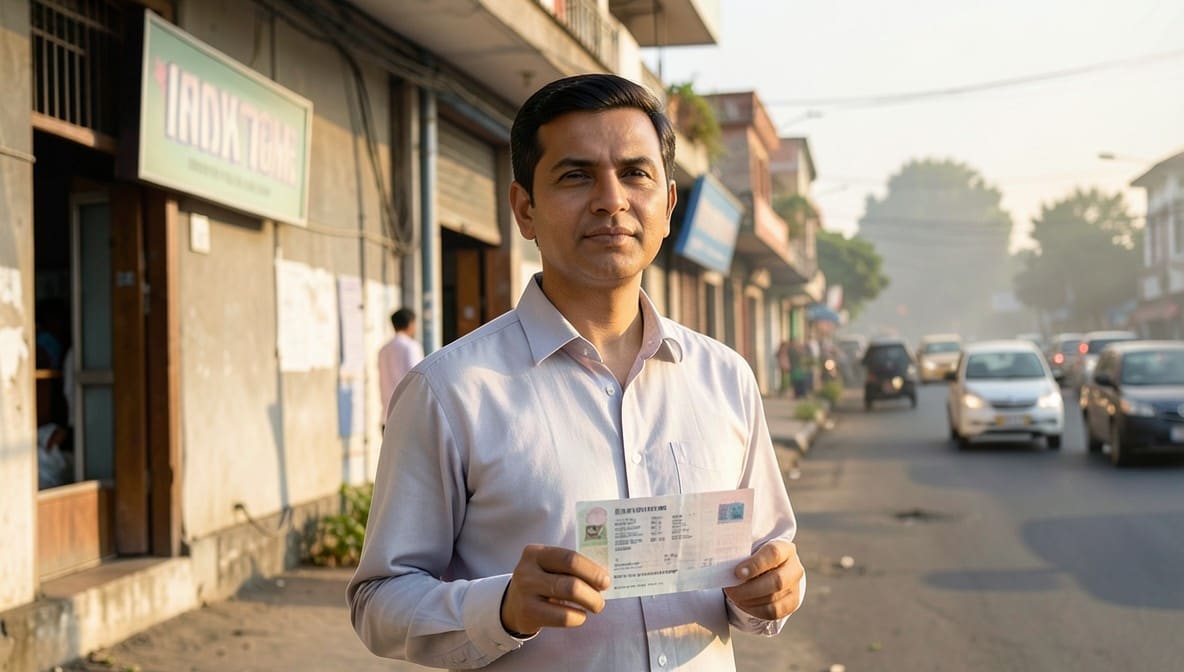
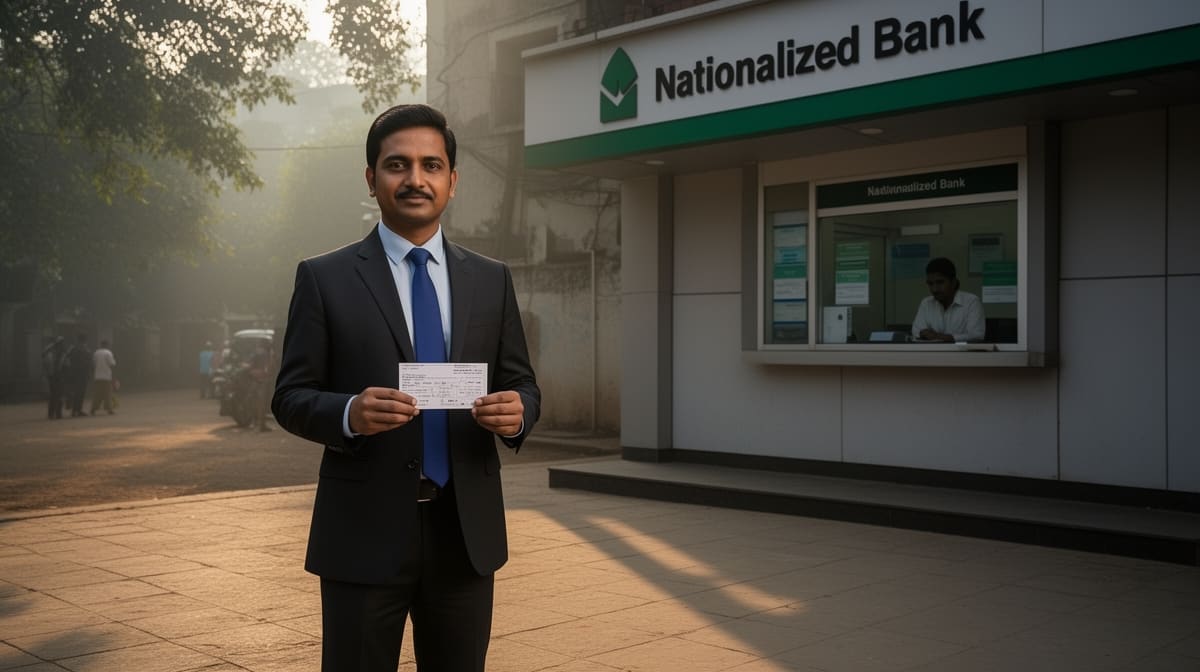
- On 21.04.2026, the applicant submitted a demand draft of Rs. 2,88,000/- (one-third of the outstanding amount) bearing No. 514145, issued by SBI, Allahabad High Court Branch, payable to Aseem Shrinetra, son of the deceased first informant.
- A photocopy of the demand draft is on record and has been handed over to the counsel for the first informant’s son.
- The applicant undertakes to pay the remaining Rs. 5,76,914/- within six months of his release from jail.
- The applicant has been in judicial custody since 09.11.2024.
- The co-accused, Krishna Kumar Singh, was granted bail earlier, with the first bail application of the applicant being rejected on 02.07.2025 on grounds of criminal antecedents and lack of parity.
Procedural History
- 09.11.2024: Applicant arrested and taken into custody.
- 21.04.2026: Applicant deposits Rs. 2,88,000/- via demand draft as partial restitution.
- 02.07.2025: First bail application (Criminal Misc. Bail Application No. 19441 of 2025) rejected by the trial court on grounds of criminal history and lack of parity with co-accused.
- 05.05.2026: Second bail application filed before the Allahabad High Court.
- 06.05.2026: Hearing conducted before Hon’ble Justice Arun Kumar Singh Deshwal.
The Parties' Positions
For the Applicant: Counsel argued that the matter is not one of dishonest misappropriation but of accounting discrepancy. The applicant has demonstrated bonafide intent by paying one-third of the claimed liability and has undertaken to clear the balance within six months. His prolonged incarceration since November 2024, coupled with the absence of any flight risk or threat to witnesses, warrants bail. The rejection of parity with the co-accused was unjustified, as the co-accused had no criminal history.
For the First Informant’s Counsel: No objection to bail if the applicant fulfills his undertaking to pay the remaining amount. The counsel confirmed the receipt of the partial payment and expressed willingness to cooperate.
For the State (A.G.A.): Opposed bail on the nature of offences but conceded that the dispute had been amicably resolved and no substantive objection remained.
Relief Sought
The applicant seeks release on bail during the pendency of trial, subject to conditions including repayment of the outstanding amount within six months of release, cooperation with the trial, and compliance with standard bail conditions.
The Legal Issue
Can bail be granted in a non-bailable case under Sections 406, 420, 467, 468, 471 IPC where the accused has made a bonafide partial restitution, undertaken to pay the balance, and the complainant has no objection, despite prior criminal antecedents and gravity of offences?
Arguments Presented
For the Appellant/Petitioner
Counsel relied on Kapil Wadhawan v. Central Bureau of Investigation (2025 SCC OnLine SC 3038), which emphasized that bail should not be denied solely on the gravity of the offence when the accused has demonstrated restitution and cooperation. He also cited Maya Tiwari v. State of U.P. (2024 SCC Online All 6765), where this Court held that settlement in financial disputes, especially where the victim’s family consents, is a compelling factor in bail decisions. The applicant’s payment of Rs. 2,88,000/- via demand draft was presented as proof of bonafide intent. His incarceration since November 2024, without trial progress, was highlighted as a violation of the right to speedy justice.
For the Respondent/State
The State did not dispute the factual settlement. The A.G.A. acknowledged that the dispute was essentially civil in nature, transformed into a criminal case due to procedural overreach. No evidence of threat, tampering, or flight risk was presented. The State’s opposition was largely formal, with no substantive rebuttal to the applicant’s undertaking.
The Court's Analysis
The Court examined the nature of the offences, the stage of trial, the conduct of the accused, and the evolving jurisprudence on bail in financial fraud cases. It noted that while the offences are non-bailable and serious, they arise from a private financial dispute, not violence or public harm. The applicant’s partial payment of Rs. 2,88,000/- via a bank instrument, coupled with a clear undertaking to pay the balance within six months, demonstrated a willingness to make restitution - a factor the Supreme Court has recognized as materially relevant in Kapil Wadhawan.
"The fact that the complainant’s representative has no objection to bail, and the accused has made a tangible effort to discharge his liability, tilts the balance in favour of liberty, especially when incarceration has lasted over six months without trial progress."
The Court distinguished this case from those involving habitual offenders or where restitution is absent. While the applicant had three prior cases, the Court held that this alone cannot override a demonstrable effort at settlement, particularly when the victim’s side has no objection. The Court also emphasized the constitutional imperative under Article 21 to avoid prolonged pre-trial detention and the operational directives from In Re: Policy Strategy for Grant of Bail (2024) 10 SCC 685, mandating swift release upon bail order.
The Court further noted that the co-accused had been granted bail, and the applicant’s antecedents did not indicate a pattern of financial fraud or evasion. The undertaking to pay the balance was deemed credible and enforceable.
The Verdict
The applicant, Anil, is granted bail on furnishing a personal bond of Rs. 50,000/- and two sureties each in the like amount, subject to conditions. He shall pay the remaining outstanding amount of Rs. 5,76,914/- to the son of the deceased first informant within six months of his release. He shall not tamper with evidence, threaten witnesses, or commit any further offence. The trial court shall transmit the bail order via the Bail Order Management System (BOMS) within 24 hours. The jail superintendent shall be emailed a copy of the order within 24 hours. The certified copy of the order shall be filed within 15 days. Identity, Aadhaar, and mobile verification of applicant and sureties shall be confirmed by the court before release.
What This Means For Similar Cases
Settlement Can Override Criminal Gravity
- Practitioners should now routinely file bail applications in financial fraud cases where partial restitution is made and the complainant consents.
- Courts are increasingly willing to treat restitution as a mitigating factor, even in non-bailable offences under Sections 420 and 467 IPC.
Undertakings Must Be Concrete and Verifiable
- Oral promises are insufficient; payments must be made via bank instruments (demand draft, RTGS, cheque) with documentary proof.
- Undertakings to pay future amounts must specify exact figures, timelines, and recipients.
Parity with Co-Accused Is Not Absolute, But Relevant
- While prior criminal history is a factor, it cannot override a demonstrable settlement if co-accused are granted bail.
- Courts must weigh the nature of prior offences - non-financial antecedents carry less weight in fraud cases.
Procedural Compliance Is Mandatory for Release
- Courts must ensure BOMS transmission and email notification to jail within 24 hours, as mandated by the Supreme Court.
- Failure to comply with these directives may attract contempt proceedings.
Bail Is Not Acquittal - But It Is a Right
- This judgment reinforces that bail is not a reward for good behavior but a procedural safeguard under Article 21.
- Prolonged incarceration without trial progress is now a recognized ground for bail, even in serious cases.