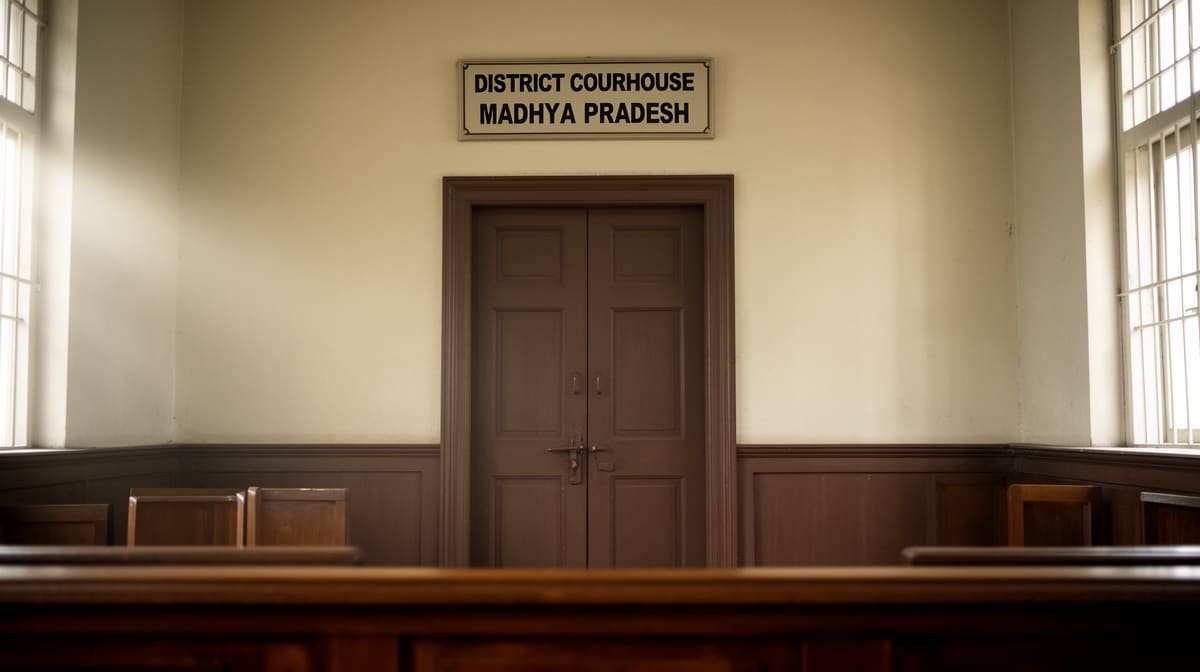
The Madhya Pradesh High Court has firmly reaffirmed that no criminal court, including the High Court, may review or recall a final order quashing an FIR, regardless of procedural irregularities. This ruling underscores the absolute statutory bar under Section 362 CrPC and clarifies that inherent powers under Section 482 cannot be used to circumvent this prohibition.
Background & Facts
The Dispute
The petitioner, Smt. Maya, sought review of an order dated 28.09.2016 passed by the same High Court in M.Cr.C. No. 10046/2016, which had quashed the FIR registered at Police Station Belbag, District Jabalpur, under Sections 306 and 34 IPC against respondent Nos. 2 and 3. The petitioner, who filed the original complaint, was not heard before the quashment order was passed. She contended that this violated the principles of natural justice and sought recall of the order under Section 482 CrPC.
Key Facts
- FIR No. 39/2016 was registered at Police Station Belbag, Jabalpur, on allegations of abetment to suicide under Sections 306/34 IPC
- The accused persons were respondent Nos. 2 and 3
- On 28.09.2016, the High Court quashed the FIR and all consequential proceedings in M.Cr.C. No. 10046/2016
- The petitioner was neither impleaded nor heard during the hearing leading to the quashment order
- No appeal or revision was filed against the 28.09.2016 order by any party, including the petitioner
- The petitioner filed the present petition under Section 482 CrPC on 15.11.2016 seeking review/recall of the quashment order
Procedural History
- 15.11.2016: Present petition (M.Cr.C. No. 19780/2016) filed before the High Court seeking review of the order dated 28.09.2016
- 28.09.2016: Order passed in M.Cr.C. No. 10046/2016 quashing FIR and criminal proceedings
- 24.06.2026: Judgment delivered in the present petition
The Parties' Positions
Petitioner: Argued that the absence of hearing before quashing the FIR violated natural justice and that the High Court has the power to correct such a grave procedural flaw through its inherent jurisdiction under Section 482 CrPC.
Respondent (State): Took a neutral stance but acknowledged that the State had not challenged the 28.09.2016 order in any higher forum.
Relief Sought
The petitioner sought recall or review of the order dated 28.09.2016 quashing the FIR, and restoration of the criminal proceedings against respondent Nos. 2 and 3.
The Legal Issue
Can the High Court, under its inherent powers under Section 482 CrPC, review or recall its own final order quashing an FIR, where the complainant was not heard, despite the express bar under Section 362 CrPC?
Arguments Presented
For the Petitioner
The petitioner contended that the failure to afford a hearing before quashing the FIR amounted to a violation of the principles of natural justice. She argued that such a fundamental procedural defect, especially in a case involving a serious offence like abetment to suicide, warranted corrective action by the High Court. She relied on the Court’s inherent jurisdiction under Section 482 CrPC to prevent abuse of process and secure justice, asserting that the absence of a hearing rendered the order voidable.
For the Respondent
The State did not oppose the petition outright but emphasized that it had not challenged the 28.09.2016 order in any appellate or revisional forum. The Government Advocate conceded that the petitioner’s grievance was procedural but did not dispute the legal bar under Section 362 CrPC.
The Court's Analysis
The Court began by examining the statutory framework governing the alteration or review of final orders in criminal proceedings. Section 362 CrPC provides: "No court, when it has signed its judgment or final order disposing of a case, shall alter or review the same except to correct a clerical or arithmetical error."
The Court emphasized that the language of Section 362 is mandatory and leaves no room for judicial discretion. It creates an absolute prohibition against reviewing or recalling final orders, irrespective of the nature of the error or the procedural lapse.
"The provision does not preserve any inherent power of review in criminal proceedings."
The Court then addressed the petitioner’s reliance on Section 482 CrPC, which grants the High Court inherent powers to prevent abuse of process and secure the ends of justice. However, the Court held that such inherent powers cannot override an express statutory prohibition. Citing Hari Singh Mann v. Harbhajan Singh Bajwa (2001) 1 SCC 169 and State of Kerala v. M.M. Manikantan Nair (2001) 4 SCC 752, the Court reaffirmed that what cannot be done directly under Section 362 cannot be achieved indirectly through Section 482.
The Court observed that the order dated 28.09.2016 was a final order disposing of the criminal proceedings. Once signed, the Court became functus officio. Even if the petitioner was not heard - a matter of serious concern - the absence of a hearing does not create a legal power to review a final order where the statute explicitly forbids it.
The Court noted that the petitioner’s remedy, if any, lay in filing an appeal or revision before a superior forum, which she failed to do. The Court concluded that permitting review under Section 482 would render Section 362 otiose and undermine the finality of judicial orders.
The Verdict
The petition was dismissed. The Court held that the order dated 28.09.2016 quashing the FIR could not be reviewed or recalled under Section 482 CrPC, as Section 362 CrPC imposes an absolute bar on such review. No costs were awarded.
What This Means For Similar Cases
Final Orders Cannot Be Reviewed on Procedural Grounds
- Practitioners must file appeals or revisions within statutory time limits; post-finality review under Section 482 is not available
- A violation of natural justice during quashment proceedings does not create a right to review once the order is signed
- Any challenge to a quashment order must be raised before a higher forum, not through a review petition in the same court
Section 482 Is Not a Substitute for Appellate Remedies
- The inherent jurisdiction under Section 482 is confined to preventing abuse of process and not correcting procedural lapses in final orders
- Courts will not entertain petitions that are, in substance, appeals dressed as review applications
- Lawyers must advise clients to pursue statutory remedies promptly, as delay or inaction bars recourse under Section 482