The Bombay High Court has upheld the conviction and life imprisonment of three accused for the 2011 murders of Keenan Santos and Ruben Fernandez outside a Mumbai restaurant, ruling that their coordinated departure, procurement of weapons, and armed return after a 10-15 minute interval established common intention under Section 34 IPC. The Court rejected defences of sudden fight, grave provocation, and afterthought molestation allegations, affirming the reliability of five eyewitnesses despite investigative delays and omissions.
Background & Facts
The Dispute
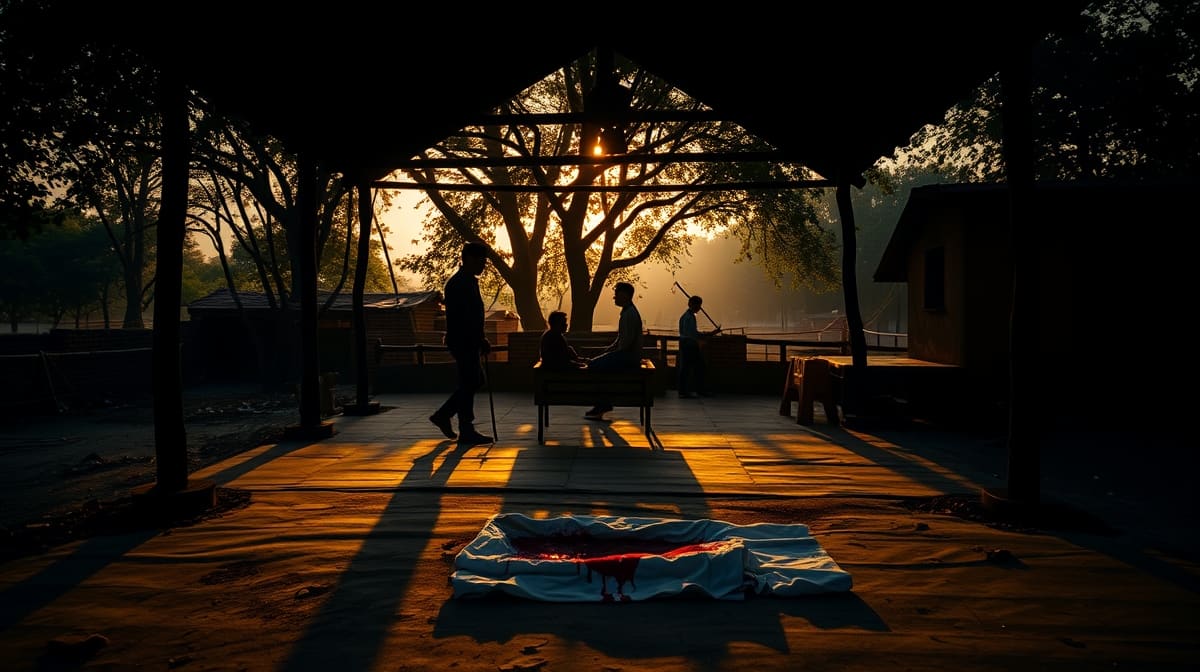
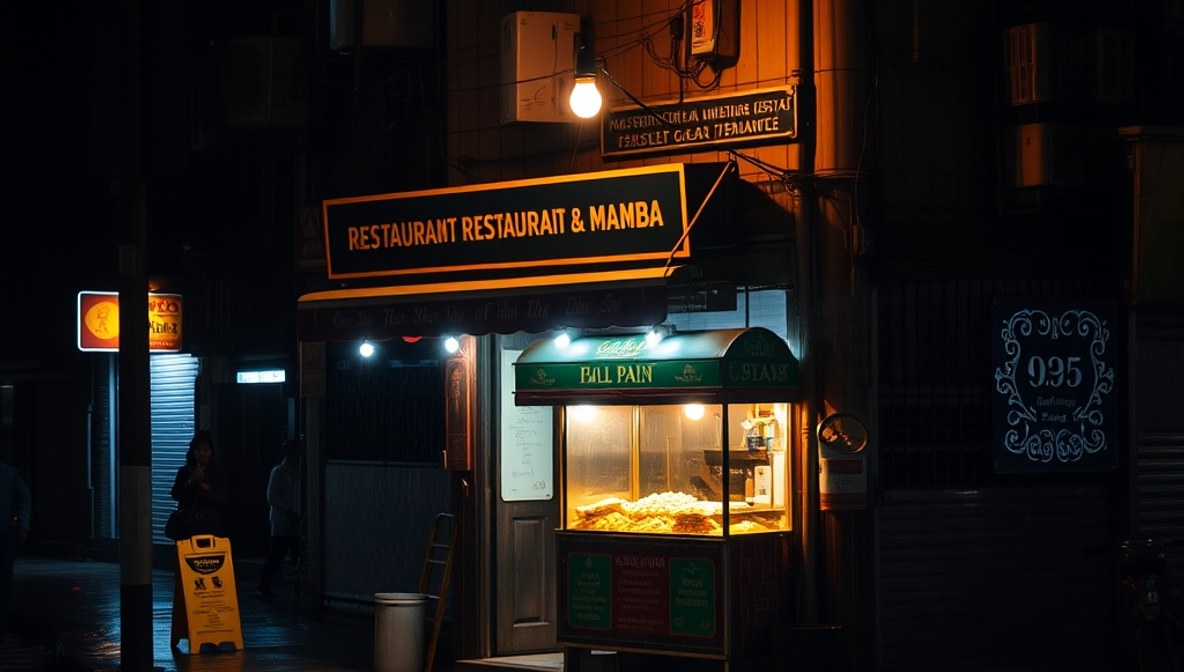
The appeals arose from the brutal murders of two young men, Keenan Santos and Ruben Fernandez, on the night of 20 October 2011 outside the Amboli Bar and Kitchen Restaurant in Andheri West, Mumbai. The appellants - Jitendra Fakirchand Rana @ Chaina (Accused No.1), Sunil Omprakash Both @ Chota (Accused No.3), and Deepak Ishwar Omprakash Piwal (Accused No.4) - challenged their convictions and life sentences imposed by the Additional Sessions Judge, Greater Mumbai, in Sessions Case No. 161/2012 vide judgment dated 5 May 2016. Accused No.2, Satish Nafesing Dulgaj, died during the pendency of the appeal on 3 November 2025.
Key Facts
- On 20 October 2011, a group of seven friends (four males, three females) visited the restaurant to watch an India-England cricket match and had dinner.
- Around 10:30 PM, the four males - Keenan Santos, Ruben Fernandez, Benjamin Fernandez, and Avinash Solanki (PW-17) - went to a nearby paan shop while the three females (PW-1, PW-18 Shobita Singh, and Priyanka) went to the washroom.
- As the girls descended the staircase, Accused No.1 (wearing white Pathani) made a "shuk shuk" noise, passed lewd comments ("Kya mast maal hai, isko aaj raat ko uthake leke jayenge"), and molested PW-1. Accused No.2 (wearing 3/4th pants and white t-shirt) also touched her inappropriately and made vulgar remarks.
- PW-1 screamed, pushed them away, and ran to her friends. Keenan confronted the accused, asking if they had no mothers or sisters. A verbal altercation ensued; Avinash Solanki slapped Accused No.1.
- The accused abused the group, threatened to return ("chhodunga nahi, wapas aa ke batata hoon"), and left.
- After 10-15 minutes, all four accused returned armed: Accused No.1 and No.2 with knives, Accused No.3 with a cricket stump, Accused No.4 with a bamboo stick.
- Accused No.1 repeatedly stabbed Keenan in the abdomen and arm; Keenan fell. Accused No.2 stabbed Ruben in the abdomen; he also fell. Accused No.3 and No.4 assaulted Avinash and Benjamin with the stump and bamboo.
- Avinash threw glasses (hitting Accused No.1 on the head) and a ladder at the attackers. A crowd gathered; the accused fled with their weapons.
- Keenan was rushed to Kokilaben Hospital by waiter Mohsin and Avinash; he was declared dead within 10-15 minutes of admission (around 12:30 AM on 21 October 2011).
- Ruben was initially taken to Cooper Hospital, then shifted to Kokilaben Hospital; he died on 31 October 2011 at 5:52 PM.
- Avinash Solanki (PW-17) lodged the FIR (CR No. 410/2011) at D.N. Nagar Police Station around 2:40 AM on 21 October 2011.
- The FIR initially did not mention molestation; a supplementary statement on 22 October 2011 added these details. PW-18's statement was recorded on 21 October 2011; PW-1 and Priyanka's statements were recorded on 7 November 2011.
- Section 354 IPC was added on 30 December 2011; Sections 509 and 506(II) were added on 7 November 2011.
- Test Identification Parade conducted on 16 November 2011 at Arthur Road Jail by Executive Magistrate PW-14; all eyewitnesses identified the accused.
- Knives recovered at the instance of Accused No.1 (from electric box near Gulmohar building) and Accused No.2 (from roof corner in Valmiki Nagar) under Section 27 Evidence Act. DNA analysis matched blood on Accused No.1's knife to Ruben Fernandez.
- Post-mortem of Keenan revealed six external injuries including two fatal stab wounds perforating stomach and small intestine; cause of death: hemorrhage due to stab injuries. Post-mortem of Ruben revealed fatal incised stab wound damaging external iliac artery and veins; cause of death: shock due to incised stab wound.
- Medical examination of Accused No.1 showed two scalp injuries (12 hours old) consistent with being hit by glass.
- Trial Court convicted all four accused under Section 302 r/w 34 IPC (life imprisonment for remainder of natural life). Accused No.1 and No.2 also convicted under Sections 354, 509, 504, 506(II) IPC and Section 37(1) r/w 135(1) Bombay Police Act. Accused No.3 and No.4 also convicted under Section 323 IPC. All sentences to run concurrently.
Procedural History
- 20.10.2011: Incident occurs at Amboli Bar and Kitchen Restaurant, Andheri West.
- 21.10.2011 (02:40 AM): FIR No. 410/2011 registered at D.N. Nagar Police Station by PW-17.
- 21.10.2011: PW-18's statement recorded under Section 161 CrPC.
- 22.10.2011: Supplementary statement of PW-17 recorded; molestation details disclosed.
- 25.10.2011: Knife recovered at instance of Accused No.2 (Article 1).
- 25.10.2011: Knife recovered at instance of Accused No.1 (Article 2).
- 16.11.2011: Test Identification Parade conducted at Arthur Road Jail.
- 30.12.2011: Section 354 IPC added to FIR.
- 05.05.2016: Trial Court judgment convicting all four accused.
- 2016: Criminal Appeals Nos. 439, 381, 840 of 2016 filed before Bombay High Court.
- 03.11.2025: Accused No.2 (Satish Dulgaj) expires; Appeal No. 790/2016 abated.
- 18.09.2026: Appeals reserved for judgment.
- 05.11.2026: Judgment pronounced by Division Bench (Justices M.S. Karnik and Sandesh D. Patil).
Relief Sought
The appellants sought acquittal on all charges, alternatively conviction under Section 304 IPC (culpable homicide not amounting to murder) invoking Exception 4 to Section 300 IPC (sudden fight/grave provocation), and challenge to the applicability of Section 34 IPC to Accused No.3 and No.4 who did not inflict fatal injuries.
The Legal Issue
The central questions were: (1) Whether the prosecution proved the molestation of PW-1 by Accused No.1 and No.2 as the genesis of the incident, despite delay in recording statements and omission from the initial FIR; (2) Whether the 10-15 minute interval between the first altercation and the armed return of all four accused negated sudden fight or grave provocation under Exception 4 to Section 300 IPC; (3) Whether common intention under Section 34 IPC could be imputed to Accused No.3 and No.4 who carried only a cricket stump and bamboo and did not inflict the fatal knife wounds; (4) Whether investigative omissions (non-examination of certain witnesses, non-production of CCTV footage, absence of alcohol tests) fatally weakened the prosecution case.
Arguments Presented
For the Appellants
Senior Advocate Sudeep Pasbola (for Accused No.1) argued the molestation narrative was an afterthought introduced under media pressure to avoid the defence of grave and sudden provocation. He highlighted: the FIR's silence on molestation; PW-1's statement recorded 18 days post-incident (7 November 2011) with no medical proof of illness; PW-17's supplementary statement after 24 hours; Section 354 added only on 30 December 2011. He contended the EPR entries, medical records, and station diary entries contained no mention of molestation. He argued the incident was a free fight: PW-17 slapped Accused No.1 first; Benjamin (Ruben's brother) told doctors at Cooper Hospital that 15 persons with knives assaulted them; the complainant party consumed alcohol for three hours (sour smell in Keenan's stomach noted at autopsy); blood samples for alcohol not collected; CCTV footage, restaurant bills, and waiter Mohsin not produced. He submitted Accused No.1's knife recovery was implausible (concealed near crime scene); DNA on it matched Ruben (assaulted by Accused No.2). He relied on Surinder Kumar v. UT Chandigarh, Jagrup Singh v. State of Haryana, Arvind Kumar v. State of UP, Sukhbir Singh v. State of Haryana, Surain Singh v. State of Punjab, Rambir v. State of NCT Delhi, Rampal Singh v. State of UP, Tholan v. State of Tamil Nadu, Anbazhagan v. State of Tamil Nadu for principles on sudden fight and provocation.
Dr. Yug Mohit Chaudhary (for Accused No.4) adopted the afterthought argument, emphasizing the Station Diary (Exhibit 134) recorded only "uttered bad words for girl" not molestation. He argued Accused No.4 held only a bamboo, caused no fatal injury, and Section 34 IPC did not apply absent common intention to kill. He cited the Trial Court's own finding at page 1337 that "no role attributed to Accused No.4."
Gaurav Bhavnani (for Accused No.3) adopted co-accused arguments and added: Accused No.3's cricket stump (Article 3) had no blood per Chemical Analyser Report (Exhibit 171); his clothes showed no blood on shirt, inconclusive blood on jeans not matching deceased; no common intention to murder proven.
For the Respondent
Special Public Prosecutor Aabad Ponda argued the case rested on direct evidence of five eyewitnesses (PW-1, PW-2, PW-17, PW-18, PW-21) - two independent (PW-2 security guard, PW-21 paan vendor) - corroborated by medical, forensic, and documentary evidence. He submitted: PW-1 and PW-18 consistently narrated molestation; PW-17's supplementary statement explained FIR omission (girls feared social stigma); PW-18's statement recorded next day; Station Diary Exhibit 134 (recorded 21 October 2011, 2:00 AM) contemporaneously noted "quarrel arose after one boy uttered abusive words towards girl"; TIP conducted properly; knife recoveries under Section 27 proven by panch witnesses PW-6 and PW-7; DNA on Accused No.1's knife matched Ruben (proving his presence at fatal assault); Accused No.1's scalp injuries corroborated glass-throwing account; all four accused left together, threatened return, returned armed after 10-15 minutes - deliberate act showing common intention; Accused No.3 and No.4 actively participated in coordinated assault; non-examination of other witnesses not fatal (Vijendra Singh v. State of UP, State of HP v. Gian Chand, Takhaji Hiraji v. Thakore Kubersing, Dahari v. State of UP); non-production of CCTV not fatal (State of Karnataka v. K. Yarappa Reddy); alcohol consumption speculative, no evidence of intoxication impairing perception; not sudden fight - interval showed premeditation; Exception 4 inapplicable as Accused No.2-4 were not provoked.
The Court's Analysis
The Court, per Justice Sandesh D. Patil, systematically addressed each defence contention.
On molestation, the Court held the prosecution proved the incident through direct evidence of PW-1 (victim) and PW-18 (eyewitness), corroborated by PW-2, PW-17, PW-21, and the contemporaneous Station Diary Exhibit 134. The Court rejected the afterthought argument: "It would be too far fetched to say that the act of molestation was subsequent act of fabrication." The Station Diary, recorded within hours, noted "quarrel had arisen after one of the boys had uttered abusive words towards the girl" - supporting the prosecution genesis. The Court cited Firoz Khan Akbarkhan v. State of Maharashtra (2025) on minor discrepancies not amounting to contradictions.
On delay in statements, the Court found PW-1's delay (statement on 7 November 2011) sufficiently explained: she was a 24-year-old girl who witnessed molestation followed by brutal murder of friends; her mother informed police on 5 November 2011 she was unwell; IO PW-25 confirmed this. The Court applied State of MP v. Balveer Singh (2025): delay alone cannot discard testimony absent malice; here delay attributable to investigation inertia and witness trauma. PW-18's statement recorded next day (21 October 2011) mentioned molestation; PW-17's supplementary statement next day explained FIR omission (girls' fear of defamation). The Court held: "FIR is not an encyclopedia" (Satpal v. State of Haryana, 2018).
On PW-2 (security guard) credibility, the Court held absence of appointment letter did not render evidence doubtful; he was a natural witness at the hotel entrance; his statement recorded next day; he withstood cross-examination.
On PW-21 (paan vendor) credibility, the Court held his conduct (closing shop, going home) was natural after witnessing gruesome murder; he did not claim to see molestation but corroborated girls' frightened demeanor and immediate disclosure to PW-17; his not hearing screams was immaterial as he was busy preparing paan.
On non-examination of witnesses (Mohsin, Benjamin, Cooper Hospital doctor, beat marshals), the Court applied Vijendra Singh v. State of UP: quality over quantity; non-examination does not affect case if examined witnesses are trustworthy and testimony unimpeachable. No adverse inference drawn.
On non-production of CCTV footage, bills, alcohol tests, the Court held these at most show investigative defects, not fatal where direct evidence of five eyewitnesses exists. Cited State of Karnataka v. K. Yarappa Reddy: court must have predominance over investigating officer; credible ocular evidence can be acted upon despite suspicious investigation.
On incongruity in number of assailants (medical records mentioning three vs four), the Court held these minor clerical errors in hospital records; ocular evidence of all five eyewitnesses and Station Diary Exhibit 134 consistently stated four accused.
On TIP delay (conducted 27 days post-incident), the Court found it conducted properly by Magistrate PW-14 with precautions; delay not fatal.
On knife recoveries, the Court upheld Section 27 recoveries: PW-6 (Accused No.2) and PW-7 (Accused No.1) proved memorandum and panchanama; DNA on Accused No.1's knife matched Ruben - placing him at the fatal assault despite his claim to have only assaulted Keenan.
On alcohol consumption, the Court held it speculative: no blood tests, no witness testified to intoxication impairing perception; sour smell in stomach not conclusive of alcohol.
On sudden fight / Exception 4 to Section 300 IPC, the Court held the 10-15 minute interval, during which accused left, procured weapons, and returned together armed, showed "intervening and deliberate act, and not a spontaneous continuation." Accused No.2-4 were not subjected to provocation (slap was to Accused No.1 only). The Court distinguished cited precedents (Surinder Kumar, Jagrup Singh, etc.) as involving mutual fighting, injuries on both sides, or private defence - none present here.
On Section 34 IPC qua Accused No.3 and No.4, the Court held common intention established: all four present at first incident, left together, threatened return, returned together armed, participated in coordinated assault. Section 34 does not require identical weapons or fatal injuries by each; active participation in coordinated assault sufficient. Accused No.3 and No.4 did not withdraw but assaulted Avinash and Benjamin simultaneously with stump and bamboo while Accused No.1 and No.2 stabbed the deceased. Their conduct showed active participation in furtherance of common intention.
"Their departure, procurement of weapons and return together showed an intervening and deliberate act, and not a spontaneous continuation of the earlier incident. Further, accused Nos.2 to 4 had not themselves been subjected to the alleged provocation."
The Verdict
The Bombay High Court dismissed Criminal Appeals Nos. 439/2016 (Accused No.1), 381/2016 (Accused No.3), and 840/2016 (Accused No.4). The convictions and sentences imposed by the Trial Court were upheld in full:
- Section 302 r/w 34 IPC: Life imprisonment for the remainder of natural life for all three appellants.
- Accused No.1 (Jitendra Rana): Additional rigorous imprisonment 2 years + Rs.5,000 fine (default 1 month) under Section 354 IPC; 1 year imprisonment under Section 509 IPC; rigorous imprisonment 2 years under Section 504 IPC; rigorous imprisonment 5 years + Rs.5,000 fine (default 15 days) under Section 506(II) IPC; rigorous imprisonment 6 months under Section 37(1) r/w 135(1) Bombay Police Act.
- Accused No.3 (Sunil Both) and Accused No.4 (Deepak Piwal): Additional rigorous imprisonment 1 year under Section 323 IPC; rigorous imprisonment 6 months under Section 37(1) r/w 135(1) Bombay Police Act.
- All substantive sentences to run concurrently.
- Criminal Appeal No. 790/2016 (Accused No.2) stood abated due to his death on 3 November 2025.
What This Means For Similar Cases
Molestation Allegations Not Afterthought Merely Due To Delayed Disclosure
The Court affirmed that victims of sexual harassment, especially young women, may delay disclosure due to trauma, fear of social stigma, and shock from subsequent violent events. A supplementary statement recorded the next day (PW-17) and an eyewitness statement recorded the next day (PW-18) mentioning molestation, coupled with a contemporaneous Station Diary entry noting "abusive words towards girl," suffice to prove the genesis. Practitioners should:
- Not treat FIR omissions as fatal where plausible explanation exists (social stigma, shock).
- Rely on Satpal v. State of Haryana: FIR is not an encyclopedia.
- Corroborate victim testimony with independent witnesses (here PW-2, PW-21) and contemporaneous police records.
Interval Between Provocation And Armed Return Negates Sudden Fight Defence
The 10-15 minute gap during which all accused left the scene, procured deadly weapons (knives, stump, bamboo), and returned together as a group transformed the incident from a sudden quarrel into a premeditated assault. This principle is critical for:
- Distinguishing Exception 4 (sudden fight) from planned retaliation.
- Establishing that cooling time + weapon procurement = deliberation, not heat of passion.
- Proving common intention under Section 34 IPC through conduct during the interval.
Common Intention Under Section 34 IPC Does Not Require Fatal Blow By Each Accused
The Court clarified that active participation in a coordinated assault - even with non-lethal weapons - while co-accused inflict fatal injuries, establishes vicarious liability for murder. Key takeaways:
- All four accused left together, threatened return, returned armed together.
- Accused No.3 and No.4 assaulted survivors simultaneously with stump/bamboo while fatal stabbings occurred.
- No withdrawal or attempt to prevent the killing.
- Section 34 IPC applies to "active participation in furtherance of common intention," not identical roles.
- Trial Court's observation of "no role attributed to Accused No.4" was based on fatal injury causation, not participation; High Court corrected this narrow view.
Investigative Deficiencies Do Not Trump Credible Direct Evidence
Non-production of CCTV footage, restaurant bills, alcohol test reports, and non-examination of certain witnesses (waiter, Benjamin, etc.) were held non-fatal where five eyewitnesses (two independent) gave consistent, corroborated testimony supported by medical and forensic evidence. The Court reinforced judicial predominance over investigation (State of Karnataka v. K. Yarappa Reddy). Practitioners should:
- Focus on quality and consistency of ocular evidence.
- Argue investigative gaps go to weight, not admissibility or credibility of direct evidence.
- Cite Vijendra Singh line of authorities on non-examination of witnesses.
DNA And Forensic Evidence Can Link Accused To Specific Acts Beyond Their Claimed Role
The DNA match of Ruben's blood on the knife recovered from Accused No.1 (who claimed to have only stabbed Keenan) powerfully rebutted the defence's attempt to compartmentalize roles. This demonstrates:
- Forensic evidence can transcend self-serving claims of individual roles.
- Section 27 recoveries, when properly proven by panch witnesses, carry high evidentiary value.
- Chain of custody (seizure, forwarding, sealed receipt, scientific examination) must be established.
Station Diary Entries As Contemporaneous Corroboration
Exhibit 134 (Station Diary entry by Control Room Officer at 2:00 AM on 21 October 2011) recording "quarrel arose after one boy uttered abusive words towards girl" provided powerful contemporaneous corroboration of the molestation genesis, recorded before any alleged fabrication. This underscores:
- The evidentiary value of real-time police records.
- Such entries need not be encyclopedic; they capture the essence of information received.
- They can effectively rebut afterthought allegations.