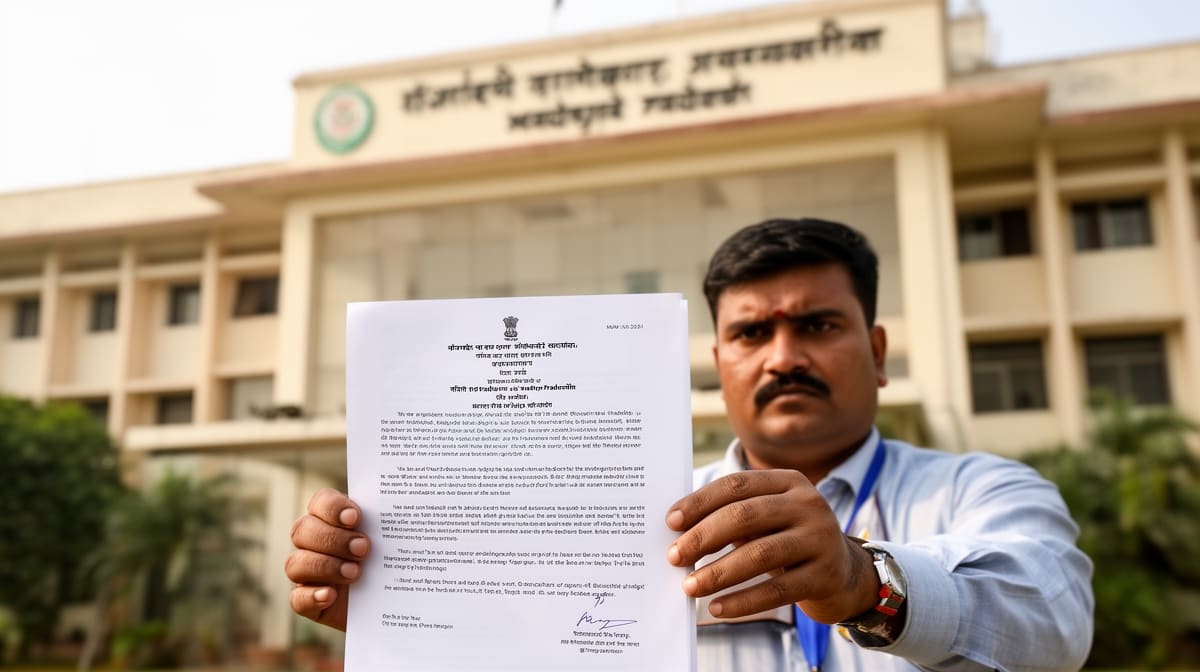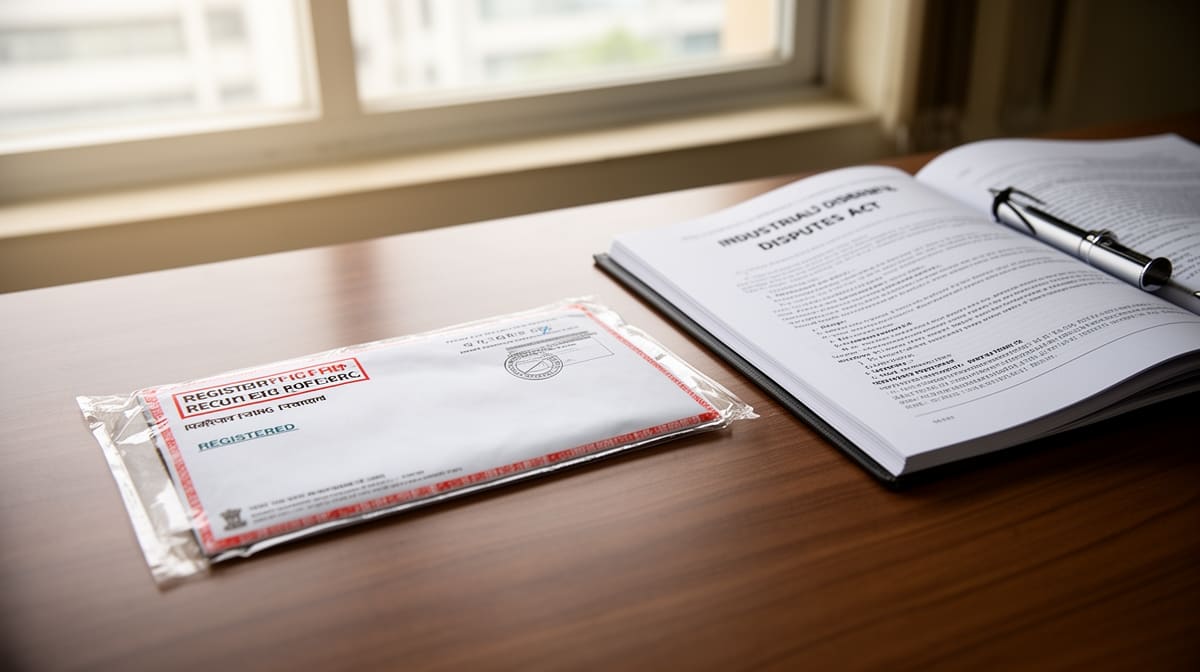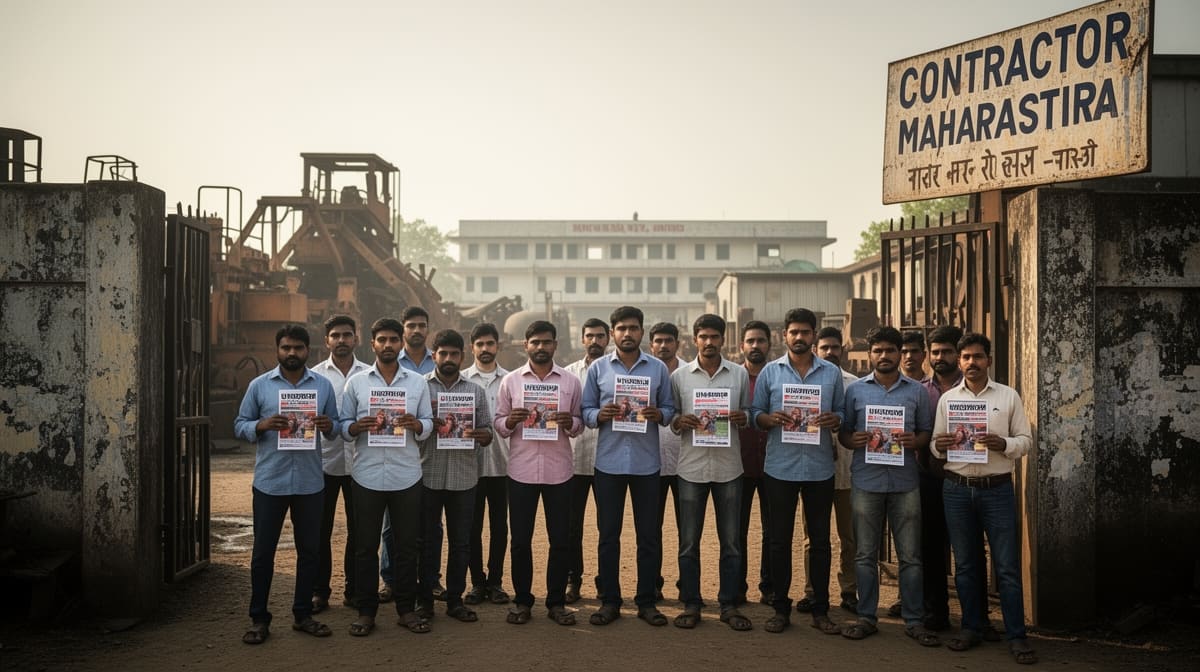
The Punjab and Haryana High Court has reaffirmed that Section 33-C(2) of the Industrial Disputes Act, 1947, permits enforcement of monetary claims only if they arise from a pre-existing right or benefit, not from an abstract notion of fairness. This ruling clarifies the jurisdictional limits of Labour Courts in adjudicating claims by workmen against government employers.
Background & Facts
The Dispute
The petitioner, the Chief Engineer of the Rural Sanitation and Drainage Corporation (RSDC), is a government establishment. The respondents, numbered 1 to 19, are workmen employed by the petitioner. These workmen were temporarily posted from RSDC to the Punjab State Transport Corporation (PSTC), Chandigarh, under a deputation arrangement. Upon their return, they filed an application under Section 33-C(2) of the Industrial Disputes Act, 1947, seeking payment of four allowances allegedly due during their deputation period.
Key Facts
- The workmen were deputed from RSDC to PSTC, Chandigarh, between 10.05.2010 and 13.05.2011
- The deputation was governed by terms and conditions executed between RSDC and PSTC (Annexure R-1)
- The workmen claimed four allowances totaling Rs. 44,032/-:
- Deputation Allowance @ 10% of pay (Rs. 1,176/month) for 12 months: Rs. 14,112/-
- Uniform and Washing Allowance @ Rs. 160/month for 7 months: Rs. 1,920/-
- Transfer Travelling Allowance (Shahpurkandi to Samrala and back): Rs. 16,000/-
- Local Travelling Allowance @ Rs. 40/day for 300 days: Rs. 12,000/-
- The petitioner-management, in its reply to the application (Annexure P-2), admitted liability for the latter three claims but disputed only the deputation allowance
- The terms and conditions explicitly stated that deputation allowance would not be payable, but transfer and local travelling allowances would be paid by PSTC as per government rules
- The workmen’s application was filed before the Industrial Tribunal on an unspecified date prior to 29.07.2015
Procedural History
- 10.05.2010: Workmen deputed from RSDC to PSTC
- 13.05.2011: Deputation period ended
- Date unknown (prior to 29.07.2015): Application under Section 33-C(2) filed by workmen
- 29.07.2015: Industrial Tribunal passed award granting claims for uniform washing, transfer travelling, and local travelling allowances; rejected deputation allowance
- 24.03.2026: Writ petition filed before the Punjab and Haryana High Court challenging the Tribunal’s jurisdiction
The Parties' Positions
The petitioner contended that:
- The dispute is civil in nature, governed by Punjab Civil Service Rules
- No pre-existing right to deputation allowance exists under service rules or terms of deputation
- The Industrial Tribunal lacks jurisdiction under Section 33-C(2) to adjudicate any claim not rooted in a pre-existing right
- The Supreme Court’s decision in M/s Bombay Chemical Industries v. Deputy Labour Commissioner bars enforcement of benefits merely deemed fair
The respondents contended that:
- The petitioner-management admitted three of the four claims in its reply
- The Tribunal only adjudicated the admitted claims, which fall squarely within Section 33-C(2)
- The jurisdiction of the Tribunal is not invalidated by the rejection of one disputed claim
- The admitted entitlements are clearly quantifiable and arise from established practice and government instructions
Relief Sought
The petitioner sought quashing of the Industrial Tribunal’s order dated 29.07.2015 on the ground that the Tribunal lacked jurisdiction under Section 33-C(2) to adjudicate any of the claims, including the admitted ones.
The Legal Issue
Can an Industrial Tribunal exercise jurisdiction under Section 33-C(2) of the Industrial Disputes Act, 1947 to adjudicate and enforce monetary claims that have been expressly admitted by the employer, even if one of the multiple claims raised is not based on a pre-existing right?
Arguments Presented
For the Petitioner
The petitioner’s counsel argued that Section 33-C(2) is strictly limited to enforcement of pre-existing rights or benefits, as clarified by the Supreme Court in M/s Bombay Chemical Industries v. Deputy Labour Commissioner. He contended that deputation allowances are not part of the statutory or service rules governing government employees, and that the terms of deputation explicitly excluded such allowance. He further submitted that even if the Tribunal only granted the admitted claims, the entire application was tainted by the inclusion of a non-pre-existing claim, rendering the Tribunal’s jurisdiction invalid. He relied on the Supreme Court’s observation that the distinction between a pre-existing right and a benefit deemed just and fair is vital.
For the Respondent
The respondents’ counsel countered that the Tribunal did not adjudicate the disputed deputation allowance as a matter of jurisdiction. Instead, it only awarded the three claims that the employer had admitted in writing. The admission of these claims - uniform washing, transfer travelling, and local travelling allowances - constituted clear, quantifiable, and pre-existing entitlements under government instructions and PSTC rules. The Tribunal’s decision was confined to these admitted rights, and therefore fell squarely within its statutory mandate under Section 33-C(2). The rejection of the deputation allowance did not invalidate the jurisdiction exercised over the admitted claims.
The Court's Analysis
The Court undertook a detailed examination of the Industrial Tribunal’s award and the petitioner’s reply. It noted that the petitioner-management, in its written response, had explicitly admitted liability for three of the four claims: uniform washing allowance, transfer travelling allowance, and local travelling allowance. The only dispute was regarding deputation allowance, which the Tribunal correctly declined to grant.
The Court emphasized that the jurisdiction of the Industrial Tribunal under Section 33-C(2) is not rendered invalid merely because one of several claims in the application is outside its purview. The Tribunal’s function is to adjudicate only those claims that are admitted and capable of being computed in monetary terms.
"In the case of Kankuben (supra), it is observed and held that whenever a workman is entitled to receive from his employer any money or any benefit which is capable of being computed in terms of money and which he is entitled to receive from his employer and is denied of such benefit can approach Labour Court under Section 33C (2) of the ID Act. It is further observed that the benefit sought to be enforced under Section 33C (2) of the ID Act is necessarily a pre-existing benefit or one flowing from a pre-existing right. The difference between a pre-existing right or benefit on one hand and the right or benefit, which is considered just and fair on the other hand is vital. The former falls within jurisdiction of Labour Court exercising powers under Section 33C (2) of the ID Act while the latter does not."
The Court held that the admitted claims - uniform washing, transfer travelling, and local travelling allowances - were not speculative or discretionary. They were grounded in government instructions and established rules, and thus qualified as pre-existing rights. The Tribunal’s decision to grant these admitted claims was entirely within its statutory authority.
The Court further clarified that the Supreme Court’s ruling in M/s Bombay Chemical Industries does not support the petitioner’s argument. That case did not hold that the entire application fails if one claim is non-pre-existing. Rather, it affirmed that only those claims rooted in pre-existing rights are enforceable under Section 33-C(2). The Tribunal correctly applied this principle by granting only the admitted, pre-existing claims.
The Court concluded that the Tribunal’s award was legally sound, procedurally correct, and did not exceed its jurisdiction.
The Verdict
The petition was dismissed. The Industrial Tribunal’s order dated 29.07.2015 was upheld. The workmen are entitled to the following amounts as admitted and awarded:
- Uniform and Washing Allowance: Rs. 1,920/-
- Transfer Travelling Allowance: Rs. 16,000/-
- Local Travelling Allowance: Rs. 12,000/- Total: Rs. 29,920/-, along with 12% interest from the date of the application until realization. All pending applications stand disposed of.
What This Means For Similar Cases
Admitted Claims Are Enforceable Even If Other Claims Are Rejected
- Practitioners must now argue that jurisdiction under Section 33-C(2) is determined claim-by-claim, not application-wide
- If an employer admits even one quantifiable benefit, the Labour Court has jurisdiction to enforce it, regardless of other disputed claims
- This prevents employers from using jurisdictional objections to delay payment of undisputed dues
Pre-Existing Right Must Be Concrete, Not Abstract
- Benefits must arise from service rules, standing orders, contracts, or established practice - not from notions of equity or fairness
- Government instructions, circulars, or departmental policies that create a consistent entitlement qualify as pre-existing rights
- Oral assurances or discretionary practices without documentation will not suffice
Strategic Use of Admissions in Labour Disputes
- Employers must carefully draft replies to Section 33-C(2) applications; inadvertent admissions can bind them to payment
- Workmen should structure applications to clearly separate admitted claims from disputed ones to strengthen enforceability
- Tribunals are empowered to sever and adjudicate only the valid claims, making partial awards legally sustainable