The Jharkhand High Court has clarified that a demand for financial support to establish a business after marriage, if tied to marital expectations and accompanied by harassment, qualifies as dowry under Section 304B IPC. The judgment distinguishes between legitimate financial assistance and coercive demands, reinforcing the statutory presumption of guilt when cruelty and dowry demand are established.
Background & Facts
The Dispute
The case arose from the death of Shikha Banerjee, who died on 17.10.1999 from severe burn injuries sustained at her matrimonial home in Saluk Capra, Dhanbad. She had married Baid Nath Banerjee on 26.02.1997. The prosecution alleged that her husband and in-laws subjected her to continuous harassment and physical cruelty due to unfulfilled dowry demands, culminating in her being set on fire.
Key Facts
- Shikha Banerjee’s marriage to Baid Nath Banerjee took place on 26.02.1997.
- At the time of marriage, the bride’s father, Nityanand Mukherjee, provided Rs. 50,000 in cash, 14 tola gold ornaments, and household articles.
- Within 2-3 months of marriage, Baid Nath Banerjee began demanding an additional Rs. 50,000 to open a homeopathic clinic in Hirapur, Dhanbad.
- The deceased, Shikha, reported this pressure to her parents during visits to her parental home, stating she was being threatened and mistreated.
- In February 1999, the bride’s father paid Rs. 20,000 to Baid Nath Banerjee to appease him.
- Despite this payment, Baid Nath Banerjee continued demanding the remaining Rs. 30,000, and allegedly intensified harassment.
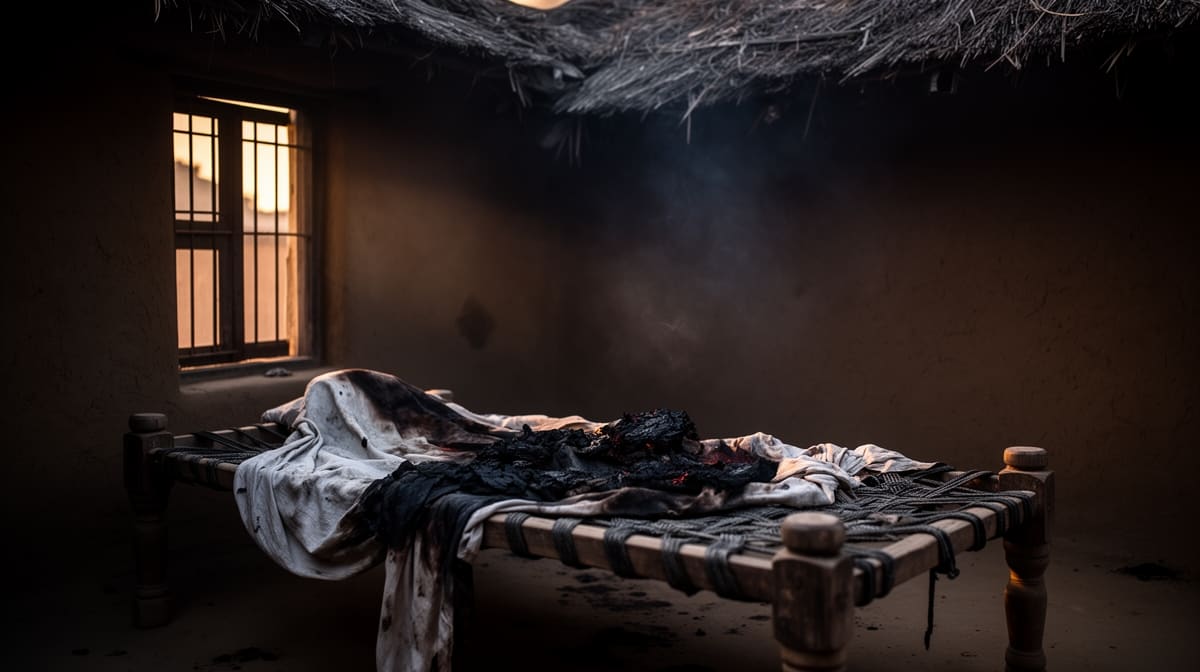
- On 17.10.1999, Shikha was found severely burnt in the courtyard of her matrimonial home and died at Sadar Hospital, Dhanbad.
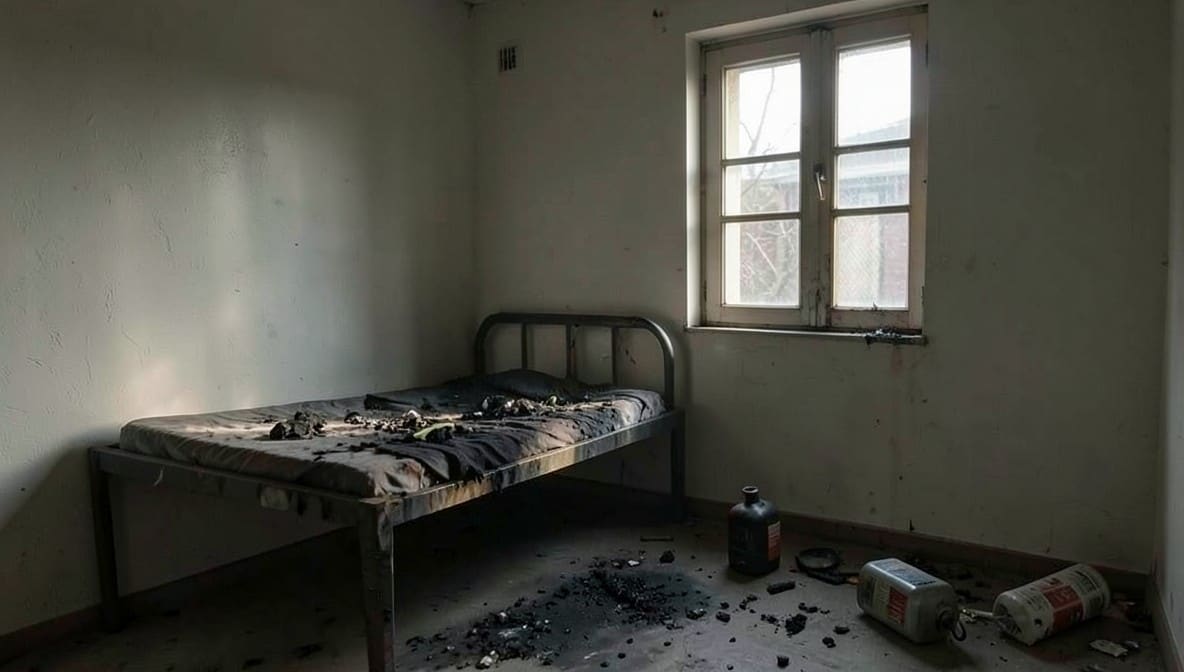
- The post-mortem report (Exhibit-4) confirmed 90% body burns caused by kerosene oil, with no signs of accidental stove burst.
- A U.D. case was registered on 17.10.1999 by Baid Nath Banerjee, claiming accidental fire due to kerosene stove burst. Aditya Mukherjee, the deceased’s brother, signed the statement.
- The formal F.I.R. was lodged on 05.11.1999 after the complainant approached the Superintendent of Police and the National Human Rights Commission.
- The deceased left behind a one-and-a-half-year-old son, Rohan.
Procedural History
- 26.02.1997: Marriage of Shikha Banerjee and Baid Nath Banerjee.
- 17.10.1999: Death of Shikha Banerjee due to burn injuries.
- 17.10.1999: U.D. case registered by Baid Nath Banerjee; Aditya Mukherjee signed the statement.
- 05.11.1999: Formal F.I.R. registered under Sections 304B/34 and 498A IPC.
- 13.02.2000: First charge sheet filed against Ram Podo Banerjee, Baid Nath Banerjee, Renuka Banerjee, and Mohan Banerjee.
- Ram Podo Banerjee died after charge sheet submission.
- 06.07.2000: Second charge sheet filed against Tapas Kumar Mukherjee, Bharati Mukherjee, Baidyanath Mukherjee, and Tripti Mukherjee.
- 2001: Sessions Trial No. 18 of 2001 commenced.
- 2003: Trial Court convicted Baid Nath Banerjee and Mohan Banerjee under Sections 304B/34 and 498A IPC.
- 2003: Appellants filed criminal appeals before the Jharkhand High Court.
- 19.02.2026: Appeal of Renuka Banerjee abated due to her death during pendency.
- 13.05.2026: Judgment delivered by the Division Bench of the Jharkhand High Court.
The Parties' Positions
Appellants (Baid Nath Banerjee and Mohan Banerjee):
- Argued that the death was accidental, caused by a kerosene stove burst.
- Claimed the Rs. 50,000 demand was for business loan, not dowry.
- Asserted that Mohan Banerjee, as brother-in-law, had no involvement in any demand or cruelty.
- Contended that the delay in F.I.R. and registration of U.D. case indicated fabrication.
Respondent (State of Jharkhand):
- Maintained that the demand for Rs. 50,000 was made in connection with marriage, not as a loan.
- Presented consistent testimony from father (P.W.3), mother (P.W.5), and brother (P.W.4) of the deceased.
- Highlighted that the demand was followed by harassment, physical abuse, and ultimately, the fatal burning.
- Argued that the U.D. case was a post-facto fabrication to cover up the crime.
Relief Sought
- Appellant Mohan Banerjee sought acquittal on grounds of no evidence linking him to dowry demand or cruelty.
- Appellant Baid Nath Banerjee sought reversal of conviction, arguing lack of proof of dowry and accidental death.
- The State sought confirmation of conviction and sentence for both appellants.
The Legal Issue
The central question was whether a demand for money to establish a business after marriage, when coupled with harassment and resulting in death within seven years, constitutes dowry under Section 304B IPC, and whether the presumption under Section 113B of the Indian Evidence Act can be invoked against a brother-in-law absent specific evidence of his involvement.
Arguments Presented
For the Appellants
Learned counsel for Baid Nath Banerjee argued that the Rs. 50,000 demand was a personal loan for business development, not dowry, citing the absence of any formal demand at the time of marriage. He emphasized that the U.D. case was filed immediately after the incident, corroborated by the deceased’s brother, and that no kerosene stove was found at the scene. For Mohan Banerjee, counsel contended that no witness ever testified to his involvement in any demand or act of cruelty, and that his conviction was based on guilt by association. He relied on Rajinder Singh v. State of Punjab to argue that demands must be directly tied to marriage, not merely incidental.
For the Respondent
The Additional Public Prosecutors argued that the demand for Rs. 50,000 was made repeatedly after marriage, with threats of withholding food and clothing, and that the timing and context clearly linked it to the marriage. They cited the consistent testimony of three close relatives and the post-mortem findings to establish that the death was not accidental. They further argued that the U.D. case was a cover-up, as the brother’s signature was obtained without reading the contents, and that the delay in F.I.R. was understandable given the trauma. The State relied on Rajinder Singh v. State of Punjab to assert that any demand reasonably connected to the marriage, even if framed as business funding, qualifies as dowry.
The Court's Analysis
The Court undertook a meticulous review of the evidence, focusing on the four foundational ingredients of dowry death under Section 304B IPC: (i) unnatural death within seven years of marriage; (ii) death by burns; (iii) cruelty or harassment soon before death; and (iv) such cruelty in connection with a dowry demand.
The Court found that the death occurred under unnatural circumstances, as confirmed by the post-mortem report (Exhibit-4), which noted 90% kerosene burns and no evidence of accidental stove burst. The Court rejected the defence’s claim of accident, noting the absence of any physical evidence supporting it.
Regarding the dowry demand, the Court examined the testimony of P.W.3 (father), P.W.4 (brother), and P.W.5 (mother), all of whom consistently stated that the Rs. 50,000 was demanded for opening a clinic, not as a loan, and that refusal led to harassment. The Court held that the demand, though framed as business funding, was made in the context of marriage and was coercive in nature, thus falling within the ambit of dowry as interpreted in Rajinder Singh v. State of Punjab (2015) 6 SCC 477. The Court observed:
"Any money or property or valuable security demanded by any of the persons mentioned in Section 2 of the Dowry Prohibition Act, at or before or at any time after the marriage which is reasonably connected to the death of a married woman, would necessarily be in connection with or in relation to the marriage unless, the facts of a given case clearly and unequivocally point otherwise."
The Court further held that the presumption under Section 113B of the Indian Evidence Act was rightly invoked against Baid Nath Banerjee, as the prosecution established all four ingredients. The defence failed to rebut this presumption with any credible evidence.
However, regarding Mohan Banerjee, the Court found no evidence linking him to any demand or act of cruelty. No witness testified that he ever made a demand, threatened the deceased, or participated in the harassment. The trial court’s conviction of Mohan Banerjee was based on general association, not specific proof. The Court emphasized:
"For invoking the presumption under Section 113B, it must be proved that the accused was involved in demanding dowry and subjected the woman to cruelty soon before her death. This has not been established against Mohan Banerjee."
The Court distinguished between the husband, who was the direct beneficiary and perpetrator of the demand, and the brother-in-law, who had no role in the transaction or abuse.
The Verdict
The appeal of Mohan Banerjee (Cr. A. (S.J.) No. 643 of 2003) was allowed. He was acquitted of all charges under Sections 304B/34 and 498A IPC. He was discharged from bail obligations, and his sureties were released.
The appeal of Baid Nath Banerjee (Cr. A. (S.J.) No. 656 of 2003) was dismissed. His conviction and sentence of 10 years rigorous imprisonment under Section 304B read with Section 34 IPC, and 2 years under Section 498A IPC, were upheld. He was directed to surrender before the trial court within two months from the date of this judgment. Failure to surrender would result in immediate arrest. The suspension of sentence granted during appeal was cancelled.
What This Means For Similar Cases
Dowry Demand Is Not Limited to Cash or Gold at Marriage
- Practitioners must now argue that any financial demand made after marriage - whether for business, property, or education - qualifies as dowry if it is tied to marital expectations and enforced through harassment.
- The Rajinder Singh precedent now binds lower courts: the context and coercion matter more than the label given to the demand.
- Defence arguments claiming "loan" or "business funding" as a shield against Section 304B will fail if the demand is persistent, coercive, and linked to marital life.
Brother-in-Law Cannot Be Convicted Without Specific Evidence
- Prosecutors must now specifically plead and prove the involvement of relatives beyond the husband.
- General inclusion of in-laws without individualized evidence of demand or cruelty will lead to acquittal.
- Section 113B presumption applies only to those who directly participated in the harassment or demand; mere presence or familial relationship is insufficient.
- Defence counsel should aggressively challenge joint charges where no individualized evidence exists.
Delay in F.I.R. Does Not Invalidate Dowry Death Cases
- The Court reaffirmed that trauma, fear, or attempts at reconciliation may delay reporting.
- Registration of a U.D. case by the accused does not automatically exonerate; courts must examine its credibility and timing.
- Evidence of post-incident attempts to fabricate alibis (e.g., U.D. case) may strengthen the prosecution’s case.
Documentary Evidence Must Be Scrutinized for Authenticity
- Signed statements by relatives under duress (e.g., U.D. case) are not reliable if the signatory claims ignorance of content.
- Courts must assess whether such documents were obtained under coercion or misinformation.
- The burden remains on the prosecution to prove the authenticity and voluntariness of all documentary evidence.
The Burden of Rebuttal Is Heavy for the Defence
- Once the prosecution establishes the four ingredients of Section 304B, the defence must present credible, specific evidence to rebut the presumption.
- Vague denials or unsubstantiated claims of accident will not suffice.
- Medical evidence (e.g., post-mortem) is decisive in distinguishing accidental from intentional burns.
Legal Practitioners Should Focus on Timing and Pattern
- In dowry death cases, the pattern of escalating demands, repeated threats, and physical abuse over time is more critical than isolated incidents.
- Counsel should map the timeline of demands, visits to parental home, and incidents of abuse to show a clear nexus between harassment and death.
- The Court’s emphasis on "soon before death" requires precise chronological alignment between the last demand and the fatal incident.
The Role of Relatives in Dowry Death Cases
- Relatives (parents, siblings, in-laws) can be charged under Section 304B only if they are shown to have actively participated in the demand or cruelty.
- Mere co-residence or association is not enough.
- Prosecutors must avoid "guilt by association" and focus on individual conduct.
Practical Takeaways for Defence Lawyers
- Always challenge joint charges under Section 304B where evidence against a relative is absent.
- Request separate examination of each accused’s role in the trial.
- Use Section 113B’s requirement of direct involvement to seek acquittal of non-involved relatives.
Practical Takeaways for Prosecutors
- Ensure that charges against relatives are supported by specific testimony or documentary evidence.
- Avoid lumping all family members into one charge without individualized proof.
- Use the Rajinder Singh precedent to argue that post-marriage demands for financial support can constitute dowry.
Key Statutory Interpretation
- Section 2 of the Dowry Prohibition Act, 1961, now interpreted broadly: "in connection with the marriage" includes demands made after marriage if they are reasonably connected to marital life.
- The phrase "in connection with" is not limited to demands made at the time of marriage.
- The Court’s interpretation aligns with the legislative intent to protect women from post-marital economic coercion.
Conclusion
This judgment reinforces that dowry is not confined to traditional gifts at marriage but extends to coercive financial demands made during marital life. It also sets a clear boundary: relatives cannot be convicted under Section 304B without direct evidence of their involvement. Practitioners must now tailor their arguments to the specific role of each accused, ensuring that charges are grounded in individual conduct, not familial association.