In a significant departure from conventional sentencing, the Karnataka High Court has modified a two-year imprisonment sentence under Section 304A of the Indian Penal Code (IPC) to a compensation order of Rs. 4,00,000. The Court, relying on a recent Supreme Court judgment, prioritized monetary restitution to the victim's family over incarceration, marking a nuanced approach in motor accident cases involving rash and negligent driving.
Background & Facts
The Incident
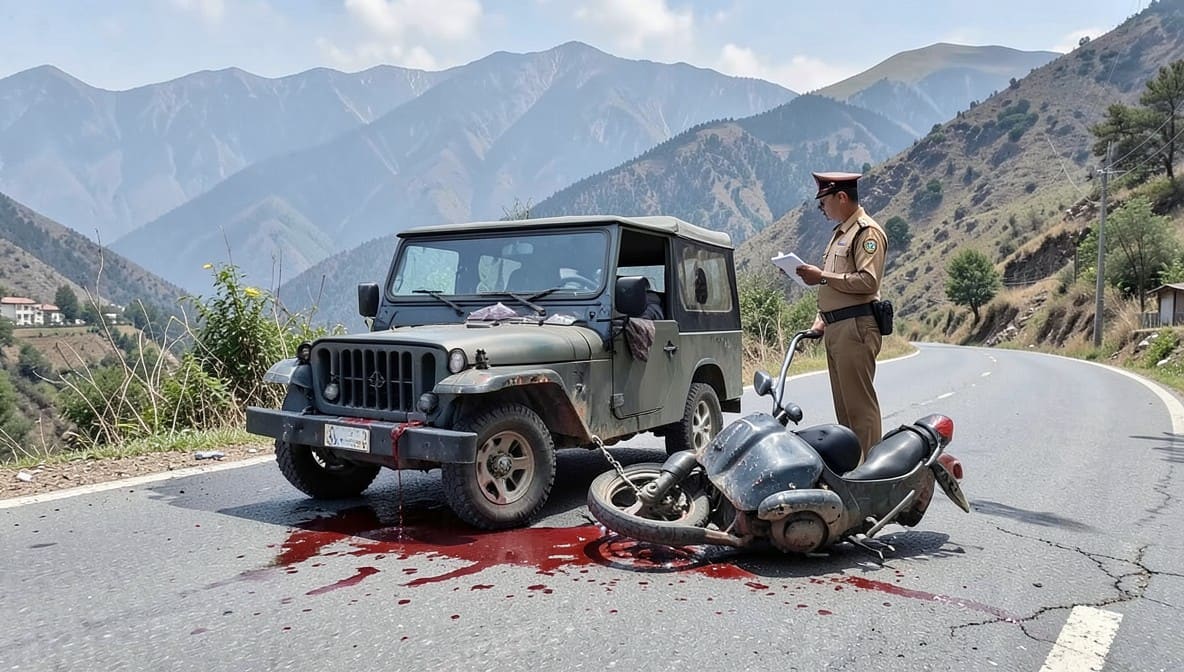
On 01.08.2014 at 2:15 p.m., the petitioner, Prabhulingaiah, was driving a KSRTC bus (bearing No. KA-42-F-287) on the Bangalore-Kanakapura State Highway. Near Annapoorneshwari Bar, Udayapalya, Uttarahalli Hobli, Bangalore South, the bus collided with two motorcycles (KA-05-JE-4726 and KA-02-HZ-6109) coming from the opposite direction. The rider of motorcycle KA-05-JE-4726, Madesh, sustained grievous injuries and was rushed to Bangalore BGS Global Hospital, where he succumbed to his injuries at 3:45 a.m. on 02.08.2014. A case was registered against the petitioner for offences punishable under Sections 279 (rash driving), 338 (grievous hurt), and 304A (causing death by negligence) of the IPC.
Key Facts
- The petitioner was driving the KSRTC bus on the right side of the road at the time of the accident.
- Madesh, the deceased, was 25 years old at the time of the incident.
- The prosecution examined P.W.1 to P.W.8 and marked documents Exs.P.1 to P.11.
- P.W.1 (Kamalappa): Conductor of the bus, who heard the sound of the collision and saw the driver stop the bus.
- P.W.4: An injured witness who deposed that the bus driver, attempting to overtake a tempo, came to the extreme side of the road and dashed against Madesh’s motorcycle.
- Ex.P.7: IMV (Inquest Mahazar) report.
- Ex.P.11: Sketch of the accident scene, relied upon by the prosecution to prove the petitioner’s guilt.
Procedural History
- C.C. No. 2272/2015: Trial commenced before the II Additional Chief Judicial Magistrate, Bengaluru Rural.
- 20.01.2020: Trial Court convicted the petitioner under Sections 279, 338, and 304A IPC and sentenced him to two years’ imprisonment.
- Criminal Appeal No. 21/2020: Filed before the IX Additional District and Sessions Judge, Bengaluru Rural.
- 12.08.2022: Appellate Court upheld the conviction, relying on Ex.P.11 (sketch) and the evidence of eye-witnesses, including P.W.4.
- Criminal Revision Petition No. 1300/2022: Filed before the Karnataka High Court, challenging the conviction and sentence.
Relief Sought
The petitioner sought:
- Setting aside the conviction and sentence imposed by the Trial Court and confirmed by the Appellate Court.
- Acquittal under Sections 279, 338, and 304A IPC.
- Alternatively, modification of the sentence to compensation, citing the recent Supreme Court judgment in Mahadevanna D.M. v. State of Karnataka.
The Legal Issue
The central question before the High Court was whether, in cases of rash and negligent driving causing death (Section 304A IPC), the Court could modify the sentence of imprisonment to compensation, particularly when the incident was accidental and not intentional, and when the victim’s family could be adequately compensated.
Arguments Presented
For the Petitioner
- Both the Trial Court and Appellate Court erred in relying on the evidence of P.W.1 and the injured witnesses, as there were discrepancies in their testimonies.
- The Courts failed to consider the evidence on record impartially and ought to have extended the benefit of doubt to the petitioner.
- Citing the Supreme Court judgment in Mahadevanna D.M. v. State of Karnataka, the petitioner argued that compensation of Rs. 4,00,000 should be ordered in lieu of imprisonment, as the incident was accidental and not intentional.
For the Respondent (State)
- The Trial Court rightly relied on the evidence of P.W.1 (conductor) and P.W.4 (injured witness), who clearly established that the petitioner was driving the bus rashly and negligently.
- P.W.4 deposed that the petitioner, while attempting to overtake a tempo, drove to the extreme side of the road and collided with Madesh’s motorcycle, causing fatal injuries.
- The prosecution’s evidence, including Ex.P.11 (sketch) and Ex.P.7 (IMV report), conclusively proved the petitioner’s guilt.
- The sentence of two years’ imprisonment was justified, and no interference was warranted.
The Court's Analysis
The High Court undertook a detailed re-appreciation of the evidence and the legal principles governing Section 304A IPC. Key observations included:
-
Evidence Appreciation:
- The Court noted that P.W.4, an injured witness, had deposed that the petitioner drove the bus rashly, attempting to overtake a tempo, and collided with the deceased’s motorcycle. This testimony was corroborated by P.W.1 (conductor) and the documentary evidence (Ex.P.7 and Ex.P.11).
- The Appellate Court had rightly relied on Ex.P.11 (sketch), which was not effectively disproved by the petitioner’s counsel during cross-examination.
-
Legal Principles:
- The Court observed that Section 304A IPC deals with causing death by rash or negligent act, which is distinct from intentional homicide. The offence is strict liability in nature, requiring no proof of mens rea.
- However, the Court emphasized that the incident was accidental and not intentional, warranting a more restorative approach rather than punitive imprisonment.
-
Supreme Court Precedent:
- The Court relied on the recent judgment of the Supreme Court in Mahadevanna D.M. v. State of Karnataka, where a BMTC driver was ordered to pay Rs. 5,00,000 as compensation to the victim’s family instead of undergoing imprisonment. The Supreme Court had held that in cases of accidental death caused by rash driving, compensation to the victim’s family could serve as an adequate remedy, particularly when the accused was the sole breadwinner.
-
Proportionality of Sentence:
- The Court noted that the two-year imprisonment sentence imposed by the Trial Court was exorbitant for an accidental offence under Section 304A IPC, where the minimum sentence is typically six months.
- Balancing the interests of justice, the Court held that compensation would better serve the cause of justice, as it would provide immediate relief to the victim’s family while avoiding the social and economic consequences of incarceration for the petitioner.
"The Apex Court in its judgment in the case of Mahadevanna D.M. v. State of Karnataka passed in SLP (Crl.) No. 4563/2022 dated 18.05.2026, while considering a similar set of facts in a case of a BMTC driver, imposed a fine of Rs. 5,00,000 payable towards compensation to the family of the deceased. In the case on hand, the deceased was aged about 25 years, and hence, instead of sentencing the revision petitioner, the family of the deceased may be compensated."
The Verdict
The Karnataka High Court partially allowed the Criminal Revision Petition with the following directions:
- The sentence of imprisonment was set aside and replaced with a compensation order of Rs. 4,00,000.
- Rs. 3,75,000 was to be paid to the parents of the deceased, equally if both were alive, or entirely to the surviving parent.
- Rs. 25,000 was to vest with the State.
- The petitioner was granted one month to deposit the compensation amount before the Trial Court.
- The payment of compensation would not disqualify the petitioner from employment, as observed by the Supreme Court in Mahadevanna D.M. v. State of Karnataka.
What This Means For Similar Cases
Compensation Over Imprisonment: A Shift in Sentencing
- Courts may increasingly favor compensation orders over imprisonment in Section 304A IPC cases, particularly where the offence is accidental and not intentional.
- This approach aligns with the restorative justice model, ensuring that victims’ families receive timely financial relief while avoiding the collateral consequences of incarceration for the accused.
Burden of Proof and Evidence in Rash Driving Cases
- Documentary evidence, such as sketches (Ex.P.11) and IMV reports (Ex.P.7), plays a pivotal role in establishing guilt. Defence counsel must rigorously cross-examine prosecution witnesses to disprove such evidence.
- Eye-witness testimonies, particularly of injured witnesses like P.W.4, carry significant weight. Courts are likely to uphold convictions where such testimonies are corroborated by documentary evidence.
Practical Implications for Legal Practitioners
- For Defence Counsel:
- Argue for compensation in lieu of imprisonment in Section 304A IPC cases, citing the Supreme Court’s precedent in Mahadevanna D.M. v. State of Karnataka.
- Highlight discrepancies in witness testimonies and lack of mens rea to seek acquittal or reduced sentence.
- For Prosecution:
- Ensure strong documentary evidence (sketches, IMV reports, medical records) is adduced to corroborate witness testimonies.
- Emphasize the strict liability nature of Section 304A IPC, where negligence alone is sufficient for conviction.
- For Victims’ Families:
- Seek compensation orders as a viable alternative to imprisonment, particularly in cases where the accused is the sole breadwinner or the offence was accidental.