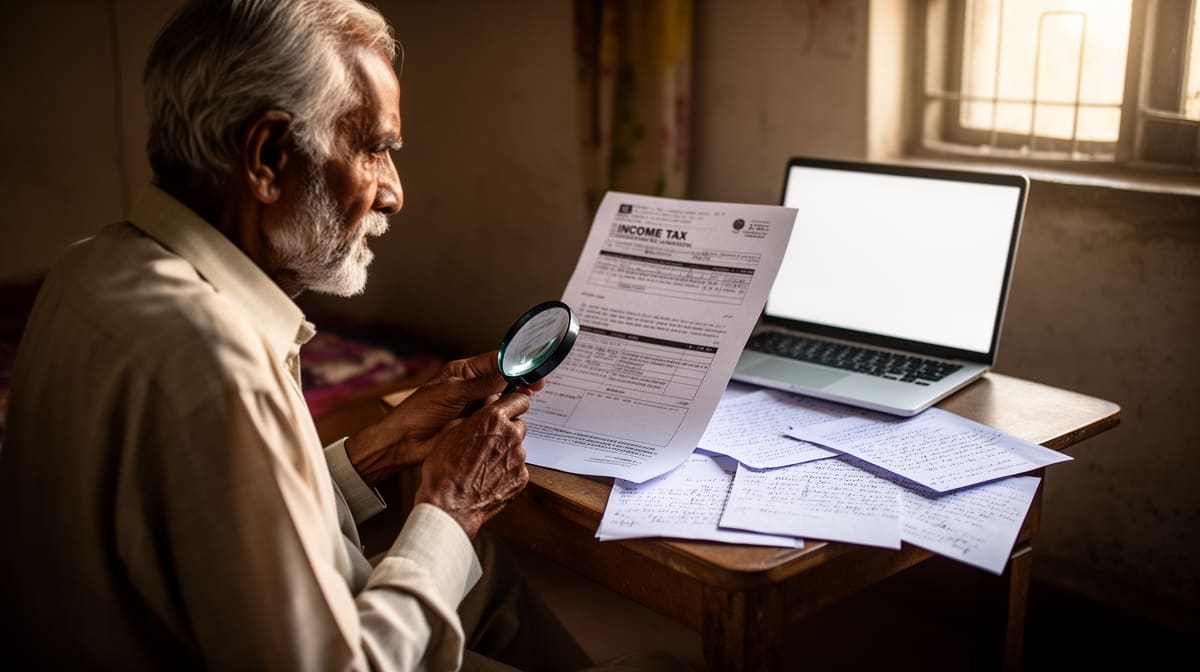
The Income Tax Appellate Tribunal, Jodhpur, has affirmed that the time spent litigating the jurisdictional validity of a reassessment order before the High Court and Supreme Court constitutes sufficient and reasonable cause to condone delay in filing an appeal under Section 249(2) of the Income Tax Act, 1961. This ruling reinforces the principle that taxpayers are entitled to exhaust judicial remedies without penalty, even if those efforts ultimately fail.
Background & Facts
The Dispute
The assessee, Bharat Das Vaishnav, received a reassessment order dated 03.02.2014 under Section 147 read with Section 144 of the Income Tax Act, 1961. The assessee challenged the jurisdiction of the Assessing Officer (AO) by filing a writ petition before the Hon'ble Rajasthan High Court, contending that the reassessment was legally invalid due to procedural and jurisdictional infirmities.
Key Facts
- Reassessment order issued by AO on 03.02.2014
- Writ petition filed before Rajasthan High Court challenging AO’s jurisdiction
- Rajasthan High Court issued an order on 11.04.2014 setting aside the reassessment order
- Revenue filed a D.B. Special Appeal against the High Court’s 11.04.2014 order
- Rajasthan High Court, by order dated 11.04.2017, set aside its own earlier order of 11.04.2014
- Assessee filed a Special Leave Petition (SLP) before the Supreme Court
- Supreme Court dismissed the SLP on 15.01.2018
- Assessee filed appeal before the Commissioner of Income Tax (Appeals) [CIT(A)] on 14.02.2018 - within 30 days of the Supreme Court’s dismissal
- The delay in filing the appeal before CIT(A) amounted to 1,460 days from the original reassessment order date (03.02.2014)
- CIT(A) rejected the appeal solely on grounds of delay, without examining the cause
Procedural History
- 03.02.2014: Reassessment order issued by AO under Section 147 r.w.s. 144
- Date unknown: Writ petition filed before Rajasthan High Court
- 11.04.2014: Rajasthan High Court sets aside reassessment order
- 11.04.2017: Rajasthan High Court reverses its own order via D.B. Special Appeal
- Date unknown: SLP filed before Supreme Court
- 15.01.2018: Supreme Court dismisses SLP
- 14.02.2018: Appeal filed before CIT(A) - 30 days after SLP dismissal
- 01.03.2024: CIT(A) order rejecting appeal for delay
- 25.02.2026: Hearing before ITAT Jodhpur
- 24.03.2026: ITAT judgment pronounced
Relief Sought
The assessee sought condonation of delay in filing the appeal before CIT(A), and remand of the matter for fresh adjudication on merits, arguing that the delay was due to bona fide litigation in higher courts.
The Legal Issue
The central question was whether the time consumed in challenging the jurisdiction of the Assessing Officer before the High Court and Supreme Court constitutes a reasonable cause for condonation of delay under Section 249(2) of the Income Tax Act, 1961, read with Section 5 of the Limitation Act, 1963.
Arguments Presented
For the Appellant/Petitioner
The counsel for the assessee argued that the assessee was exercising a fundamental right to challenge the legality and jurisdiction of the reassessment order before higher judicial forums. The litigation before the Rajasthan High Court and Supreme Court was not frivolous or dilatory but a legitimate attempt to protect legal rights. The appeal before CIT(A) was filed immediately upon the final dismissal of the SLP by the Supreme Court on 15.01.2018 - within the statutory 30-day window. The delay was therefore not due to negligence or laches but due to the unavoidable pendency of judicial proceedings. Reliance was placed on the principle of natural justice and the doctrine of equitable tolling.
For the Respondent/State
The Departmental Representative did not dispute the factual sequence of litigation. He relied solely on the CIT(A)’s order rejecting the appeal on technical grounds of delay, without offering any counter-argument on the reasonableness of the cause. No attempt was made to challenge the timeline or the bona fides of the assessee’s litigation strategy.
The Court's Analysis
The Tribunal emphasized that Section 249(2) permits condonation of delay if sufficient cause is shown, and Section 5 of the Limitation Act explicitly allows courts to extend time if the applicant satisfies the court that there was sufficient cause for the delay. The Tribunal held that litigation in higher courts - particularly when challenging the very jurisdiction of the taxing authority - is not merely a procedural step but a substantive assertion of legal rights.
"Every appellant assessee or common man has a fundamental right to avail legal rights before the Hon'ble High Courts and Apex Courts in the civil, revenue and other proceedings."
The Tribunal rejected the notion that delay must be excused only if caused by illness, absence, or administrative error. It recognized that judicial process itself - even when unsuccessful - is a legitimate and constitutionally protected avenue for dispute resolution. The 1,460-day delay was entirely attributable to the pendency of litigation in the Rajasthan High Court and Supreme Court, which the assessee was entitled to pursue.
The Tribunal further noted that the appeal was filed within 30 days of the final judicial determination - the dismissal of the SLP on 15.01.2018 - thereby demonstrating promptness once the higher forum closed the door. The CIT(A) had failed to apply the correct legal standard and had treated the delay as absolute, ignoring the doctrine of equitable tolling.
The Verdict
The appeals were allowed for statistical purposes. The Tribunal set aside the CIT(A)’s order dated 01.03.2024, condoned the delay of 1,460 days, and remanded both appeals to the CIT(A) for fresh adjudication on merits. The CIT(A) was directed to afford the assessee a full opportunity of being heard and to decide the appeals in accordance with law, without prejudice to the merits of the case.
What This Means For Similar Cases
Litigation in Higher Courts Is Sufficient Cause
- Practitioners may now confidently argue that prolonged litigation in High Courts or Supreme Court challenging the legality or jurisdiction of a tax order constitutes sufficient cause under Section 249(2)
- Delay caused by pending writ petitions or SLPs should not be treated as inexcusable, even if the higher court ultimately upholds the tax authority’s action
- The burden shifts to the Revenue to prove mala fide or negligence - mere passage of time is insufficient
Procedural Fairness Trumps Technicality
- Tribunals and appellate authorities must examine the nature of the litigation, not just the duration of delay
- The doctrine of natural justice requires that taxpayers not be penalized for pursuing judicial remedies
- A mechanical application of limitation periods without considering the context violates the spirit of Section 5 of the Limitation Act
Strategic Litigation Timing Matters
- Taxpayers must file appeals within 30 days of the final judicial decision (e.g., dismissal of SLP), not from the original order date
- Maintaining a clear chronological record of all judicial proceedings is critical to substantiate the cause of delay
- Legal notices or representations to the AO during pendency of litigation should be preserved as evidence of good faith