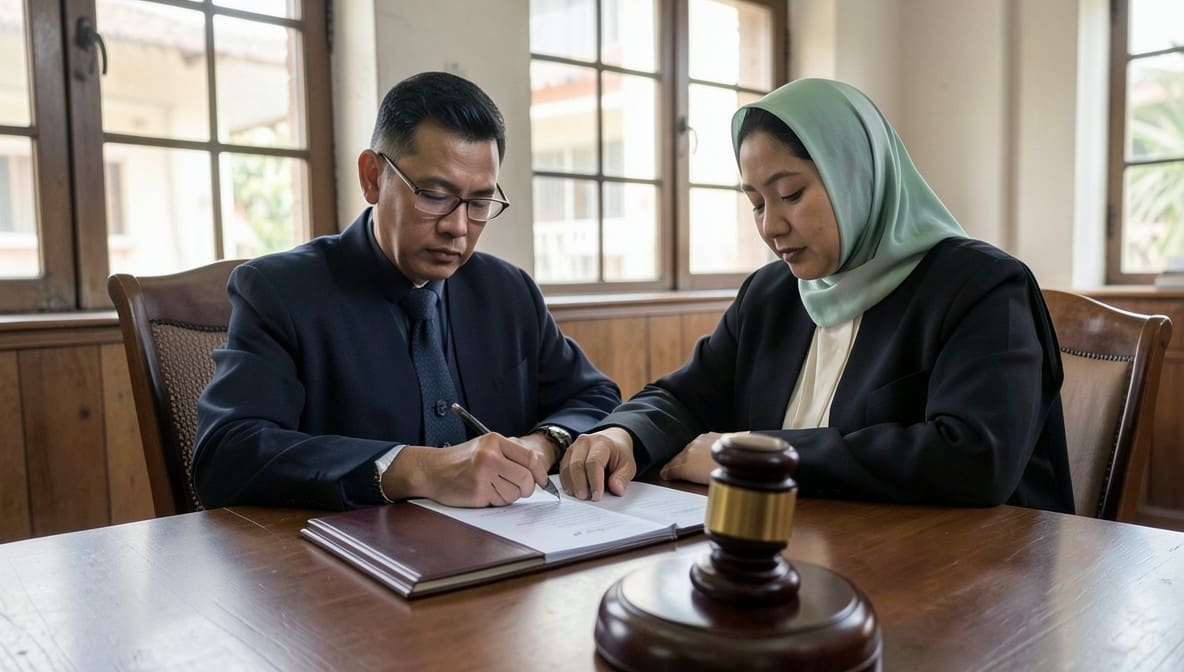
The Kerala High Court has clarified that a threat to induce withdrawal of a criminal complaint does not constitute an offence under Section 232 of the Bharatiya Nyaya Sanhita, 2023, where no intent to procure false evidence is established. This ruling provides critical guidance on the narrow scope of Section 232 BNS and reinforces the principle that pre-arrest bail must be granted where custodial interrogation is unnecessary.
Background & Facts
The Dispute
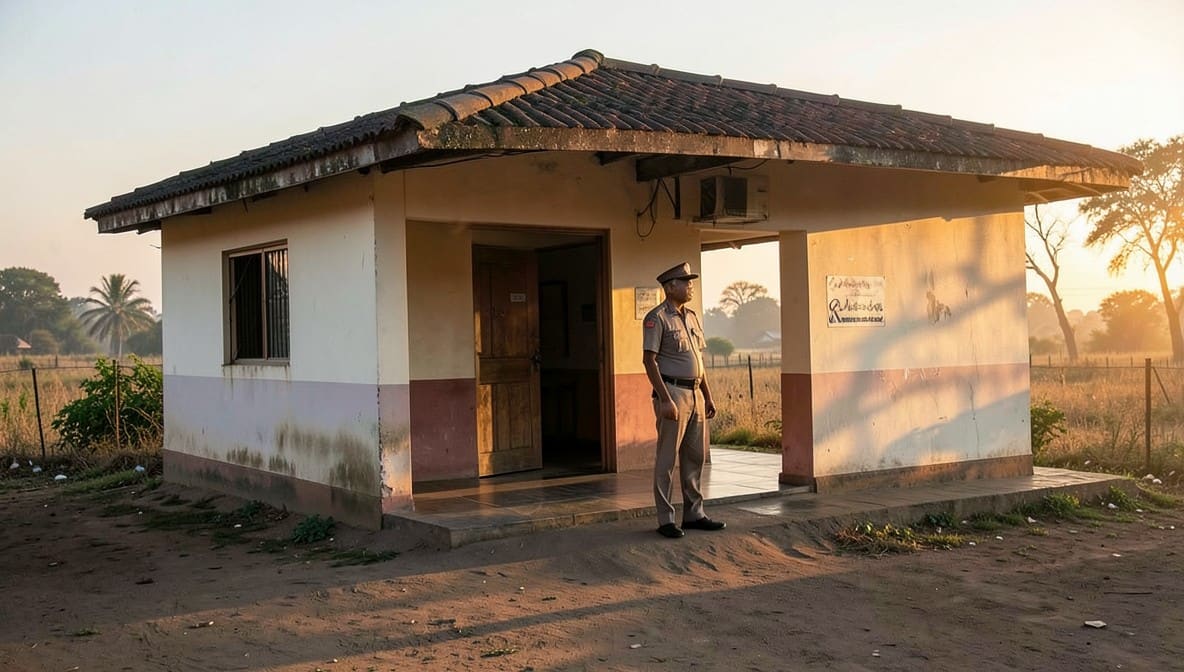
The petitioner, Vivek K.R., is the sole accused in Crime No. 274/2026 registered at Varapuzha Police Station, Ernakulam District. The case arises from alleged acts of harassment and intimidation directed at the de facto complainant, following prior litigation between the parties. The prosecution alleges that between 22.03.2026 and 09.04.2026, the petitioner repeatedly telephoned the complainant and sent messages via Telegram, threatening that he would not allow her and her family to live peacefully. The complainant further alleged that the petitioner demanded she withdraw the criminal case previously filed against him.
Key Facts
- The de facto complainant had previously filed a criminal case against the petitioner, which remained pending.
- Between 22.03.2026 and 09.04.2026, the petitioner allegedly made multiple phone calls and Telegram messages to the complainant.
- The content of the messages included statements that he would make her life difficult unless she withdrew the earlier case.
- Crime No. 274/2026 was registered on 22.04.2026 based on the complainant’s statement.
- The FIR (Annexure A1) invokes Sections 232 and 351(2) of the Bharatiya Nyaya Sanhita, 2023.
- No physical violence, stalking, or direct threat of harm was alleged.
- The petitioner has no prior criminal record.
Procedural History
- 22.04.2026: FIR No. 274/2026 registered at Varapuzha Police Station.
- 10.03.2026: Petitioner filed a prior bail application (B.A. No. 340/2026) before the Sessions Court, which was dismissed.
- 04.05.2026: Another bail application (B.A. No. 821/2026) was dismissed by the Sessions Court.
- 30.06.2026: Present bail application filed under Section 482 of the Bharatiya Nagarik Suraksha Sanhita, 2023, before the High Court.
The Parties' Positions
For the Petitioner: The counsel argued that the petitioner is innocent and falsely implicated. The alleged messages, while unpleasant, do not meet the statutory definition of Section 232 BNS, which requires intent to cause the victim to give false evidence. No material evidence links the petitioner to any attempt to fabricate or suppress testimony. Custodial interrogation is unnecessary given the non-violent nature of the allegations.
For the Respondent: The Public Prosecutor contended that the petitioner’s conduct was intentional, malicious, and aimed at obstructing justice. Granting bail would risk influencing witnesses and hampering the investigation.
Relief Sought
The petitioner seeks pre-arrest bail to prevent arbitrary arrest and custodial interrogation, pending investigation and trial.
The Legal Issue
The central question was whether threatening a complainant to withdraw a pending criminal case constitutes an offence under Section 232 of the Bharatiya Nyaya Sanhita, 2023, which criminalizes threatening a person with intent to cause them to give false evidence.
Arguments Presented
For the Petitioner
The learned counsel relied on the plain language of Section 232 BNS, which requires two essential elements: (1) a threat, and (2) the specific intent that the threatened person shall give false evidence. The counsel argued that demanding withdrawal of a case is not equivalent to demanding false testimony. The petitioner never asked the complainant to lie, fabricate, or alter her statement. The prosecution’s case, therefore, lacks the mens rea required under the provision. The counsel cited Arnesh Kumar v. State of Bihar to emphasize that non-bailable offences must not lead to automatic arrest where custodial interrogation is not necessary.
For the Respondent
The Public Prosecutor contended that any attempt to dissuade a complainant from pursuing legal action constitutes obstruction of justice and falls within the mischief of Section 232 BNS. He argued that the petitioner’s conduct was calculated to intimidate and silence the complainant, thereby undermining the judicial process. The prosecution relied on the gravity of the threat and the potential chilling effect on victims of crime.
The Court's Analysis
The Court undertook a strict textual interpretation of Section 232 BNS, which states: "Whoever threatens any person with injury to his person, reputation or property, with intent to cause that person to give false evidence, shall be punished..."
The Court observed that the prosecution’s case hinges on the allegation that the petitioner threatened the complainant to withdraw the case. However, withdrawal of a case is not the same as giving false evidence. The complainant may withdraw a case for any number of lawful reasons - reconciliation, fear, financial hardship, or lack of evidence - without ever fabricating testimony.
"The mere threat to make life difficult unless a complaint is withdrawn does not, by itself, establish the intent to procure false evidence. The statute demands a direct nexus between the threat and the inducement to testify falsely."
The Court further noted that the complainant had already filed a formal complaint and given a statement under Section 161 CrPC. There was no indication that the petitioner sought to alter her recorded statement or influence her testimony in court. The Court held that the prosecution’s interpretation would expand Section 232 BNS beyond its legislative intent, effectively criminalizing ordinary harassment or emotional coercion.
The Court also emphasized that the petitioner had no prior criminal antecedents, the allegations were non-violent, and there was no risk of evidence destruction. Custodial interrogation was deemed unnecessary. The Court distinguished this case from those involving threats to witnesses during trial or attempts to bribe or coerce testimony.
The Verdict
The petitioner succeeded. The Court granted pre-arrest bail on the following conditions: (i) execution of a personal bond of Rs. 1,00,000 with two solvent sureties of like amount; (ii) cooperation with investigation including deemed police custody for discovery; (iii) appearance before the investigating officer every Saturday between 10.00 a.m. and 11.00 a.m. until further orders; (iv) no commission of similar offences; (v) no contact with prosecution witnesses or tampering with evidence; (vi) no departure from Kerala without court permission; and (vii) any application for modification or cancellation of bail to be filed in the jurisdictional court.
What This Means For Similar Cases
Threat to Withdraw Complaint ≠ Threat to Give False Evidence
- Practitioners must now distinguish between attempts to dissuade a complainant from pursuing a case and attempts to induce false testimony.
- Section 232 BNS requires proof of specific intent to procure false evidence - mere intimidation or emotional pressure is insufficient.
- Prosecutors must plead and prove the exact nature of the desired false testimony, not just the desire to drop the case.
Pre-Arrest Bail Is Warranted Where Custodial Interrogation Is Unnecessary
- Courts must assess whether arrest is proportionate to the alleged offence, especially in non-violent, non-economic crimes.
- The absence of prior record, non-violent nature of allegations, and lack of risk to investigation are decisive factors.
- Conditions such as weekly reporting and no contact with witnesses are sufficient safeguards without custodial detention.
Statutory Interpretation Must Be Textually Grounded
- Courts must resist expansive readings of penal provisions that criminalize conduct outside the statute’s intended scope.
- The mens rea element in Section 232 BNS is not inferable from general hostility - it must be explicitly tied to the act of giving false evidence.
- This judgment sets a precedent for challenging overbroad applications of BNS provisions in harassment-related cases.