The Income Tax Appellate Tribunal, Mumbai, has delivered a significant ruling clarifying that incidental income generated from activities ancillary to charitable purposes does not automatically disqualify a trust from registration under Section 12AB of the Income-tax Act, 1961, provided such income is wholly applied to charitable objectives and does not indicate a commercial motive.
Background & Facts
The Dispute
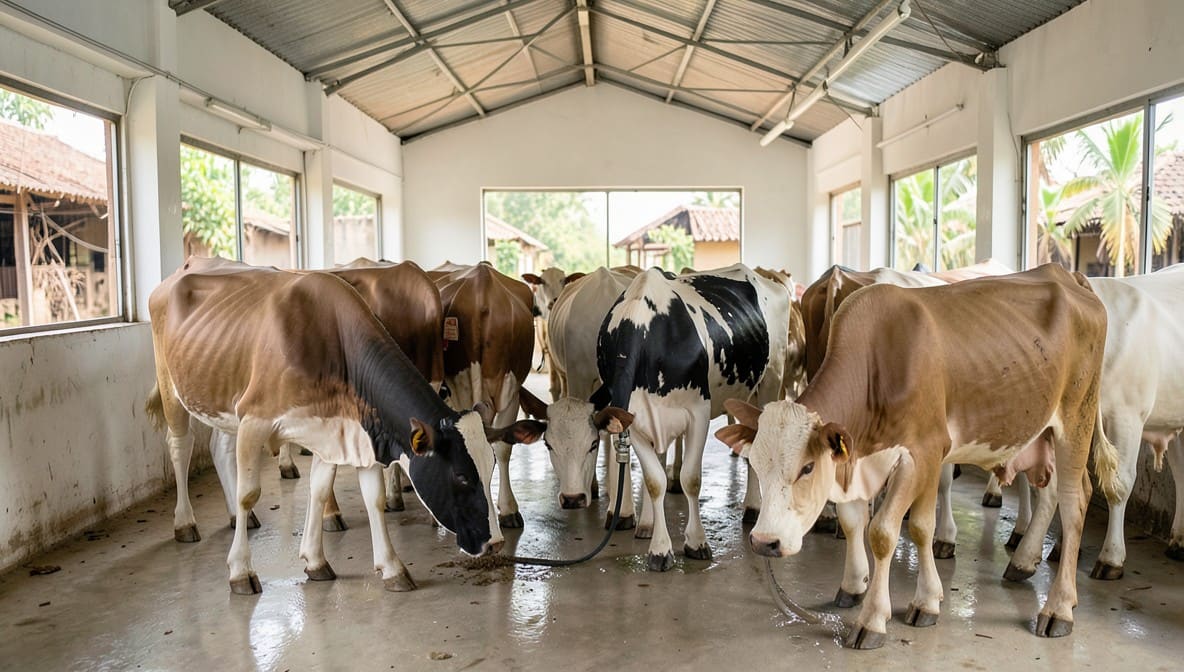
The Govardhan Eco Village Trust, a long-standing charitable entity registered since 1998 under Section 12A, applied for renewal of registration under Section 12AB for the assessment years 2022-23 to 2026-27. The Trust’s primary activities include running an English-medium school for rural children, promoting organic farming, preserving indigenous cattle through a Gaushala, nurturing native plant species via a nursery, restoring forests, and disseminating Vedic knowledge through research and yoga programs. The Trust also generates incidental income from the sale of agricultural and Gaushala products and from renting surplus space in its remote rural campus.
Key Facts
- The Trust was originally registered under Section 12A on 19.08.1998.
- Provisional registration under Section 12AB was granted on 28.05.2021.
- A formal registration for A.Y. 2022-23 to 2026-27 was issued on 19.11.2024.
- The Trust Deed was amended on 19.04.2024 to include additional objects: preservation of traditional culture, promotion of Ayurveda and yoga, water resource development, and care for all living beings.
- The Trust filed Form 10AB on 27.09.2025 for registration under Section 12AB(1)(ac)(ii).
- The Ld. CIT(E) issued multiple notices between September 2024 and December 2025 seeking details on income from rent and sale of agro/Gaushala products.
- The Trust submitted detailed financials for A.Y. 2022-23 to 2024-25, showing:
- FY 2021-22 (A.Y. 2022-23): Agro/Gaushala income = Rs. 42,08,888 (11.83% of total income)
- FY 2022-23 (A.Y. 2023-24): Agro/Gaushala income = Rs. 36,53,074 (17.42% of total income)
- FY 2023-24 (A.Y. 2024-25): Agro/Gaushala income = Rs. 33,70,092 (11.57% of total income)
- The Trust incurred a deficit of Rs. 72 lakh in FY 2021-22.
- Rental income was generated from temporary letting of surplus space to a bank for a rural branch and to staff of other NGOs in the area.
- The Trust operates in a remote rural area (P.O. Galtare, Palghar, Maharashtra) with no nearby infrastructure.
- The Trust denies involvement in room-renting activities attributed to ISKCON, which operates a similarly named entity nearby.
Procedural History
- 19.08.1998: Original registration under Section 12A granted.
- 14.05.2021: Application filed for renewal under Section 12AB.
- 28.05.2021: Provisional registration granted.
- 19.11.2024: Formal registration granted for A.Y. 2022-23 to 2026-27.
- 12.09.2025: Application filed for registration under amended Trust Deed.
- 16.09.2024 to 25.12.2025: Multiple notices issued by Ld. CIT(E) seeking financial and operational details.
- 31.12.2025: Ld. CIT(E) rejected registration under Section 12AB, citing income from rent and agro/Gaushala sales exceeded 20% of total receipts and constituted commercial activity.
- 31.12.2025: Approval under Section 80G also denied as consequential to rejection under Section 12AB.
- 09.02.2026: Hearing held before ITAT Mumbai.
- 23.03.2026: Judgment pronounced.
The Parties' Positions
For the Appellant (Trust):
- Activities fall squarely under specific charitable heads: education, relief of the poor, preservation of environment.
- Income from agro/Gaushala products and rent is incidental, ancillary, and fully applied to charitable purposes.
- Reliance on CBDT Circular No. 11 of 2022, which deems existing trusts registered under new regime upon filing.
- The 20% threshold under the proviso to Section 2(15) applies only to trusts under the residuary category of "general public utility," not those under specific charitable limbs.
- Rental activity is not commercial; it is a necessity due to remote location and supports local community infrastructure.
- Room-renting attributed to ISKCON is a case of mistaken identity.
For the Respondent (Revenue):
- Aggregate income from rent and sale of products exceeded 20% in multiple years.
- Such receipts indicate commercial activity.
- The Trust’s objects include "advancement of any other object of general public utility," triggering the restrictive proviso to Section 2(15).
- Expenditure declined disproportionately to income, suggesting profit motive.
- Registration must be denied under Section 12AB(1)(ac)(ii) as the Trust engages in business.
Relief Sought
The Trust sought:
- Restoration of registration under Section 12AB(1)(ac)(ii).
- Grant of approval under Section 80G.
- Recognition that its activities fall under specific charitable purposes, not the residuary category.
- Clarification that incidental income, even if exceeding 20% in one year, does not disqualify charitable status if wholly applied to charitable purposes.
The Legal Issue
The central question was whether Section 2(15) of the Income-tax Act, 1961, disqualifies a trust from charitable status merely because income from incidental activities exceeds 20% of total receipts, when those activities are demonstrably ancillary to and integrated with the trust’s primary charitable objects of education, environmental preservation, and relief of the poor.
Arguments Presented
For the Appellant
The appellant relied on CBDT Circular No. 11 of 2022 to argue that existing trusts like itself are deemed registered under the new regime upon filing Form 10AB. It emphasized that its activities - running a school for underprivileged children, promoting organic farming, maintaining a Gaushala for ecological balance, and restoring forests - are explicitly covered under the specific limbs of "education," "relief of the poor," and "preservation of environment" under Section 2(15). The income from sale of agro and Gaushala products was shown to be by-products of training farmers and caring for cattle, not independent commercial ventures. Rental income was described as passive, incidental, and necessary to support infrastructure in a remote area. The Trust submitted that the 20% threshold under the proviso applies only to trusts falling under the residuary category of "advancement of any other object of general public utility," not those under enumerated charitable heads. It further argued that the Ld. CIT(E) failed to distinguish between its operations and those of ISKCON, leading to factual error.
For the Respondent
The Revenue contended that the aggregate receipts from rent and sale of products exceeded 20% in multiple assessment years, triggering the restrictive proviso to Section 2(15). It argued that the Trust’s inclusion of "advancement of any other object of general public utility" in its objects rendered it subject to the proviso, regardless of other charitable activities. The Revenue pointed to a decline in expenditure relative to income as evidence of profit motive. It maintained that letting out premises and selling farm products constituted business activity, and that the Trust failed to prove the income was wholly applied to charitable purposes. The Revenue relied on the Ld. CIT(E)’s order, which treated all receipts as commercial and rejected registration on that basis alone.
The Court's Analysis
The Tribunal observed that the Ld. CIT(E) erred in treating the 20% threshold as a standalone disqualifier without first determining whether the Trust’s activities fell under the specific charitable limbs or the residuary category of "general public utility." The Court emphasized that Section 2(15) distinguishes between trusts whose objects are specifically charitable and those whose objects are residual. Where the dominant activities align with education, environmental preservation, or relief of the poor, the proviso does not apply unless the trust is primarily engaged in commercial activity.
"Merely because one of the objects in the trust deed refers to 'advancement of any other object of general public utility', it would not, by itself, conclude the matter unless the Ld.CIT(E) also examines the dominant and actual activities carried on by the assessee during the relevant period and determines under which limb of section 2(15) such activities properly fall."
The Tribunal noted that the Trust’s financials showed incidental income remained below 20% in two out of three years, and even in the year it exceeded the limit (17.42%), the Trust had incurred a deficit of Rs. 72 lakh, negating any profit motive. The income from agro and Gaushala products was directly linked to training farmers and maintaining cattle for ecological purposes. Rental income was incidental to the Trust’s remote location and used to support community infrastructure, not for profit.
The Court further held that the Revenue’s reliance on expenditure patterns was misplaced, as charitable trusts often incur high upfront costs with delayed returns. The Tribunal also found merit in the Trust’s contention regarding mistaken identity with ISKCON, noting the absence of any evidence linking the Trust to the disputed rental activity.
The Tribunal concluded that the Ld. CIT(E) had not conducted a proper factual and legal analysis. The order was therefore set aside not on the merits, but because the adjudication was superficial and failed to apply the correct legal framework under Section 2(15) and CBDT Circular No. 11 of 2022.
The Verdict
The ITAT Mumbai allowed the appeals for statistical purposes and set aside the order dated 31.12.2025. The matter was remanded to the Ld. CIT(E) for fresh adjudication. The provisional registration granted on 19.11.2024 remains valid until 31.03.2026. The Ld. CIT(E) is directed to re-examine: (1) whether the Trust’s activities fall under specific charitable limbs or the residuary category; (2) whether income from rent and agro/Gaushala sales is incidental and wholly applied to charitable purposes; (3) whether CBDT Circular No. 11 of 2022 applies; and (4) whether the rental activity is attributable to the Trust or ISKCON. The approval under Section 80G is also remanded as consequential. The Trust’s provisional registration shall not be disturbed during remand.
What This Means For Similar Cases
Charitable Purpose Trumps Income Thresholds
- Practitioners must argue that Section 2(15)’s 20% threshold applies only to trusts under the residuary category of "general public utility," not those with demonstrably specific charitable objects.
- Income exceeding 20% in one year does not disqualify status if the trust shows overall deficit, full application of income to charitable purposes, and no profit motive.
- Financial statements must be presented across multiple years to demonstrate consistency in charitable intent.
Incidental Income Must Be Contextualized
- Income from sale of by-products (e.g., milk, compost, saplings) is not commercial if it arises directly from charitable activities like training, preservation, or education.
- Rental income from surplus space in remote areas, used to support community infrastructure or NGO operations, qualifies as incidental if no profit motive exists.
- Documentation must clearly link income sources to primary charitable activities and show full application of proceeds.
Procedural Compliance Is Non-Negotiable
-
Authorities must issue speaking orders that analyze dominant activities, not merely rely on nomenclature or income figures.
-
Mistaken identity with similarly named entities must be investigated with due diligence before adverse orders are passed.
-
CBDT Circulars must be applied where applicable; ignoring them constitutes legal error.
-
Key takeaway: A trust’s charitable status is determined by its dominant purpose and actual activities, not by incidental income or ambiguous objects in the trust deed.