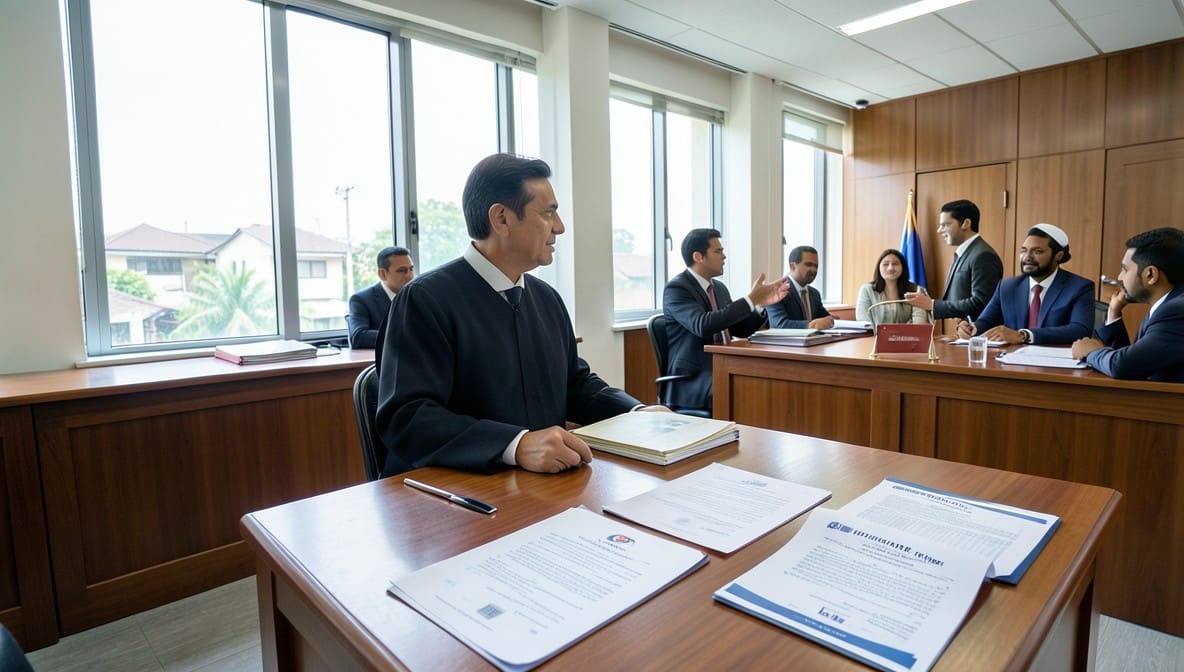
The Bombay High Court has delivered a significant judgment on the interpretation of Section 11 of the Arbitration and Conciliation Act, 1996, clarifying the limitation period for initiating fresh arbitral proceedings after an award is set aside under Section 34. The Court also examined the applicability of the Group of Companies doctrine and the principle of 'claiming through or under' a signatory, holding that non-signatories cannot be compelled into arbitration without their consent or a prima facie demonstration of their involvement in the underlying contract. This judgment provides critical guidance for practitioners on procedural compliance and the scope of arbitration agreements involving non-signatories.
Background & Facts
The Dispute
The dispute arises from a Deed of Partnership dated 9th December 1985 between the Applicants (Hemant D. Shah HUF and Kokila H. Shah) and Respondent Nos. 1 and 2 (Chittaranjan D. Shah HUF and Parul V. Shah). The Applicants sought the appointment of a sole arbitrator under Section 11 of the Arbitration and Conciliation Act, 1996, invoking the arbitration clause in the 1985 Deed. The Applicants contended that Respondent Nos. 3 and 4 (Gayatri Sachin Shah and M/s Sachin Trust), though not signatories to the 1985 Deed, were bound by the arbitration agreement as they were 'claiming through or under' Respondent Nos. 1 and 2.
Key Facts
- 9th December 1985: Deed of Partnership executed between Applicants and Respondent Nos. 1 and 2, containing an arbitration clause.
- 1995: Applicants allegedly retired from the partnership firm, M/s Prospective Traders.
- 30th September 2009: New Deed of Partnership executed, inducting Respondent Nos. 3 and 4 as partners. Applicants and Respondent Nos. 1 and 2 were not signatories to this deed.
- 4th November 2009: Deed of Retirement executed, retiring Respondent No. 1 from the firm.
- 24th May 2006: First notice under Section 21 issued by Applicants invoking arbitration.
- 17th June 2006: First arbitral proceedings commenced.
- 15th April 2016: Arbitral Award passed in the first round of proceedings.
- 15th October 2019: Bombay High Court set aside the arbitral award under Section 34.
- 15th March 2020 to 28th February 2022: Limitation period excluded due to COVID-19 pandemic orders.
- 8th March 2024: Fresh notice under Section 21 issued by Applicants.
- 25th March 2026: Present Commercial Arbitration Application No. 184 of 2026 filed under Section 11.
Procedural History
- 27th January 2011: Earlier Section 11 application filed; Applicants undertook that the award would not bind Respondent Nos. 3 and 4.
- 15th April 2016: Arbitral Award passed in favour of Applicants.
- 15th October 2019: Award set aside by Bombay High Court under Section 34.
- 8th March 2024: Fresh Section 21 notice issued.
- 25th March 2026: Present application filed under Section 11.
The Parties' Positions
For the Applicants
- The arbitration clause in the 1985 Deed binds Respondent Nos. 3 and 4 as they are 'claiming through or under' Respondent Nos. 1 and 2.
- The fresh Section 21 notice issued on 8th March 2024 commenced the arbitral proceedings, stopping the limitation period.
- The application under Section 11 was filed within the prescribed limitation period of three years under Article 137 of the Limitation Act, 1963, after excluding the COVID-19 period.
- Relied on judgments including Harkisandas Tulsidas Pabari v. Rajendra Anandrao Acharya, Bharat Sanchar Nigam Limited v. Nortel Networks India Pvt. Ltd., and Adavya Projects Pvt. Ltd. v. Vishal Structurals Pvt. Ltd..
For the Respondents
- Respondent Nos. 1 and 2: The application under Section 11 is barred by limitation as it was filed beyond three years from the date of the award being set aside (15th October 2019). The issuance of a fresh Section 21 notice is not mandatory for commencing fresh arbitral proceedings post award set aside.
- Respondent Nos. 3 and 4: They are not signatories to the 1985 Deed and cannot be bound by its arbitration clause. The Applicants had knowledge of the 2009 Deed and did not invoke arbitration against Respondent Nos. 3 and 4 in the first round of proceedings. The application is time-barred as against them.
- Relied on judgments including SBI General Insurance Co. Ltd. v. Krish Spinning, Hindustan Petroleum Corporation Limited v. BCL Secure Premises Pvt. Ltd., and Cox and Kings Limited v. Sap India Pvt. Ltd..
Relief Sought
The Applicants sought the appointment of a sole arbitrator to adjudicate disputes arising from the 1985 Partnership Deed, including the referral of Respondent Nos. 3 and 4 to arbitration.
The Legal Issue
The Court addressed two primary questions:
- Whether the application under Section 11 for appointment of an arbitrator, filed on 15th October 2026, was within the limitation period prescribed under Article 137 of the Limitation Act, 1963, considering the earlier award was set aside on 15th October 2019.
- Whether Respondent Nos. 3 and 4, who were not signatories to the 1985 Partnership Deed, could be referred to arbitration under the doctrines of 'claiming through or under' or the Group of Companies doctrine.
Arguments Presented
For the Applicants
- The fresh arbitral proceedings commenced upon issuance of the Section 21 notice on 8th March 2024, which was within three years of the award being set aside, after excluding the COVID-19 period.
- Section 43(4) of the Arbitration Act excludes the period between the commencement of arbitration and the setting aside of the award while computing limitation.
- Respondent Nos. 3 and 4 are bound by the arbitration clause as they derive their rights and interests from the 1985 Deed.
For the Respondents
- Respondent Nos. 1 and 2: The application under Section 11 ought to have been filed within three years from 15th October 2019, the date the award was set aside. The issuance of a fresh Section 21 notice is not mandatory for commencing fresh proceedings.
- Respondent Nos. 3 and 4: They are not parties to the 1985 Deed and cannot be compelled into arbitration. The Applicants' delay in invoking arbitration against them renders the application time-barred.
The Court's Analysis
Limitation Period for Fresh Arbitral Proceedings
The Court examined Sections 21 and 43(4) of the Arbitration Act, which provide:
Section 21: "Unless otherwise agreed by the parties, the arbitral proceedings in respect of a particular dispute commence on the date on which a request for that dispute to be referred to arbitration is received by the respondent."
Section 43(4): "Where the Court orders that an arbitral award be set aside, the period between the commencement of the arbitration and the date of the order of the Court shall be excluded in computing the time prescribed by the Limitation Act, 1963, for the commencement of the proceedings (including arbitration) with respect to the dispute so submitted."
The Court computed the limitation period as follows:
- Original cause of action to first Section 21 notice: 25 days (24th May 2006 to 17th June 2006).
- First Section 21 notice to setting aside of award: Excluded under Section 43(4) (17th June 2006 to 15th October 2019).
- Setting aside of award to COVID-19 exclusion: 152 days (16th October 2019 to 14th March 2020).
- COVID-19 exclusion period: Excluded (15th March 2020 to 28th February 2022).
- End of COVID-19 exclusion to fresh Section 21 notice: 738 days (1st March 2022 to 8th March 2024).
The total period counted for limitation was 915 days, which is within the three-year period prescribed under Article 137 of the Limitation Act, 1963.
The Court relied on the Division Bench judgment in Harkisandas Tulsidas Pabari v. Rajendra Anandrao Acharya, which held that for fresh arbitral proceedings post award set aside, the procedure under Section 21 is mandatory to avail the benefit of Section 43(4). The Court distinguished the judgment in Vardhaman Builders v. Narendra Balasaheb Ghatge, noting that in that case, both the Section 21 notice and Section 11 application were barred by limitation, making the distinction irrelevant.
The Supreme Court in Bhagheeratha Engineering Ltd. v. State of Kerala held that Section 21 is not a mandatory prerequisite for commencing arbitration but aids in determining limitation. The Court concluded that the Section 21 notice issued on 8th March 2024 and the Section 11 application filed on 25th March 2026 were within the limitation period.
Non-Signatories and Arbitration Agreement
The Court examined whether Respondent Nos. 3 and 4 could be referred to arbitration under the doctrines of 'claiming through or under' or the Group of Companies doctrine.
Group of Companies Doctrine
The Supreme Court in Cox and Kings Limited v. Sap India Pvt. Ltd. held that arbitration is consensual, and non-signatories cannot be compelled into arbitration without their consent. The Group of Companies doctrine applies where non-signatories participated in the negotiation, performance, or termination of the contract, indicating a common intention to be bound by its terms.
The Court observed that the 1985 and 2009 Partnership Deeds operated in separate orbits, and Respondent Nos. 3 and 4 had no connection with the 1985 Deed. The Group of Companies doctrine was inapplicable as there was no prima facie evidence of their involvement in the 1985 partnership.
Claiming Through or Under
The Supreme Court in Cox and Kings clarified that a person 'claiming through or under' a signatory derives their rights from the original party and cannot be saddled with new liabilities. The Court held that Respondent Nos. 3 and 4 were not 'claiming through or under' Respondent Nos. 1 and 2, as they were not parties to the 1985 Deed and did not derive their rights from it.
The Court relied on Hindustan Petroleum Corporation Limited v. BCL Secure Premises Pvt. Ltd., where the Supreme Court held that the referral court must prima facie determine whether a non-signatory is a veritable party to the arbitration agreement. The Court concluded that Respondent Nos. 3 and 4 were not veritable parties to the 1985 Deed and could not be referred to arbitration.
The Verdict
The Court passed the following orders:
- Application allowed against Respondent Nos. 1 and 2: The Applicants and Respondent Nos. 1 and 2 were referred to arbitration.
- Application dismissed against Respondent Nos. 3 and 4: The application was dismissed as they were not parties to the 1985 Partnership Deed and could not be compelled into arbitration.
- Appointment of Arbitrator: Mrs. Justice Sadhana Jadhav (Retired Judge of Bombay High Court) was appointed as the sole arbitrator to adjudicate the disputes between the Applicants and Respondent Nos. 1 and 2.
- Directions: The parties were directed to appear before the arbitrator for further directions, including the schedule for pleadings and hearings. The arbitrator was requested to forward the statutory Statement of Disclosure under Section 11(8) read with Section 12(1) of the Arbitration Act.
- Costs: Arbitral costs and fees were to be borne equally by the parties in the first instance, subject to the final award.
What This Means For Similar Cases
Limitation Period for Fresh Arbitral Proceedings
- Section 21 Notice is Mandatory for Fresh Proceedings: Practitioners must issue a fresh Section 21 notice to commence arbitral proceedings post award set aside to avail the benefit of Section 43(4) of the Arbitration Act. The limitation period stops running from the date of issuance of the Section 21 notice.
- COVID-19 Exclusion Period: The period excluded due to COVID-19 orders must be carefully computed while calculating the limitation period for fresh arbitral proceedings.
Non-Signatories and Arbitration Agreements
- Prima Facie Determination by Referral Court: The referral court must prima facie determine whether a non-signatory is a veritable party to the arbitration agreement. If there is no semblance of intent to be bound by the agreement, the non-signatory cannot be referred to arbitration.
- Group of Companies Doctrine: The doctrine applies only where non-signatories participated in the negotiation, performance, or termination of the contract, indicating a common intention to be bound by its terms. Mere commercial relationship or proximity is insufficient.
- Claiming Through or Under: Non-signatories cannot be compelled into arbitration merely because they derive rights from a signatory. They must have consented to be bound by the arbitration agreement.
- Enforceability of Award: The argument that all parties must be referred to arbitration to ensure the enforceability of the award was rejected. Arbitration is consensual, and considerations of equity or convenience cannot override party autonomy.
Practical Takeaways
- Drafting Arbitration Clauses: Ensure arbitration clauses explicitly include non-signatories who may be involved in the performance or benefits of the contract to avoid disputes over their inclusion.
- Timely Invocation: Issue Section 21 notices and file Section 11 applications within the prescribed limitation period to avoid procedural dismissals.
- Evidence of Involvement: Maintain records of non-signatories' participation in the contract to establish their intent to be bound by the arbitration agreement, if necessary.