The Karnataka High Court has reaffirmed that courts possess inherent power under Section 152 of the Code of Civil Procedure, 1908 to correct clerical or accidental errors in decrees, even after finality, to prevent irreparable prejudice to litigants. The judgment underscores that procedural hyper-technicality cannot thwart substantive justice when a decree’s effective implementation is at stake.
Background & Facts
The Dispute
The petitioners, legal representatives of the deceased Geeta, sought a Succession Certificate under Section 372 of the Indian Succession Act, 1925 for properties left by the deceased. The Probate Court initially dismissed their petition on 25.02.2021, but the Division Bench of the Karnataka High Court allowed their appeal (MFA No. 101632/2021 (ISA)) and directed issuance of Letters of Administration for Schedule ‘A’ to ‘D’ properties.
Key Facts
- The deceased’s property (Schedule ‘A’) was described in a 2003 Sale Deed with specific measurements and boundaries.
- Post-decree, the property was assigned a CTS number, but the boundaries remained unchanged.
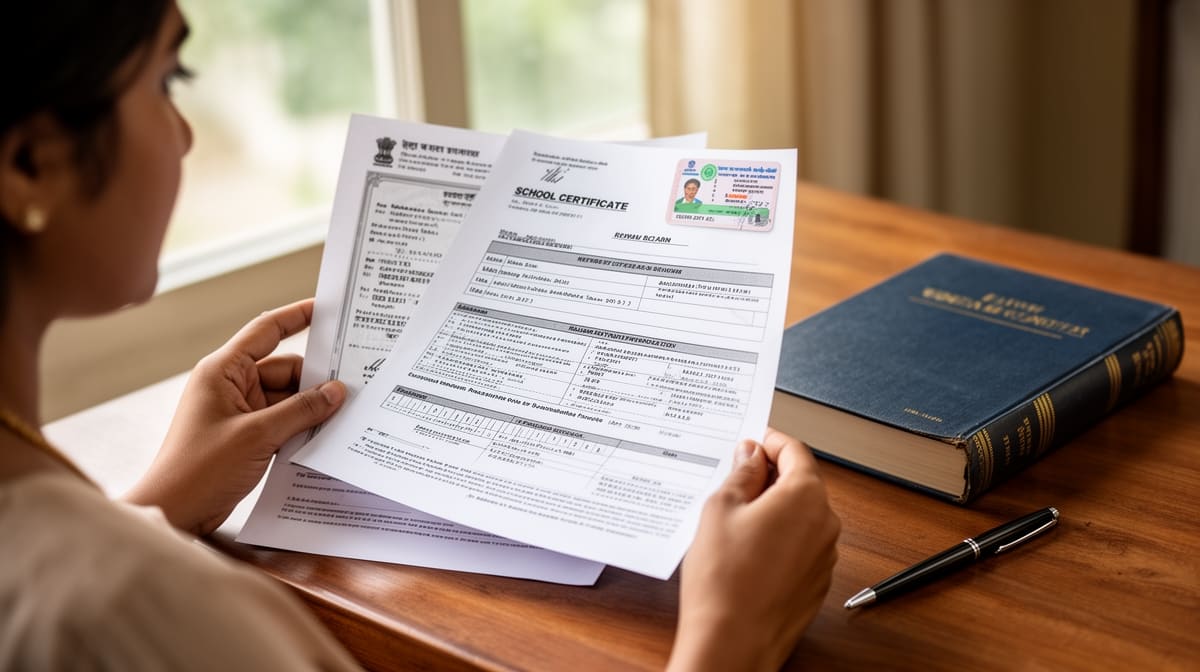
- The petitioners sought correction of the decree under Section 152 CPC to include the CTS number, arguing that without this correction, mutation and revenue record updates would be impossible.
- The Probate Court rejected their application on 06.11.2024, holding that the petitioners had failed to seek all corrections in an earlier application.
Procedural History
- 25.02.2021: Probate Court dismissed the petition for Succession Certificate.
- MFA No. 101632/2021 (ISA): Division Bench allowed the appeal and directed issuance of Letters of Administration.
- Post-decree: Petitioners approached revenue authorities for mutation but faced obstacles due to the decree’s outdated property description.
- 22.04.2024: Petitioners filed an application under Section 152 CPC for correction of the property description.
- 19.06.2024 & 09.07.2024: Additional applications under Order VI Rule 17 read with Section 151 CPC were filed.
- 06.11.2024: Probate Court rejected the application, citing lack of diligence.
- 2025: Present writ petition (WP No. 108310 of 2025) filed under Articles 226 and 227 of the Constitution of India.
Relief Sought
The petitioners sought:
- Quashing of the Probate Court’s order dated 06.11.2024.
- Direction to the Probate Court to correct the decree under Section 152 CPC to include the CTS number of Schedule ‘A’ property.
- Ensuring effective implementation of the decree passed in MFA No. 101632/2021 (ISA).
The Legal Issue
The central question was whether a court can refuse to correct a clerical error in a decree under Section 152 CPC on the ground that the litigant had earlier availed an opportunity to seek corrections, even if the refusal would render the decree incapable of implementation.
Arguments Presented
For the Petitioners
- Section 152 CPC empowers courts to correct clerical or accidental errors to prevent injustice.
- The decree’s effective implementation hinges on the correction sought.
- Refusal to correct would deprive them of the decree’s benefits, defeating the Division Bench’s order.
- Cited Nareppa v. Chikka Venkatarayappa and Others (2019(3) Kar.L.J. 839), which held that courts retain jurisdiction to correct errors even after finality.
For the Respondent
- The petitioners had earlier opportunities to seek corrections and failed to exercise due diligence.
- The court below’s rejection was justified as the petitioners did not exhaust all remedies at the appropriate stage.
The Court's Analysis
The Court emphasized the following principles:
-
Purpose of Section 152 CPC: The provision exists to ensure that litigants are not deprived of the fruits of a decree due to inadvertent errors. It is not a mere formality but a tool to advance substantive justice.
"Section 152 of CPC confers ample power on the Court to correct clerical or arithmetical mistakes or errors arising from accidental slips or omissions in judgments, decrees or orders. The provision is intended to ensure that a successful litigant is not deprived of the fruits of a decree on account of inadvertent mistakes or omissions."
-
Jurisdiction Not Functus Officio: Even after a decree attains finality, courts retain jurisdiction to correct errors under Section 152 CPC. The judgment in Nareppa reiterated this principle, holding that hyper-technical considerations cannot override the cause of justice.
-
Prejudice to the Petitioners: The Court noted that refusal to correct the decree would render it incapable of implementation, depriving the petitioners of their rightful enjoyment of the property. This would defeat the very object of the decree passed in their favour.
-
Critique of the Probate Court’s Approach: The Probate Court’s rejection of the application solely on the ground of lack of diligence was deemed hyper-technical. The Court held that procedural provisions must facilitate justice, not thwart substantive rights.
The Verdict
The High Court allowed the writ petition and set aside the Probate Court’s order dated 06.11.2024. The matter was remitted to the Probate Court for fresh consideration of the application under Section 152 CPC, with directions to:
- Consider the correction sought on merits.
- Keep in view the observations made in the judgment.
- Apply the law laid down in Nareppa v. Chikka Venkatarayappa and Others (2019(3) Kar.L.J. 839).
What This Means For Similar Cases
Courts Must Prioritize Substantive Justice Over Procedural Technicalities
- Section 152 CPC is not a mere formality but a safeguard against injustice. Courts must exercise this power liberally to ensure decrees are capable of implementation.
- Hyper-technical objections, such as lack of diligence in earlier applications, cannot justify refusal if the correction is necessary to give effect to the decree.
Correction of Decrees Is a Continuing Jurisdiction
- Courts do not become functus officio after passing a decree. They retain inherent power to correct errors even after finality to prevent irreparable prejudice.
- Practitioners should argue that Section 152 CPC is a continuing jurisdiction, and courts must intervene if refusal to correct would defeat the decree’s purpose.
Practical Implications for Litigants
- Documentary Precision: Ensure property descriptions, boundaries, and identifiers (e.g., CTS numbers) are accurately reflected in pleadings and decrees to avoid post-decree complications.
- Proactive Corrections: Seek corrections under Section 152 CPC at the earliest opportunity, but do not hesitate to file successive applications if earlier attempts fail.
- Appeal Strategy: If a lower court rejects an application under Section 152 CPC on technical grounds, challenge the order under Articles 226/227, citing this judgment as precedent.