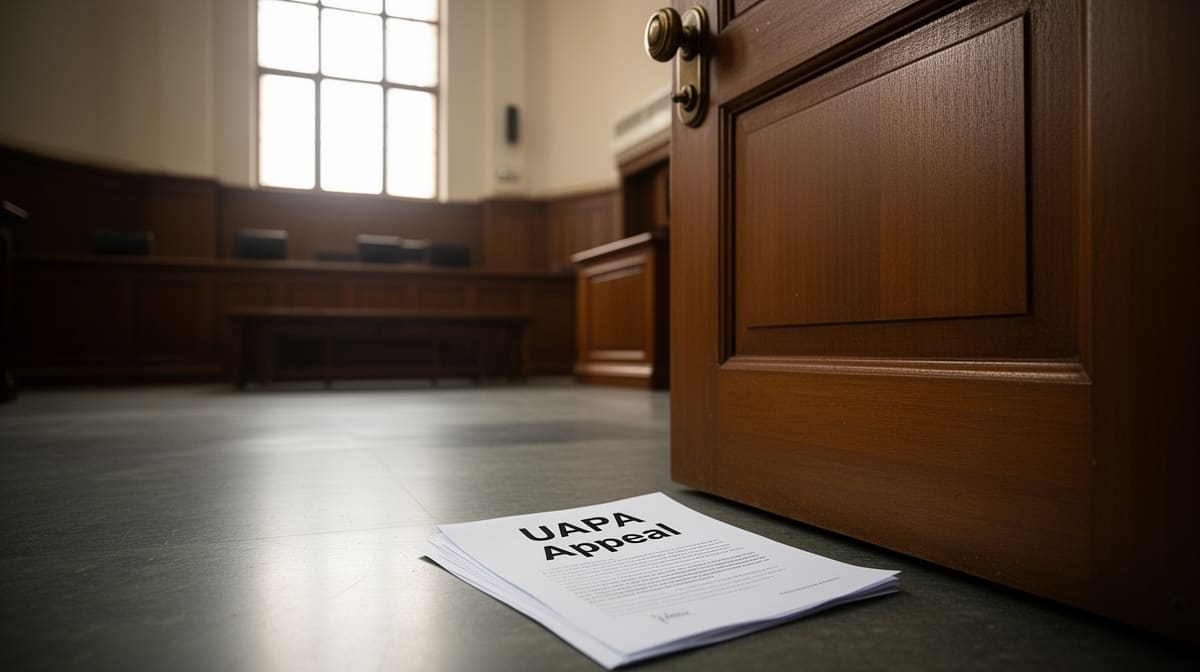
The Karnataka High Court has clarified that revision petitions under the Bharatiya Nagarik Suraksha Sanhita (BNSS), 2023 are not maintainable for challenging discharge orders in cases registered under the Scheduled Castes and Scheduled Tribes (Prevention of Atrocities) Act, 1989. The Court directed the petitioner to file an appeal under Section 14A of the SC/ST Act, emphasizing the statutory bar on revision petitions for such matters.
Background & Facts
The Dispute
The petitioner, Siddaling @ Siddalingayya Swamiji, is the Peetadipati of Karneshwar Math in Andola Village, Kalaburagi District. He was accused in a case registered under the SC/ST (Prevention of Atrocities) Act, 1989 by the Brahmapur Police Station, Kalaburagi. The petitioner filed an application for discharge under Section 250 of the BNSS, 2023, before the II Additional District and Sessions Judge (Special Court), Kalaburagi, in Special Case No. 90/2025.
Procedural History
- Date of Offence/Incident: Not explicitly mentioned in the judgment, but the case was registered under the SC/ST Act.
- Date of Discharge Application: The petitioner filed an application for discharge under Section 250 BNSS.
- 21.11.2025: The II Additional District and Sessions Judge (Special Court), Kalaburagi, dismissed the petitioner’s discharge application (Annexure-G).
- Date of Revision Petition: The petitioner filed Criminal Revision Petition No. 200081 of 2026 under Section 438 read with Section 442 of the BNSS, 2023, challenging the dismissal of his discharge application.
- 29.06.2026: The Karnataka High Court, Kalaburagi Bench, heard the matter and passed the present order.
Relief Sought
The petitioner sought:
- Quashing of the order dated 21.11.2025 dismissing his discharge application.
- Allowance of his discharge application under Section 250 BNSS.
- Liberty to file an appeal if the revision petition was not maintainable.
The Legal Issue
The central question was whether a revision petition under Section 438/442 of the BNSS, 2023 is maintainable to challenge an order dismissing a discharge application in a case registered under the SC/ST (Prevention of Atrocities) Act, 1989, or whether such challenges must be filed exclusively under Section 14A of the SC/ST Act.
Arguments Presented
For the Petitioner
The petitioner’s counsel argued that the revision petition under BNSS was the appropriate remedy to challenge the dismissal of the discharge application. They contended that the Special Court erred in rejecting the discharge application and sought the High Court’s intervention to correct the alleged error.
For the Respondent/State
The Additional State Public Prosecutor (Addl. SPP) submitted that the impugned order was passed in a case registered under the SC/ST (Prevention of Atrocities) Act, 1989. Citing the special provision under Section 14A of the SC/ST Act, the Addl. SPP argued that the revision petition was not maintainable and that the petitioner should have filed an appeal under Section 14A instead.
The Court's Analysis
The Court observed that the SC/ST (Prevention of Atrocities) Act, 1989 contains a special provision under Section 14A, which provides for an appeal against orders of discharge or acquittal. The Court relied on the principle that special statutes override general statutes and held that the revision petition under BNSS was not maintainable for challenging orders passed under the SC/ST Act.
The Court noted:
"Therefore, as pointed out by the learned Addl. SPP, the petitioner should have challenged the impugned order, wherein discharge application filed by the petitioner was dismissed by the learned Special Judge, by filing the appeal under Section 14A of SC and ST (PoA) Act."
The Court further emphasized that the petitioner’s remedy lay in filing an appeal under Section 14A of the SC/ST Act, rather than a revision petition under BNSS. However, the Court granted liberty to the petitioner to withdraw the revision petition and file an appeal, subject to the law of limitation and with the benefit of Section 516 of BNSS.
The Verdict
The Court dismissed the revision petition as withdrawn, with the following directions:
- Liberty granted to the petitioner to file an appeal under Section 14A of the SC/ST Act.
- Benefit of Section 516 BNSS extended to the petitioner, which likely pertains to condonation of delay in filing the appeal.
- Return of documents to the petitioner’s counsel with proper acknowledgment.
What This Means For Similar Cases
Special Statutes Prevail Over General Remedies
- Practitioners must note that special statutes like the SC/ST Act contain exclusive appellate remedies (e.g., Section 14A) that override general provisions under the BNSS or CrPC.
- Revision petitions under BNSS/CrPC are not maintainable for challenging orders passed under the SC/ST Act. Instead, appeals under Section 14A must be filed.
Limitation Periods Are Critical
- The Court’s grant of liberty to file an appeal is subject to the law of limitation. Practitioners must ensure timely filing of appeals under Section 14A SC/ST Act to avoid dismissal on limitation grounds.
- Section 516 BNSS (or its CrPC equivalent) may provide relief for condonation of delay, but this is discretionary and not guaranteed.
Strategic Withdrawal of Petitions
- Where a revision petition is not maintainable, practitioners may withdraw the petition with liberty to pursue the correct remedy (e.g., appeal under Section 14A).
- Courts may grant benefits like Section 516 BNSS to facilitate transition to the correct appellate forum, but this depends on the facts of the case and judicial discretion.