The Himachal Pradesh High Court has reaffirmed the strict evidentiary standards governing prosecutions under Section 138 of the Negotiable Instruments Act, holding that the statutory presumption of lawful liability under Section 139 cannot be defeated by unsubstantiated allegations of cheque tampering. The judgment underscores that mere denial of debt, without corroboration, is insufficient to rebut the presumption, reinforcing the legislative intent to protect the credibility of negotiable instruments.
Background & Facts
The Dispute
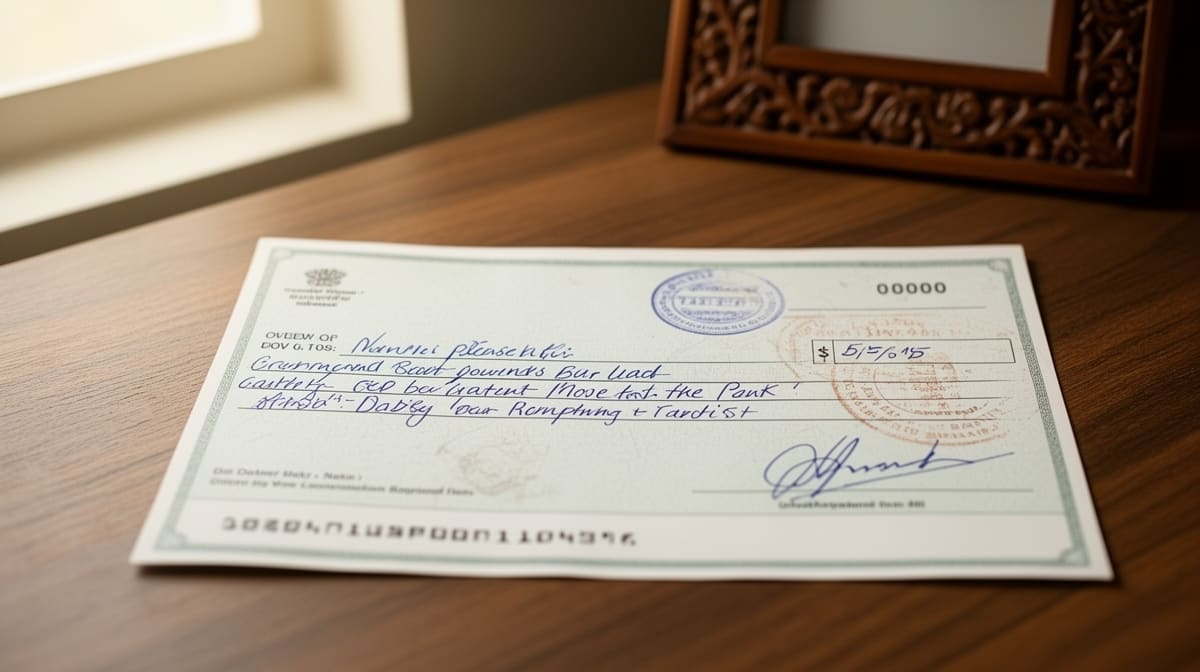
The dispute arose from a contractual employment relationship between the petitioner, Tej Singh, a contractor and owner of a JCB machine, and the respondent, Sanjay Kumar, who was engaged as a JCB operator from 13.11.2019 to 17.12.2020. The complainant alleged that despite working on multiple projects in Tehsil Chachiot and Tehsil Thunag - including land leveling, road cutting, and drainage work - he was not paid wages amounting to over Rs. 2,60,000. To discharge part of this liability, the petitioner issued Cheque No. 063589 dated 27.10.2020 for Rs. 1,00,000 drawn on his account at Punjab National Bank, Branch Chail Chowk, District Mandi. The cheque was dishonoured on presentation with the remark "Funds Insufficient".
Key Facts
- The complainant was engaged as a JCB operator from 13.11.2019 to 17.12.2020 on a monthly wage of Rs. 20,000
- Total wages accrued: Rs. 2,60,000 for the period of engagement
- Cheque No. 063589 dated 27.10.2020 for Rs. 1,00,000 issued as partial payment
- Cheque presented to bank on or about 30.10.2020 and returned on 02.11.2020 with "Funds Insufficient" remark
- Legal notice dated 15.11.2020 sent via registered post, received by accused on 18.11.2020 (Ex.CW1/C, D, E)
- Accused failed to make payment within 15 days of notice
- Complaint filed under Section 138 NI Act on 22.12.2020 before Judicial Magistrate First Class, Chachiot
- No written employment agreement existed between parties
Procedural History
- 22.12.2020: Complaint filed under Section 138 NI Act before Judicial Magistrate First Class, Chachiot (Case No. 204-I/2021)
- 21.05.2025: Trial Court convicted accused under Section 138 NI Act, sentenced to 2 months simple imprisonment and Rs. 1,50,000 compensation
- 29.10.2025: Sessions Judge, Mandi, dismissed appeal (Criminal Appeal No. 20/2025), upholding conviction
- 15.12.2025: High Court granted interim relief: accused to deposit 30% of compensation (Rs. 45,000) and furnish personal bond of Rs. 50,000; substantive sentence stayed
- 08.04.2026: Criminal Revision Petition No. 699 of 2025 decided; interim order vacated, petition dismissed
The Parties' Positions
For the Petitioner (Accused):
- Claimed cheque was issued for Rs. 10,000 only, not Rs. 1,00,000
- Alleged complainant tampered the amount by altering "10,000" to "1,00,000"
- Denied receipt of legal notice
- Claimed complainant was dishonest, had stolen diesel from JCB, and caused losses of Rs. 3,00,000
- Asserted no legally enforceable debt existed
For the Respondent (Complainant):
- Stated employment period and wage arrears of Rs. 2,60,000
- Asserted cheque was issued as partial payment of legitimate liability
- Denied all allegations of tampering or misconduct
- Produced cheque, dishonour memo, legal notice, postal receipts, and acknowledgment as evidence
Relief Sought
The petitioner sought acquittal and setting aside of the conviction and sentence, arguing that the Courts below erred in appreciating evidence and misapplying Section 139 of the NI Act.
The Legal Issue
The central question was whether the statutory presumption under Section 139 of the Negotiable Instruments Act that a cheque is issued for a lawful consideration can be rebutted solely by an uncorroborated assertion of cheque tampering, or whether the accused must lead cogent and convincing evidence to raise a probable defence.
Arguments Presented
For the Petitioner
The petitioner’s counsel contended that the cheque was originally issued for Rs. 10,000 and later altered by the complainant to Rs. 1,00,000. He relied on the accused’s testimony as DW1, asserting that the handwriting on the amount field differed and that no debt of Rs. 1,00,000 existed. He argued that the complainant’s failure to produce a written agreement and the accused’s denial of receipt of notice created reasonable doubt. He cited M/s Laxmi Dyechem v. State of Gujarat to argue that a probable defence negating lawful liability should defeat prosecution.
For the Respondent
The respondent’s counsel submitted that the accused admitted issuing the cheque, signing it, and acknowledging the employment relationship. He emphasized that the complainant’s testimony was consistent with documentary evidence and that the accused failed to produce any receipt, bank record, or independent witness to substantiate the tampering claim. He relied on State of Kerala v. Puttumana Illath Jathavedan Namboodiri to argue that the High Court’s revisional jurisdiction does not permit re-appreciation of evidence absent a gross miscarriage of justice.
The Court's Analysis
The Court undertook a meticulous review of the evidence and the legal framework under Section 138 and Section 139 of the Negotiable Instruments Act. It noted that the accused did not dispute the authenticity of the cheque, his signature, or the fact of issuance. The burden, therefore, shifted to the accused to rebut the statutory presumption under Section 139, which presumes that the cheque was issued for a lawful consideration.
"No doubt, aforesaid presumption is rebuttable, but to rebut such presumption, accused either can refer to the documents and evidence led on record by the complainant or presumption can be rebutted by leading positive evidence."
The Court observed that the accused’s defence of tampering was purely speculative. He neither produced the original cheque copy, nor adduced expert testimony on handwriting, nor demonstrated any discrepancy in the bank’s records. The complainant’s cross-examination failed to extract any admission inconsistent with his evidence-in-chief. The accused’s own testimony admitted that the complainant worked for over a year and was entitled to Rs. 2,60,000, thereby confirming the existence of a lawful liability.
The Court relied on M/s Laxmi Dyechem v. State of Gujarat, emphasizing that the standard to rebut the presumption is not beyond reasonable doubt but on the balance of probabilities. The accused’s failure to produce any document, receipt, or corroborative evidence rendered his defence improbable. The Court held:
"If the accused/drawer of the Cheque in question neither raises a probable defence nor able to contest existence of a legally enforceable debt or liability, statutory presumption under Section 139... comes into play."
The Court further held that under Section 397 CrPC, its revisional jurisdiction is supervisory and not appellate. Absent any glaring error or miscarriage of justice, concurrent findings of fact by the trial court and appellate court are binding. No such error was found.
The Verdict
The criminal revision petition was dismissed. The conviction and sentence under Section 138 NI Act were upheld. The petitioner was directed to surrender immediately to serve two months of simple imprisonment and pay compensation of Rs. 1,50,000 to the complainant. The interim order dated 15.12.2025 was vacated, and all bail bonds stood cancelled. Pending applications were disposed of.
What This Means For Similar Cases
Presumption Under Section 139 Is Not Easily Rebutted
- Practitioners must advise clients that mere denial of debt or allegation of cheque alteration is insufficient to defeat a Section 138 prosecution
- Defence must be supported by documentary evidence, expert opinion, or independent corroboration
- Failure to produce bank records, prior communications, or receipts will be fatal to the defence
Burden of Proof Is on the Accused, But Standard Is Probabilistic
- The accused need not prove innocence beyond reasonable doubt
- But must raise a probable defence that creates doubt about the existence of a lawful liability
- Oral testimony alone, without corroboration, will not suffice
Revisional Jurisdiction Is Limited to Gross Errors
- High Courts must not re-appreciate evidence in revision petitions unless a manifest injustice is evident
- Concurrent findings of fact by trial and appellate courts are entitled to high deference
- Revision petitions under Section 397 CrPC are not substitutes for appeals