The Chhattisgarh High Court has reaffirmed that a conviction under Section 138 of the Negotiable Instruments Act cannot rest on speculative or inconsistent testimony, even when cheques are presented and signatures admitted. The judgment underscores that the statutory presumptions under the NI Act are rebuttable and require a credible, verifiable foundation of debt.
Background & Facts
The Dispute
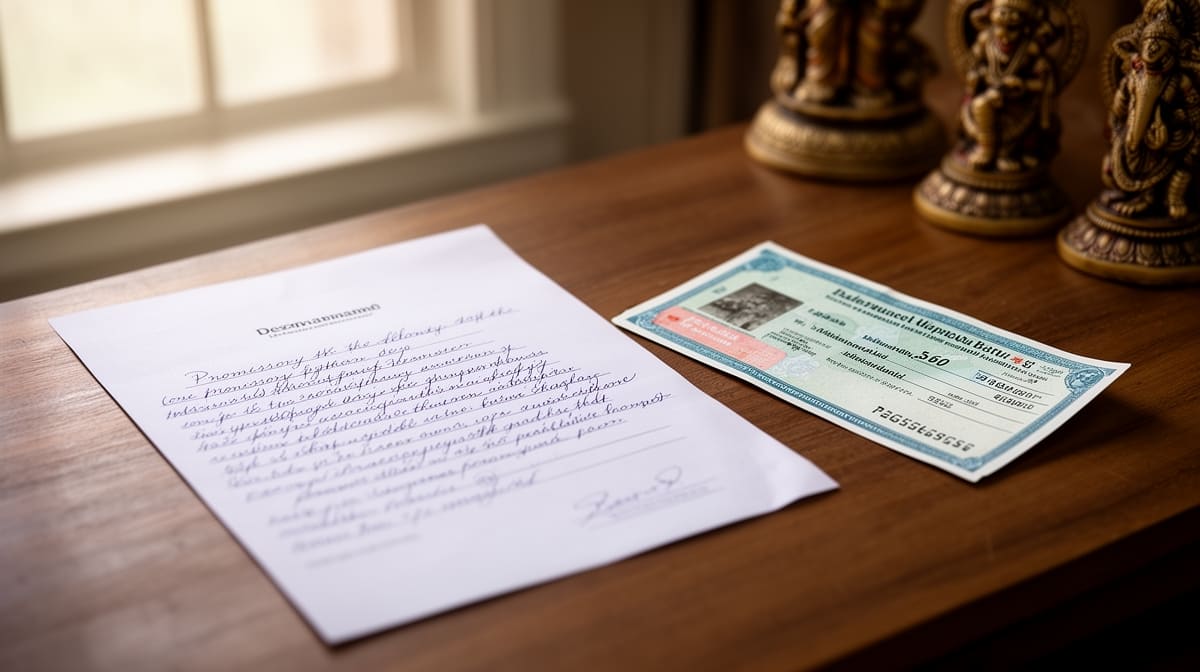
The appellant, Chhedilal Shahjit, filed a criminal complaint under Section 138 of the Negotiable Instruments Act, 1881 against respondent No.1, Rajesh Gupta, alleging non-payment of three loans totaling Rs.50,000. The complainant claimed to have advanced Rs.20,000, Rs.15,000, and Rs.15,000 in three separate installments for domestic purposes, and in return, received three post-dated cheques dated 06.11.2011, 21.11.2011, and 02.12.2011. These cheques were presented for payment on 24.02.2012 and returned unpaid on 27.02.2012. A legal notice dated 03.03.2012 was issued, which went unheeded, prompting the filing of Complaint Case No. 345/12 before the Judicial Magistrate First Class, Durg.
Key Facts
- The complainant (C.W.1) testified that he advanced three sums: Rs.20,000, Rs.15,000, and Rs.15,000, but could not recall the exact dates of disbursement.
- During cross-examination, the complainant admitted he had previously stated in court that apart from Rs.10,000 paid on 06.06.2008, no other amount had been paid to the accused.
- The complainant admitted to filling in the cheque amounts, payee name, and other details himself.
- The cheques (Exhibits P-1, P-2, P-3) showed visible differences in ink between the accused’s signature and the handwritten entries.
- The accused admitted his signature on the cheques but denied receiving any loan of Rs.50,000.
- The accused claimed the cheques were given as security for a prior loan of Rs.10,000 and were never intended as payment for the alleged three installments.
Procedural History
- 06.11.2011: First cheque issued by accused (Rs.20,000)
- 21.11.2011: Second cheque issued by accused (Rs.15,000)
- 02.12.2011: Third cheque issued by accused (Rs.15,000)
- 24.02.2012: Cheques presented for payment at State Bank of India, Sector-1, Bhilai
- 27.02.2012: Cheques dishonoured; bank returned them with memo
- 03.03.2012: Legal notice issued by complainant
- 28.09.2015: Judicial Magistrate First Class, Durg convicted accused under Section 138 NI Act; sentenced to 6 months RI + Rs.55,000 compensation
- 01.02.2016: Additional Sessions Judge, Durg allowed accused’s appeal and acquitted him; dismissed complainant’s appeal
- 27.03.2026: Chhattisgarh High Court heard acquittal appeal under Section 378 CrPC
Relief Sought
The appellant sought reversal of the acquittal, reinstatement of the conviction under Section 138 NI Act, and confirmation of the sentence of 6 months RI and Rs.55,000 compensation awarded by the trial court.
The Legal Issue
The central question was whether the appellate court was justified in acquitting the accused under Section 138 of the NI Act when the complainant’s testimony was internally inconsistent, the cheques were self-filled, and the existence of a legally enforceable debt was not established beyond reasonable doubt.
Arguments Presented
For the Appellant/Petitioner
Counsel argued that the trial court’s conviction was based on a proper appreciation of evidence, including the admitted signatures on the cheques, which triggered presumptions under Sections 118 and 139 of the NI Act. He contended that the appellate court erred in reversing the conviction without demonstrating perversity or illegality, and that the accused’s defence was speculative and lacked corroboration. He relied on Jafarudheen v. State of Kerala and Mallappa v. State of Karnataka to argue that appellate courts must not interfere with acquittals unless the trial court’s view is legally untenable.
For the Respondent/State
Counsel for the accused argued that the complainant’s testimony was fundamentally unreliable. He highlighted the complainant’s admission that he filled the cheques himself, his inability to recall dates of disbursement, and his prior statement denying any loan beyond Rs.10,000. He emphasized that the visible ink discrepancy and lack of documentary evidence (bank records, receipts, or prior correspondence) rendered the claim of a Rs.50,000 debt implausible. The defence successfully rebutted the statutory presumptions by raising a probable alternative explanation consistent with the evidence.
The Court's Analysis
The High Court undertook a meticulous review of the evidence, applying the principles laid down by the Supreme Court in Jafarudheen v. State of Kerala and Mallappa v. State of Karnataka. The Court emphasized that an order of acquittal carries a strong presumption of innocence, and appellate interference requires clear demonstration of perversity, illegality, or error of law.
"The complainant’s version is doubtful, as although he specifically remembered advancing Rs.10,000/- on 06.06.2008, but he failed to recall the dates on which the subsequent alleged loans of Rs.20,000/-, Rs.15,000/- and Rs.15,000/- were advanced, and his admissions further created doubt that, apart from Rs.10,000/-, no other amount had been paid to the accused and that other blank cheques had also been obtained from him and no explanation was offered as to why the complainant himself filled in the cheque amount, his name and other particulars."
The Court noted that while the accused admitted his signature, thereby invoking the presumptions under Sections 118 and 139 of the NI Act, these presumptions are rebuttable. The accused successfully rebutted them by demonstrating that the cheques were not issued in discharge of a legally enforceable debt, but rather as security for a prior, smaller loan. The complainant’s failure to produce any corroborative evidence - such as bank withdrawals, witness testimony, or prior communications - further weakened his case.
The Court held that the appellate court’s conclusion - that the complainant’s testimony was inconsistent and the debt claim lacked credibility - was not only plausible but legally sound. The visible ink discrepancy, the complainant’s self-admission of filling the cheques, and his contradictory prior statements collectively created reasonable doubt. The appellate court’s acquittal was therefore not perverse, nor contrary to law.
The Verdict
The appeal was dismissed. The Chhattisgarh High Court affirmed the acquittal of respondent No.1 under Section 138 of the NI Act. The judgment dated 01.02.2016 of the Additional Sessions Judge, Durg, remains in force. No compensation, fine, or sentence is imposed on the accused. The conviction by the trial court is set aside, and the accused stands acquitted.
What This Means For Similar Cases
Presumptions Under NI Act Are Rebuttable
- Practitioners must not assume that a signed cheque automatically proves a debt; the complainant must still establish the existence of a legally enforceable liability.
- Where the complainant fills the cheque details, courts will scrutinize the circumstances closely for signs of manipulation.
Inconsistent Testimony Defeats Prosecution
- A complainant’s inability to recall key dates or prior contradictory statements will be fatal to a Section 138 case.
- Courts will not sustain convictions based on vague or shifting narratives, even if cheques are dishonoured.
Appellate Courts Must Respect Trial Court’s Findings
- An acquittal based on a plausible view of evidence cannot be overturned merely because a contrary view is possible.
- Appellate courts must explicitly address and refute the trial court’s reasoning - mere re-appreciation is insufficient.
Documentary Evidence Trumps Oral Testimony
- In cheque dishonour cases, absence of supporting documents (receipts, bank records, emails) weakens the complainant’s case significantly.
- Courts increasingly rely on objective evidence over subjective claims, especially where the complainant is the sole witness.
Burden of Proof Remains on Complainant
- The burden to prove the existence of a debt does not shift to the accused merely because a cheque is presented.
- The accused need only raise a probable defence; the complainant must disprove it with credible evidence.