The Madhya Pradesh High Court has clarified that issuing a cheque as security for a third party’s liability, without any personal debt or compliance with agreed conditions, does not constitute an offence under Section 138 of the Negotiable Instruments Act. This ruling reinforces the requirement of a legally enforceable debt as a foundational element for prosecution under the Act.
Background & Facts
The Dispute
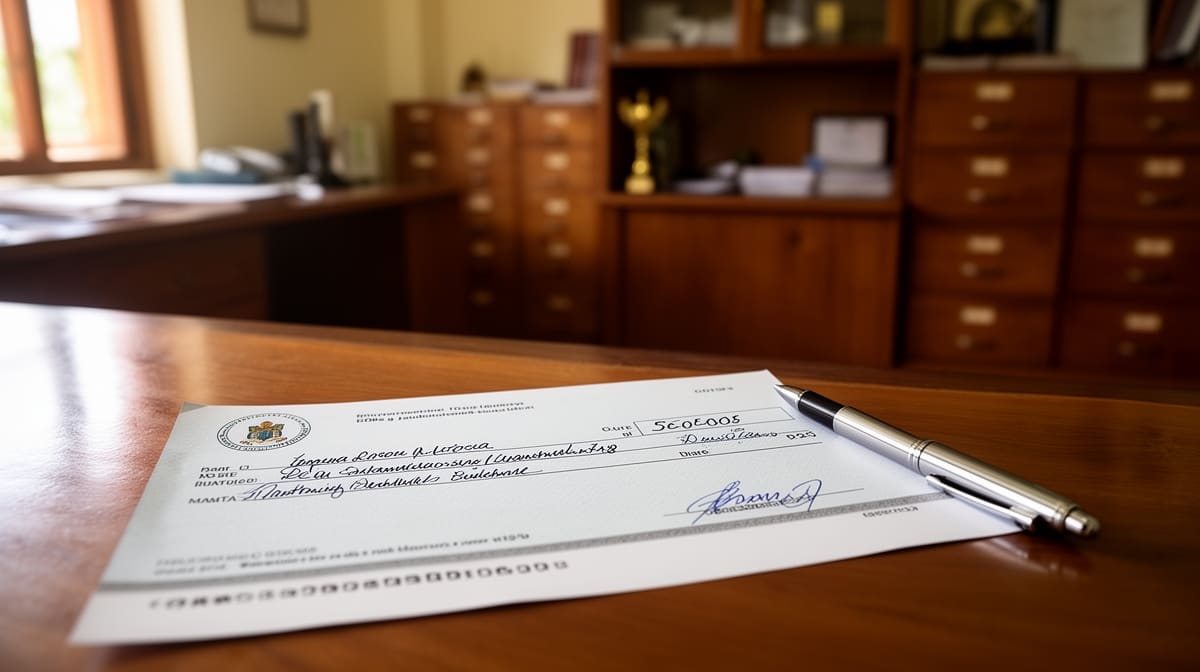
The respondent, Ucharan Bilgaiyan, filed a criminal complaint against the petitioner, Sanjay Agrawal, under Section 138 of the Negotiable Instruments Act, alleging dishonour of a cheque issued for repayment of an investment made in Sahara India. The petitioner was alleged to have acted as an intermediary in the transaction, with no direct receipt of funds. The cheque, bearing No. 023590 dated 29.07.2022 for ₹5,82,450 drawn on Axis Bank, Datia, was issued with the understanding that it would be presented only after two months and upon fulfillment of certain conditions.
Key Facts
- The complainant invested money in Sahara India through the petitioner, who was not a beneficiary or recipient of the funds
- The cheque was issued as a security measure, not in discharge of any existing debt
- The reverse side of the cheque contained specific terms requiring the complainant to return original documents before presentation
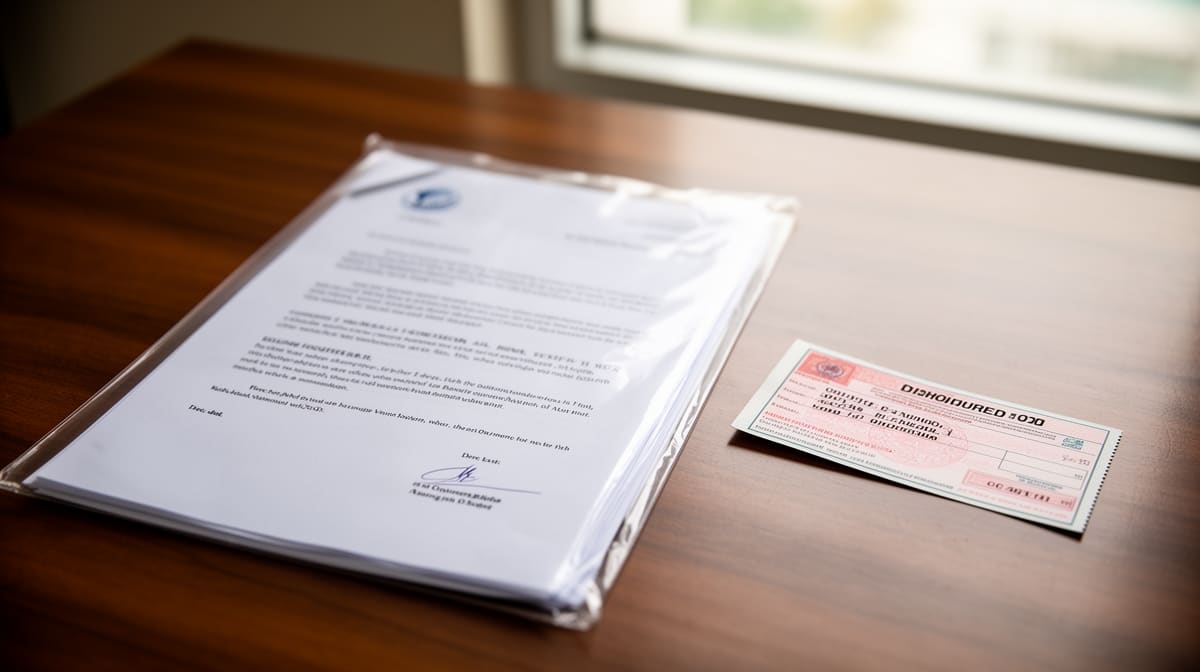
- The cheque was first presented on 07.09.2022 and dishonoured with the remark "account closed"
- A second presentation was made on 20.10.2022, again dishonoured with the same reason
- No evidence was produced that the complainant returned the original documents as required by the agreed conditions
- The petitioner raised these factual and legal objections in his reply to the statutory notice dated 15.11.2022
Procedural History
- 29.07.2022: Cheque issued by petitioner to respondent
- 07.09.2022: First presentation of cheque; dishonoured
- 20.10.2022: Second presentation; dishonoured
- 15.11.2022: Statutory notice issued under Section 138 NI Act
- 22.12.2022: Petitioner’s reply to notice, asserting security nature and non-compliance with conditions
- 11.12.2024: Judicial Magistrate First Class, Datia, framed charges under Section 138 NI Act in SC NIA No. 220 of 2022
- 28.02.2025: Sessions Court, Datia, dismissed criminal revision (Crl. Rev. No. 02 of 2025), affirming the trial court’s order
- 17.03.2026: Present petition under Section 528 of Bharatiya Nagarik Suraksha Sanhita, 2023, filed before High Court of Madhya Pradesh at Gwalior
Relief Sought
The petitioner sought quashing of the orders dated 11.12.2024 and 28.02.2025, and termination of all criminal proceedings against him, on grounds that no legally enforceable debt existed and the cheque was issued as security subject to unfulfilled conditions.
The Legal Issue
The central question was whether the issuance of a cheque as security for a third party’s liability, where the conditions precedent to its presentation were not complied with and no personal debt or liability is established against the drawer, constitutes an offence under Section 138 of the Negotiable Instruments Act.
Arguments Presented
For the Petitioner
The petitioner’s counsel argued that the cheque was not issued in discharge of any subsisting or crystallized debt but as contingent security for Sahara India’s potential default. The complainant admitted in the complaint that the liability, if any, lay with Sahara India, not the petitioner. The cheque’s reverse side contained explicit conditions requiring return of original documents before encashment, which were never fulfilled. The courts below mechanically applied presumptions under Sections 118 and 139 without examining whether the foundational requirement of a legally enforceable debt was established. The proceedings, therefore, amounted to an abuse of process.
For the Respondent
The respondent’s counsel contended that since the cheque bore the petitioner’s signature, the statutory presumptions under Sections 118 and 139 applied, and the defence raised involved disputed questions of fact that could only be decided at trial. The mere assertion of a security nature or unfulfilled conditions, without evidence, could not defeat the presumption of liability.
The Court's Analysis
The Court emphasized that Section 138 NI Act requires the existence of a legally enforceable debt or liability at the time of cheque issuance. The complainant’s own averments in the complaint established that the petitioner was an intermediary and not the beneficiary of the investment. The Court noted:
"It is apparent that the alleged liability pertains to Sahara India, and not to the present petitioner, who is stated to have acted merely as an intermediary."
The Court further held that the conditions on the reverse of the cheque were not mere formalities but material terms governing the validity of presentation. The complainant’s failure to comply with these conditions rendered the presentation unlawful and negated the presumption of liability under Section 139. The Court observed:
"The existence of such conditions is not disputed and is borne out from the material on record... there is nothing on record to indicate that the respondent complied with the said conditions before presenting the cheque for encashment."
The Court rejected the mechanical application of presumptions, citing K. Srinivas v. M. Srinivas and D. Vijay Kumar v. K. Suresh, which hold that presumptions are rebuttable and cannot override clear evidence contradicting the existence of a debt. The trial and revision courts failed to independently evaluate the factual matrix and instead relied solely on the presumption of liability. The Court concluded:
"The impugned orders suffer from non-application of mind and cannot be sustained. Continuation of the criminal proceedings against the petitioner would amount to an abuse of the process of law."
The Verdict
The petitioner succeeded. The High Court set aside the order dated 11.12.2024 of the Judicial Magistrate First Class, Datia, and the order dated 28.02.2025 of the Sessions Court, Datia. All criminal proceedings under SC NIA No. 220 of 2022 against the petitioner are quashed.
What This Means For Similar Cases
Security Cheques Require Strict Compliance with Conditions
- Practitioners must now establish that any conditions attached to a security cheque were fulfilled before presentation
- Failure to comply with express terms on the cheque’s reverse side invalidates the presumption of liability under Section 139
- Courts cannot presume a debt exists when the complainant’s own pleadings show the cheque was issued contingently
Third-Party Liability Cannot Be Transferred via Cheque
- A cheque issued for a third party’s obligation, where the drawer has no personal liability, cannot attract Section 138
- Merely signing a cheque does not create liability if no debt or consideration flows to the drawer
- Prosecution under Section 138 requires a direct nexus between the drawer and the debt
Presumptions Are Not Automatic - Foundational Facts Must Be Established First
- Courts must examine whether the cheque was issued for a legally enforceable debt before invoking Sections 118 and 139
- Quashment petitions under Section 528 BNSS are viable where the complaint itself negates the essential ingredient of a debt
- Mechanical application of presumptions by trial courts is now a ground for quashment