The Kerala High Court has clarified that proceeds from the sale of immovable property by a public servant, even if jointly held, must be accounted for as income under Section 13(1)(e) of the Prevention of Corruption Act, 1988, if not satisfactorily explained. This ruling overturns an acquittal and reinforces the prosecution’s burden-shifting framework in disproportionate asset cases.
Background & Facts
The Dispute
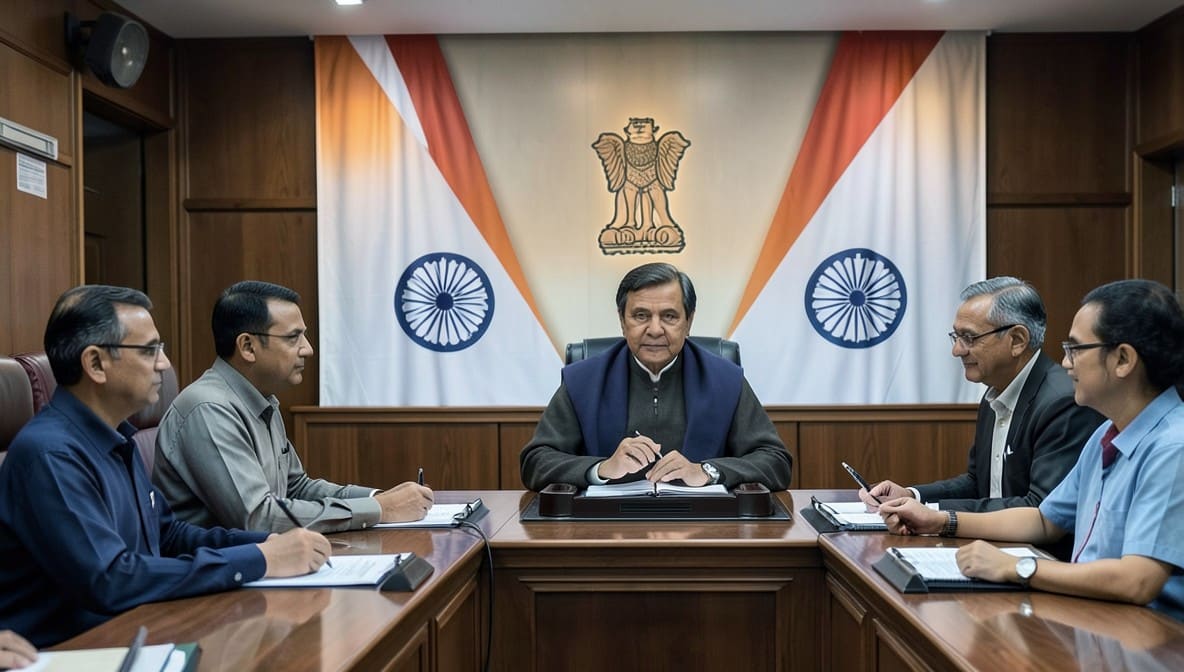
The case involves allegations of criminal misconduct against Sri V.K. Rajan, former Director of Health Services, Thiruvananthapuram, and his wife, Dr. K.K. Sumathy, a Civil Surgeon. The prosecution alleged that during the check period from 01.01.1994 to 31.10.2005, the accused amassed assets worth Rs. 60,29,656 in his name and that of his daughters, of which Rs. 24,54,988 were disproportionate to his known sources of income. The wife, initially co-accused, was acquitted by the High Court in Crl.M.C. No. 3327/2012 and later by the Supreme Court in SLP No. 7913/2015, leaving only the husband as the respondent.
Key Facts
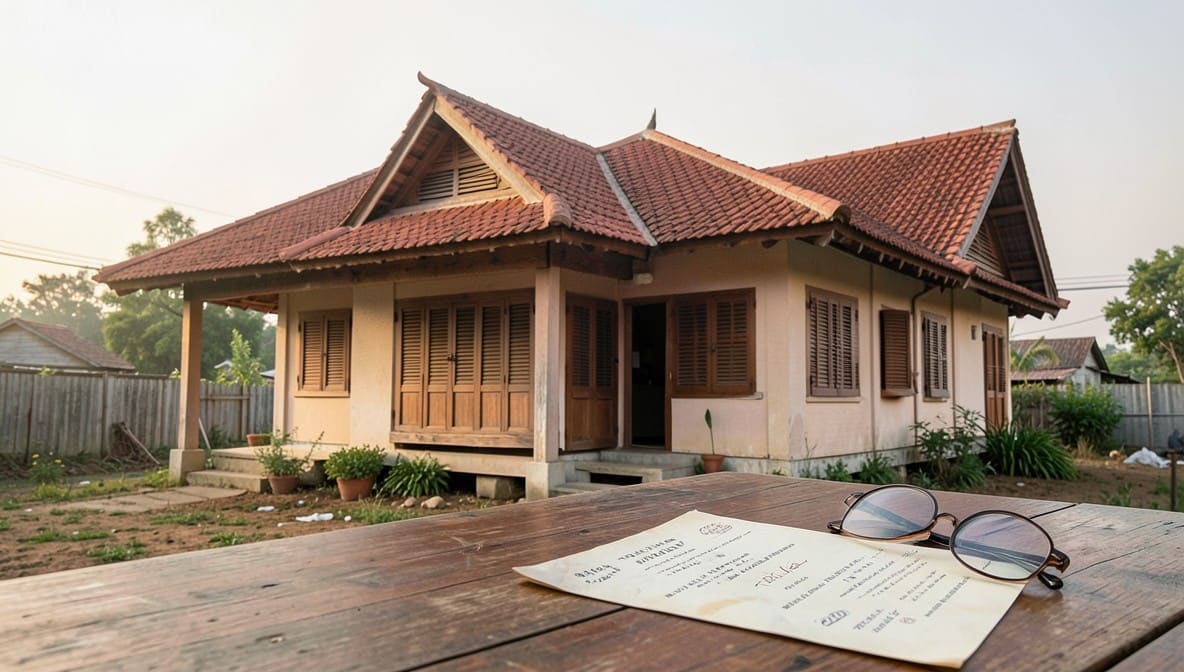
- The accused and his wife jointly purchased 13 cents of land in Edappally on 01.03.1994 for Rs. 1,80,000 (Sale Deeds Ext.P12(b) and (c)).
- They constructed a double-storied house (4400 sq.ft.) between 1995 - 1997.
- On 30.03.2005, the property was sold for Rs. 70,00,000 (Ext.P12(a)).
- The wife, DW6, admitted in trial that the construction cost was Rs. 35,00,000.
- The prosecution used the PWD Manual to validate the construction cost.
- Rs. 35,00,000 from the sale proceeds was deposited as a Fixed Deposit (FD No. 310214) in the accused’s name on 05.08.2005 (Ext.D1).
- The accused’s known income during the check period was Rs. 50,33,876.
- Total expenditure during the period was Rs. 14,59,208.
- Total assets at the end of the check period (31.10.2005) were Rs. 61,75,806.
- The prosecution calculated the disproportionate asset as Rs. 24,54,988.
Procedural History
- 20.05.2006: Direction issued by Director, VACB, Thiruvananthapuram for investigation (Order No. E17 (VE-3/2005/SCT)).
- 25.05.2006: Investigation assigned to PW61, Deputy Superintendent of Police.
- 16.06.2008: Charge sheet filed before Special Judge, Thiruvananthapuram.
- 20.06.2008: Charge sheet filed; Dr. K.K. Sumathy named as second accused.
- 20.06.2013: High Court quashed charges against Dr. Sumathy (Crl.M.C. No. 3327/2012).
- 30.05.2015: Special Judge acquitted the accused, holding that Rs. 35,00,000 was capital gain and not income.
- 17.06.2026: Kerala High Court delivered judgment on appeal.
The Parties' Positions
For the State (Appellant)
- Argued that Rs. 33,20,000 (Rs. 70,00,000 - Rs. 36,80,000) from the sale of property constituted income.
- Contended that 50% of this amount (Rs. 16,60,000) should be added to the accused’s income.
- Relied on testimonies of PW26 (Chartered Accountant) and PW64 (Income Tax Officer) who opined that sale proceeds exceeding cost of acquisition and improvement constitute income under the Income Tax Act.
- Cited Vigilance Manual Guidelines 150(a) and 151(c) to classify FDs and sale proceeds as assets and income respectively.
For the Accused (Respondent)
- Argued that Rs. 35,00,000 was capital gain, not income, and should not be included in the income calculation.
- Claimed that the construction cost of Rs. 35,00,000 was not proven scientifically, as no PWD valuation was obtained.
- Asserted that the wife’s income and assets were independent and could not be clubbed with the accused’s.
- Cited State of Maharashtra v. Pollonji Darabshaw Daruwalla (1987 Supp. 379) to argue that the check period must be strictly defined by the allegations.
- Highlighted that the accused had retired on 30.04.2006 and was on leave from 30.03.2004 to 20.04.2006, which should be excluded from the check period.
Relief Sought
The State sought: (1) setting aside the acquittal order dated 30.05.2015; (2) conviction under Section 13(1)(e) r/w 13(2) of the PC Act, 1988; and (3) imposition of appropriate sentence.
The Legal Issue
The central question was whether the sale proceeds of immovable property, exceeding the cost of acquisition and improvement, constitute income under Section 13(1)(e) of the Prevention of Corruption Act, 1988, and whether the accused’s failure to explain the source of Rs. 16,60,000 (50% of Rs. 33,20,000) renders the assets disproportionate.
Arguments Presented
For the Appellant
The State contended that the sale of the property yielded Rs. 70,00,000, with Rs. 36,80,000 as total cost (Rs. 1,80,000 land + Rs. 35,00,000 construction). The surplus of Rs. 33,20,000 was income under Section 48 of the Income Tax Act as capital gain, which is includible as income under Section 13(1)(e). The accused admitted the construction cost through DW6, and the PWD Manual was properly applied. The FD of Rs. 35,00,000 in his name was unexplained. The prosecution’s calculation of Rs. 16,60,000 as income was correct and the accused failed to account for it.
For the Respondent
The accused argued that capital gains are not income for the purpose of Section 13(1)(e), citing M.Krishna Reddy v. State (AIR 1993 SC 313). He claimed the construction cost was not proven by reliable evidence and that the sale value reflected market appreciation, not actual expenditure. He emphasized that his wife’s independent income and assets could not be attributed to him, and the check period was illegally extended beyond his service tenure.
The Court's Analysis
The Court examined the legal framework under Section 13(1)(e) and the Explanation thereto, which defines "known sources of income" as income received from lawful sources and duly intimated under applicable laws. The Court relied on M.Krishna Reddy v. State to affirm that once the prosecution establishes the existence of disproportionate assets, the burden shifts to the accused to provide a satisfactory explanation.
"The sale proceeds of Rs. 70,00,000, less the cost of acquisition and improvement, yield a surplus of Rs. 33,20,000. This surplus is not merely capital gain but income in the context of the Prevention of Corruption Act, as it represents an unexplained increase in wealth during the period of office."
The Court rejected the accused’s argument that capital gains under the Income Tax Act are excluded from Section 13(1)(e). It held that the Act’s purpose is to detect illicit enrichment, and the source of income need not be strictly tax-compliant; it must be lawful and explainable. The admission by DW6 that construction cost was Rs. 35,00,000, coupled with the PWD Manual’s application, rendered the cost calculation reliable.
The Court further held that the FD of Rs. 35,00,000 in the accused’s name was a direct result of the sale proceeds and formed part of the assets. Since the accused failed to explain how he obtained Rs. 16,60,000 (his share of the surplus), the prosecution’s case of disproportionate assets stood proven. The Court dismissed the claim that the wife’s assets were independent, noting that the prosecution’s case was framed solely on the accused’s assets and income, and the wife’s acquittal did not negate the sufficiency of evidence against him.
The Court also rejected the argument that the check period was illegally extended, noting that the investigation was initiated within the statutory period and the final date of 31.10.2005 was consistent with the accused’s last known service record.
The Verdict
The appeal is allowed. The judgment of the Special Judge dated 30.05.2015 is set aside. The respondent, Sri V.K. Rajan, is convicted under Section 13(1)(e) r/w Section 13(2) of the Prevention of Corruption Act, 1988. He is sentenced to undergo simple imprisonment for one year and to pay a fine of Rs. 16,00,000. In default of payment of fine, he shall undergo default imprisonment for four months. The Registry is directed to forward a copy of this judgment to the trial court for information.
What This Means For Similar Cases
Sale Proceeds Are Income Under PC Act
- Practitioners must treat surplus from sale of immovable property as income under Section 13(1)(e) if it exceeds documented acquisition and improvement costs.
- Capital gains under the Income Tax Act do not exempt such amounts from scrutiny under the Prevention of Corruption Act.
Burden of Explanation Is Strict
- Once the prosecution establishes a disproportionate asset, the accused must provide a clear, verifiable, and contemporaneous explanation for the source of funds.
- Admissions by family members (e.g., construction cost) can be used to fix the cost base, even if not independently verified by PWD.
Joint Assets Do Not Shield Individual Liability
- Assets held jointly with a spouse who is also a public servant may still be attributed to the accused if the prosecution’s case is framed on his individual income and assets.
- Acquittal of a co-accused does not automatically invalidate the case against the other, provided the evidence against him is independently sufficient.
Check Period Must Be Based on Service Tenure
- The check period must align with the accused’s period of office, but minor extensions for investigative completeness are permissible if supported by evidence.
- Claims of leave or retirement must be substantiated with official records to exclude periods from the check period.
Documentation Is Critical
- PWD valuations are helpful but not mandatory; other credible evidence (e.g., witness admissions, tax records) can suffice.
- Fixed deposits, bank statements, and sale deeds must be reconciled with income and expenditure statements to avoid gaps in accounting.
The Court’s Ruling Clarifies
The judgment establishes that Section 13(1)(e) is not confined to cash or salary income but encompasses any unexplained increase in wealth, including capital appreciation from property. This reinforces the Act’s preventive and deterrent purpose against illicit enrichment by public servants.