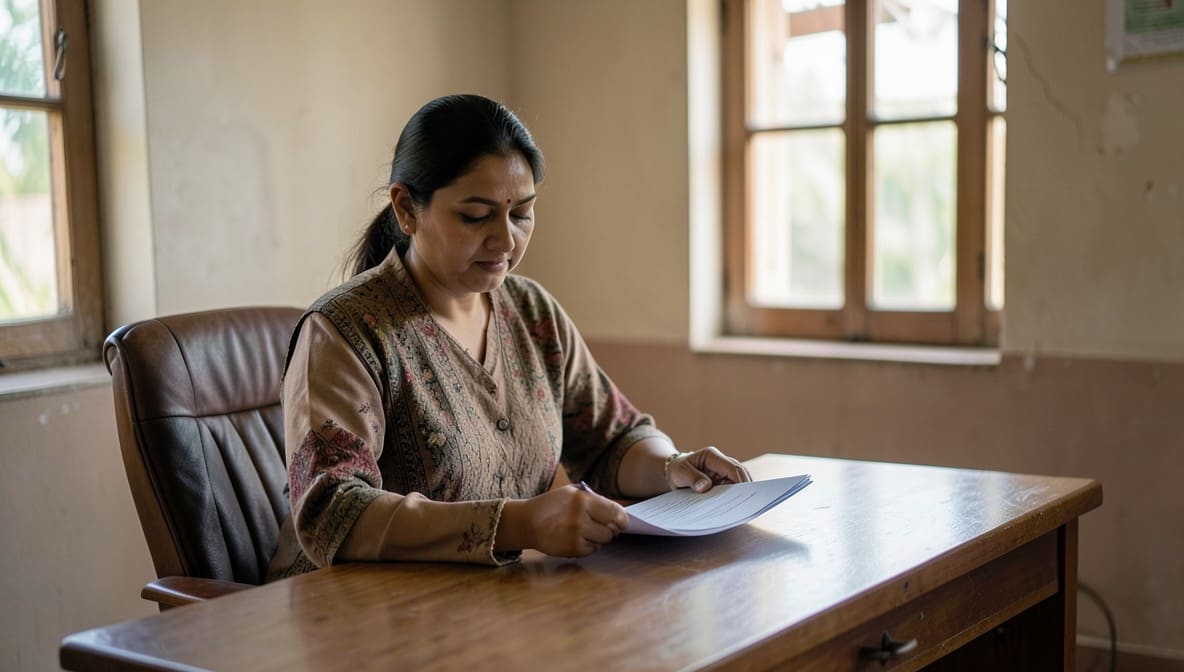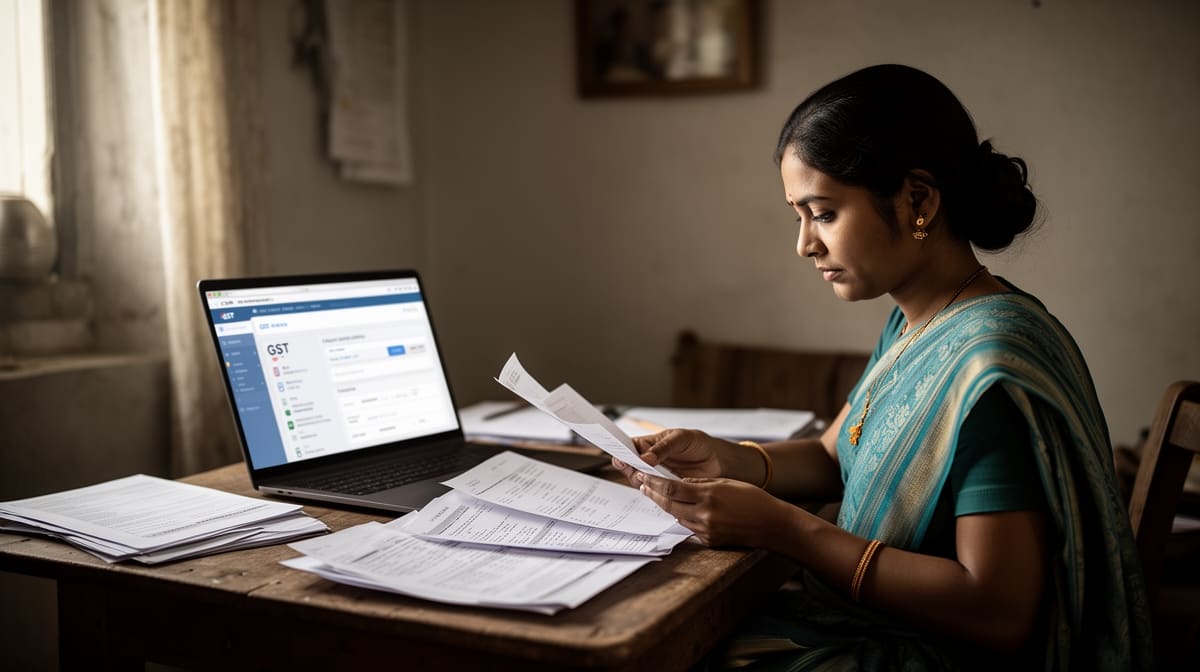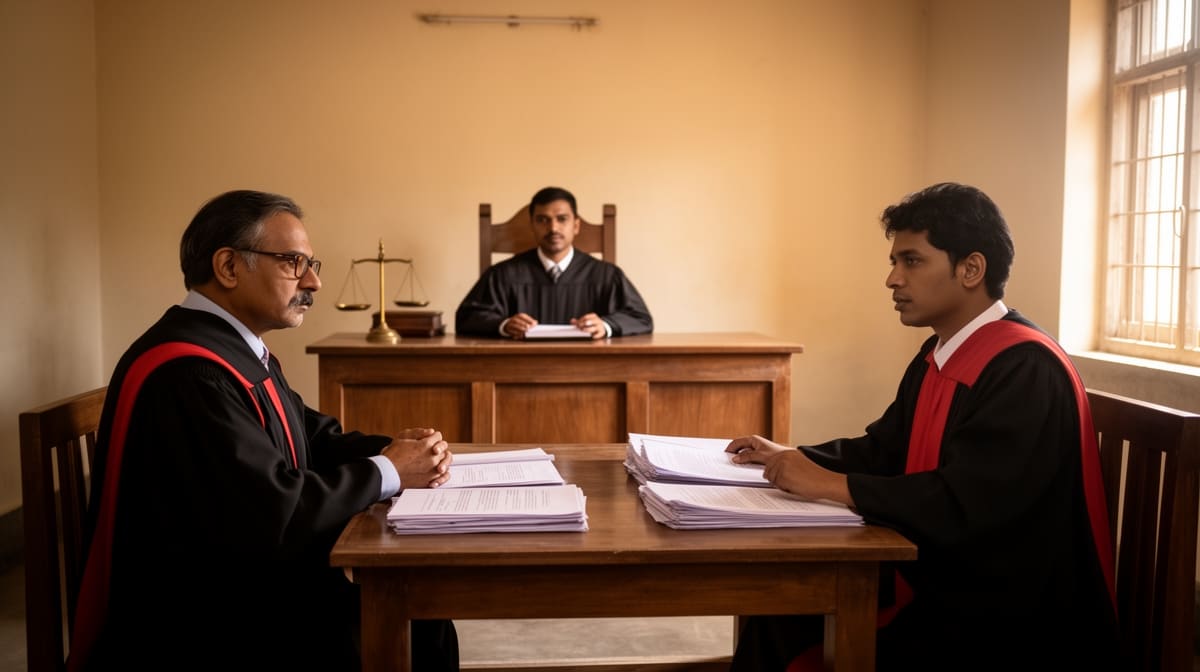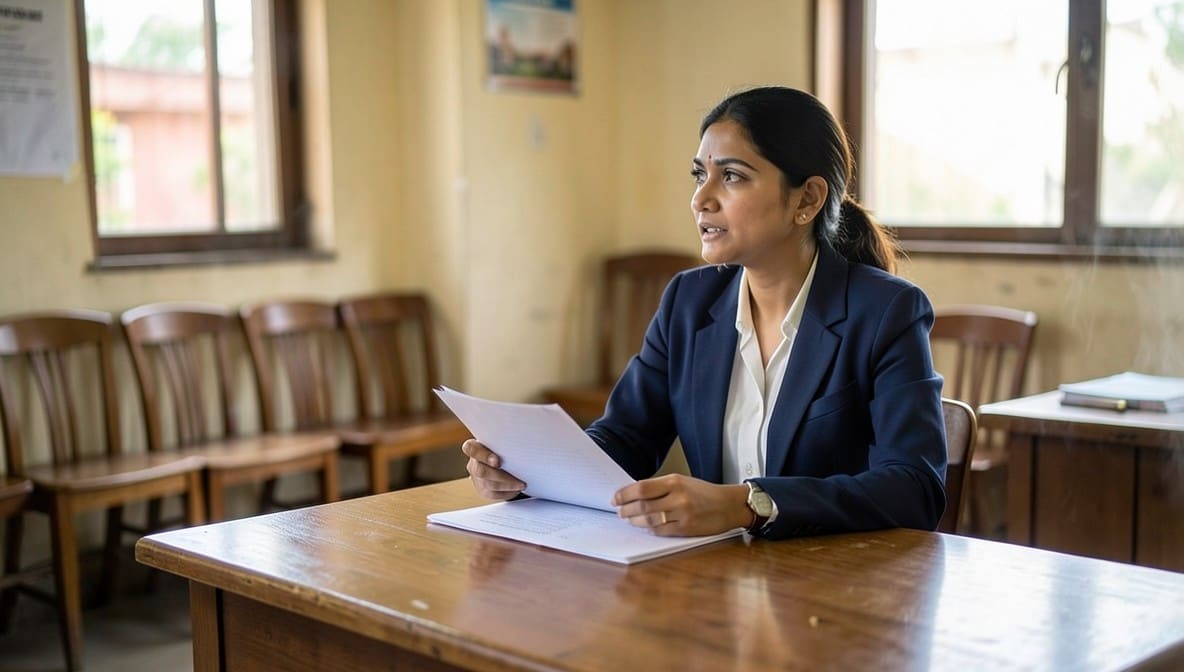
The Madhya Pradesh High Court has reaffirmed that failure by a respondent to cross-examine witnesses or present rebuttal evidence in a Section 125 CrPC proceeding renders dismissal of the maintenance application legally unsustainable. This judgment underscores the procedural obligation on courts to give effect to unrebutted testimony, particularly in cases involving vulnerable claimants such as wives and minor children.
Background & Facts
The Dispute
The petitioners - Rijwana Bano (wife), Mohd. Yasir (minor son), and Ku. Tuba (minor daughter) - filed an application under Section 125 of the Code of Criminal Procedure before the Family Court, Chhindwara, seeking maintenance from the respondent, Ibrahim, their husband and father. The petitioners alleged that the respondent had ceased to provide financial support after separating from the petitioner-wife, leaving them without means of subsistence.
Key Facts
- The marriage between Rijwana Bano and Ibrahim was solemnized as per Islamic rituals
- Two children, Mohd. Yasir and Ku. Tuba, were born from the marriage
- The petitioner-wife claimed to have been living separately from the respondent since 2012 with sufficient cause
- The petitioners produced five documentary exhibits (Ex.P-1 to P-5) to substantiate their claims
- Three witnesses were examined: Rijwana Bano (AW-1), Anjar Ansari (AW-2), and Jageshwar Kanoriya (AW-3)
- The respondent did not appear, did not file any written statement, did not cross-examine any witness, and did not adduce any evidence in rebuttal
Procedural History
- Date of filing: Misc. Criminal Case No. 428/2014 filed before the Family Court, Chhindwara
- 17.10.2014: Family Court dismissed the application on two grounds: (i) failure to prove separate living with sufficient cause, and (ii) failure to prove the respondent’s income
- 2025: Criminal Revision No. 219/2015 filed before the High Court of Madhya Pradesh at Jabalpur
- 20.04.2026: Judgment delivered by Justice Dwarka Dhish Bansal
Relief Sought
The petitioners sought setting aside of the Family Court’s order dated 17.10.2014 and direction for grant of maintenance under Section 125 CrPC, including arrears from the date of separation.
The Legal Issue
The central question was whether a Family Court may dismiss an application under Section 125 CrPC solely on the ground of insufficient proof when the respondent has failed to cross-examine the petitioner’s witnesses or adduce any rebuttal evidence.
Arguments Presented
For the Petitioner
Learned counsel for the petitioners submitted that the evidence adduced by the petitioners - including oral testimony and documentary proof - was unrebutted. He emphasized that the respondent’s complete absence from proceedings, coupled with non-cross-examination of witnesses, amounted to a waiver of the right to contest. He relied on settled principles that where evidence is unchallenged, it must be accepted as true unless inherently improbable. He argued that the Family Court erred in imposing an undue burden on the petitioner-wife to prove income, which is often inaccessible to women in patriarchal settings.
For the Respondent
The respondent did not appear before the High Court nor file any written submissions. No counter-arguments were presented on his behalf.
The Court's Analysis
The Court observed that the Family Court, while acknowledging the solemnization of marriage and birth of children, dismissed the application on technical grounds despite the absence of any rebuttal from the respondent. The Court noted that the Family Court’s order failed to engage meaningfully with the unrebutted testimony of AW-1, AW-2, and AW-3, or with the documentary evidence.
"Since the respondent did not even cross-examine the aforesaid witnesses and did not adduce any evidence, therefore, in my considered opinion, the Family Court has committed an illegality in passing the impugned order rejecting the application under Section 125 of Cr.P.C."
The Court held that Section 125 CrPC is a remedial provision designed to prevent vagrancy and destitution. The burden on the applicant is prima facie; once a credible case is made out and left unrebutted, the court cannot dismiss the application on speculative grounds. The Family Court’s requirement that the petitioner prove the respondent’s exact income, without any opportunity for discovery or disclosure, was found to be legally untenable. The Court emphasized that maintenance under Section 125 is not contingent on absolute proof of income but on a reasonable inference drawn from available circumstances.
The Verdict
The criminal revision was allowed. The High Court set aside the Family Court’s order dated 17.10.2014 and remanded the matter for fresh adjudication. The Family Court was directed to restore the application under Section 125 CrPC to its original number and decide it afresh in accordance with law. The parties were directed to appear before the Family Court on 14.05.2026. If either party fails to appear, the Family Court was directed to issue fresh summons. All pending applications were disposed of.
What This Means For Similar Cases
Unrebutted Evidence Must Be Accepted
- Practitioners must insist that courts accept unrebutted testimony as prima facie proof in Section 125 proceedings
- Failure to cross-examine or adduce evidence constitutes a waiver of contest, not a basis for dismissal
- Courts cannot impose impossible burdens of proof on women seeking maintenance, especially when the respondent is absent
Procedural Lapses Cannot Defeat Substantive Rights
- Technical dismissals on grounds of insufficient evidence are impermissible when the respondent has not participated
- The Family Court’s duty under Section 125 is proactive; it must infer income from available indicators (lifestyle, property, occupation, local standards)
- This judgment reinforces that Section 125 CrPC is a social welfare provision and must be interpreted liberally in favor of dependents
Strategic Implications for Advocates
- Always ensure witnesses are properly examined and documents marked
- File a written submission highlighting the respondent’s non-appearance and non-cross-examination
- Cite this judgment to oppose dismissals based on "lack of proof" where the respondent is silent
- Use this precedent to argue for interim maintenance during pendency, even before final adjudication