The Madhya Pradesh High Court has clarified that maintenance under Section 125 CrPC must reflect the husband’s actual standard of living, not merely his claimed income. In a significant ruling, the Court enhanced maintenance for a wife and minor son after finding the husband’s assertions of financial incapacity unsubstantiated and inconsistent with his family’s industrial background.
Background & Facts
The Dispute
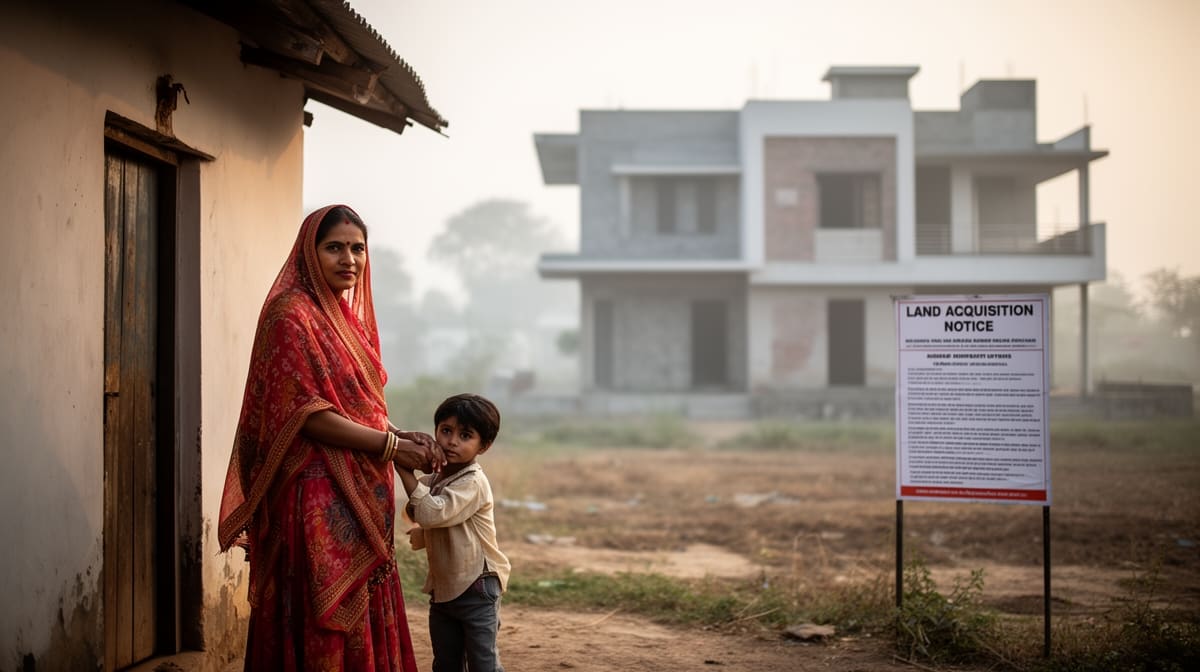
The dispute arose from a petition filed by Mona @ Moni under Section 125 of the Code of Criminal Procedure, 1973, seeking maintenance for herself and her minor son from her husband, Sandeep Koka. The marriage was solemnized on 01.12.2011 in Pali, Rajasthan, under Hindu customs, and a son was born on 15.01.2012. The child currently resides with the wife in Neemuch. The wife alleged that she was ousted from the matrimonial home on 15.12.2022, that the husband neglected his maintenance obligations, and that he had withdrawn Rs.50,000 from a joint SBI account. She further claimed the husband demanded Rs.25 lakhs to start a new factory despite owning substantial properties.
Key Facts
- Marriage solemnized on 01.12.2011
- Son born on 15.01.2012; currently residing with mother
- Maintenance application filed on 03.12.2022
- Wife alleged ouster from matrimonial home on 15.12.2022
- Claimed maintenance: Rs.30,000/month for wife and Rs.20,000/month for son
- Husband failed to file reply until 16.08.2023
- Family Court proceeded ex parte against husband on account of non-filing
- Wife testified as PW-1; documents admitted as Ex.P/1
- Husband claimed annual income of only Rs.50,000
- Husband referenced an agreement dated 01.02.2015 for rental income from M/s Suraj Textile, owned by his father, Sajjan Koka
- Rental agreement showed monthly rent of Rs.9,000 from M/s Durga Finishing for premises including 5,000 sq.ft. of land and a hall
- No affidavit of income filed by husband despite court directives
- No petition for restitution of conjugal rights filed under Section 9 of the Hindu Marriage Act, 1955
Procedural History
- 03.12.2022: Maintenance petition filed under Section 125 CrPC before Family Court, Neemuch (MJCR No.221/2022)
- 16.08.2023: Husband filed reply, but after extended delay; court proceeded ex parte
- 15.03.2024: Family Court awarded Rs.5,000/month to wife and Rs.2,000/month to son, effective from 03.12.2022
- 15.03.2024: Wife filed Criminal Revision No.2582/2024 seeking enhancement
- 15.03.2024: Husband filed Criminal Revision No.2679/2024 seeking setting aside of order
- 22.04.2026: Hearing conducted before High Court, Indore
- 22.06.2026: Judgment delivered
Relief Sought
- Wife sought enhancement of maintenance to Rs.30,000/month for herself and Rs.20,000/month for son
- Husband sought quashing of the maintenance order, alleging insufficient income proof and misrepresentation
The Legal Issue
The central question was whether the maintenance amount under Section 125 CrPC must be determined based on the husband’s claimed income alone, or whether the court must consider the husband’s standard of living, family background, and ability to maintain, especially when he fails to substantiate his financial claims.
Arguments Presented
For the Appellant/Petitioner (Wife)
The wife’s counsel argued that the husband, belonging to an industrial family with substantial property holdings, cannot evade maintenance obligations by claiming minimal income. The rental agreement dated 01.02.2015, though in the name of his father, indicated the family’s ownership of commercial assets. The husband’s failure to file an affidavit of income despite multiple opportunities violated the mandate in Rajnesh v. Neha (2021) 2 SCC 324. The wife, left to care for a school-going child, required adequate support to meet educational and living expenses.
For the Respondent/State (Husband)
The husband contended that his annual income was only Rs.50,000 and that the rental property belonged to his father, Sajjan Koka, not him. He argued that the Family Court erred in awarding maintenance without verified income proof and that the wife had submitted false details regarding his financial capacity. He claimed the maintenance order was arbitrary and disproportionate.
The Court's Analysis
The Court examined the obligations under Section 125 CrPC and the precedent in Rajnesh v. Neha, which places the burden of proving income squarely on the husband. The Court observed that the husband had participated in multiple hearings but deliberately failed to file his affidavit of income, thereby inviting adverse inference.
"It is not the wife who has to discharge burden to prove income of husband but it is the husband who has to discharge the burden to prove income and he is unable to maintain the wife and minor son."
The Court noted that the husband’s conduct - refusing to file for restitution of conjugal rights, remaining absent despite court notices, and relying on third-party property to deny liability - demonstrated a pattern of avoidance. The rental agreement, though in the father’s name, was part of the family’s commercial enterprise, indicating a higher standard of living.
The Court emphasized that maintenance under Section 125 is not a charity but a statutory obligation to prevent destitution. The award of Rs.5,000 and Rs.2,000 was found grossly inadequate given the family’s industrial background and the child’s educational needs.
The Verdict
The wife’s revision petition was allowed and the husband’s was dismissed. The impugned order dated 15.03.2024 was modified: the husband is directed to pay Rs.15,000 per month to the wife and Rs.15,000 per month to the minor son, effective from 03.12.2022. Any amount already paid shall be adjusted. The order is binding until the son attains majority. A copy of this judgment was directed to be sent to the Family Court, Neemuch.
What This Means For Similar Cases
Burden of Proof Lies Firmly on the Husband
- Practitioners must insist on strict compliance with Rajnesh v. Neha: failure to file income affidavit invites adverse inference
- Courts may impute higher income where husband’s lifestyle or family assets suggest greater capacity
- Maintenance cannot be reduced to mere subsistence if the husband’s background indicates a higher standard
Standard of Living Trumps Claimed Income
- Even if income is unverified, courts must assess the husband’s economic environment, property holdings, and family enterprise
- Rental income from family-owned properties, even if not directly in the husband’s name, is relevant to assessing capacity
- A child’s educational needs and the wife’s role as primary caregiver must be central to the calculation
Non-Cooperation Has Legal Consequences
- Absence from hearings and refusal to file documents cannot be used as a tactical advantage
- Courts may draw negative inferences from non-filing of affidavits or failure to seek restitution
- Maintenance proceedings are not a contest of technicalities but a mechanism to prevent destitution