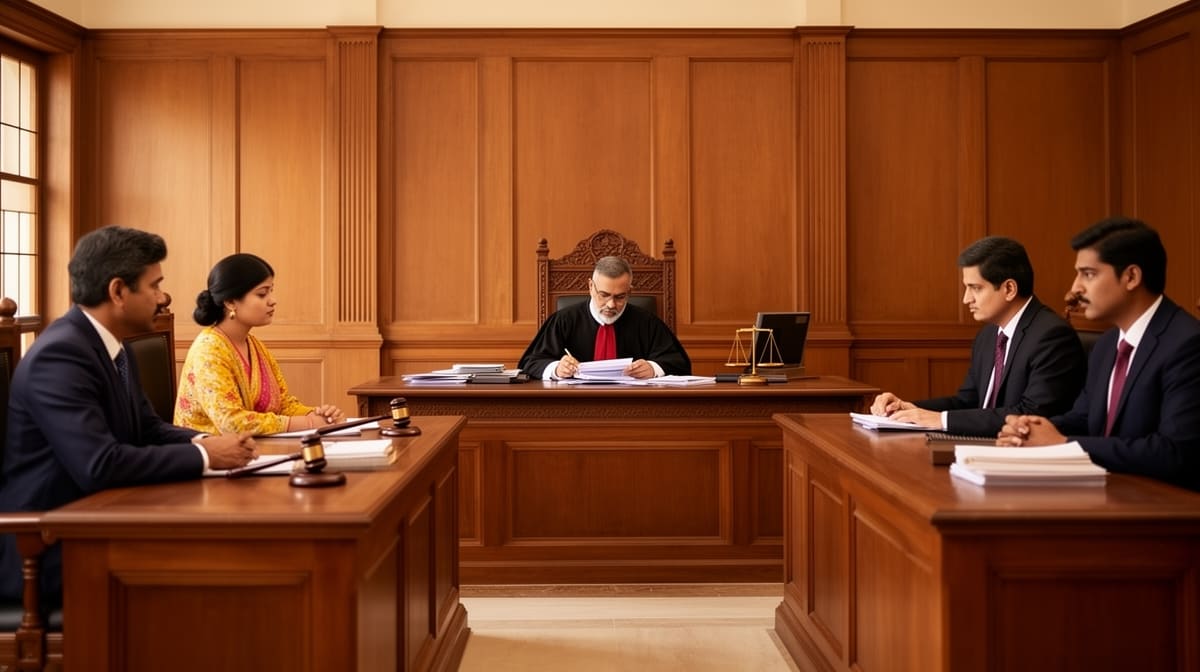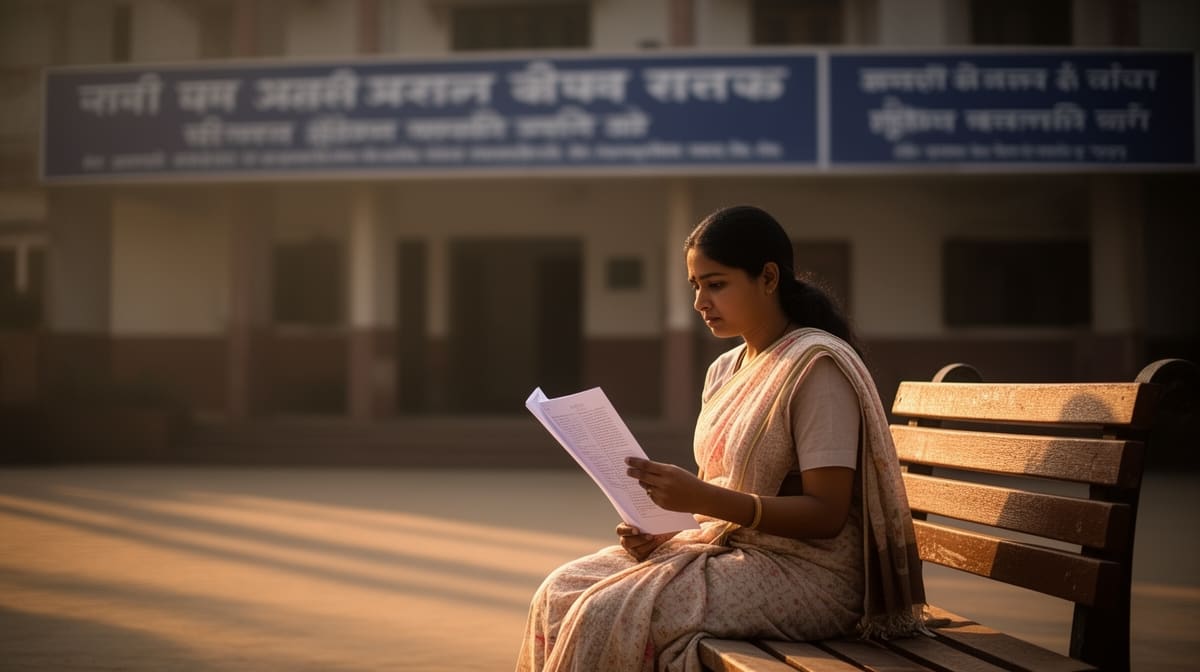
The Bombay High Court has clarified that a wife cannot be denied maintenance under Section 125 of the CrPC based on isolated or past instances of adultery. The judgment reinforces that only continuous and sustained adulterous conduct qualifies as 'living in adultery' under the statute, setting a critical threshold for courts adjudicating maintenance claims.
Background & Facts
The Dispute
The petitioner, Chayabai, sought maintenance of ₹20,000 per month from her husband under Section 125 of the CrPC, alleging neglect after his voluntary retirement in 2003. She claimed he began assaulting her under the influence of alcohol and abandoned her in 2007, despite his steady income from pension, rental property, and agriculture. The husband, Pandit, admitted to the marriage and three children but countered that she had engaged in illicit relationships during his years of service in the armed forces, citing named individuals and testimony from their adult son.
Procedural History
- 2008: Chayabai filed a civil suit under Section 18 of the Hindu Adoption and Maintenance Act seeking maintenance; the civil court dismissed it, finding she was leading an adulterous life.
- 2021: Chayabai filed a maintenance petition under Section 125 CrPC before the Family Court, Latur.
- 2023: The Family Court rejected her petition, relying on the 2008 civil court judgment and testimony from the son.
- 2023: Chayabai filed a criminal revision application before the Bombay High Court, Aurangabad Bench.
Relief Sought
The petitioner sought reversal of the Family Court’s order and an award of monthly maintenance under Section 125 CrPC, arguing that the lower court misapplied the law by treating sporadic allegations as sufficient to invoke Section 125(4).
The Legal Issue
The central question was whether Section 125(4) of the CrPC permits denial of maintenance based on isolated or historical acts of adultery, or whether it requires proof of continuous and ongoing adulterous conduct.
Arguments Presented
For the Petitioner
Counsel argued that Section 125(4) requires proof of a wife 'living in adultery' - a phrase interpreted by multiple High Courts as denoting continuous, not sporadic, conduct. He cited judgments from the Madhya Pradesh, Kerala, and Punjab & Haryana High Courts, and this Court’s own decision in Criminal Revision No. 273/1992, emphasizing that past affairs, even if proven, cannot disentitle a wife unless the adulterous relationship persists. He contended that the civil court’s 2008 finding was irrelevant to a CrPC proceeding, as the standards of proof and purpose differ.
For the Respondent
Counsel contended that the Family Court rightly relied on the civil court’s final judgment, which had conclusively found the wife’s adulterous conduct. He emphasized corroborative testimony from the couple’s adult son and the wife’s prior written bond to cease illicit relations. He argued that the cumulative evidence - multiple partners, family awareness, and judicial findings - established a pattern of continuous immorality sufficient to invoke Section 125(4).
The Court's Analysis
The Court acknowledged that revisional jurisdiction under Section 397 CrPC is limited and cannot be used to re-appreciate evidence unless the order is perverse, illegal, or based on no evidence. It noted that while the civil court’s 2008 judgment was admissible, its findings could not be mechanically transplanted into a CrPC proceeding, as the two remedies serve distinct purposes.
"The expression 'living in adultery' in Section 125(4) CrPC must be understood as denoting a state of continuous or habitual adulterous conduct, not a single or isolated incident."
The Court examined the legislative intent behind Section 125, which is to prevent destitution of dependents, and held that the threshold for disentitlement must be high. It observed that the husband’s allegations, even if true, pertained to a period during his service - over two decades ago - and there was no evidence of ongoing adulterous relationships after his return in 2003. The son’s testimony, while relevant, was insufficient to establish continuity without corroboration from independent sources.
The Court further distinguished between proof of adultery in a civil suit for divorce and the statutory bar under Section 125 CrPC. It emphasized that the latter requires a present state of conduct, not past transgressions. The Family Court erred in treating the civil judgment as conclusive without independently evaluating whether the wife was currently 'living in adultery' at the time of the maintenance petition.
The Verdict
The petitioner won. The Court held that Section 125(4) requires proof of continuous adulterous conduct, not isolated or historical acts, and that the Family Court’s reliance on a 2008 civil judgment without assessing current circumstances was legally flawed. The revision application was allowed, and the matter was remanded to the Family Court for fresh adjudication on the merits of the wife’s current conduct.
What This Means For Similar Cases
Continuous Conduct Is Mandatory
- Practitioners must now prove that the wife’s adulterous behavior was ongoing at the time of the maintenance petition, not merely past.
- Allegations of affairs during a spouse’s military posting or long absence are insufficient unless tied to present conduct.
- Courts must conduct an independent evaluation of current circumstances, even if prior civil judgments exist.
Civil Court Findings Are Not Conclusive
- A civil court’s finding of adultery in a divorce or maintenance suit under the Hindu Act does not automatically bar maintenance under Section 125 CrPC.
- The burden remains on the husband to demonstrate that the wife is currently 'living in adultery' - a higher threshold than mere infidelity.
- Evidence must be contemporaneous and corroborated; testimony from children alone is inadequate without additional material.
Maintenance Is a Socio-Legal Safety Net
- Section 125 CrPC is remedial in nature and must be interpreted liberally to protect vulnerable spouses.
- Courts must avoid using moral judgments to deny statutory rights; the focus must remain on economic need and continuous misconduct.
- Practitioners should emphasize the distinction between moral fault and statutory disentitlement when arguing maintenance cases.