The Income Tax Appellate Tribunal, Mumbai, has clarified that amendments to Section 11(3) of the Income Tax Act, 2022, withdrawing the benefit of utilising accumulated income in the sixth year, cannot be applied retrospectively to deprive charitable trusts of rights lawfully accrued under the prior legal regime. This ruling affirms the principle that statutory changes affecting vested rights must respect the legal framework in force at the time of accumulation.
Background & Facts
The Dispute
The dispute centres on whether the Centralised Processing Centre (CPC) was legally entitled to treat unutilised income accumulated by a charitable trust in Assessment Year (AY) 2017-18 as taxable income in AY 2023-24, following an amendment to Section 11(3) of the Income Tax Act by the Finance Act, 2022. The trust had lawfully accumulated income under the then-existing provision permitting utilisation within five years and the immediately succeeding sixth year. The CPC, applying the amended law, deemed the unutilised amount as income for AY 2023-24, triggering a tax addition of Rs. 29,04,39,083.
Key Facts
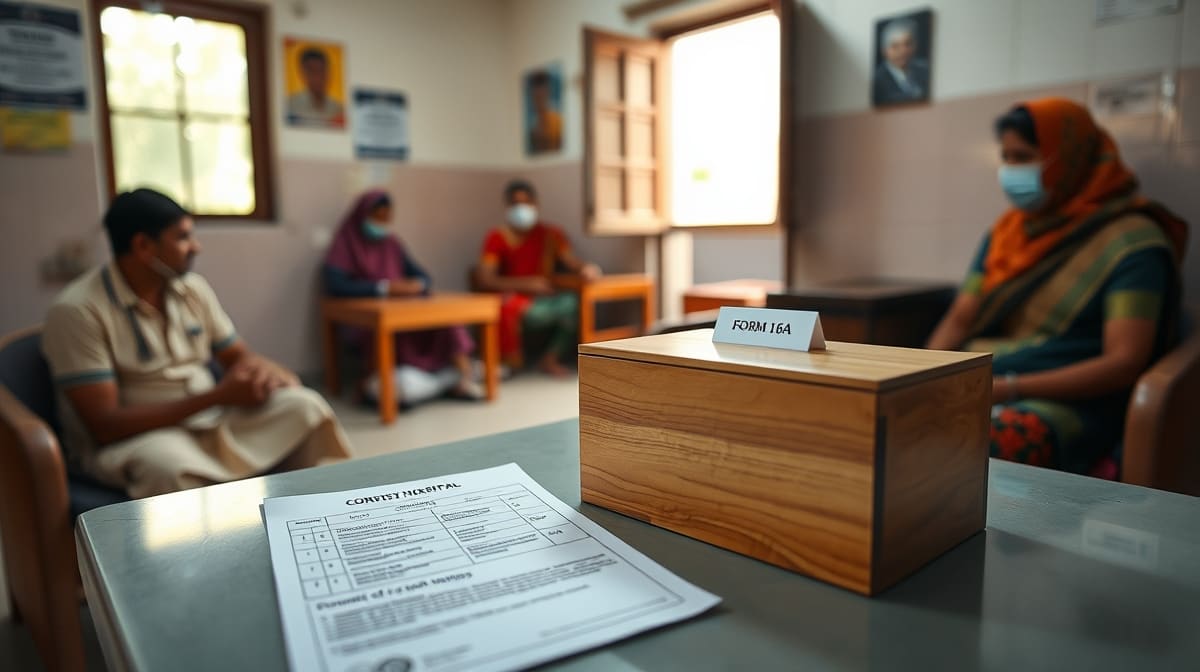
- The assessee, Society of the Servants of the Holy Spirit, is a charitable trust registered under Section 12A of the Income Tax Act and operates Holy Spirit Hospital, a 300-bed medical facility in Andheri East, Mumbai.
- The trust filed its return for AY 2023-24 on time, declaring total income of Rs. 35,94,350 after claiming exemption under Section 11.
- In AY 2017-18, the trust accumulated Rs. 29,04,39,083 under Section 11(2), having duly filed Form 9A and Form 10 within the prescribed timelines.
- At the time of accumulation (AY 2017-18), the law permitted utilisation of accumulated income within five years and also in the immediately succeeding sixth year.
- The trust applied the accumulated amount during Financial Year (FY) 2022-23, which corresponds to AY 2023-24.
- The Finance Act, 2022 received Presidential assent on 30.03.2022, amending Section 11(3) to withdraw the sixth-year benefit with effect from AY 2023-24.
- The CPC, under Section 143(1), made an automatic addition of Rs. 29,04,39,083, treating the unutilised amount as deemed income for AY 2023-24.
Procedural History
- 30.03.2022: Finance Act, 2022 receives Presidential assent, amending Section 11(3) with effect from AY 2023-24.
- 31.07.2023: Due date for filing return of income for AY 2023-24.
- 01.08.2023: Return filed by assessee.
- 15.10.2023: CPC processes return under Section 143(1) and makes addition of Rs. 29,04,39,083.
- 15.11.2023: Appeal filed before Ld. CIT(A) Addl./JCIT (A)-7, Kolkata.
- 25.08.2025: Ld. CIT(A) deletes the addition, holding that the amendment cannot apply retrospectively to AY 2017-18 accumulations.
- 09.04.2026: Hearing before ITAT Mumbai.
- 20.04.2026: ITAT Mumbai pronounces order dismissing the revenue’s appeal.
The Parties' Positions
For the Revenue (CPC and CIT)
- Argued that the amendment to Section 11(3) applies prospectively to AY 2023-24, and any unutilised accumulation as of that year becomes taxable, regardless of when it was accumulated.
- Contended that the amendment does not operate retrospectively but governs the taxability of accumulations remaining unutilised in AY 2023-24.
- Asserted that the CPC’s action under Section 143(1) was purely mechanical and within statutory mandate.
- Rejected the doctrine of impossibility of performance, stating that statutory compliance cannot be excused on equitable grounds.
For the Assessee (Trust)
- Argued that the right to utilise accumulated income in the sixth year was a vested right acquired under the law prevailing in AY 2017-18.
- Highlighted that the amendment was notified on 30.03.2022, leaving only 12 months to utilise funds accumulated over five years - an impractical and unreasonable timeframe.
- Relied on Life Insurance Corporation of India v. CIT (219 ITR 410) and Krishnaswamy S. Pd. v. Union of India (281 ITR 305 SC) to invoke the principle that no person can be compelled to perform an impossible act.
- Cited coordinate bench decisions (ACIT v. State Examination Board, Phulchand Gulabchand Charitable Trust v. ITO) affirming the permissibility of sixth-year utilisation.
- Argued that CPC’s addition under Section 143(1) was beyond its scope, as it involved interpretation of a new statutory provision.
Relief Sought
The assessee sought confirmation of the Ld. CIT(A)’s order deleting the addition of Rs. 29,04,39,083. The Revenue sought to restore the CPC’s addition and treat the unutilised accumulation as taxable income for AY 2023-24.
The Legal Issue
The central question was whether the amendment to Section 11(3) of the Income Tax Act by the Finance Act, 2022, which withdrew the benefit of utilising accumulated income in the sixth year, could be applied to income accumulated in AY 2017-18 under the prior law permitting such utilisation.
Arguments Presented
For the Appellant (Revenue)
The Revenue contended that the amendment to Section 11(3) was prospective in nature, applicable from AY 2023-24, and governed the taxability of any unutilised accumulation as of that year. It argued that the tax liability arises not on the date of accumulation but on the date of non-utilisation within the statutory period. Since the period of utilisation expired in AY 2023-24, the amendment applied. The Revenue further asserted that the doctrine of impossibility of performance could not override a clear statutory mandate and that the CPC’s action under Section 143(1) was a mechanical application of law.
For the Respondent (Assessee)
The assessee argued that the right to utilise accumulated income in the sixth year was a vested right acquired under the law as it stood in AY 2017-18. The amendment, though prospectively effective, could not extinguish rights lawfully accrued. The trust had acted in good faith, complying with all formalities, and the sudden withdrawal of the sixth-year benefit with only 12 months’ notice rendered compliance impossible. The assessee relied on Supreme Court precedents and coordinate bench rulings to affirm that sixth-year utilisation was legally permissible and that the CPC had no authority to make such an addition under Section 143(1).
The Court's Analysis
The Tribunal examined the nature of the amendment and its impact on vested rights. It noted that the accumulation was made in AY 2017-18 when the law explicitly permitted utilisation within five years and the immediately succeeding sixth year. The assessee had fulfilled all procedural requirements, including timely filing of Form 10, thereby acquiring a legitimate expectation and a vested right to utilise the funds within the extended period.
"The amendment brought in by the Finance Act, 2022, though applicable from A.Y. 2023-24, cannot be interpreted in a manner so as to take away a vested right already accrued to the assessee at the time of accumulation."
The Tribunal held that applying the amendment to deny the sixth-year benefit to accumulations made under the prior regime would amount to retrospective deprivation of a legal right, contrary to the settled principle of non-retroactivity of statutes affecting vested rights. The timing of the amendment - receiving Presidential assent on 30.03.2022 - left the assessee with only 12 months to utilise funds accumulated over five years, a period insufficient for practical compliance. The Tribunal affirmed that the law does not compel the impossible, citing Life Insurance Corporation of India v. CIT and Krishnaswamy S. Pd. v. Union of India.
Further, the Tribunal found support in its own coordinate benches’ decisions in ACIT v. State Examination Board and Phulchand Gulabchand Charitable Trust v. ITO, which had consistently held that the phrase "in the year immediately following the expiry thereof" in Section 11(2) permits utilisation in the sixth year. The Tribunal concluded that the CPC’s addition under Section 143(1) was legally unsustainable, as it involved interpretation of a new statutory provision beyond the scope of a mechanical processing function.
The Verdict
The appeal filed by the Revenue is dismissed. The order of the Ld. CIT(A) dated 25.08.2025, deleting the addition of Rs. 29,04,39,083 made under Section 11(3) for AY 2023-24, is upheld. The unutilised accumulation of Rs. 29,04,39,083 from AY 2017-18, applied in FY 2022-23, is not taxable in AY 2023-24. No costs are awarded.
What This Means For Similar Cases
Vested Rights in Accumulation Cannot Be Revoked by Prospective Amendments
- Charitable trusts that accumulated income under the pre-2022 regime are entitled to utilise such funds in the sixth year, even if the amendment is effective from AY 2023-24.
- Tax authorities cannot treat such utilisation as taxable merely because the amendment came into force during the sixth-year window.
- Practitioners must argue that any amendment affecting utilisation rights must respect the legal regime in force at the time of accumulation.
CPC Cannot Make Substantive Additions Under Section 143(1)
- The CPC’s role under Section 143(1) is limited to arithmetical and procedural checks; it cannot interpret or apply new statutory provisions.
- Additions involving legal interpretation, such as applicability of amended Section 11(3), must be made only after proper assessment proceedings under Section 143(3).
- Practitioners should challenge CPC-initiated additions under Section 143(1) that involve statutory interpretation as ultra vires.
Impossibility of Performance Is a Valid Defence Against Sudden Legal Changes
- When statutory amendments drastically reduce compliance windows without reasonable transition, the doctrine of impossibility may be invoked.
- Courts and tribunals may consider the practical feasibility of compliance, especially for entities like charitable trusts with long-term funding cycles.
- Practitioners should document the timing of amendments and the actual time available for compliance to build a strong impossibility argument.