The Income Tax Appellate Tribunal, Delhi, has clarified a critical principle in charitable trust taxation: when donations received by an unregistered trust are treated as income, the corresponding expenditures made for charitable purposes must be allowed as deductions. This ruling reinforces the matching principle in income computation and affirms that procedural non-registration does not negate substantive charitable intent.
Background & Facts
The Dispute
The appellant, Girdhari Lal Sundari Devi, is a charitable trust engaged in providing medical treatment to indigent patients through its association with Holy Family Hospital, New Delhi. During the assessment year 2020-21, the trust received donations totaling Rs. 95,952. As the trust was not registered under Section 12A of the Income Tax Act, 1961 at the time, the Assessing Officer (AO) treated the entire amount as taxable income. The AO disallowed the full amount of Rs. 95,952 claimed as expenditure, despite evidence that the funds were transferred to Holy Family Hospital for free treatment of poor patients.
Key Facts
- The trust received donations amounting to Rs. 95,952 during A.Y. 2020-21
- All payments were made to "New Delhi Holy Family Hospital Society" for treatment of needy patients
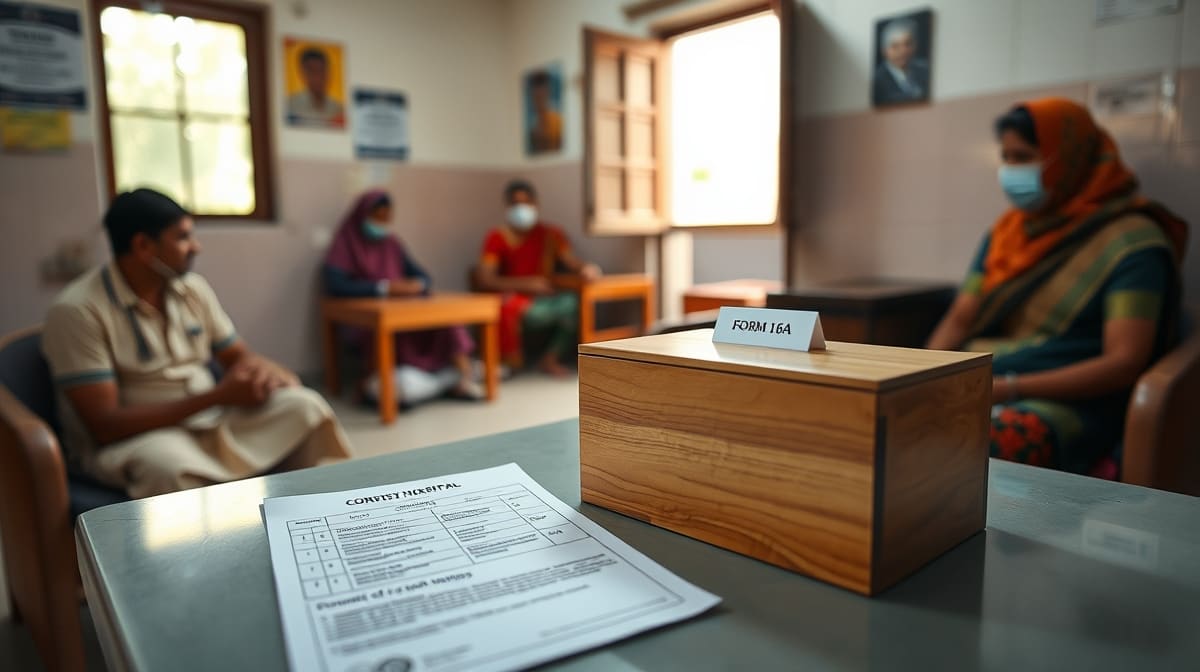
- Tax Deducted at Source (TDS) was applied on all payments, as evidenced by Form 16A (pages 9 - 12 of the Paper Book)
- The trust was not registered under Section 12A during A.Y. 2020-21
- Registration under Section 12A was granted retrospectively with effect from 29.12.2022
- The AO and CIT(A) both disallowed the expenditure on grounds of lack of documentary substantiation
Procedural History
- 01.04.2020 - 31.03.2021: Assessment Year 2020-21
- 05.07.2024: Order of Commissioner of Income Tax (Appeals), National Faceless Appeal Centre, Delhi, confirming addition of Rs. 95,952
- 25.03.2026: Hearing before ITAT Delhi
- 25.03.2026: Oral order pronounced by Judicial Member Vikas Awasthy
- 30.03.2026: Written order signed and dated
Relief Sought
The appellant sought deletion of the addition of Rs. 95,952, arguing that the expenditure incurred for charitable purposes should be allowed as a deduction against the income represented by donations, irrespective of the absence of Section 12A registration at the time.
The Legal Issue
The central question was whether, when donations received by an unregistered charitable trust are treated as income under the Income Tax Act, the corresponding expenditures incurred for charitable purposes must be allowed as deductions, even in the absence of Section 12A registration during the relevant assessment year.
Arguments Presented
For the Appellant
Shri Rajan Sachdeva, CA, argued that the principle of matching income with expenditure is fundamental to income computation. He submitted that the trust had furnished Form 16A as documentary proof of TDS deducted on payments made to Holy Family Hospital, establishing the bona fide nature of the transactions. He emphasized that the subsequent grant of Section 12A registration in 2022 validated the trust’s charitable intent and that denying expenditure on technical grounds would defeat the purpose of the law.
For the Respondent
Shri Manoj Kumar, Sr. DR, contended that without Section 12A registration, the trust could not claim any exemption or deduction under the Act. He argued that the absence of detailed bills, receipts, or hospital records rendered the expenditure claim unsubstantiated, and that the mere production of Form 16A was insufficient to prove the charitable use of funds.
The Court's Analysis
The Tribunal rejected the Revenue’s narrow interpretation of Section 12A. It held that while registration under Section 12A is necessary for claiming exemption under Section 11, it does not negate the basic accounting principle that income must be matched with legitimate expenditures. The Court observed:
"Once the donations received are treated as income of the assessee, the corresponding expenditure has to be allowed."
The Tribunal noted that the payments were made to a recognized hospital, subject to TDS, and were demonstrably for the treatment of poor patients. The retrospective grant of Section 12A registration was treated as corroborative evidence of the trust’s bona fides, not as a condition precedent for expenditure allowance. The Court emphasized that the AO’s failure to justify the denial of expenditure was legally unsustainable. The Tribunal further held that Form 16A, coupled with the nature of the recipient institution and the purpose of payments, constituted sufficient documentary evidence under the circumstances.
The Verdict
The appeal was allowed. The ITAT set aside the order of the CIT(A) dated 05.07.2024 and directed the Assessing Officer to allow the expenditure of Rs. 95,952 claimed by the assessee against the donations received during A.Y. 2020-21. The order was pronounced on 25.03.2026 and signed on 30.03.2026.
What This Means For Similar Cases
Expenditure Must Be Allowed Against Donations Treated as Income
- Practitioners representing unregistered trusts must argue that disallowance of expenditure is contrary to the basic principle of income computation under Section 145 of the Act
- The burden shifts to the Revenue to prove that expenditures are not genuinely incurred for charitable purposes, not to the assessee to prove them beyond all doubt
Documentary Evidence Can Be Contextual
- Form 16A, recipient identity, and nature of payments can collectively constitute sufficient proof where detailed receipts are unavailable
- Courts will consider the substance over form, especially where subsequent registration validates intent
Section 12A Registration Is Not a Prerequisite for Expenditure Allowance
- Denial of deduction solely on the ground of non-registration during the assessment year is legally untenable if income is already included
- This ruling creates a clear distinction between exemption under Section 11 and the allowance of expenditure under general income computation rules