The Customs, Excise and Service Tax Appellate Tribunal (CESTAT) Chennai has clarified that misdeclaration of a new vehicle as used, without compliance with regulatory conditions, does not render the goods inherently prohibited. The Tribunal emphasized that absolute confiscation under Section 111(d) of the Customs Act, 1962 is disproportionate unless the goods are categorically banned, and that the statutory right to redemption under Section 125 must be afforded.
Background & Facts
The Dispute
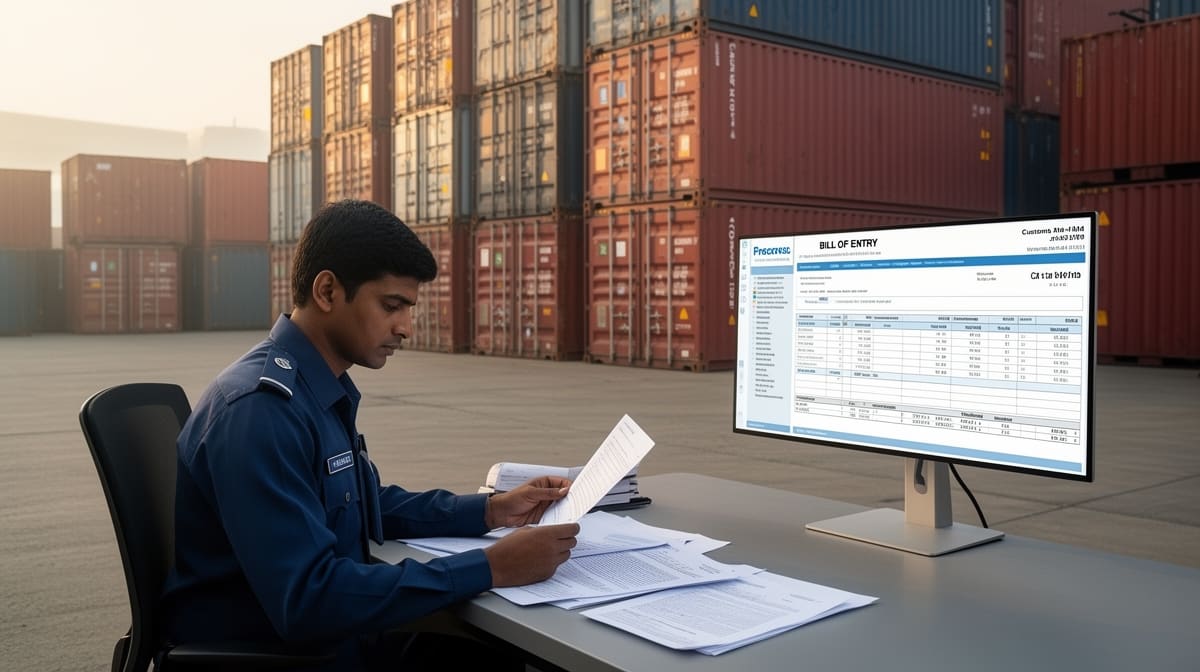
The dispute arose from the import of a Toyota Land Cruiser Prado TZ-G, Right-Hand Drive vehicle, declared as a used vehicle under Bill of Lading No. GOSUTY0001033379 dated 12.09.2018 and Import General Manifest No. 2206355 dated 02.10.2018 at Chennai Port. The consignment remained uncleared after no Bill of Entry was filed, despite notices issued under Section 48 of the Customs Act, 1962. The vehicle was subsequently examined and referred to the Automobile Association of Southern India (AASI), which on 11.03.2021 certified it as brand new with an odometer reading of 8 kilometres and valued it at Rs.1,12,00,000/-. The department concluded that the vehicle had been misdeclared and imported in violation of Chapter 87 of the Import Policy read with the Motor Vehicles Act, 1988 and Central Motor Vehicles Rules, 1989.
Key Facts
- The vehicle was imported on 12.09.2018 under a declaration as a used vehicle
- No Bill of Entry was filed by the importer, M/s. Home Designers and Fabricators Pvt. Ltd.
- Notices under Section 48 of the Customs Act were issued but ignored
- AASI report dated 11.03.2021 confirmed the vehicle was unused and new
- The vehicle was valued at Rs.1,12,00,000/- by AASI
- No type approval certificate or other mandatory documentation under the Motor Vehicles Act, 1988 was produced
- The importer did not contest the valuation or the fact of misdeclaration
- The importer expressed willingness to comply with legal requirements for clearance
Procedural History
- 02.06.2021: Order-in-Original No. 84676/2021 passed by Adjudicating Authority ordering absolute confiscation under Section 111(d) and penalty of Rs.22,00,000/- under Section 112(a)
- 14.07.2021: Order-in-Appeal C.Cus.II.No. 565/2021 by Commissioner of Customs (Appeals-II) upheld confiscation but reduced penalty to Rs.1,00,000/-
- 22.12.2025: Hearing before CESTAT Chennai
- 26.03.2026: Final Order No. 40428/2026 pronounced
The Parties' Positions
For the Appellant (Revenue)
- Argued that misdeclaration of a new vehicle as used constituted fraud and violation of import policy
- Contended that non-compliance with mandatory conditions under the Motor Vehicles Act, 1988 rendered the vehicle liable for absolute confiscation under Section 111(d)
- Submitted that the vehicle was imported in contravention of Chapter 87 of the Import Policy, thereby acquiring the character of prohibited goods
- Initially filed appeal against reduction of penalty but withdrew it under Government Litigation Policy
For the Respondent (Importer)
- Argued that the vehicle was not inherently prohibited; import of new vehicles is generally free under Foreign Trade Policy subject to compliance
- Contended that non-compliance with regulatory conditions does not equate to prohibition
- Asserted that Section 125 mandates an option for redemption unless goods are absolutely prohibited
- Highlighted that the shipping line had requested release of the container after years of detention
- Stated that ownership under Section 2(26) of the Customs Act cannot be presumed solely from IGM
- Challenged the valuation as arbitrary and not in accordance with Customs Valuation Rules
- Offered to pay duties, interest, and redemption fine to clear the vehicle
Relief Sought
The respondent sought:
- Setting aside of the order of absolute confiscation
- Grant of option for redemption under Section 125 of the Customs Act, 1962
- Payment of applicable customs duties and interest
- A redemption fine commensurate with the value of the vehicle
- Release of the vehicle from detention
The Legal Issue
The central question was whether a vehicle imported in violation of regulatory conditions under the Import Policy and Motor Vehicles Act, 1988, but not inherently prohibited, is liable for absolute confiscation under Section 111(d) of the Customs Act, 1962, or whether the statutory option for redemption under Section 125 must be afforded.
Arguments Presented
For the Appellant
The Revenue relied on the misdeclaration and non-compliance with mandatory conditions to argue that the vehicle acquired the character of prohibited goods. It cited the intent to evade regulatory controls and the potential for safety risks as justification for absolute confiscation. It contended that the statutory scheme under Section 111(d) permits absolute confiscation where goods are imported contrary to policy, and that the Supreme Court decisions cited by the respondent were distinguishable.
For the Respondent
The respondent argued that the Foreign Trade Policy does not prohibit import of new vehicles; it merely imposes conditions. It cited Union of India v. Sampat Raj Dugar and Commissioner of Customs v. Atul Automations Pvt. Ltd. to establish that violation of policy conditions does not equate to prohibition. It emphasized that Section 125 is mandatory unless goods are inherently banned, and that absolute confiscation without redemption option violates the principle of proportionality.
The Court's Analysis
The Tribunal undertook a detailed analysis of the statutory framework under the Customs Act, 1962, and relevant Supreme Court precedents. It observed that Section 111(d) permits confiscation of goods imported in contravention of any provision of the Act or any rule, regulation, or notification issued thereunder. However, it clarified that such contravention does not automatically render goods "prohibited" within the meaning of Section 111(d).
"The import of new vehicles is not prohibited under the Foreign Trade Policy; it is regulated. Non-compliance with conditions does not transform the goods into prohibited goods."
The Tribunal examined the Supreme Court’s rulings in Union of India v. Sampat Raj Dugar and Commissioner of Customs v. Atul Automations Pvt. Ltd., which held that where goods are not inherently prohibited, the adjudicating authority must ordinarily grant an option for redemption under Section 125. It further relied on Union of India v. Raj Grow Impex LLP, which emphasized that confiscation must be proportionate to the gravity of the violation.
The Tribunal noted that the respondent had not contested the valuation or the fact of misdeclaration, and had expressed willingness to comply with all legal requirements. It held that the absence of any evidence of fraudulent intent, smuggling, or public safety risk negated the justification for absolute confiscation.
"The statutory scheme under Section 125 is designed to balance enforcement with fairness. Denial of redemption in the absence of exceptional circumstances is arbitrary and contrary to settled law."
The Tribunal also addressed the procedural issue of maintainability of cross-objections after withdrawal of the departmental appeal. It held that under Section 129A(4), cross-objections are independent proceedings and must be adjudicated on merits, citing Income Tax Officer v. Fagoomal Lakshmi Chand and Commissioner of Central Excise v. Optel Telecommunications Ltd.
The Verdict
The respondent succeeded. The Tribunal held that the imported vehicle is liable for confiscation under Section 111(d) of the Customs Act, 1962, but the order of absolute confiscation was set aside. The respondent was granted an option to redeem the vehicle on payment of a redemption fine of Rs.11,20,000/-, applicable customs duties, and interest thereon. The penalty of Rs.1,00,000/- imposed by the Commissioner (Appeals) was upheld and not disturbed. The vehicle was directed to be released upon compliance within 60 days from the date of the order.
What This Means For Similar Cases
Redemption Option Is Presumptive, Not Discretionary
- Practitioners must argue that Section 125 applies whenever goods are imported in breach of regulatory conditions, not absolute prohibition
- Authorities cannot deny redemption without recording specific reasons tied to public safety, fraud, or repeat violations
- The burden shifts to the department to prove that the goods are inherently prohibited, not merely non-compliant
Policy Violations ≠ Prohibited Goods
- Import policy violations under Chapter 87 or other sections do not automatically trigger absolute confiscation
- Courts and tribunals will examine whether the restriction is a condition or a prohibition
- Goods subject to licensing, certification, or documentation requirements remain redeemable unless explicitly banned
Procedural Safeguards for Cross-objections
-
Cross-objections under Section 129A(4) survive even if the departmental appeal is withdrawn
-
Respondents may independently challenge adverse findings without filing a separate appeal
-
Tribunals are obligated to adjudicate cross-objections on merits regardless of the main appeal’s status
-
Always request redemption under Section 125 in cases involving regulatory non-compliance
-
Challenge absolute confiscation orders on grounds of disproportionality
-
Preserve evidence of willingness to comply as a mitigating factor